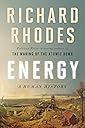

Energy: A Human History [Rhodes, Richard] on desertcart.com. *FREE* shipping on qualifying offers. Energy: A Human History Review: 500 Year Summary - Whether you are someone curious about how the world runs from wood to nuclear. - Each chapter takes you through a different stage in the evolution of energy—from wood and coal to steam, oil, electricity, and beyond—tracing not just the technologies, but the inventors, visionaries, and sometimes controversial characters who made these leaps possible. In many ways, each chapter could easily stand alone as its own book, yet Rhodes ties it all together with a narrative that is both compelling and accessible. What sets this book apart is how it brings together science, history, innovation, and politics without ever becoming overwhelming. It’s a tribute to the thinkers and tinkerers who laid the groundwork for our energy-dependent world, and a powerful reminder of how technological progress often begins with humble, overlooked origins. The book includes several drawings (30 plus) from the period to add more visuals to the reading content. Here are a few sample images. Review: Excellent Coverage Of Energy Transitions Since The 17th Century - Richard Rhodes has an amazing capacity to digest enormous amounts of information, digest them and present them in a manner accessible to most readers. This book is an excellent read about how energy use has progressed from wood to coal to oil, natural gas and on to nuclear and renewables. My one caveat and major disagreement with his presentation is that he veers off into propaganda for the nuclear industry and fatuously optimistic projections about how the world will continue to progress in the face of massive overpopulation and resource depletion. He ignores the dangers of nuclear terrorism, nuclear warfare and the incompetence of nuclear energy companies. As well he seems to have read nothing about our destruction of the oceans, atmosphere and agricultural resources. Despite these qualms this is a valuable book regarding the challenges facing humanity as we seek solutions to energy development and maintenance.
| Best Sellers Rank | #387,348 in Books ( See Top 100 in Books ) #9 in Electric Energy #13 in Oil & Energy Industry (Books) #26 in Environmental Economics (Books) |
| Customer Reviews | 4.4 4.4 out of 5 stars (530) |
| Dimensions | 6 x 1.4 x 9 inches |
| Edition | First Edition |
| ISBN-10 | 1501105353 |
| ISBN-13 | 978-1501105357 |
| Item Weight | 1.4 pounds |
| Language | English |
| Print length | 480 pages |
| Publication date | May 29, 2018 |
| Publisher | Simon & Schuster |
E**A
500 Year Summary - Whether you are someone curious about how the world runs from wood to nuclear.
Each chapter takes you through a different stage in the evolution of energy—from wood and coal to steam, oil, electricity, and beyond—tracing not just the technologies, but the inventors, visionaries, and sometimes controversial characters who made these leaps possible. In many ways, each chapter could easily stand alone as its own book, yet Rhodes ties it all together with a narrative that is both compelling and accessible. What sets this book apart is how it brings together science, history, innovation, and politics without ever becoming overwhelming. It’s a tribute to the thinkers and tinkerers who laid the groundwork for our energy-dependent world, and a powerful reminder of how technological progress often begins with humble, overlooked origins. The book includes several drawings (30 plus) from the period to add more visuals to the reading content. Here are a few sample images.
A**R
Excellent Coverage Of Energy Transitions Since The 17th Century
Richard Rhodes has an amazing capacity to digest enormous amounts of information, digest them and present them in a manner accessible to most readers. This book is an excellent read about how energy use has progressed from wood to coal to oil, natural gas and on to nuclear and renewables. My one caveat and major disagreement with his presentation is that he veers off into propaganda for the nuclear industry and fatuously optimistic projections about how the world will continue to progress in the face of massive overpopulation and resource depletion. He ignores the dangers of nuclear terrorism, nuclear warfare and the incompetence of nuclear energy companies. As well he seems to have read nothing about our destruction of the oceans, atmosphere and agricultural resources. Despite these qualms this is a valuable book regarding the challenges facing humanity as we seek solutions to energy development and maintenance.
M**J
Fascinating from the very first page
A history of human use of energy doesn’t sound like gripping reading, but Richard Rhodes is a master story teller and historian. Like every other book of his that I’ve read, this is fascinating from the very first page. Rhodes is, along with John McPhee and Tracey Kidder, one of the deans of modern non-fiction writing.
A**R
Excellent historical review
I was pleasantly surprised at the balanced emphasis on the view of energy through the centuries. Rhodes has a realistic view for the requirements of different energy sources in the present and future world. Anyone with an interest in the evolution of energy in the past and future should read this well written book.
E**F
"Energy" is both insightful and disappointing
The story of energy from the time of Shakespeare to the 1960s is well told with many amusing anecdotes. The last two chapters of the book try to articulate a theory of energy transitions with the next one being nuclear energy. Rhodes writes off renewable energy as being of marginal importance. That assertion made in 2017 sounds very dated now. His attempt to link opponents of nuclear energy to misanthropists like David Malthus and Paul Ehrlich is also unconvincing.
L**A
Wow, what a fascinating book
Well written and copiously annotated. It is an interesting read from ancient times to the current problems of the day.
W**L
Great Book!
This is the kind of 300 page book that you can devour in a couple of days. Very well researched and entertaining. This book contains a collection of stories and histories that capture the picture of early energy usage. You will learn a lot about daily life over the last couple centuries, as well as a lot of broad interesting history.
A**R
Kindle app ruins book’s illustrations.
The book is excellent. It explains our energy past to elucidate our energy present and future. And it’s quite well written. However, don’t buy this or any other book with graphs, photos, or illustrations on the Kindle app. This book has many such features which I’m sure would aid in comprehending the material, if only they were rendered at a size larger than my little fingernail. As it stands, it is impossible to even see what most of the diagrams and photos are meant to convey. And yes, I tried to no avail to enlarge them. Amazon really needs to fix this. For now, though, I’d advise folks to avoid trying to read even marginally technical books on the Kindle app.
P**A
Especially the early history of steam and electric power is superb. But it doesn't come up to Making of the Atomic bomb.
@**Y
Energy is the foundation of human progress, growth and economic prosperity. In this work, Richard Rhodes provides an excellent and competent introduction to the history of energy capture and utilization within industrialized civilization. The books is written to reach a large and not exclusively academic audience; and while highly informative, should be accessible to the vast majority, particularly the audiobook. The hardback edition of this books is printed and bound to a high quality standard and the audiobook is narrated well. I highly recommend both the physical hardback edition and the audiobook.
S**O
È scritto bene, in tono più divulgativo che tecnico, quindi comprensibile anche a chi non ha molte nozioni di fisica e chimica. Nonostante questo, a volte le spiegazioni sul funzionamento dei motori e dei macchinari risultano un po’ difficili da seguire. Nel complesso, comunque, una lettura interessante e godibile.
W**R
Author knows a great deal over the subject but the story gets lost in too many details.
S**L
Very well researched. Rhodes does not dissappoint.
Trustpilot
1 month ago
2 days ago