![How to Change Your Mind: The New Science of Psychedelics [Hardcover] [May 17, 2018] POLLAN MICHAEL](https://m.media-amazon.com/images/I/71JnN1twTPL._AC_SL3840_.jpg)
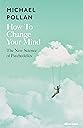
How to Change Your Mind: The New Science of Psychedelics [Hardcover] [May 17, 2018] POLLAN MICHAEL
Product ID: 91890213
BRAND NEW, Exactly same ISBN as listed, Please double check ISBN carefully before ordering. Review: Narrative of the author's introduction to and journey with psychedelics in middle age. - How to Change Your Mind is quite a different pace from the author's other books; but the result is excellent nonetheless. I typically had read Michael Pollan for his food non-fiction works but How to Change Your Mind is a personal journey of psychedelics that the author bolsters with history and science to help the reader learn about a subject that is seemingly wrongly a taboo. There's a lot of ground covered in the book and the level of objectivity is to be admired. For a person looking to learn about psychadelics, the mind and perspective on a balanced life; this is worth the read. The book is split really into 3 parts. The author gives a quick introduction to how he came to want to take the personal journey to understand psychedelics and the potential benefits as his personal background was largely absent of substance use/abuse so the first chapter really just contextualizes the why for this project as its a different pace than his previous books. The book then gets into a more structured approach and discusses the history of the use of psychedelics in the West. He discusses how mushrooms were discovered in Mexico and had been used for spiritual journeys and also how LSD was synthesized and shelved by Sandoz and how its use by an individual was largely a random act. Its pretty interesting to learn the history of what early benefits were perceived for LSD; in particular as a means to understand psychosis but soon after as a means to help with addiction and terminal illness. LSD and mushrooms were made illegal partially due to Timothy Leary and the counterculture that evolved and embraced their use and the author gives the stories of events. Its definitely interesting for those unfamiliar. After giving the reader a good sense of how people used and thought about psychedelics as they first explored their potential, the author gets into his experience in using them for the first time. Inevitably communicating the experience is tough as one has an altered state of consciousness that is difficult to communicate with accuracy, but to one gets a shadow of the author's experience on some serious mushrooms, LSD and a hallucinogenic toad. Its definitely entertaining and the sense of connectedness is conveyed. Especially if one has personal experience with doing the drugs the author does a pretty good job of describing some of the sensations. In any case the author goes through experiences of mushroom hunting as well as the perceptions while on it and the lingering aspects of the experience. If one has read the omnivore's dilemma, mushroom hunting falls within the author's expertise but magic mushrooms are seemingly much harder to distinguish from many poisonous mushrooms so the hunting process is pretty interesting. The author then discusses some of the understood neuroscience of hallucinogens and some theories about how psychedelics operate. This remains a subject of study so there aren't definitive conclusions but the author argues that mushrooms and LSD improve communication between parts of the brain which don't communicate actively and suppress activity in the more self referential parts of the brain which the author names the default network. The author discusses recent studies in psychedelic clinical research and notes funding for such programs has increased in the last decade. The author finally discusses how these substances might be useful to people. The focuses of discussion are on those terminally ill, as psychedelics can help a person come to grips with their mortality; the author takes a case study approach with this chapter and discusses the effects on particular people who found them extremely useful. The author discusses addiction as well and how addiction can be broken with psychedelics when properly applied, it is caveated though that the effects are unlikely to be permanent but can help behavior on the order of months. One needs to remember that these are areas that need to be studied such that clinical data can lead to actual conclusions about these topics rather than the stories and hopes projected by believers or the fears projected by the puritanical. The author finally discusses depression which is a huge category. The anecdotal evidence from the authors interactions were all positive about the benefits of clinically administered psychedelics to combat depression. How to Change Your Mind is an informative book to consider. The author partially argues that psychedelics become very useful as we get to middle age and get entrenched in our way of thinking. These drugs expand the way the mind processes and bring back a youthfulness to the way that the mind thinks about things that is very spiritual. The author is scientific in approach and given his non substance intensive background it seems to be an honest account of a subject which I am sure many people consider taboo so its quite convincing. The book definitely helps rationalize doing psychedelics for tangible benefit without real side effects; though it is careful to remind the reader the environment of consumption matters. Definitely worth the read and almost definitely worth the experience if one can! Review: A fantastic book on a fascinating subject - I've enjoyed several if Michael Pollan's other books and I was intrigued after watching his Google talk on this one. I have never used psychadelics and knew very little about them, other than various stereotypes from TV and film, anecdotal reports from friends, and horror stories from health class. In his talk he touched on a few points that really stuck with me, such as the promising research into psychadelics treating a variety of mental disorders, and the history and influence of them in high tech. I'm so glad I decided to pick this book up because I absolutely loved it. It's one of my favorite books I've read, and my favorite from Michael Pollan. Other longer reviews likely delve into what content to expect so I'll outline what stuck out to me as especially interesting and enjoyable. - Michael Pollan's writing is a joy to read. I highlighted a hefty portion of this book, and many of those were little phrases and descriptions which perfectly captured what he was trying to describe or captured the essence of someone's character. - Speaking of characters, Michael Pollan crossed paths with a host of eccentric characters, and his descriptions of them were a delight to read. Many were "out there" by most standards but he documented their ideas, theories, and life choices fairly and without judgement. - On that note, this book deals with a tricky subject matter, and handles it quite well. Much of what he's documenting is at least for now outside the realm of science, and he does an excellent job describing what science is there now, where the research is headed, and what experiences and ideas we may just never be able to explain with the tools of science. The subject matter is also, of course, illegal, and many readers with certain backgrounds or in a certain age bracket will come to this book with prejudices, thinking they understand psychadelics as a negative force on society which derails lives and drives young minds to mental disorder. I would strongly encourage anyone with a negative view of psychadelics to give this book a try. Michael Pollan's narrative on these drugs is largely positive (assuming the right setting and context), but I think he also gives a fair voice to their potential risks and detractors. - This book changed how I think about my own mind, and while I'm not about to rush out and buy a bunch of LSD I have been very reflective of how my mind works, what this experience of conciousness even is, and most importantly how my ego / sense of self doesn't have to be my entire identity and what the benefits of letting go of that a bit could be. I've struggled my whole life with anxiety, depression, obsessive thinking, and thought spirals. The descriptions of getting stuck in certain modes of thinking and becoming destructively inward focused felt dead on. That something as simple as a mushroom or meditation can shake the brain up and help someone escape from deeply ingrained patterns of thinking is fascinating and potentially extremely important. I feel like I can now step back a bit and identify some of these destructive patterns in my own thinking where my ego runs wild, and on the other end of the spectrum can reflect back on sublime "mystical" feeling experiences I've had, and how small but connected I felt to things (like MP I feel uncomfortable using like "mystical" and "spiritual" but that's the language I have to work with). - The stories in this book are great and often very funny. Because each section, even the more science heavy ones, are presented as well told stories, the book is very engaging and information easy to take in. This review may come across as disjointed but that's because I'm still sorting out all of the interesting information and insights I gained. Definitely give this one a read if you're feeling open minded.
| Best Sellers Rank | #4,793,617 in Books ( See Top 100 in Books ) |
| Customer Reviews | 4.7 out of 5 stars 10,517 Reviews |
A**N
Narrative of the author's introduction to and journey with psychedelics in middle age.
How to Change Your Mind is quite a different pace from the author's other books; but the result is excellent nonetheless. I typically had read Michael Pollan for his food non-fiction works but How to Change Your Mind is a personal journey of psychedelics that the author bolsters with history and science to help the reader learn about a subject that is seemingly wrongly a taboo. There's a lot of ground covered in the book and the level of objectivity is to be admired. For a person looking to learn about psychadelics, the mind and perspective on a balanced life; this is worth the read. The book is split really into 3 parts. The author gives a quick introduction to how he came to want to take the personal journey to understand psychedelics and the potential benefits as his personal background was largely absent of substance use/abuse so the first chapter really just contextualizes the why for this project as its a different pace than his previous books. The book then gets into a more structured approach and discusses the history of the use of psychedelics in the West. He discusses how mushrooms were discovered in Mexico and had been used for spiritual journeys and also how LSD was synthesized and shelved by Sandoz and how its use by an individual was largely a random act. Its pretty interesting to learn the history of what early benefits were perceived for LSD; in particular as a means to understand psychosis but soon after as a means to help with addiction and terminal illness. LSD and mushrooms were made illegal partially due to Timothy Leary and the counterculture that evolved and embraced their use and the author gives the stories of events. Its definitely interesting for those unfamiliar. After giving the reader a good sense of how people used and thought about psychedelics as they first explored their potential, the author gets into his experience in using them for the first time. Inevitably communicating the experience is tough as one has an altered state of consciousness that is difficult to communicate with accuracy, but to one gets a shadow of the author's experience on some serious mushrooms, LSD and a hallucinogenic toad. Its definitely entertaining and the sense of connectedness is conveyed. Especially if one has personal experience with doing the drugs the author does a pretty good job of describing some of the sensations. In any case the author goes through experiences of mushroom hunting as well as the perceptions while on it and the lingering aspects of the experience. If one has read the omnivore's dilemma, mushroom hunting falls within the author's expertise but magic mushrooms are seemingly much harder to distinguish from many poisonous mushrooms so the hunting process is pretty interesting. The author then discusses some of the understood neuroscience of hallucinogens and some theories about how psychedelics operate. This remains a subject of study so there aren't definitive conclusions but the author argues that mushrooms and LSD improve communication between parts of the brain which don't communicate actively and suppress activity in the more self referential parts of the brain which the author names the default network. The author discusses recent studies in psychedelic clinical research and notes funding for such programs has increased in the last decade. The author finally discusses how these substances might be useful to people. The focuses of discussion are on those terminally ill, as psychedelics can help a person come to grips with their mortality; the author takes a case study approach with this chapter and discusses the effects on particular people who found them extremely useful. The author discusses addiction as well and how addiction can be broken with psychedelics when properly applied, it is caveated though that the effects are unlikely to be permanent but can help behavior on the order of months. One needs to remember that these are areas that need to be studied such that clinical data can lead to actual conclusions about these topics rather than the stories and hopes projected by believers or the fears projected by the puritanical. The author finally discusses depression which is a huge category. The anecdotal evidence from the authors interactions were all positive about the benefits of clinically administered psychedelics to combat depression. How to Change Your Mind is an informative book to consider. The author partially argues that psychedelics become very useful as we get to middle age and get entrenched in our way of thinking. These drugs expand the way the mind processes and bring back a youthfulness to the way that the mind thinks about things that is very spiritual. The author is scientific in approach and given his non substance intensive background it seems to be an honest account of a subject which I am sure many people consider taboo so its quite convincing. The book definitely helps rationalize doing psychedelics for tangible benefit without real side effects; though it is careful to remind the reader the environment of consumption matters. Definitely worth the read and almost definitely worth the experience if one can!
W**Y
A fantastic book on a fascinating subject
I've enjoyed several if Michael Pollan's other books and I was intrigued after watching his Google talk on this one. I have never used psychadelics and knew very little about them, other than various stereotypes from TV and film, anecdotal reports from friends, and horror stories from health class. In his talk he touched on a few points that really stuck with me, such as the promising research into psychadelics treating a variety of mental disorders, and the history and influence of them in high tech. I'm so glad I decided to pick this book up because I absolutely loved it. It's one of my favorite books I've read, and my favorite from Michael Pollan. Other longer reviews likely delve into what content to expect so I'll outline what stuck out to me as especially interesting and enjoyable. - Michael Pollan's writing is a joy to read. I highlighted a hefty portion of this book, and many of those were little phrases and descriptions which perfectly captured what he was trying to describe or captured the essence of someone's character. - Speaking of characters, Michael Pollan crossed paths with a host of eccentric characters, and his descriptions of them were a delight to read. Many were "out there" by most standards but he documented their ideas, theories, and life choices fairly and without judgement. - On that note, this book deals with a tricky subject matter, and handles it quite well. Much of what he's documenting is at least for now outside the realm of science, and he does an excellent job describing what science is there now, where the research is headed, and what experiences and ideas we may just never be able to explain with the tools of science. The subject matter is also, of course, illegal, and many readers with certain backgrounds or in a certain age bracket will come to this book with prejudices, thinking they understand psychadelics as a negative force on society which derails lives and drives young minds to mental disorder. I would strongly encourage anyone with a negative view of psychadelics to give this book a try. Michael Pollan's narrative on these drugs is largely positive (assuming the right setting and context), but I think he also gives a fair voice to their potential risks and detractors. - This book changed how I think about my own mind, and while I'm not about to rush out and buy a bunch of LSD I have been very reflective of how my mind works, what this experience of conciousness even is, and most importantly how my ego / sense of self doesn't have to be my entire identity and what the benefits of letting go of that a bit could be. I've struggled my whole life with anxiety, depression, obsessive thinking, and thought spirals. The descriptions of getting stuck in certain modes of thinking and becoming destructively inward focused felt dead on. That something as simple as a mushroom or meditation can shake the brain up and help someone escape from deeply ingrained patterns of thinking is fascinating and potentially extremely important. I feel like I can now step back a bit and identify some of these destructive patterns in my own thinking where my ego runs wild, and on the other end of the spectrum can reflect back on sublime "mystical" feeling experiences I've had, and how small but connected I felt to things (like MP I feel uncomfortable using like "mystical" and "spiritual" but that's the language I have to work with). - The stories in this book are great and often very funny. Because each section, even the more science heavy ones, are presented as well told stories, the book is very engaging and information easy to take in. This review may come across as disjointed but that's because I'm still sorting out all of the interesting information and insights I gained. Definitely give this one a read if you're feeling open minded.
A**Y
Truly brings you along on a fascinating journey
I read a lot of non-fiction, and while I enjoy most books, it’s also impossible to ignore that most books follow (borrowing a metaphor in this book describing how the brain works) well-worn grooves to success. There’s a formula for writing the business book, a formula for the aspirational how-to from an expert, etc. It gets a little tiresome sometimes being lectured to, being told how to do xxx by an expert or why we should yyy by someone who is already a convert. That’s not the case here. Pollan is an exceptionally gifted writer of a different style than a Malcolm Gladwell or Michael Lewis. Where Gladwell and Lewis specialize in spinning narratives that keep you engrossed, Pollan loves taking the reader along on his own intellectual journeys, and the earnestness and sincerity of his quest as well as the boyish excitement in which he approaches it comes through on the page. He’s a master of long-form journalism in its richest and truest sense. The quest the reader is invited to go along on here -- to understand everything about the psychedelic renaissance, how these amazing molecules impact consciousness, the now underground history of how they came to be and how we came to place such a taboo on them, how they impact consciousness and what they can tell us about the nature of consciousness in the process, and how they might be used to treat mental ailments like depression, addiction, and end-of-life anxiety -- could not have come for a more interesting topic or at a better time. Psychedelics are going through a renaissance of sorts, and Pollan’s book has the potential to be enormously influential in bringing that renaissance into our collective consciousness. There’s so many dimensions to this story that there is something here for everyone, from natural history (of mushrooms), to clinical (analyses of scientific trials and Johns Hopkins and NYU as well as elsewhere) to the historical (account of the development of these drugs and subsequent involvement in the 60s counterculture), to the illumination of the underground world of trip “guides” and the colorful characters in it, to firsthand “trip reports” of what Pollan experienced when taking psilocybin. In the process you’ll meet a cast of characters as colorful as you can find in any fictional book. If there's a downside to this book, it's that Pollan's language as a 'guide' in this intellectual journey can sometimes sound a bit wishy-washy. There's a very wide range of characters here, from new age spiritual guides to scientists, many of whom talk in very excited and probably overstated terms that are not always backed by reason. Pollan is naturally a skeptic and understands this, yet it also sometimes feels that he doesn't want to disappoint any of the "camps" that helped him so much in researching and writing this book, so he can seem to hedge in one paragraph while diving headfirst into the pool in the next. That said, a small amount of annoyance here is a small price to pay for being able to come along on an amazing journey. Even if you don’t have the faintest interest in mushrooms, LSD, or altered states of consciousness and what they mean, you should read this book if you can appreciate a good non-fiction book. It might not convert you, but it will certainly interest you and change the way you think about something significant in the process.
J**S
Everyone should read this book
Very informative. I loved the historical aspect of the book and learned a great deal about the history of psilocybin. The author does get a bit repetitive about his personal experiences but it's still a very solid and fascinating read.
M**N
Turn off your mind, relax, and float downstream - 6 related reviews
“Turn off your mind and float downstream…” are the words beginning the Beatles song Tomorrow Never Knows, on the album Revolver. The following is a review of 6 fairly recent books centered on these 7 words and the music that accompanies them. They are, listed from wide to narrow focus: How to Change Your Mind: What the New Science of Psychedelics Teaches Us About Consciousness, Dying, Addiction, Depression, and Transcendence by Michael Pollan, Penguin Press, 2018 The Gospel According to the Beatles by Steve Turner, Westminster John Knox Press, 2006 Revolution in the Head: The Beatles Records and the Sixties, 3rd ed. by Ian MacDonald, Chicago Review Press, 2007 Tomorrow Never Knows: Rock and Psychedelics in the 1960s by Nick Bromell, University of Chicago Press, 2000 Rock: The Primary Text: Developing a Musicology of Rock, 2nd ed. by Allan F. Moore, Ashgate Publishing Company, 2001 The Beatles: Sgt. Pepper’s Lonely Hearts Club Band by Allan F. Moore, Cambridge University Press, 1997 ________________________________________________________ I will provide a brief bio of your reviewer so you can see where I’m coming from (and maybe where I’m going to): I first heard Tomorrow Never Knows at age 12 in 1974, when my uncle had given me Rubber Soul and Revolver to add to my burgeoning private record collection. When the Beatles hit America, I was 2 years old, had young hip parents who always had pop radio on, and even then had absconded with my grandmother’s 5 transistor (proudly displayed) “pocket” radio. It became mine, and even television didn’t supplant the importance of the music I was listening to on the radio. When my uncle gave me Revolver, I had already possessed the White Album (my dad bought it in 1968 when I was 6, and strangely enough, bought John and Yoko’s Two Virgins LP, as an investment I suppose), Abbey Road, and the 1962-1966, 1967-1970 compilations. But, I had never heard anything like Tomorrow Never Knows, and was endlessly fascinated by the music and then the lyrics which were imploring me to listen to the colors of my dreams. Huh? Four years later, 1978, age 16, I began a decade long spiritual quest beginning with a query into Christianity I was familiar with through cultural osmosis, compared to the ideas expressed in Tomorrow Never Knows. For ten years I searched for someone I could trust to give me a psychedelic. My first of four magic mushroom trips started on my 26th birthday. I was intellectually primed for an experience having read books from the Electric Koolaid Acid Test to the Tao of Physics and The Cosmic Code. Digesting what I had just experienced, it was my great fortune to discover on PBS special featuring Joseph Campbell and Bill Moyers in “The Power of Myth,” and through him, the psychology of Carl Jung. (Freud had turned me off in college and I hadn’t yet given Jung a chance, silly me.) The rest, as they say, is history. I’ve been most focused over the years on what now can be called psychedelia. (I had aspired to be like the professor of applied narcotics in the hilarious Rutles movie All You Need Is Cash. “Listen, lookit, very simply…”) In particular, I’m most interested in the years of 1966-1968. _______________________________________________________ From the outset, one cannot understand, naturally, psychedelia without knowing something about psychedelics in general. A new book, as of this writing, is Michael Pollan’s How to Change Your Mind. I have long been in the habit of reading the bibliography and index of books, and sometimes notes and references, before even opening up to read the first page. I find it’s a good habit, and Pollan’s bibliography doesn’t disappoint. It alone is worth the price of admission. He divides the history of psychedelics into two periods: the first ending with the prohibition and disfavor of psychedelics (and hippies in general) in the backlash during the 70s. The second period is the resurgence of psychedelic research, almost all underground initially, that started a few years later. I am intimately familiar with the texts of the first period, and almost completely ignorant of the second, despite having joined MAPS in the early 80s. (I remember in the early 70s finding a urine soaked box of sugar cubes in our apartment parking lot with the adults present saying it was a dreaded drug. Scary. I had no idea then, but know know, that LSD laced sugar cubes are not yellow, usually.) Pollan comes to psychedelics from a traditional journalistic/scientific worldview: “My default perspective is that of a philosophical materialist who believes that matter is the fundamental substance of the world and the physical laws should be able to explain everything that happens.” (pg.12) A mystic or proselytizer (think Timothy Leary) he is not, and it is his generally skeptical approach which should help elucidate the subject for those with an “objective” worldview on the subject of psychedelics. For example, by someone considering only scientifically measurable phenomenon worthy for study or exploration. A most excellent introduction to psychedelia as a whole. John Lennon, 1968: “If this scene is (around) in 2012 . . . the masses will be where I am today and I should be as groovy as Jesus by then.” (pg. 1) When I read this quote on the first chapter of The Gospel According to the Beatles, I thought to myself, oh this should be good. Having already scanned the sources at the back of the book, I knew that the author, music journalist Steve Turner, had many interviews he personally had about religion with the major characters involved, including John Lennon in 1969 and a whole host of people who were there. Add in a deft analysis from a Christian author, as he defines himself, and you get an insight into the Beatles particular brand of spirituality as it developed through the years. He writes: “In what follows I won’t be endorsing everything they said. I will simply be arguing that they had things to say and that these things were taken seriously at the time by a large proportion of young people, many of whom are still affected by those views.” (pg. 11) Indeed. And yet, Turner only mentions Tomorrow Never Knows specifically and in passing only 3 times. For me, this leaves much to be desired. Read on: Next comes Revolution in the Head by Ian MacDonald. One of those most cited books in the Beatles canon, and for good reason. (The first edition came out in 1994.) A book that analyses each song, and also has a very good introduction (an essay really) which begins with a quote by Aaron Copland: “If you want to know about the Sixties, play the music of the Beatles.” (pg.1) In his essay, MacDonald, a British music critic, places the Beatles’ spirituality (expressed via their songs) in a broader sociological context. He writes in 1997, “the destabilizing social and psychological evolution witnessed since the Sixties stems chiefly from the success of affluence and technology in realizing the desires of ordinary people. The countercultural elements usually blamed for this were in fact resisting an endemic process of disintegration with its roots in scientific materialism.” (pg. 36) And, “The Sixties seem like a golden age to us because, relative to now, they were.” On the plus side, for my purposes, MacDonald devotes 8 pages to the Tomorrow Never Knows track. In it, he discusses the recording process (in much less detail than Mark Lewisohn’s book) and also a bit of musicology (but less than Allan F. Moore, see below). His best observation is, “... yet it is easy, thirty years later, to underestimate its original cultural impact.” (pg. 191) Indeed yes. But MacDonald has an exceedingly dim view of psychedelic drug use, calling it “Russian roulette played with one’s mind” (pg.186) To each their own opinion, I say. In support of his argument, he cites several times that his source of the effects of LSD on Lennon’s life is Albert Grossman’s biography of John. (I decline to comment here.) Such opinions are why I started this review with Michael Pollan’s book. The truth of the matter is much more nuanced than MacDonald or Grossman’s account. It’s true that there were so-called “acid-casualties” like Syd Barrett and Peter Green, they being two famous examples. Both, however, suffered from schizophrenia, which can be triggered by psychedelic use. Says David Gilmour (from Wikipedia): “In my opinion, (Syd’s) nervous breakdown would have happened anyway. It was a deep-rooted thing. But I'll say the psychedelic experience might well have acted as a catalyst. Still, I just don't think he could deal with the vision of success and all the things that went with it." Clearly, we will have to go somewhere else to get perhaps a more balanced view: In the introduction to his wonderfully titled (in my opinion, anyway) book Tomorrow Never Knows, a professor of history, English, and American Literature, Nick Bromell, states: “This book isn’t conventional history or cultural studies or popular culture analysis or musicology or memoir, but a hybrid of all of these.” (pg. 6) Now we’re talking! A short but packed book, I wish I could have read it long ago. Impossible to describe in fewer words than the text itself, so I shan’t even try. After noting (and agreeing) that many critics regard Tomorrow Never Knows as the most important rock song of the decade, Bromell takes that as just the starting point in his discussion. I myself have had over the years a rotating list of favorite Beatle songs (Strawberry Fields, A Day in the Life, I am the Walrus, Dear Prudence) but Tomorrow Never Knows was the most influential in my life. Bromwell writes: “Yet we must also remember that to the millions of young persons who, innocent of Leary and LSD, eagerly unwrapped the new Beatles album and sat back to see where it would take them, Tomorrow Never Knows was an enigma they would understand only gradually, through many listening and over many months.” Or years, in my case. “They heard it first and foremost as a place to dwell, not as an answer or a deliverance.” (pg. 93) Need I say more? A most excellent read and a wonderful book to create more avenues for exploration. (For example, he references Heidegger in his explanation of the song’s significance. I did not know that. Off to Wikipedia I go…) As mentioned in his introduction, Bromell includes the discipline of musicology in his analysis. For those who are very interested in this topic, I recommend two books by musicologist Allan F. Moore. Rock: The Primary Text is a great introduction to a serious analysis of rock music. Although there were exceptions (like Twilight of the Gods by Wilfred Mellers), there was precious little analysis of rock music in academia for a long time. Presumably, many scholars didn’t think there was much to this simple rhythmic (at least at the beginning) music of the unwashed masses, made up of people like me. Such attitudes are hopefully not as strong these days. Moore stresses the sounds of rock music. He writes in his introduction, “We can, however, evolve an understanding of what ‘rock’ is, in musical terms, by treating it as structured by multiple-evolving but coherent set of rules and practices.” (pg. 7) If this sounds at all interesting, this book is for you. Moore also wrote The Beatles: Sgt. Pepper’s Lonely Hearts Club Band, which begins, quite rightly, with Strawberry Fields/Penny Lane (the finest single ever made, so says I) and then onto Sgt. Pepper proper. A bit denser than than the book above, but much shorter, I personally understood only some of it. (I did take music theory in college, but the class didn’t speak to me. The academy didn’t seem to care about the music I was interested in.) _______________________________________________________________ “Trust your divinity, trust your brain, trust your companions. Whenever in doubt, turn off your mind, relax, float downstream.” - The Psychedelic Experience (pg. 6) by Timothy Leary, Richard Alpert, and Ralph Metzner, University Books, 1964 In one of those rare moments of synchronicity (aka meaningful coincidences), as I was writing this review I learned that Ralph Metzner had recently died, and, further, that I unknowingly was a neighbor of his for the past 20 years, in a small hamlet called Sonoma, California, in wine country. Small world, huh? Best Wishes for his family. - March 2019
A**M
An announcement that the world is about to swerve.
I finished Michael Pollan's "How To Change Your Mind" last week and have been thinking about it basically non-stop since then, waiting to write this review, trying to decide what it all means and how I feel about it. My biases are two-fold. First, I love Pollan’s previous books and outlook on food and life in general. I trust him and admire him. But I also am deeply skeptical of drugs and have completely rejected drugs in my own life—I have never been high or drunk or on a trip of any kind ever and I really have no desire to go there. Until now. Sort of. Pollan tries LDS (which he had tried before in his youth), Psilocybin (the magic mushroom), and 5-MeO-DMT (a substance derived from the saliva of a type of toad). All are psychedelic drugs which induce a trip. He does not try MDMA due to a heart condition he is dealing with, but he would have. He barely touches on mescaline (peyote) for an unknown reason. A few take aways: 1. The future will be one where psychoactive drugs are commonly used for medical/clinical purposes. The science is clear that they are amazingly effective in treating addiction and depression. Better than anything else out there by far. Since the publication of the book, the FDA has fast-tracked psilocybin trials for depression treatment. The day is quickly coming when their use will be standard practice in these fields. It can’t come soon enough as we are currently terrible at treating addiction and depression. I am encouraged and hopeful about these uses. 2. Psychoactive drugs also can be very useful in dealing with things like death, mid-life crises, existential angst, the end of a relationship and other such intellectual/emotional turmoil. This is not likely to be legal for a long while, but the use of the drugs in this way will explode and become common in the next decade. 3. Context matters, a lot. Just taking the psychoactive drug will not mean you are able to overcome an addiction or depression or better deal with a mental crises. The “trip” should be guided and shaped, thoughtfully approached and coached before, during and afterwards during processing. No one should pop some psilocybin or LSD for fun, but they can be an amazing tool if taken in the right way for good reasons. 4. The ritual and ceremony used by traditional cultures when using psychoactive drugs, even and including the peace and love culture of the late 60s and early 70s, but mainly the context of native peoples who have been using the tools for thousands of years, is helpful in creating the context. Taking the substance out of the culture where it has been used to great benefit is not likely to recreate that benefit. There is significant value in the traditions surrounding the use of psychedelics. They don’t have to be followed exactly, and a modern more spiritual (as opposed to any specific religious) setting can also be effective. But the lessons of historical context are very important. 5. Psychoactive drugs were suppressed due to Timothy Leary’s cult of personality and counter-culture war on the establishment alienating Washington’s power structure sufficiently to push them into action coupled with the MKUltra madness going on at the CIA which, when revealed, rightfully horrified right-minded citizens. They are now coming back out of the dark and into the mainstream. This has to potential of being a very good thing—if stupid old hippies and bored young people don’t rush in and start using them irresponsibly in mass. 6. Eventually I think I might like to try psilocybin. Maybe LDS. Maybe. But only in the right setting. Only for a meaningful purpose. I’m not sure my brand of crazy is crazy enough to justify it. Maybe. It is legal in some countries and they have retreats with guides that look interesting. Maybe. I recommend the book. It is important because it will be seen as the watershed moment in the mainstreaming of the use of psychoactive drugs in the modern world. All of us know people who might be significantly helped by their use. This book feels like it is announcing an important moment in human history—the time when we as modern humans started looking towards the full spectrum of experience, even when aided by odd substances found in unexpected places. A coming of home of sorts—it is possible that human evolution was sparked or aided significantly by the use of psychedelics. They were commonly used by man throughout history. And maybe they are a connection to the divine (literally or figuratively—take your pick). But this book is an announcement that world is about to swerve. Huxley was a big fan of psychedelics. Soma is coming indeed.
A**N
An engaging and thought provoking call for investment in further research
My wife Ivy and I have been avid readers of Michael Pollan's previous articles and book-length works especially those involving healthful eating and the food industry. By way of background I am a forty-something surgeon and my wife is an author and blogger with MS who has on occasion had to cope with condition-related mood issues. Without having done much research into the psychedelics other than to ensure they are indeed medically safe (as this book discusses in more detail) a couple years back we participated in several overseas guided ayahuasca (a psychedelic plant mentioned in How to Change Your Mind) sessions. Our experiences as a couple participating both to obtain hoped-for medical benefits and for, in my case, the "betterment of well people" to quote Pollan's book have been discussed online and mirror the experiences described by Mr. Pollan and by the numerous academic professionals, researchers, and patients interviewed throughout this journalistic masterpiece. To describe this further is beyond the scope of my review but we can vouch that this book is one hundred percent serious journalism and that research investment into the study of psychedelics as medications for treatment resistant psychiatric conditions and as spiritual aids for the betterment of humanity is very much needed and is well underway as described in detail in Pollan's book. As for the prosaic the book is over 400 pages and written at an advanced level and will engage the most curious of readers. The book is organized into six chapters. The first is a broad introduction to the topic of psychedelics and the second discusses psychedelic mushrooms which possess an active ingredient that is the topic of many current-era human research studies. The third chapter discusses the first wave of psychedelic research (I had no idea that in the 1950's these substances were academically studied and thought to hold great promise only for that research to be practically shut down as a result of the political upheaval of the late 60's) and is of great interest to anyone interested in the history of these substances even if one has no interest in their pharmacological effects. The fourth discusses the author's own personal experiences as a middle-aged adult with the psychedelics and he is spot-on with his fascinating first person descriptions of the experience. Finally, chapters five and six discuss current research, expected medical benefits and benefits to the well-person, the neuroscience behind the actual function of psychedelics in the brain, and proposed solutions for safely distributing the psychedelics to persons who could benefit. For many readers this book will "change your mind" about the loaded term "psychedelic" and will open you up to at least the possibility the world could be a better place if these substances could be studied with as much zeal as are other pharmaceuticals and could be offered safely for the benefit of the millions of persons worldwide suffering from conditions related to dysfunction of the mind.
K**N
Fantastic, skillfully written, real science
A wonderful book that grabbed my attention and kept it (almost to the end; it did sort of peter out in the last couple of chapters). Michael Pollan is a gifted writer and storyteller, and in this book, he is writing about topics that can be difficult to articulate. My favorite parts of the book, aside from the “trip reports,” of course, were those about the neuroscience. Most notable for me among the scientists Pollan interviewed was Robin Carrhart-Harris from Imperial College in London. This is where Pollan gets into the “default mode network” that anyone who has ever experienced depression knows very well. Carrhart-Harris is an amazing mind, and his commentary, along with Pollan’s reporting, is quite simply brilliant. Finally, we know Somethimg more than just “prone to rumination” about depression. Carrhart-Harris explains what he and colleagues have discovered about what is going on in the brain during rumination, as well as what stops happening in the brain with psychedelics. I’m grateful for all of the information in this book. Judging by how many places I see this book and its author mentioned, I think it’s safe to say that the book is making a real impact on the subject of psychedelics. You really cannot read this and not question why we are still allowing the hysteria of the Nixon era to continue. Read this book, maybe especially if you believe that all drugs are bad and evil. If you can follow legitimate scientific discussion, backed up by credible and reliable sources, this book is for you. If you want to have an informed, intelligent opinion on this contentious topic, read this book. Read the sources cited. Then think about it and form your own opinion. If you suffer from depression, anxiety, PTSD, you owe it to yourself to read this book and then to use your voice to put an end to the exclusion of these plants and substances that hold such great promise for these hellish conditions. There is hope beyond failing SSRIs. And anyone who would approve of denying psychedelic medication to those facing terminal cancer needs to have their own head examined. You really cannot argue with the research that Roland Griffiths, PhD, and colleagues from Johns-Hopkins have carried out. This is real research, carried out with real and trusted scientific protocols We have the ability to greatly ease the suffering of those facing the worst medical scenarios; to withhold these treatments from those people is unconscionable. A fantastic book for our times. Let the madness of the Nixon era melt away. I think this book will be long remembered as a public service. And don’t miss Robin Carrhart-Harris, PhD, with his discussions about watching the brain in action while under the influence of psychedelics via functional MRI. If you want to know more or simply can’t get enough of the science, don’t miss him on the MAPS podcast. (You’ll find a lot more there too, including Michael Pollan, as well as more scientists and researchers. Dr. Ben Sasser is not to be missed!)
A**R
O melhor livro do ano!
O melhor livro que já li sobre psicodélicos e enteógenos (e já li vários). Pollan mais uma vez nos cativa com sua prosa cativante, concisa e precisa! Nos entregou um texto simples, porém com uma incrível abundância de conteúdo e referências a diversos outros autores e pesquisadores. Nesta obra ele apresenta um viés extremamente sóbrio e necessariamente cético sobre esse polêmico tema. Apesar de todo ceticismo do autor, ele lança questões perspicazes, dinâmicas e honestas... Melhor livro do ano pra mim. Já admirava o autor e fiquei muito satisfeito com mais essa jornada que ele nos traz.
D**.
Do change your mind!
Not sure if it was the author's intention, but there seems to be a hidden message in the title. The book does not only explore how psychedelics can change our minds, but perhaps more importantly it strives to change the minds of the wider audience on psychedelics. And it does it beautifully. Extremely well written and researched, the facts about the history of the subject and the studies meet personal experiences and contemplations. With fresh parallels and thought provoking questions the book offers the reader a great understanding of not just "how", but "why". This should be on a recommended reading list of anyone who is at the beginning of the journey. And if you had some experience, but can't quite make sense of it, the book will certainly help with that. The Audible narration is perfect as well.
A**R
Compralo
Uno de los mejores libros que he leído y con mucho aprendizaje sobre la psicodelia y la historia de los pioneros de la terapia con psicodelicos
B**L
Dose Me, Egghead !
Lovely. Honest, fascinating. I love how Pollan hates the word and idea "spiritual" (as do I) but cannot get away from it when he is on psychedelics. Yep.
M**U
Brilliant inquisitive journal of psychedelic world
Comprehensive account of psychedelic world. Michael Pollan has a explored the psychedelic world in quite an academic way, however at certain places he does seem to be erring in favour of psychedelics. For example, attributing NASA's earth catalogue project to LSD ( with an open ended maybe). Then making broad generalisations like " closer to two million Americans had tried LSD by 1969, this cadre had indeed blown the mind of America, leaving the country in a substantially different place." ( That's an utterly simplistic view of social change and shows heavy bias ). Other than that, he has explored and explained the psychedelics world from spiritual, humanistic, psychoanalytic, or neurological angles which is great. His choice of words in explaining his own psychedelic experiences has been amazing. Overall great read.
Trustpilot
2 months ago
3 weeks ago