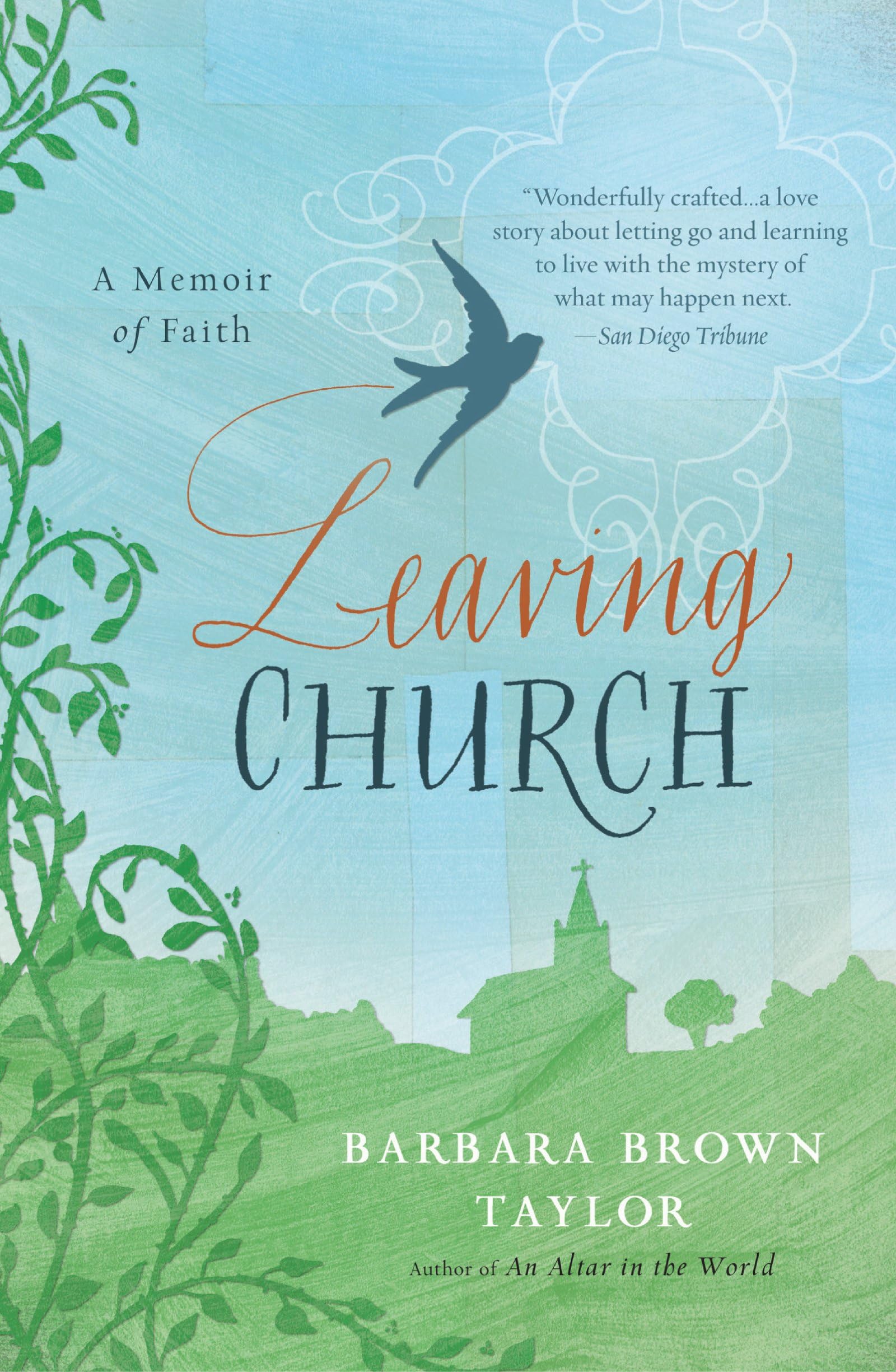
Leaving Church: A Memoir of Faith
Product ID: 8338251
📚Compelling memoir format
⛰️Set in scenic North Georgia mountains
🕊️Spiritual liberation theme
Buy anything from 5,000+ international stores. One checkout price. No surprise fees. Join 2M+ shoppers on Desertcart.
Desertcart purchases this item on your behalf and handles shipping, customs, and support to Colombia.
🕯️ Illuminate your faith journey with a memoir that redefines spiritual leadership.
Leaving Church: A Memoir of Faith by Barbara Brown Taylor is a bestselling, critically acclaimed autobiographical book that chronicles her transition from ordained parish ministry to teaching religion. Set in the picturesque North Georgia mountains, it offers an honest, witty, and deeply human exploration of faith, burnout, and spiritual liberation. With over 1,300 positive reviews and a strong ranking in religious and spiritual growth categories, this memoir resonates with anyone navigating the complexities of leadership and belief.
| Best Sellers Rank | #54,891 in Books ( See Top 100 in Books ) #200 in Religious Leader Biographies #793 in Christian Personal Growth #1,832 in Christian Spiritual Growth (Books) |
| Customer Reviews | 4.6 out of 5 stars 1,340 Reviews |
M**R
Excellent, but much about nature and important areas unexplored
Barbara Taylor is an excellent writer and storyteller, and this autobiographical book is a compelling read. In this book, she writes about her own journey in faith and a life-changing decision: After twenty years of ordained ministry in a church position, Taylor resigned as rector of a relatively small Episcopal church in the North Georgia mountains to accept a position teaching religion at a small college nearby. The title "Leaving Church" is inaccurate, of course, because leaving ordained parish ministry is not the same as leaving church. Taylor is still an Episcopal priest, but even if she had resigned as a priest, she would still not necessarily have left church. The title stems from Taylor's resignation as a church rector, which surprised many people, and some apparently misunderstood her choice as really leaving church and/or losing her faith. In this book, Taylor explains the journey that led to her change in direction, providing an overview of her experience of ordained ministry and her transition out of church employment. Overall, she regards the decision to leave as spiritually liberating. Unfortunately, in my opinion, Taylor says too little about the actual decision to leave, other than emphasizing that she was tired and depressed. Although Taylor emphasized how hard she worked, so much so that it's almost exhausting to read about it, her decision to resign as rector of a church never seems adequately explained. From the viewpoint of many -- particularly those engaged in ordained ministry -- she has lived a charmed and even enviable life. First, after an apparently easy ordination process, she immediately received a position at a large and wealthy multi-staff church in central Atlanta, working with a popular rector. Then she was called as a rector of a charming church in exactly the area she and her husband wanted to live - the kind of location that people retire to because it's so beautiful. Taylor appears to have been financially comfortable throughout her ministry, and the couple were able to build a dream house on 100 beautiful acres in the mountains (with three streams on their property!) In the meantime, she was developing a widespread reputation as an outstanding preacher while authoring a number of popular books. What's not to like about this life? Sounds ideal, right? Apparently the author didn't like it, or at least the part about being rector of a parish, because she resigned. Exhaustion and symptoms of depression appear to have played a major role, as well as conflict in a church split over the issue of homosexuality. However, little time is spent discussing the decision to resign and even less on the reaction of the church members. Some of this may have been unavoidable, because of concerns about confidentiality and washing dirty linen in public. Taylor mentions that she had committed to stay 10 years when she accepted the position and left after 5 1/2, but other than that, says little about breaking that agreement. Additionally, she mentions only in passing that her recently hired assistant had to resign when she did (it's the rule). She hints that some in the church were unhappy with her (perhaps because she was spread too thin?) Certainly, one wonders about the wisdom of her initial commitment: 10 years is a long time to commit to. I wish she had felt free to tell more about that part of her story and spent less time describing finding God in the beauty of nature. I get it. Nature is lovely. The mountains are lovely - it's easier to find God there than in a church hall of angry people. Life in the church can be as messy as any barnyard, and that no doubt contributed to her decision, but she barely mentioned it. It was frustrating when she skipped quickly over her farewell party but spent pages on birds. It seems likely, also, that much of the author's exhaustion came from her own very high standards and successful outside endeavors. Taylor barely mentions her increasingly busy schedule filled with engagements outside her own church, as her reputation as preacher and author grew. She was no doubt traveling frequently while living in a remote area, accessible only by mountain roads. Additionally, Taylor's many publications during this period would by itself be sufficient work for most people! She says virtually nothing about these activities but instead describes the demands of providing pastoral care. It's amazing she managed to do all that she did for as long as she did without completely burning out. This book would be great for use by a book club, particularly those in a church setting, as it raises some provocative questions. I wonder if the author will find that even after "leaving church," she will continue to find herself over-scheduled, with more demands on her than most people could manage. I hope not, because she's definitely gifted as both an author and preacher.
L**D
Lomax R. Bland Review of Leaving Church By Barbara Brown Taylor
Barbara Brown Taylor's Leaving Church: A Memoir of Faith is a heartfelt and honest reflection on the ups and downs of pastoral ministry. As an Episcopal priest, Taylor takes us on her journey—from an eager and passionate minister to someone who becomes weary under the weight of church life and ultimately finds God in unexpected places beyond the institution's walls. Her writing is both uplifting and deeply thoughtful, making this book a powerful read for anyone who has struggled with faith, ministry, or the heavy expectations placed on spiritual leaders. Barbara Brown Taylor's memoir isn't about rejecting the church—it's about rethinking where and how we experience God. For anyone who has served in ministry, especially those who have felt the weight of leadership, her story will feel deeply relatable, like holding up a mirror to their own struggles and questions.
S**E
Burnout
When I saw the author, Barbara Brown Taylor, interviewed on TV, I was so impressed by her clarity, beauty, and honesty, and her essential love of Christ, that I had to buy the book and find out why she left the church. Turns out that she left only a part of the Episcopal Church, in which she had been ordained. After serving as associate pastor in a large Atlanta church, she and her husband decided to leave the city for a small rural church. Here she experienced, and describes with compassion and wit life in a small town and the rewards and tribulations of a small church parish priest. As a former resident for many years of a small town (under 700 population) I can attest that this part rings true. I also now know well two Episcopal parish priests, one in a small church and one in a large one, and they are now going through the same stress and dissention as well as rewards of being a parish priest. As Ms. Taylor says, and as I see in the priests I know, ministering to others bewcomes so all consuming that the priest has no time for him or her self or family. This fiinally led Ms. Taylor to resign as a parish priest, but luckily she was able to continue her service to the Lord as a teacher, as Jesus was. This book is very well worth a read by anyone interested in church or religion.
M**T
More about searching than leaving
"Leaving Church" is somewhat a misleading title in that it could be construed as a guide for leaving church. Granted that is what the author did, but that's certainly not the entire story. In this book Taylor tells the story of her faith journey from a young girl always interested in matters of religion to her ordination as an Episcopal priest and then her decision to leave the clergy and become a teacher. It is a journey for her and the book is personal, but it is so much more than that. "Leaving Church" is a guide for believers of all faiths. The ups and downs, the questions, the challenges, the everyday struggle to put faith in action--all these must be handled not just by clergy, but by all persons of faith. Taylor does not provide answers, but she provides an example for others. Her faith is not one of dogma, but one of trust. This is a book to be read and re-read. Her writing is sincere, but not preachy; thoughtful, but not difficult.
V**N
New To Me Author.
Leaving Church h by Barbara Brown Taylor was different for me. I have never read a book where they wanted something so bad, To be a priest at a time where women were not to be one! She studied, passed whatever boards were required She even got the exact church she wanted (thinking God was pleased with her and worked things out for her). Then to be that church's priest for 5 years she wanted out! She got a call from a college to come teach religion and she saw her way out! She saw a lot of difference between being the one choosing the songs, Scripture and sermon theme even how people treat you in public. She worked hard and always wore the priests clothing. When she went to teach, she didn't wear priestly clothes and the public treated her differently! Interesting read!
T**T
Less about faith than I expected
This is my first book by Ms. Taylor, so I knew very little about her history or her place in the world, although it was clear she didn't really leave "the church" from the dust jacket and a cursory look at reviews. I thought she might cover more about a crisis in faith that she was able to surpass, or how she retained her faith while moving toward less connection to organized religion, which is a common scenario in America. Those two possibilities would probably have resonated more for me personally. In any case, her story was quite interesting and finely crafted. The first section, from her youth down a path that eventually led her to ordination (in another religion, no less) mixed nicely the events, her motivation, and the unexpected turns without feeling too self-conscious "me" autobiography. One can appreciate her yearning for a small, highly personal congregation in a lovely little church. The second part was more about on-the-job training and the inevitable burn-out from trying to do everything for everybody, pushing her own worship and honoring of God to the background. Rather than stepping back and finding a better balance, she chose the path of leaving her position and moving on to another career. Perhaps she could have found the balance needed to survive long-term as a priest. I don't know. From the third section, I suppose it's clear she made the right choice and found a more natural calling for her gifts and personality. One may even conclude her faith found a more complete flowering once out from under the constraints a practicing priest must follow. I had the vague feeling that she was presenting her "outside looking in" story as more difficult than it really was, as the woman I learned about in the first two sections seemed made of what was necessary to find success in her new life without a true crisis. Ms. Taylor was a pleasant diversion from my usual books. I probably won't read another one of hers, however. My own religious attitude may not be the right fit.
H**R
Cathartic, Even for Me
Barbara Brown Taylor never claims that her approach to the ministry was typical, nor does she advocate that other people follow her footsteps in leaving the church (although she does have some interesting suggestions for empowering churchgoers and the faithful in general). Her story of "finding, losing, and keeping," is merely one personal narrative that successfully avoids the pretense that everyone shares the same dramas and should therefore listen to her wisdom. She is not selling anything. Her book is rather an intimate, articulate self-revelation about her path in the world. I am a non-religious person, and I am often wearied, threatened, or offended by religious perspectives and narratives that don't honor the humanity in all of us. Taylor's book did not put me off: I read it voraciously, I frequently found myself crying, and the book left me emotionally drained but satisfied. It was cathartic. I learned a lot about her particular experience as a priest, which satisfied my curiosity, but better yet, I easily followed her into deeply incisive but poetic analyses of her own behavior, reactions, expectations, needs, desires, and hopes. One of the final lessons, that some people thrive "in the wildnerness" and others thrive in the central church, and that all are needed and wanted by God, was a refreshing and reassuring view of faith. I can see why Taylor's desires for solitude and nature, and her fortune in living on a beautiful rural ranch, might not be representative of a good priest. In fact, she herself states that she might have been better qualified as a religious hermit. I won't go away thinking that all priests think as she does; it's clear even from her book that they don't. But I was grateful to Taylor for sharing her vision of faith with me. In a sense, with this book, I think she has again achieved her priestly mission of "finding holiness and holding it up to God."
A**R
Fascinating and honest look at organized religion (without being condescending)
With a title like "Leaving Church", I was not sure what to expect. I greatly enjoyed the writing style and the way the book made me question and think. I couldn't help but to wish I'd been in this woman's congregation when she was leading it. I would have left her Sunday sermons with something to mull over for the entire week. Mostly, I appreciated that while she left the church, this book is not encouraging everyone to do that. It's simply presented as her story, and her experiences.
Trustpilot
3 days ago
5 days ago