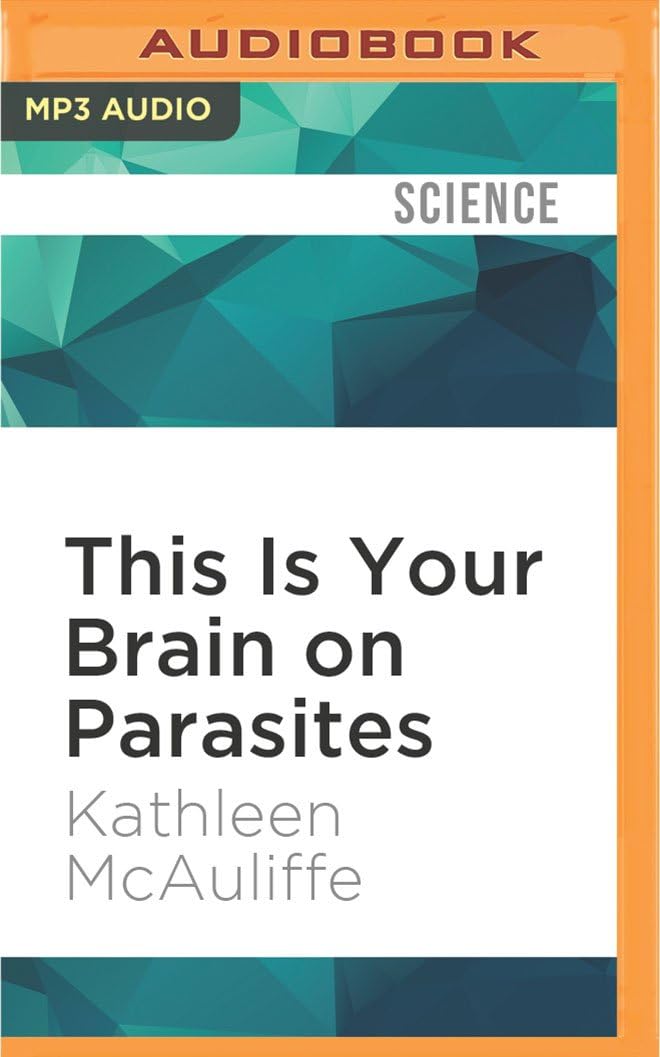
This Is Your Brain on Parasites
Product ID: 76336180
A riveting investigation of the myriad ways that parasites control how other creatures - including humans - think, feel, and act. These tiny organisms can live only inside another animal, and, as McAuliffe reveals, they have many evolutionary motives for manipulating their host's behavior. Far more often than appreciated, these puppeteers orchestrate the interplay between predator and prey. With astonishing precision, parasites can coax rats to approach cats, spiders to transform the patterns of their webs, and fish to draw the attention of birds that then swoop down to feast on them. We humans are hardly immune to the profound influence of parasites. Organisms we pick up from our own pets are strongly suspected of changing our personality traits and contributing to recklessness, impulsivity - even suicide. Microbes in our gut affect our emotions and the very wiring of our brains. Germs that cause colds and flu may alter our behavior even before symptoms become apparent. Parasites influence our species on the cultural level, too. As McAuliffe documents, a subconscious fear of contagion impacts virtually every aspect of our lives, from our sexual attractions and social circles to our morals and political views. Drawing on a huge body of research, she argues that our dread of contamination is an evolved defense against parasites - and a double-edged sword. The horror and revulsion we feel when we come in contact with people who appear diseased or dirty helped pave the way for civilization but may also be the basis for major divisions in societies that persist to this day. In the tradition of Jared Diamond's Guns, Germs, and Steel and Neil Shubin's Your Inner Fish , This Is Your Brain on Parasites is both a journey into cutting-edge science and a revelatory examination of what it means to be human. Review: Thank you, DISGUST!! - This book set me on the path to looking at the world in a different way: an unabashedly parasite-centric way. We are more microbe than humans! Some of our unconscious may be controlled by pathogens! Gut microbiome influences our brains, behaviors, and even personality!! Do you know how? Well... you can read it yourself. Save for anthelmintic, how parasites affect you? Are you happy to have high standards of hygiene? What do you think about the stomach churning emotion, disgust: visceral vs moral disgust? How politicians harness disgust sensitivity? How about Hillary Clinton's extended bathroom break during a Democratic primary debate? Do you wonder about whether you have the larger anterior insula relative to total brain size? Do you want to get the answers? Read it yourself. Remember the following tips: (1) eat vegetables that have been scrubbed throughly; (2) wear gloves while gardening; (3) cook meat well or, if you prefer it rare, freeze it first to kill the microbe's cysts ㅡT.gondii produces thick-walled cysts in the animal's muscle Ectoparasites and microscopic parasites may exist anywhere around you... and jeopardize you, your partner, and your offsprings.... So go get the book and read it yourself! Don't worry. I bet you will totally lose track of the time while reading. You will find yourself indulged in this a wee bit provocative topics. Well-written and very informative. I highly recommend this one to you. Review: The parasites could be controlling you right now. - A very entertaining book that gives you a lot to ponder, but one thing to keep in mind is that the author is a journalist, not a scientist. That's not a negative, the book is well researched and well written but it feels like a number of the examples used are chosen for their entertainment value and their wow factor as opposed to scientific veracity. There are many experiments and theories that are highlighted in the book with caveats like "the results haven't yet been duplicated", or "the sample size was very small" etc. To clarify again, I enjoyed the book, but just keep in mind its a bit more skewed toward entertainment. That of course has the bonus of making it easier to grasp. The book starts out focusing on the animal kingdom and I think its where it really shines. Here you'll be reading about amazing parasites that take control of their hosts and force them to do very detrimental things. Things that will most often cause the host to kill itself, or get itself eaten so the parasite can continue on its life cycle. It's stuff that sounds like science fiction but is happening all around us. Following that, the book focuses more on humans and how parasites can affect us. The first major example is the parasite toxoplasma. Rats affected with toxo lose their fear of cats and become less risk averse, making them more likely to be eaten by a cat, which just so happens where the toxo want to live. The author then gives examples of similar situations in people. People with toxo apparently have a higher incidence of car accidents. Is the infection making them drive more recklessly? Some scientists believe so and their research follows that theory. Following that the book continues exploring the affect of parasites on peoples' personalities. Could parasites affect whether you're shy or outgoing? Liberal or conservative? Whether or not you like spicy food? Do societies that developed in areas where parasites are a concern differ from those that didn't? In what ways? Many people would brush those questions off with a quick no, but the book may make you think a little bit harder about it.
| Best Sellers Rank | #15 in Microbiology (Books) #161 in Popular Psychology Pathologies |
| Customer Reviews | 4.4 out of 5 stars 1,062 Reviews |
S**Y
Thank you, DISGUST!!
This book set me on the path to looking at the world in a different way: an unabashedly parasite-centric way. We are more microbe than humans! Some of our unconscious may be controlled by pathogens! Gut microbiome influences our brains, behaviors, and even personality!! Do you know how? Well... you can read it yourself. Save for anthelmintic, how parasites affect you? Are you happy to have high standards of hygiene? What do you think about the stomach churning emotion, disgust: visceral vs moral disgust? How politicians harness disgust sensitivity? How about Hillary Clinton's extended bathroom break during a Democratic primary debate? Do you wonder about whether you have the larger anterior insula relative to total brain size? Do you want to get the answers? Read it yourself. Remember the following tips: (1) eat vegetables that have been scrubbed throughly; (2) wear gloves while gardening; (3) cook meat well or, if you prefer it rare, freeze it first to kill the microbe's cysts ㅡT.gondii produces thick-walled cysts in the animal's muscle Ectoparasites and microscopic parasites may exist anywhere around you... and jeopardize you, your partner, and your offsprings.... So go get the book and read it yourself! Don't worry. I bet you will totally lose track of the time while reading. You will find yourself indulged in this a wee bit provocative topics. Well-written and very informative. I highly recommend this one to you.
M**1
The parasites could be controlling you right now.
A very entertaining book that gives you a lot to ponder, but one thing to keep in mind is that the author is a journalist, not a scientist. That's not a negative, the book is well researched and well written but it feels like a number of the examples used are chosen for their entertainment value and their wow factor as opposed to scientific veracity. There are many experiments and theories that are highlighted in the book with caveats like "the results haven't yet been duplicated", or "the sample size was very small" etc. To clarify again, I enjoyed the book, but just keep in mind its a bit more skewed toward entertainment. That of course has the bonus of making it easier to grasp. The book starts out focusing on the animal kingdom and I think its where it really shines. Here you'll be reading about amazing parasites that take control of their hosts and force them to do very detrimental things. Things that will most often cause the host to kill itself, or get itself eaten so the parasite can continue on its life cycle. It's stuff that sounds like science fiction but is happening all around us. Following that, the book focuses more on humans and how parasites can affect us. The first major example is the parasite toxoplasma. Rats affected with toxo lose their fear of cats and become less risk averse, making them more likely to be eaten by a cat, which just so happens where the toxo want to live. The author then gives examples of similar situations in people. People with toxo apparently have a higher incidence of car accidents. Is the infection making them drive more recklessly? Some scientists believe so and their research follows that theory. Following that the book continues exploring the affect of parasites on peoples' personalities. Could parasites affect whether you're shy or outgoing? Liberal or conservative? Whether or not you like spicy food? Do societies that developed in areas where parasites are a concern differ from those that didn't? In what ways? Many people would brush those questions off with a quick no, but the book may make you think a little bit harder about it.
A**S
Amazing read
Love this book always gift it
W**E
A highly superior book
I have been reading books on microbes since Life On Man, written several decades ago. This book is better than any I have read - by far. Anyone can present startling and important information, and she does that. But the writing itself, aside from the content, is highly readable and sophisticated, and you can enjoy this book for the writing alone, if you can ignore the amazing things that parasites can do and also the amazing things that people do, often unconsciously, to combat them. As a social psychologist, I have to congratulate her on the way she has incorporated psychological and anthropological principles into this book. It may be a must read for biologists, but also for psychologists, sociologists, anthropologists and just anyone who has been unaware of just how important parasites are and have been since the beginning. I will be highly surprised if this book doesn't win some important awards. I read a lot of nonfiction and this just stands out.
A**R
Well written but not enough data.
McAuliffe clearly is a remarkable writer and researcher. The content of this book, however, is not as impressive as her writing skills. The first chapters were great and provided lots of information to support that parasites manipulate lesser organisms like roaches. The chapters about human/parasites interaction were very speculative. There is a lot of "maybe, might, and may". She cites real scientists and their claims that parasites MAY affect human behavior, but there is not real data to support those statements. In science, you need numbers, large numbers, for a study to have some validity. She didn't provide numbers in most studies, which reduces credibility in the results. Also, the nature of the mentioned studies is unreliable. You can't conclude there is a correlation between parasites infection and the likelihood of a risky behavior, when there are much much more variables to consider. I believe this field of science will be huge, but at the time the amount of data is not enough to make any claim. McAuliffe is a talented writer and I hope I'll see in few years a more reliable book in this subject by her.
R**N
Fun science writing for a wide audience
I am a molecular parasitologist with 10 years research experience in this discipline, and although I like to take a break from my work, sometimes I want to remind myself why I am doing this, because research is often focused on the details and not the big picture. This book is great place to start as a fun introduction to parasitology, or as a refresher highlighting the diverse impact parasites have on Earth and human society. The book covers manipulations of parasites on behavior of various animals including humans, and cites some examples familiar to readers of Richard Dawkins, and other science writers, but really dives deep into the most provocative and controversial aspects of microbiology and parasitology research and sociology. I really enjoyed her writing on toxoplasmosis, rabies, and emotional disgust, and it certainly got me thinking fresh thoughts on my chosen research career, and it's broader relevance outside of academia. Her writing is fast-paced, erudite and balanced, although at times she does get off-topic a little (e.g. Chapter 3 - caffeine in plants; Chapter 6 - commensal bacteria in the gut), nevertheless the unrelated examples are never boring, and do provide additional context. Alas, much to my chagrin, she does not mention the organism I study Trypanosoma brucei, which is infamous for causing African Sleeping Sickness as a result of brain invasion and inflammation, which chemically manipulates the sleep/wake cycle of brain activity in human hosts. For this reason I rate the book 4 stars, as she missed a premier and fascinating example in her showcases of brains on parasites, which killed millions of Africans in the 20th century. However, I will recommend this book to my scientist coworkers and undergraduates I teach and mentor in the future. An additional note - "Parasite Rex" by Carl Zimmer and "New Guinea Tapeworms and Jewish Grandmothers" by Robert Desowitz are two other excellent popular science books on parasites in the last 40 years, I can also recommend reading. This book compliments both, and reading all three will educate and entertain you in different ways.
S**V
Fascinating Read
The author introduces us to this new field of study, with fascinating examples. It is very readable and thought provoking.
L**R
This book explains a lot about the interaction of wee beasties and our brains!
The title was intriguing and I had a long flight across the pond coming up. The reviews seemed good and so I got the audio version to bring along. What a great story and how these "wee beasties" as Anton Van Leeuwenhoek described microbes back in the 17th century relate to human behavior issues today! I won't get into the details, but for some, it may be shocking or gross, but for others, some of this obscure science is very fascinating and enlightening, especially to anyone with microbiological background or anybody curious about the quarks of human behavior. For those who enjoy a mystery and science, this is even better!
林**翰
商品状態素晴らしい
無事に早く届いてきました。 品物の状況も申し分ないです。
A**R
Gripping
A real good book,amazingly interesting.Really gets you thinking
D**0
Flippant
Assez passionnant à lire quand-même.. mais au fur et à mesure de la lecture je me suis un peu lassée et me suis mise à douter de l'intérêt du sujet (à part pour se faire peur). Mais peut-être que je préfère être dans une forme de déni ?
E**I
super
veramente un libro stupendo! me lo sono divorato! una panoramica veramente completa e competente di quello che è un tema molto particolare, talvolta scomodo...ma vero!
M**A
Pontualidade
Chegou como acordado.
Trustpilot
3 weeks ago
1 week ago