Buy anything from 5,000+ international stores. One checkout price. No surprise fees. Join 2M+ shoppers on Desertcart.
Desertcart purchases this item on your behalf and handles shipping, customs, and support to Colombia.
โฐ Own Your Time: Precision Sync Without the Internet FOMO
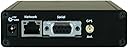
The TimeMachines TM1000A is a GPS-based NTP network time server delivering Stratum 1 accuracy with a built-in high-sensitivity GPS receiver and patch antenna. Designed for professional networks, it provides reliable, internet-independent time synchronization with easy setup, low power consumption, and flexible installation options including rack mounts. Ideal for IT managers seeking precise, uninterrupted timekeeping across all devices.
| ASIN | B002RC3Q4Q |
| Antenna | Satellite |
| AntennaDescription | Satellite |
| Best Sellers Rank | #352 in GPS Antennas |
| Brand | TimeMachines |
| Color | Black |
| Customer Reviews | 4.4 out of 5 stars 48 Reviews |
| Item Weight | 1.6 Pounds |
| Manufacturer | TimeMachines |
| Mfr Part Number | 760-1000-000 |
| Model Number | TM1000A |
| Number of Channels | 1 |
| Number of Items | 1 |
| UPC | 837654709085 |
| Warranty Description | All Time Machine products carry a one year warranty that covers manufacturing defects on the hardware and software. Please see details on our website www.css-timemachines.com. |
B**L
Cost-effective, turn-key time syncing solution!
This thing is exactly what I was looking for in an NTP appliance. Easy setup, great compatibility, incredible accuracy, small footprint, and appliance level of reliability. We attached the magnetic antenna to the metal frame of one of our skylights, so it has a direct line of sight toward the South. So far, we have not had any issues, and W32time, SNTP, and NTP (unicast) clients of all flavors work just fine using standard configurations. I recommend this product to anyone who wants a cost-effective, turn-key time syncing solution!
T**D
Great product!
As another reviewer noted, very easy to use. The folks who designed it thought it through. A decade ago, I managed a few computers for a small non-profit group and had some computer clocks 6-8 hours off. Back then not so easy to fix. Today, with Win XP, Vista or 7, Windows has an Internet Time option. Which is great if you are connected to the Internet when the update is scheduled. If not, no update. The TM1000A performs the same function, on a local basis. No Internet needed. Simple to set up. Place the antenna near a window, and the base unit near your computer. Plug in power. The local network connection can have several forms, depending on your particular configuration. (the manual, download from css-timemachines.com has far more info) The easiest is just a crossover cable (Amazon has several) between the computer and the TM1000A. Point your browser to 192.168.1.15 to connect, make any needed changes and you are ready to go. If your Internet is via USB modem (cable or DSL) you are done. Then, right click on the time in the lower right corner of the diplay, click on "Adjust Date/Time" select the Internet Time tab. In the Server field, enter 192.168.1.15 (if you didn't change it) and Update Now. In a few seconds, you should see a success message. Without any external connection. The unit will not work with Streets and Trips, there are other programs that will display satellite data, and can help with antenna placement. The 1000A can output the GPS 1 pulse per second for calibrating lab equipment. It has a wall power module, uses about 5 watts, so will cost about 10 cents a week to run, depending on your power company. It takes about 2 minutes to get initial "lock" on the satellites.
J**E
I'd always relied on internet NTP as good enough. Until one day we had a big ...
So my home network is... complex. I'd always relied on internet NTP as good enough. Until one day we had a big storm that took down the power. The outage lasted long enough that my UPS's were going to run out of juice, so I started my shutdown procedure. When the power came back on, the cable modem didn't establish block sync. Called my ISP and services were still down due to the storm. I started bringing everything back up, as I have plenty of services on the internal network. Only alot of stuff wasn't working. Come to find out that I had alot of gear that wasn't saving the date/time properly and had reverted to default. Normally this isn't an issue, but with no internet service, many nodes couldn't restore proper time. Everything that required time to be relatively in sync with the Active Directory domain controller was effectively busted, authentication being prime among them. I ended up having to log into every single node with local admin credentials and set the clocks manually. This taught me the folly of relying only on Internet NTP. So I was looking for something that would function as a stratum 1 NTP server for my local network, had no reliance on the Internet, and didn't break the bank. Searches found plenty of used enterprise level NTP servers (forget about new), but they were all very pricey. Then I ran across the CSS Time Machines offerings. They seemed to fit the bill perfectly. While $300 for the TM1000A isn't exactly cheap, for what it does, it's actually very cheap. The install was simple. It's setup in a room where there is a window, but in order to get the device on the network, it had to be placed on the opposite side of the room from the window (because I was not going to leave a network cable running across the room). This was no issue. The antenna's receiver portion is magnetic, it stuck to the top of the rack that I had the unit mounted in, and locked onto it's satellites within 2 minutes of applying power. After reconfiguring the IP address for something appropriate to my network, I began pointing all of my NTP clients to it. They all picked it up and synced to it in under a minute (I do use iburst). So now I have reliable local NTP independent of the internet at a very reasonable cost. I've seen other reviews say that it's not a good idea to point clients at it directly, but let a few servers sync off of it and then have the rest of your network sync off of the other servers. The product manual states very clearly that the unit can service 135ish synchronizations per second. If your number of NTP clients are smaller than this, then there's not going to be an issue. In a Windows domain setting, your domain connected clients are probably going to be syncing against a domain controller anyway, so you only need point the domain controller at the TM1000A. If your environment is at a scale that you require more than 135 syncs per second, you should probably be looking at something like a Symmetricon anyway. As a network engineer by profession, I do have a few nitpicks, which is the reason I didn't give it a 5 star rating. The default IP configuration may not jive with the way your network is setup. By default, the device is configured with the IP of 192.168.1.15 with a subnet mask of 255.255.0.0 and a default gateway of 192.168.0.1. I would much rather it pickup it's initial IP configuration via DHCP and then fall back to the 192.168.1.15 setup as a default if it doesn't get a DHCP lease. It's a minor nitpick, but having to either reconfigure portions of my network to support that IP space, or having to connect a host directly to the unit and reconfigure it's IP is something I didn't like. I understand CSS's reasons for what they did, as NTP servers *should* have static IP's, but I'd rather they default to DHCP in order to make it easier to get to the management page in order to set a static IP, making the entire process alot more plug and play. The other nitpicks are just management issues. Web interface is HTTP only and is only protected by a password. If you're going to use this in a setting with multiple users (ie, small enterprise or business), make sure you do not locate it on a VLAN where users without the proper access are able to sniff it's traffic. While I understand that deploying a full AAA solution would have likely added to the cost of the unit, I would have appreciated at least the ability to define a username and password and the ability to use HTTPS, even if it was just with a self-signed certificate. The lack of device security would make these non-starters to deploy at some of the companies I do business with due to their network security policies. And the final nitpick is no ability to monitor with standard tools. Not even SNMP. If you want to monitor these, you're going to have to do some coding/scripting, or find someone who already has and was nice enough to make them public. For me, this is not such a big deal, as most of the clients have tools that will show you their NTP status and whether they're synced to the unit, but having a lack of visibility due to no support for common network monitoring methods is something I knock every network device for. All in all, this little box is great. It's about as turnkey as you can get for a Strat 1 NTP server for your LAN, and it's about as reasonable a price as you could expect for a turnkey solution. I would not hesitate to recommend these for deployment, assuming network security policy doesn't rule it out, and I will probably pick up another one at some point for my own network because I like redundancy.
S**V
Unreliable and difficult to get a lock a sattelite
We purchased this to provide time synchronization for an air-gaped network and we regret the purchase. Even-tough our office is in located high up a tall building and the GPS antenna was installed directly in very wide and tall windows with direct unobstructed view of the sky, the time module is almost always unable to lock on satellite to provide the current time despite being seemingly able to receive signal from 2 to 4 satellite most of the time. We tried to contact support thinking it was a defect with something, but they were quick to tell us there's nothing they can do and it is working as it should. We unfortunately had to cut our losses and removed it from our network as it was causing more problems than it solved and we reverted to using one of our offline server as our NTP server since giving better result.
L**A
Be aware that this is UTC Time!! It cannot see local time anywhere or any place on this planet... Read the Review
I purchased this as a NTP server for over a dozen windows 10 systems that needed to have the current local time synced between them due to the simple neglect over a long period of time. All of them over the past few years have had multiple makeshift time servers that they pointed to. It ended up being over 30 different machines spread across multiple sites. Some of the systems they pointed to were either not there anymore or they simply had the wrong time primarily due to those systems also having been pointed to another and another and another and so forth. That system is fine when you have a small number of systems with each pushing or pulling off one another to make sure every clock was the same but when you need to make sure every single system is playing in the same field regardless of location you need a more elegant approach. You have 3 choices. Either set aside a machine already in the network and make it your primary NTP server (if you can spare the machine and if its OK to have on 24/7 with no issues. The next choice is to build or purchase a new system and dedicate that as your new NTP server. the last option is going the commercial route with the multiple choices out there today. The catch with all these is that you want to try and get a NTP server that does not rely on internet time, a server that takes up as little space as possible when space is a premium, a server that can stay on 24/7 with little or no supervision and finally a server that can can be modified to fit any network to suit any need. All but one was met by the device I am writing about now. Whats wrong with this product (for me anyways) is that fact anyone who purchases this product MUST be aware that when they speak of GPS time they really mean UTC time. For those not familiar with UT (UT1 or UTC) time I will explain with this brief definition: There are several versions of it, the most common one used is whats known as Coordinated Universal Time (UTC). All versions (UT1) except for UTC, are based on the Earth's rotation relative to distant celestial objects, but with a scaling factor and other adjustments to make them closer to true solar time. UTC (The time used by this product) is based on International Atomic Time, with leap seconds added to keep it within 0.9 second of UT1. The most important part of knowing that this device uses UTC is the fact that IT IS THE ONLY WAY this device can sync time. The problem there is that UTC time is HOURS off of anything we consider as "Local" time. They use UTC because it will be the same across the entire world no matter where you go. UTC time is the same here as it is in lets say China or France or South America. This is helpful when you have servers talking to other servers talking to other servers within there own little bubble. But when you are trying to sync time with simple windows host machines where individuals are using these machines as anything from scheduling, to finance, to call centers or just simple personal documentation creation and storage then you have a problem. Windows can sync time with anything and once pointed at a device that you have told it to get time from it does exactly that. The time it receives is then set as its primary default clock showing on everything and anything with the system showing that time as the current time in every program or application being used. When this happens you either add another clock to view (Windows can show multiple clocks at once as it was meant to show current time in other time zones in case you needed to know the current local time anywhere in the world) and tell the user to disregard everything that tells them the current time and pay attention to the added timezone clock (which is only for reference as windows will always use the NTP server time as its primary time) or We can have it just use internet time or pull from another machine that uses internet time which in the end defeats the entire purpose of using a NTP server that doesn't rely on the internet in the first place. You cannot adjust, change, modify or switch to anything that will give you any version of local time anywhere in the world even though the satellites used have the ability to do so. Even if they did not all this product had to do was give the simple option to "adjust" the UTC time + or - what is needed to get your current local time. I have seen far more expensive NTP servers do the simple math to simply adjust the current output + or - to whatever the user specifies. In fact ANY options to modify or change anything of importance would have been good but they obviously feel that you paying 300 dollars is not enough to have there machine do what basically breaks down to a simple basic math problem to simply add or take away from any time in any timezone in any country on this planet. What is sad is I have a magnetic calculator attached to my fridge that can do what this system cannot and frankly if you pay 300 dollars for something to basically "look at there watch" you better be able to do more than just that.
P**Y
Cost effective SNTP server
The TM1000A is a very cost affective GPS time server. The server was easy to configure and was up and running in minutes. One persons suggested that DHCP should be active at initial start up. That is unnecessary since it should be run with a static adderess assignment. So the first thing to do is hookup a computer not on a network and set the address one will use on the network. Once that is done it can be accessed when needed. In fact that is pretty much all that has to be done. The things I like are a very good GPS receiver, easy setup, and it runs extremely cool. It is also very small.
G**R
There are gotchas, but it works great on my small network.
This machine picks up GPS signals and provides date and time to user devices using NTP (Network Time Protocol). This can thus be used to set the clock in networked devices such as your computer(s). The time provided by any NTP server is UTC, NOT GPS ephemeris time, NOT local civil time. It's up to your device(s) to derive local time if that's what you want. If you are going to use this to drive time displays connected by Ethernet or WiFi, it will be up to your display unit to translate UTC into local time if that's what you want. You might, or might not, need a TM2000 if you plan to use display units that show local time, check with the vendor selling the displays. Setup can be tricky: this server comes with an IP address of 192.168.1.15 and my experience was that I had to connect a router that worked in the 192.168.1.xxx space. After you succeed in connecting via web browser, THEN you can change the IP address, or select DHCP (but I strongly suspect that DHCP is NOT the way to go). Also, I could not get Apple's Safari (browser) to modify the server's configuration page - but Firefox worked OK. Finally, if the power to the time server fails it will take time for the server to get back to normal. This is to be expected. But, some client programs seem to ignore the unit's status code and will set a wildly wrong date and time despite the warning provided by the NTP status code. PLUG THIS INTO A BATTERY BACKUP power supply!!! Not much power is required by this little machine - so go for the UPS system. Hint, if you can see the TM1000A's panel display, and the 1-second light is pulsing (one per second) the machine is serving the correct time, otherwise not so.
M**N
The most cost effective NTP server on the market
This is a second TM100A. We purchased the first unit several years ago and it's been running solidly, but we realized that we need a backup GPS clock in order to achieve NIST compliance on our secure network. The second unit is in another building a few miles away, interconnected by vier. This way if the first unit loses satellites, or power, or whatever, we can fail over to the other Stratum-1 source. This avoids having to depend on Internet time sources at all. The TM1000A is a solid, inexpensive GPS NTP *STRATUM1* time source to keep times in sync with the rest of the world. And thankfully, TimeMachines provides the technical documentation to back up its accuracy claims, which NIST ultimately required in an audit. They link to these papers on their site.
A**R
Five Stars
Easy Setup, reliable and really compatible with SNTP. Work great with Omron PLC
A**R
Five Stars
Excellent product and VERY easy to set up!
Trustpilot
2 months ago
2 days ago