
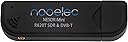

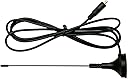

NooElec RTL-SDR、FM + DAB、DVB-T USBスティックセット(RTL2832UおよびR820T)。 SDR#、HDSDR、およびその他の一般的なSDRソフトウェアパッケージに最適なSDR!
Product ID: 737896036
Details
- コネクタタイプMCX
- ブランドNooElec
- 対応デバイスLaptop Desktop
- 接続技術USB
- 色ブラック
Desertcart purchases this item on your behalf and handles shipping, customs, and support to Colombia.
低価格でソフトウェア定義ラジオを学習するのに最適なデバイスです。 アマチュア無線、ADS-B、警察と火災スキャン、トランキング、衛星画像 - 名前を付ければ、この小さな男はおそらくそれを行うことができます。 コストの10倍の多くのデバイスを上回ります。 ラファエル・マイクロ社製のR820TチューナーICをベースにしています。 そのため、周波数能力は約27MHz~1700MHzですが、ユニットごとに多少異なります。 もちろんRTL2832U ICも搭載されており、復調器とUSBインターフェースとして機能します。 アンテナとUSBボードのコネクタータイプはMCX--アンテナのオスMCX、SDRのメスMCXです。 当社は販売されるすべてのバッチに対して広範なQAを実施しています。 当社のすべてのSDRと同様に、新しい投資がスプリアスESDによってすぐに破壊されないように、アンテナ保護が存在することを保証します。 ソフトウェアの詳細 MATLAB、HDSDR、SDR Touch、SDR#、Planeplotterなどの多数のソフトウェアパッケージとの完全な互換性-リストには多すぎます。 MathWorksとNooelecは、SDRレシーバーにMATLABサポートを提供するために調整しています。 RTL-SDR無線サポートパッケージにより、実際の信号を使用してワイヤレス受信機を設計できます。 通信システムツールボックスをRTL-SDR USBラジオと組み合わせて使用すると、MATLABとSimulinkでリアルタイムワイヤレス信号を処理するシステムを設計およびプロトタイプ化できます。 Review: Simply Amazing! - Wow. Just wow. I grew up engrossed in electronics and radio. I grew up with old fashioned radios. The big deal was having memories where we could "scan" multiple frequencies, one at a time, naturally. The holy grail device was a spectrum analyzer, which was hugely expensive. And now we have this SDR age. Wow!! It's almost too much to take in. The revolutionary step of going from monitoring one frequency and mode at a time to what is basically a spectrum analyzer on steroids is incredible. And at this price! I was skeptical due to the price, and the fact that computers generate large amounts of RF noise especially when there is a physical connection. My mind thinks "oh it's so small therefore it won't have much or any filtering hardware", because I'm still getting used to the concept of "oh, well, we'll just do much of what was once done in hardware, in software". I've been pleasantly surprised. How this will all work out for you depends heavily if not entirely on what software you use. The easiest route for me was Kali linux with that software that starts with a Q and is four letters long (why do open source folks use such silly names nobody can remember??). Seeing the spectrum pop up like that was sort of a dream come true, much like the dream of a spectrum analyzer. At first I used the antenna that came with it. I already knew this was very very minimalist, but also very portable. I had many other antennas around, but wanted to see how this one did. For me it was pretty pathetic, but is minimally acceptable for VERY local signals. For instance the police and fire station is about three blocks away and that was still hammering me so hard that I could actually see the 2nd and even 3rd order harmonics on the display. So cool! Then I started using better antennas. First a mobile for 144MHz and 440MHz. Nice upgrade there, especially since I already had it. The best update however was by using a discone antenna from Radio Shack (I really think this is the ONLY thing they make that's good these days). That changed everything. The incredible world that was opened up to me really blew my mind. Overkill really. It even allowed me to do ACARS -- And that's with the antenna indoors. At this price how can you go wrong? Do it! Review: Great way to get into VHF~UHF SDR for a few bucks. - I've got to say I'm really impressed with this NooElec version of the RTL2832U. The type of tuner is a Rafael Micro R820T not the E4000, which of course is wonderful. The Rafel Micro R820T has hotter ears from 200~800 and no gaps like the E4000. It tunes from 24MHz to 1760MHz with no holes or gaps. I've run this stick with SDR-Radio V2, rtl-sdr, SDR-Sharp, and they all worked right out of the box. There is a little bit of fiddling around with the drivers what have you but after a night or two I've got a Rasberry-Pi remote listening SDR station that I'm connecting to with SDR Sharp. It's not the most sensitive or accurate receiver in the world, and there are some problems with image rejection, but HEY, what do you want for 20 bucks. This is the stick you want if you want to jump into the RTL2832U world of VHF~UHF SDR without spending 1000s of dollars on a NetSDR, or QS1R for instance. I've bought 3 of the things, so I'm going to try a trunk tracking setup with Unitracker, the possibilities are exciting to say the least.
| ASIN | B008S7AVTC |
| おすすめ度 | 5つ星のうち4.3 327 レビュー |
| アンテナ | ラジオ |
| アンテナの説明 | ラジオ |
| カラー | ブラック |
| コネクタタイプ | MCX |
| コネクタータイプ | MCX |
| チューナータイプ | DVB-T |
| ブランド | NooElec |
| メーカー名 | NooElec |
| メーカー型番 | 100556-1 |
| リモコン付属 | いいえ |
| 互換デバイス | Laptop, Desktop, Tablet |
| 商品の重量 | 0.02 ポンド |
| 型番 | TV28Tv2 |
| 対応デバイス | Laptop, Desktop, Tablet |
| 接続技術 | USB |
| 色 | ブラック |
| 通信・接続インターフェース | USB |
P**R
Simply Amazing!
Wow. Just wow. I grew up engrossed in electronics and radio. I grew up with old fashioned radios. The big deal was having memories where we could "scan" multiple frequencies, one at a time, naturally. The holy grail device was a spectrum analyzer, which was hugely expensive. And now we have this SDR age. Wow!! It's almost too much to take in. The revolutionary step of going from monitoring one frequency and mode at a time to what is basically a spectrum analyzer on steroids is incredible. And at this price! I was skeptical due to the price, and the fact that computers generate large amounts of RF noise especially when there is a physical connection. My mind thinks "oh it's so small therefore it won't have much or any filtering hardware", because I'm still getting used to the concept of "oh, well, we'll just do much of what was once done in hardware, in software". I've been pleasantly surprised. How this will all work out for you depends heavily if not entirely on what software you use. The easiest route for me was Kali linux with that software that starts with a Q and is four letters long (why do open source folks use such silly names nobody can remember??). Seeing the spectrum pop up like that was sort of a dream come true, much like the dream of a spectrum analyzer. At first I used the antenna that came with it. I already knew this was very very minimalist, but also very portable. I had many other antennas around, but wanted to see how this one did. For me it was pretty pathetic, but is minimally acceptable for VERY local signals. For instance the police and fire station is about three blocks away and that was still hammering me so hard that I could actually see the 2nd and even 3rd order harmonics on the display. So cool! Then I started using better antennas. First a mobile for 144MHz and 440MHz. Nice upgrade there, especially since I already had it. The best update however was by using a discone antenna from Radio Shack (I really think this is the ONLY thing they make that's good these days). That changed everything. The incredible world that was opened up to me really blew my mind. Overkill really. It even allowed me to do ACARS -- And that's with the antenna indoors. At this price how can you go wrong? Do it!
J**3
Great way to get into VHF~UHF SDR for a few bucks.
I've got to say I'm really impressed with this NooElec version of the RTL2832U. The type of tuner is a Rafael Micro R820T not the E4000, which of course is wonderful. The Rafel Micro R820T has hotter ears from 200~800 and no gaps like the E4000. It tunes from 24MHz to 1760MHz with no holes or gaps. I've run this stick with SDR-Radio V2, rtl-sdr, SDR-Sharp, and they all worked right out of the box. There is a little bit of fiddling around with the drivers what have you but after a night or two I've got a Rasberry-Pi remote listening SDR station that I'm connecting to with SDR Sharp. It's not the most sensitive or accurate receiver in the world, and there are some problems with image rejection, but HEY, what do you want for 20 bucks. This is the stick you want if you want to jump into the RTL2832U world of VHF~UHF SDR without spending 1000s of dollars on a NetSDR, or QS1R for instance. I've bought 3 of the things, so I'm going to try a trunk tracking setup with Unitracker, the possibilities are exciting to say the least.
R**B
Works Great as an SDR Receiver!
For a cheap SDR receiver it works great. Just keep in mind that's exactly what is, a cheap receiver. You will not get nor should you expect to get high quality ham radio receive. This unit works well with SDR# on a Windows7 64bit machine, I have had no issues with it at all and for $20 I have well gotten my money's worth. I don't see it mentioned so I will say the antenna is approx 6inches tall from base to tip, and the antenna wire is about 2ft long with an MCX connector. I did open mine and verified it does in fact contain the R820T chip and a protection diode on the input. I have seen receive range from 23.9Mhz to 1900Mhz with no gaps in coverage. Setup is fairly easy and radioreference is a wealth of information to help you out. BTW if you intend to use this with unitrunker to track voice you will need 2 dongles.
J**S
Much better than I expected
I picked this up in addition to an E4000 version. This one is generally better. The bottom end of this is in the 37MHz range. Don't expect to pick up long-wave or AM broadcasts. Picking some lower-end areas will either show up silent, with strange device noises, or maybe fail to open the device with libusb0. I can pick up ADS-B really well with this. Higher elevation and better antenna helps too, but this blows away the E4000 even with a favorable gap. Sensitivity is pretty good with this, and so FFT contrast is good. Also, trying kalibrate, this varies by as much as 22khz from reliable sources. That's mostly thermal issues on the low quality oscillator, however, I found this to be more consistent than the E4000. This was -22kHz, plus or minus 1kHz. That's pretty easy to work with. If it's not just because of where I'm sitting temperature wise, this might even sync with GPS on RTL-GNSS for those more daring, but it won't pick up PCS or higher freqs. This is generally a decent device. Sensitivity is better than decent. This has a very small antenna port, sort of a micro-pal connector. I haven't been able to find adapters to hook up other antennae to it. The alternative is an E4000 device, which I find to have better high-end range, but poorer sensitivity, and worse reception of aviation/radar signals such as ADS-B. I recommend picking up SDRsharp, because it just works. Run the "zadig" tool to associate your RTL device with WinUSB. Start SDRsharp and go into "Configure". Turn off RTL-AGC manually set tuner gain to 36dB. Set to an FM station, and use "WFM". Hit "play" and tinker with things until you're happy. You can find your shift value by setting your step size small, and then hit the center of the channel found, and see how much that differs from the formal channel frequency. I found a shift of 3000 was close for mine, and I did some tweaking of the FFT display to make signals more visible. Click and drag sideways to tune/scroll. Click once to set the center freq within the current display (max about 2.5MHz), or click top/bottom of the numbers in the freq. Alternatively, mouse wheel works great for tuning.
D**S
I recommend this to EVERYONE who wants to learn about SDR ...
This is a software defined radio RECEIVER. I works extremely well once you have the drivers and software properly installed and has features that usually cost much, much more. I a 71, have forgotten more about radio than I ever understood (*) and have learned a bunch from messing around with the NooElec RTL-SDR. I have a MAC and the first thing I did was to install a MacPorts driver and then Cubic SDR software. My "test" band was commercial FM and the dongle performed far beyond expectations...and my abilities..When I comes to Amateur Radio, this is the most cost effective radio equipment I have bought. I recommend this to EVERYONE who wants to learn about SDR and who wants an awesome way to listen to Shortwave, CB, the Amateur Bands, Aircraft and Marine Bands, etc., etc. Code, sideband (U and L,) I/O. and a bunch of other modes. 73, KW4EC
Trustpilot
1 month ago
3 weeks ago