Buy anything from 5,000+ international stores. One checkout price. No surprise fees. Join 2M+ shoppers on Desertcart.
Desertcart purchases this item on your behalf and handles shipping, customs, and support to Colombia.
🚀 Power your network like a pro—EdgeRouter 4 means business, no compromises.
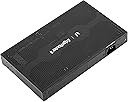
The Ubiquiti EdgeRouter 4 is a high-performance wired router featuring 3 Gigabit Ethernet ports, 1 SFP fiber port, and a powerful 1GHz quad-core CPU with 1GB RAM. Designed for professionals and tech-savvy users, it delivers carrier-class routing at up to 3.4 million packets per second with a 4Gbps line rate. Its fanless, low-power design ensures silent operation, while EdgeOS based on Debian Linux allows extensive customization and automation. Ideal for those who demand stability, flexibility, and enterprise-grade features in a compact, affordable package.


| ASIN | B078PGCGN2 |
| Antenna Location | Home |
| Best Sellers Rank | #13,443 in Computers & Accessories ( See Top 100 in Computers & Accessories ) #470 in Computer Routers |
| Brand | Ubiquiti Networks |
| Built-In Media | Rack Ears, Mounting Hardware |
| Color | black |
| Compatible Devices | Personal Computer |
| Connectivity Protocol | Ethernet |
| Connectivity Technology | Ethernet |
| Control Method | Voice |
| Controller Type | Serial and Ethernet |
| Customer Reviews | 4.6 out of 5 stars 941 Reviews |
| Data Transfer Rate | 4 Gigabits Per Second |
| Frequency Band Class | Single-Band |
| Global Trade Identification Number | 00817882020633 |
| Has Internet Connectivity | Yes |
| Has Security Updates | Yes |
| Is Modem Compatible | No |
| Item Dimensions L x W x H | 9.02"L x 5.37"W x 1.22"H |
| Item Weight | 795 Grams |
| LAN Port Bandwidth | 10/100/1000 megabits per second |
| Manufacturer | Ubiquiti |
| Maximum Upstream Data Transfer Rate | 2000 Megabits Per Second |
| Mfr Part Number | ER-4 |
| Model Name | ER-4 |
| Model Number | ER-4 |
| Number of Ports | 4 |
| Operating System | EdgeOS |
| Other Special Features of the Product | WPS |
| RAM Memory Installed | 1 GB |
| Router Firewall Security Level | Moderate |
| Router Network Type | Wired and Fiber Optic |
| Security Protocol | WPS |
| Smart Home Compatibility | Not Smart Home Compatible |
| Special Feature | WPS |
| UPC | 817882020633 |
| Unit Count | 1.0 Count |
| Voltage | 240 Volts |
| Wireless Communication Standard | IrDA |
| Wireless Compability | IrDA |
M**Z
It is a mini server, not just a router
It is a mini server, not just a router WARNING! This review has been written over several weeks, it will be long and comprehensive as it might be. By no mean, I'm to be called a networking expert, although i know something or two around Linux and software development. My review is based on one year of extensive usage and i have not used all the features available in the router, so your experience might be different. 1- Target audience of this router ____________________________________ Ubiquity may say that this is a professional level routers line, after one year of owning and running this router, I can confirm that this router can be installed and configured by any person who ever dealt with any router before. The user web interface is as simple as it gets, add that to a wizard based configurations, it makes it even easier to fire and forget. 2- Why a wired router and not the all-in-one router? __________________________________________________________ basically, every wireless/all-in-one routers consist of: - router - switch - access point (usually bridged with the switch) and in regard to software, at minimum: - NAT (for routing traffic) - DHCP (for automatically assigning IP addresses to devices) - DNS (for translating domain names into IP addresses) - VLAN (packet tagging) - access point software (to configure your SSID, encryption, passphrase, etc.) Now, we must understand that one device to do all that perfectly is nearly impossible. Not to mention updating hardware is impossible, for example, to support WIFI6. Separating these roles and responsibilities will ensure upgrade-ability and stability exactly like HI-FI equipments, separates is always the best way to go. 3- a brief on my internet connection(s) ________________________________________ I have two internet connection: - VDSL maxing @ 30Mbps up and 5Mbps down - 4G maxing @ 50Mbps up and 20Mbps down my VDSL connection is not stable at all (that is the reason I have a 4G connection). Knowing little about networking, I had an all-on-one router that I would physically go and change its WAN connection to either VDSL or 4G :) that started my search for dual LAN router and thus, I knew about Ubiquity, in particular, the EdgeRouter X. For my situation, the EdgeRouter X was enough for where i wanted to load balance two internet connection, yet, has a decent switching chip that is capable of Gigabit routing when hardware offloading is activated and it runs the same firmware as its big brothers. The only thing EdgeRouter X falls short is hardware capacity it is nearly impossible to run additional programs/software due to this limitation, if all you want is routing, load-balancing, and simple switch, you are good to go with EdgeRouter X. 4- Why the EdgeRouter 4(or 6P): ________________________________ in comparison to ERX, ER4 specifications clearly says that it is not just a router but a full single board computer. With 1 GHz 4 core CPU, 1 Gbyte Ram, and 4Gbyte of storage, the ER4 is able to crunch billions of packets with ease. Unlike ERX, the ER4 (or ER6P) doesn't have a switching chip, although you can still bridge ethernet ports, but it will be done by the CPU not a dedicated chip, so it should be avoided. Worth mentioning that the ER4 has an SFP port as well and doesn't have/provide any Power-Over-Ethernet capabilities. So, the ER4 is a dedicated router only machine that its functionalities can be extended due to very good hardware specifications. Coupled with ES8-150W POE switch, both can give a very robust and pleasant experience. Stability of the hardware and software is phenomenal, i don't remember ever restarting the router, only restarts due to software updates or power outages. 5- Initial setup and software installation ___________________________________________ using the wizards, you should be able to get going, i used load-balancing wizard which was really easy to get the router going and all i can say is WOW! i don't have to physically switch the WAN link. but this is just scratching the surface, the software is good enough for day to day activities, backups, restore, monitor devices usages using DPI (Deep Packet Inspection, which is not and will not be %100 accurate). because the software is based on older version of Debian Linux, the sky is the limit, you can install software from Debian repo, or, like i did, install python pip and then install python packages to fit your need. also, i externalized the DHCP and DNS services off the router to a server running on the LAN to offload the router and let it only focus on the one thing it should be focusing on, routing and load balancing. the grayscale interface reflects the seriousness this line of routers represents, however, it can control 20% of the router configurations, the other 80% can be configured using the command line interface (logging in via SSH or Telnet). 6- Network Automation ______________________ being obsessed with IOT and Automation, i always wanted to control the router remotely, for example, to allow or deny devices using a mobile app. as said in point 5, i installed pip on the router, then installed python flask package which allowed my to create my own python HTTP server to control the router behavior using MQTT and Node-Red. also, i was able to receive mobile notifications once the VDSL or the 4G line goes down or up, also collecting usage statistics to graph it on Grafana. by the end of the day i would know how much internet was consumed (per ISP) and which devices consumed the most. the statistics are stored in a database for later usage. 7- Things that i love ______________________ - excellent hardware specification - reasonably priced - great routing capabilities - advanced load balancing and monitoring options - function extensibility via Debian software repo - robust and stable no matter how many users 8- Things that i would like to be improved ___________________________________________ - Dedicated screen for monitoring the Load balancing feature (for now it can be only tracked via CLI) - although it lacks dedicated switching chip, it would be nice to have port mirroring feature which can ease usage monitoring, currently i have a Netgear 5 port smart switch dedicated only for WAN to LAN port mirroring. - more frequent updates 9- Conclusion ______________ no matter you are experienced network engineer or a (wo)man that just wants things to work, you can't go wrong with ER4. Highly recommended!
T**K
Excellent router for prosumers and professionals alike
The Ubiquiti EdgeRouter4 (ER4) falls somewhere in between a consumer grade SOHO router (NetGear, Linksys, etc.) and enterprise class (Cisco, Juniper). It supplies many of the features of enterprise grade hardware, such as a robust CLI, and is packaged in a durable, fanless metal box that is easily wall mounted. The SFP port is a nice plus when you need it. I purchased this product for two reasons: to better segment my home network and because it can handle Cox Gigablast's 1Gb downstream connectivity. I no longer have the time to build and maintain my own Linux or *BSD based router and this is the next best thing. The TL;DR version of below is: if you need 1 Gb symmetric (TX & RX) performance, the ER4 has you covered. If your upstream connectivity is limited to hundreds of Mb or less, you should consider the Unifi Security Gateway (USG) instead. The pros: great web GUI that doesn't hide technical complexity from the user; it does not force coddle you or obfuscate capability behind a boring interface. While wizards are available to walk you through common setup scenarios, they are optional, and you have the ability to make changes after the fact. Pretty, interactive, and live graphs on the dashboard and DPI for client IPs are nicely, albeit mostly cosmetic, features. Performance is great and you can setup almost everything from VLANs to firewalls to various services (VPN, DHCP) in the GUI. If you are a native Linux user and are already familiar with how most networking concepts (including iptables firewalls) are implemented, you will find setup intuitive and clean. If you are coming from other enterprise grade hardware companies, such as Cisco, you're going to have a slight learning curve while you translate concepts and technology implementations. The device also integrates with Ubiquiti's network management system, UNMS, a godsend if you are trying to manage multiple networks/sites/etc., less useful if you're just a home user. The cons: Apparently, Ubiquiti for some reason maintains two separate management systems, UNMS and Unifi, both with overlapping features, but nearly independent ecosystems. You cannot manage Edge devices in Unifi and vice versa. it escapes me why this makes sense, rather than have a "step up" market strategy where you hook small businesses into your equipment and offer them an upgrade path as they grow. Apparently, the benefit of the Edge series is you don't require it to be centrally managed (UNMS), while the Unifi hardware requires a unifi controller to do so. I can see the value in some situations of stand alone management interfaces, but why the central management system can't manage both types of devices makes no sense to me. So why the ER4? I couldn't find good documentation on performance for the various Edge class (UNMS) and USG (Unifi) hardware, although I heard many reports that the USG could not switch gigabit Ethernet at full duplex (meaning symmetric) on its WAN interface, while the ER4 could. This was a show stopper for me. The ER4 is fully capable of switching 1 Gb of symmetric traffic.
S**H
Fast. Advanced.
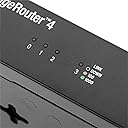
I wanted something more "Enterprise Grade" to replace my Asus AC86U router. (I have been using Asus flagship model routers for many years along with Merlin Firmware) But, Asus seems to have...hickups...with their firmware from time to time with bugs that take a long time to get fixed. I would hope that Ubquiti firmware is far more robust and tested. The EdgeRouter products is certainly for those who know how to setup network from scratch, knows CLI commands and terms and have worked with routers/switches such as Cisco etc. It is NOT a plug and play device. If you want more easy to setup and manage with a good GUI and wizards, go with the UniFi products. ( the upcoming UniFi Dream Machine is an all in one router, switch, AC AP, and controller, certainly will rival and beat out the top end Asus/Netgear etc stuff) Getting this guy all setup, I only need basic things, DHCP with Static Reservations, DDNS, Upnp....I don't need VLAN or VPN,Qos,Smart Ques...or any of the fancy stuff. I went to college for Networking back in 2012, have not done much with that knowledge in some time. It was nice to recall some of those things needed to setup this router. And, have the advanced abilities there in case I ever do wish to mess around with them. The GUI u can use...typical Enterprise...ugly, outdated looking, un-intuitive, and to me, not that logical. I still don't see why, just because its "Enterprise" that they can't make the GUI look nice and sleek and actually be enjoyable to use, like consumer products. Many other such "Enterprise/Corporate/Business" devices are like this, not just Ubquiti. But, really, no one cares cause u basically just do the initial config, then never touch it again.... I actually found that using the CLI for several of the things I needed to do was far easier, faster, and straight forward than digging around in the terrible GUI to find the setting I wanted to set or change. I like how the ER-4 has no direct port LEDs. But has them in the case else where. The Power/Status LED is a bit bright. (My networking equipment is in my bedroom, so LEDs are annoying and get covered in black tape). I have 1Gig Fiber connection. I have Eth0 as WAN. Eth1 is LAN connected to a Asus XG-U2008 unmanaged switch where all the other wired devices are connected to. ( I do not have that many devices, 9 wired, 7 wifi) My Asus RT-AC86U is now just a AC WiFi AP. (running Merlin Firmware) Since moving over to this EdgeRouter as my main router, Internet does feel zippyier, Smoother, more consistent. The ER-4 DPI (Deep Packet Inspection) Traffic Analyzer IS enabled and it is very cool to see all the stats. I do get my FULL 1Gig symmetrical and simultaneous WAN bandwidth with the ER-4, once you enable all the options for Hardware Offload AND do not use QOS or Smart Ques. Overall, it seems to be working well.
S**D
Great router, a step above typical consumer routers
For me, speed is secondary to rock solid reliability, if a router drops connections or has inconsistent reliability that requires reboots, I really don't care how fast it is theoretically. I have typically used Netgear products in the past which meet the previous description, they are theoretically fast, but have horrible reliability over time. So, I did lots of research and it all pointed back to Ubiquiti products and this Edgerouter 4. For me the Edgerouter 4 was the perfect balance of having the horsepower of the more expensive routers in their line, but without the extra jacks that are semi useless in a home environment because most of the routers in this line do not have network switches built in. It is very true that this route has many features intended for a network professions and you can easily get blown away by the number of options. HOWEVER, the router includes a setup wizard that gets you up and running in about 10 minutes with very little effort if you follow the instructions and maybe watch the 10 minute YouTube video that explains what you're doing. For most consumers, that wizard may be all you ever need to do to configure the router. The only other important thing to understand is you need wireless access point(s) for wifi (I used my old routers and set them up as access points) and a network switch. In summary, my network is much faster than its ever been (and the router isn't even breaking a sweat at about 2% cpu utilization), and it is rock solid reliable...it just works, which is perhaps the best complement.
L**T
Compact with fast routing with hardware offloading.
I purchased this unit to replace my ofSense box since my hardware is not going to be supported after v2.5. The unit itself is small and runs fairly cool. Feature wise I have found the unit to be extremely fast with hardware offloading enabled. The web based interface is practical for most home users, but all advanced features must be accessed via CLI which is also accessable via the web based interface of through programs like puTTy. The CLI commands take some getting used to. I have not found EdgeOS' command structure to be as intuitive as pfSense. I have also found that pfSense appears to be considerably more feature rich, but again for most home and small office use the Edgerouter 4 is absolutely phenomenal for the price. Also if you are using any Ubiquiti hardware such as their access points or PoE switches, there is the added bonus of Ubiquiti's UNMS management software that allows ythe management of all of their devices via one centralized interface and management interface which also includes a mobile app. Overall the one thing I am most impressed with is the units overall performance with hardware offloading enabled. My original pfSense box had a dual core 3 GHz processor with 8 GB of RAM, a 256 GB SSD and an Intel 815v quad port NIC and my average ping times were around 20 MS. With the EdgeRouter 4 my ping times have dropped to 9 MS. I have ordered some new hardware in order to do a comparison with pfSense 2.5 down the road, but Ubiquiti has really out together an outstanding product with the EdgeRouter 4. If you are considering the EdgeRouter Lite or X you should skip them and get an EdgeRouter 4 as it offers considerably more power with it's new processor and 1 GB or 2 times the RAM of the Lite and 4 times the RAM of the X series. Also keep in mind that this unit does not have a switch chip and therefore you will need to purchase a separate network switch if you have more than a couple devices and if you are planning on using both bridging and hardware offloading you should look at the Edgerouter 6 or 8 series.
A**T
Better little router for the power user
Best home router for a power user. I was able to set up multiple VLANs to isolate IoT devices, guest network and personal devices from each other with only links in trusted directions (e.g. allow personal devices to control IoT devices, but not allow traffic in the opposite direction). Have also setup the OpenVPN client at the router so that all of my traffic from all devices go through a single VPN tunnel. And then was able to exclude streaming traffic (e.g. Netflix) from going through that VPN as most of them don't work over a VPN. Have also exported out the configuration as a series of CLI commands that can has been backed up and can be selectively (or completely) re-applied at a later time if necessary. Ubiquiti's a great company that makes great devices for power home users, not just small business/small enterprises. I use this router with some of their wifi access points (Unifi NanoHD) and switches (Unifi switch 8-60w). But for routing, I skipped the USG/USG Pro on Unifi line due to those being under-powered. The newer Unifi Dream Machine (and the Unifi Dream Machine Pro that's currently in early-access) don't seem to support most of these advanced features (like SNAT/DNAT or OpenVPN client at the router). While the Unifi line router (both older USGs and the newer Dream Machines) have the fancy UIs with DPI/IPS/IDS, they are less versatile as they cannot be configured via CLI commands in manner that Edgerouter line can be. The Vyatta based Edge line is getting old now and the UI is starting to look a bit dated, but it's still rock solid and feature complete (other than DPI/IPS/IDS).
I**P
Handles 1Gbps internet without breaking a sweat
I upgraded to this from the Edgerouter-3 Lite which I loved, I saw the massively improved specs of this one and wanted to have a backup router in case one died. It has no trouble maxing out my 1Gbps comcast connection. Watching the dashboard I never see the CPU in this thing get above 10% where the old 3 lite would frequently be at 80% if you were pushing it hard, this means lots of room to turn on monitoring features, VPN, routing protocols, etc. I have recommended the edgerouter 3-lite to everyone that gets a 1Gbps internet connection and complains that their "all in one" wireless router only gets them 500Mbps out of it. They have all been incredibly satisfied as have I. The 3 lite is probably good enough for most, but if you really want the best and might be interested in more advanced features the upgrade to the 4 is worth it as the 3 will start to slow down pretty significantly with these features on. Beware that the setup isn't for the average user expecting a wizard with a quick setup guide, but it isn't something you won't be able to watch a few videos and google yourself through. The first line of the setup says "Configure the Ethernet adapter on your host system with a static IP address on the 192.168.1.x/24 subnet." That is really the only tricky part, if that line doesn't scare you the rest will be straightforward. This ships with some dated firmware with a few known issues. Update it right away before running one of the setup wizards to ensure you get the latest wizard that sets everything up optimally.
R**F
Great home or small business router if you don't want built-in wifi
Like many people today, I have a mesh/satellite wifi system that makes the built in wifi on most home gateways a waste. In addition, the routing throughput of most standard wifi gateways is just terrible. In addition, standard wifi gateways don't support multiple subnets or IP addresses. Nor does it support even slightly more complex nat capabilities. This router provides a good balance of features and performance and ease of configuration. It has a CLI which is great for network engineers like me but the web UI is still full featured enough to allow me to configure most of the features I need. I have a 3 bit subnet of public IP addresses and with this router I can now use all 5 available public IPs. I measured the routing performance with 64byte frames and was able to sustain gigabit line rate of 1.488Mpps using the hardware accelerated routing. Most vendors will claim "gigabit routing speeds" if they even get close to reaching 1Gbps at 1518byte frames but that's a useless statistic because routing performance is all about packets per second (pps) because the work of routing is reading and manipulating packet headers so it's the same amount of work for a 64byte packet/frame as for a 1518 byte packet/frame. That means a device that can barely route at line rate with 1518 byte packets will absolutely NOT be able to do full gigabit with smaller packets.
C**.
A router with full control.
tl;dr full control router, no recommended for click-next users (if this is you, go to the UniFi line instead). Great value for a nice almost corporative grade router with enough power to truly handle 1 Gb bandwidth thru WAN-NAT-LAN while providing DHCP and DNS services. The Ubiquiti EdgeOS is based on the outdated Vyatta 6.3 router OS, but Ubiquiti has updated and regularly post security patches. This means this router could be configured and customized by using the unix CLI. Of course it has a web GUI, but the real power is on the CLI. If you feel comfortable on unix, you can even install extra packages and services. Now on COVID time with high VPN requirement demands, I have been able to deploy this router on a medium size business (60+ clients). The build-in VPN server can be authenticate using the intranet Windows Domain Server (Active Directory, NPS (RADIUS) , DNS, Certificate Authority). The workstations use the build-in Windows VPN client. Ubiquiti documentation is lacking on how to use the advance features. These can be better documented on the Vyatta documentation. Also YouTube has plenty amazing tutorial videos for beginners and how to start with the advanced features. Once you learn how to use this router you will be glad that you choose this over the easy click-next, but limited UniFi line.
V**N
Recomendable
Excelente equipo y práctico de configurar
M**M
great newer generation edgerouter
This is a 'newer' generation edgerouter, which better throughput / processing capacity (ie, if you turn on full packet inspection features, you can still get good throughput performance). Overall it has the same excellent build quality of other edgerouter gear. Has of course the same core ER platform / so is familiar if you are used to that. Clearly the ER platform is not a 'novice friendly' setup. But it is simple enough to setup if you just use the 'built in wizard' config tool and actually follow the directions for doing a basic setup. After that it does require some self-education if you want to turn on and configure more features. But to some extent this just comes from - the reality that properly using more advanced features implies you actually know what they are and understand how they work at least a tiny bit, which is - inherently more technical. Anyhow. Edgerouter gear is great, amazing feature set for price point, and this is another fine example of the ER product line. This is a nice step up from ER_X in terms of capacity but a fairly modest price increase, so that is just great IMHO.
M**L
Brand new
I ordered from a third-party due to time and availability constraints. The router is new, unopened and factory-fresh. It performs better than the ERL-3 it was replacing.
A**R
You need to know networking theory and command-line programming
This router is great. Capable. Does the job. However: 1. if you want a basic router for your home, it's easy to set up, and you'll do just fine. 2. anything beyond the most basic set-up, and you're in for a step learning curve: - you need detailed knowledge of medium-to-advanced level networking theory and practical: protocols, both physical and sw layers, etc - you need to be super comfortable with command-line interface, scripting, etc 3. CLI lets you use 100% of the routers advanced capability GUI lets you use maybe 25-30% This router is designed and built by the old-school types that cut their teeth on computing systems back in the 80's and early 90's. Any resemblance of a modern day "intuitive" GUI is not here: basics only... like an afterthought, so you can get up and running with basic functionality in 15minutes... anything beyond that and you are in for days-weeks of learning curve. But after you figure it out, and get used to the CLI, it's OK... not intuitive by any sense, but OK.
Trustpilot
3 weeks ago
2 weeks ago