We remain fully operational. Our teams are working around the clock to ensure your deliveries continue safely.

DOWNLOAD THE APP


Copyright © 2025 Desertcart Holdings Limited
DOWNLOAD THE APP






Buy anything from 5,000+ international stores. One checkout price. No surprise fees. Join 2M+ shoppers on Desertcart.
Desertcart purchases this item on your behalf and handles shipping, customs, and support to Colombia.
🚀 Elevate Your 3D Printing Game with EIBOS!
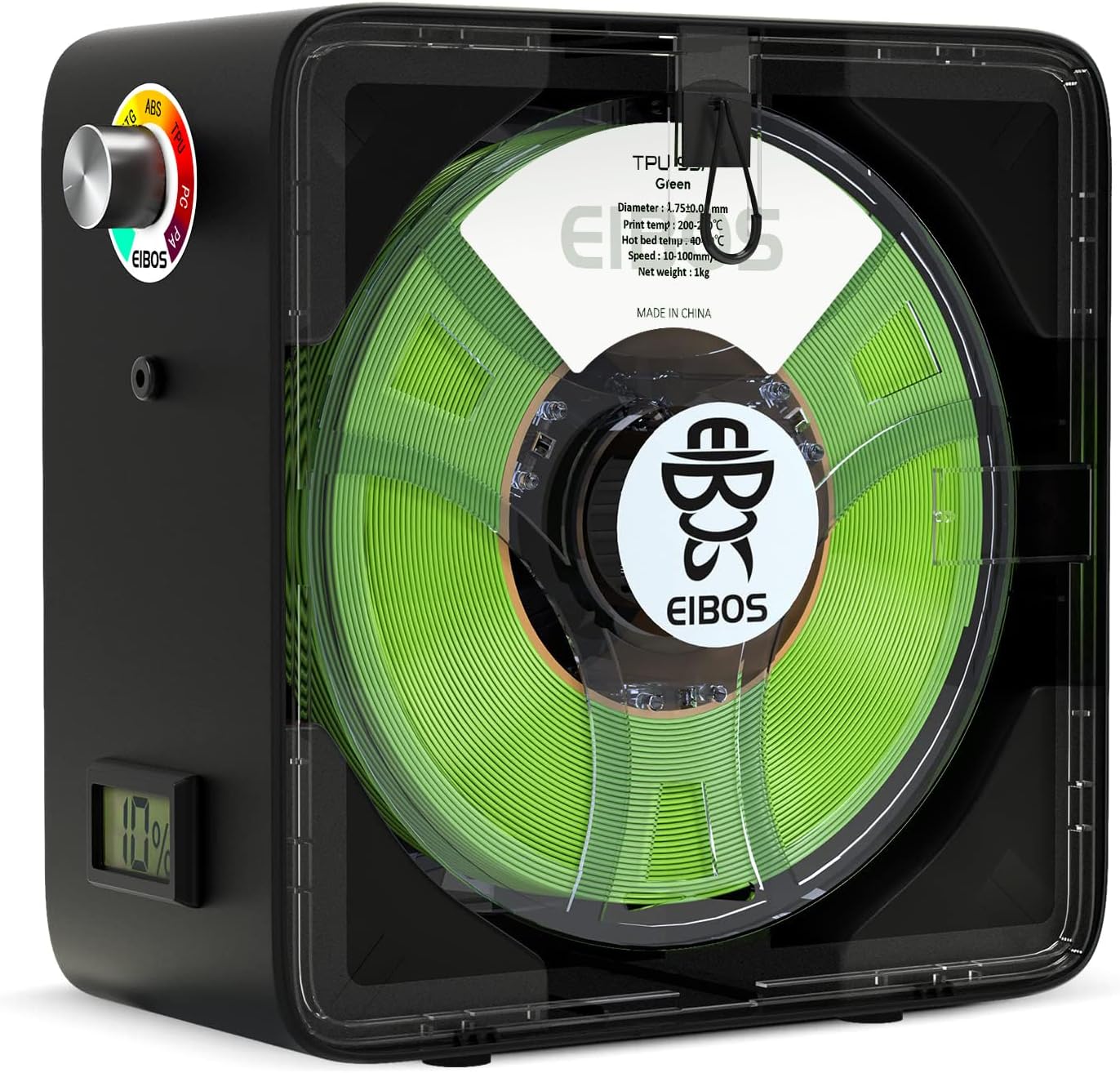
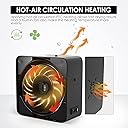
The EIBOS Official 3D Printer Filament Dryer, Easdry, is a versatile solution designed to effectively dry and store various 3D printer filaments. With adjustable temperature settings from 40-65℃ and a built-in humidity monitor, it ensures optimal conditions for filament longevity. Compatible with multiple filament types and sizes, this dryer box features a hot-air circulation system and energy-efficient PTC heater, making it an essential tool for any serious 3D printing enthusiast.





| ASIN | B0BKFMZQHB |
| Best Sellers Rank | 368,354 in Business, Industry & Science ( See Top 100 in Business, Industry & Science ) 10,708 in 3D Printer Accessories |
| Brand Name | EIBOS |
| Colour | Black |
| Customer Reviews | 4.2 4.2 out of 5 stars (450) |
| Item Diameter | 1.75 Millimetres |
| Item Type Name | EIBOS Easdry filament dryer |
| Manufacturer | EIBOS |
| Manufacturer Part Number | Easdry |
| Material Type | Acrylonitrile Butadiene Styrene |
| Model Number | Easdry |
| Number of Items | 1 |
| Special Features | Adjustable Temperature & Humidity Control, Multi-Spool Compatibility, Hot-Air Circulation Heating, Energy-Efficient Heating System |
| Unit Count | 1.0 count |
I**A
Too hot
Pros: - Goes to 10% RH in ~30mins - Adjustable temp knob for different filaments - Compact relative to other dryers - Openings for filament passthrough so can keep dry while printing Cons: - This is the US version being sold on Amazon UK, it came with the US plug - Does not have a built-in temp display, only humidity - Upon adding my own temp display, discovered its minimum temp is 60 degrees Celsius* *This turned out to be because the UK and US versions are designed for the respective grid voltages, using a US version on the UK grid resulted in 230V going into a circuit designed for 120V. Resolved by purchasing a converter for an additional £25. This goes back to the first issues - US version is sold on Amazon UK, this should not be in the first place. In addition, a heater (and this is, at its core, a simple heater) that blindly accepts the power going into it without any restriction while not monitoring temperature is asking for fire. Very poor design.
M**.
Not suitable for the UK! **DO NOT USE**
Ordered on my Amazon.co.uk Prime account from the UK but on opening I find the input voltage of this device is 110V not 230V and, in my opinion, will likely cause a fire as there is no input safety checking to prevent overload of the heater ! Unlike most well designed devices there is no voltage selector included. This explains some of the other reviews I've seen in which it is stated that it can melt the filament. I've now started an Amazon return so have to drive some miles to get rid of this piece of crap via UPS drop-off.
M**W
Do Not Purchase it will destroy your filament
DO NOT BUY, DO NOT BUY. I purchased direct from EIBOS, mine is a UK 230v version. it did fuse the inner core of my PETG-CF filament. you'll not even know it ruined your filament until your over half way through your roll. DO NOT BUY, DO NOT BUY.
O**R
All filament dryers share a few basic things in common - you set the temperature (and optionally the time,) put your filament in start it drying and let it do its thing, dehydrating the moisture out of the filament. Where EIBOS gets it right and many others that will go unnamed don’t is that the Easdry uses outside air, heats it and then provides vents that the newly humidified air (as a result of the drying process) has a way to escape. A simple dial correlated to the filament to be dried is used to set the temperature and away you go. The Easdry dropped the humidity from 40% ambient to 10% within 2 hours. Also, the Easdry doesn’t power off after 6 or 12 hours, but stays on in the event that a print takes longer and doesn’t quit in the middle of it. It’s been going all day feeding filament to my printer as I have made part after part after part (at this point it’s been going for nearly 12 hours and I still have 3 hours left in the day to print) The humidity monitor is accurate and correlates with a precision temperature & humidity sensor that I placed inside and connected to an Arduino. These humidity gauges bottom out in their range at 10% and realistically 10% humidity at filament drying temperatures is quite dry. Temperature regulation around set point is within 1 degree C. After a printing session the Easdry was turned off overnight and the 16% humidity left in the chamber as a result of moisture being liberated out of the filament, was 16-17% the following morning indicating that there is a good seal around the filament entry door. Perhaps the double walled construction at the door and the rear of the unit serve to provide some insulative capability to the unit. There are two places to put desiccant packets in without interfering with the spool or feeding of the filament. This is a plus and probably helps to maintain humidity level on dried filament between powered-up drying/printing cycles. In fact filament feed is made simpler and more reliable using the included PTFE tubing which I have between one of the filament outlets and a “cat-proof” enclosure to keep curious kitties away from the hot bed and hot end. Leaving the PTFE tubing of the enclosure end, the filament feeds directly into my Titan Aero extruder. No feeding issues, jams or other problems that are typically encountered feeding. I was able to rejuvenate and actually use Hatchbox filament opened 4 years ago, that until I had a dryer was questionable as to whether it would still be usable. The prints before and after drying of this filament showed that dehydrating older filament can be restored - not only were the resulting prints usable, they were very clean. My heavily customized RepRap i3 only has a single extruder, so I don’t have a need for another dryer at this point, but when I do it will certainly be an EIBOS Easdry Series X! This dryer rocks. The price can't be beat. Great job EIBOS! As clarification, this item was purchased by me outright for my own use and I don’t receive anything for writing this review other than the peace of mind that I likely have the best dryer on the market. With a turnkey dryer feeding my turnkey 3d printer how can I go wrong?
C**2
After searching for a while to find a good dryer for filament, I decided to get the Eibos. There were a few different reasons I did that: - Simplicity: I don't want a dryer that connects to my smartphone, or even a dryer that has complicated programming. I want a dryer that has an on and off button, preferably with simple, non-electronic controls. - Fan: I wanted a dryer that had a fan to keep the air moving. This one has one. - Air exchange: I really wanted a dryer that pulls in outside air. Other dryers just heat up the filament, pull out the moisture, then the filament sits in its own moist air until it slowly diffuses out, or you open the lid and let it out. This dryer forces air from the outside through the dryer to actually get rid of the moisture. It pulls moisture out of the filament, then gets the moisture out of the box. One of the few that does this. Here are some cons that I thought might be a problem, but actually aren't: - Top temperature is 65C: I print nylon, so I was worried this would be a deal breaker. It's not. Give the dryer enough time on the high setting and nylon dries out with no problem. - Air exchange might let moist air in: this one's true. If you switch off the dryer and leave filament in it, moisture will ever so slowly creep up. Since this unit isn't air-tight so it can expel moist air, moisture will eventually find its way back in. This isn't really a con, it just means you can't use this for drying and super-long term storage. No problem, just put the filament in a bag with desiccant when it's dry. Or, leave it in, let the humidity creep up to 20% or so, and just turn it on again when you start printing. - No timer or touch screen: you don't need a timer. Or a touch screen. Just things to eventually break. Read the reviews of more complicated units, you'll see these things break down over time. An on/off switch is simple, but it'll last. - The sensor doesn't go below 10% RH: so what? If a filament hits 10% and stays there, it's dry. Or at least that was the case for my nylon. If you're printing something more exotic than PA or PC, buy a premium dryer. I would strongly recommend this dryer. It's one of the very few filament dryers that actually works like a dryer: it heats up air, the air pulls moisture out of the filament, then the moist air is expelled from the chamber. My only regret is that I can't afford another one right now.
L**I
After using this filament dryer for about 6 months I will list the flaws I have found. The biggest flaw: !!!!! DO NOT USE WITH CARDBOARD SPOOLS !!!!! I have ruined several rolls of PETG that come on cardboard spools with this dryer. It took me a while to realize why I would get toward the middle of a spool and the filament would be melted to it's self, brittle and break when I was trying to print. The first time I just though it was a bad run of filament shipped to me by the manufacturer. But I noticed I kept having this problem with cardboard spools. Since the heating element is in the center spool "spindle" of this dryer the heat is concentrated there when you're drying. The carboard offers very little heat insulation and it cooks the spool inside out, with the highest heat in the middle of the spool. Even when the dryer is set to PETG it's too hot in the middle of the spool and it melts the inside half of the filament and will no longer release from the spool without breaking. The plastic spools don't seem to have this issue as the center plastic part of the spool insulates the filament enough. Even though it works better with plastic spools, I still don't trust it. I very seldom use it with spools and if I do I turn the heat way down to avoid melting the spools. Instead I mostly use it to dry out my 50g Wise-dry crystal packs. I can fit like 10 of them at a time in the dryer and leave them dry overnight. I use these packs to dry my filament in sealable filament boxes instead. Other flaws: The string to open the door latch ripped off like the second day I had it. I replaced the string with a 30mm M3 screw that happened to fit in the latch hole. Some spools will not spin freely in the dryer, if you want to use the dryer to keep your filament dry while you print with it. If the center hole is too big, the spool with be supported by the outside circumference and will get stuck. There are some printable bearings assemblies out there that use 4 x 608 bearings that can adapt this dryer for those types of spools, but it would be nice if the manufacturer would have included these, if not just throw the parts for it in with the kit to allow the customer to print their own. If you do print your own spool bearing, DO NOT USE PLA! Use PETG or something with a higher melting point. I'm not sure how accurate the hydrometer is. Honestly I would rather they have put in a thermometer/hydrometer combo. I would like to see what the temp was while it was running. TLDR: OK filament dryer if you DON'T PUT CARDBOARD SPOOLS IN IT! *** UPDATE *** I've ruined plastic spools of PETG with this dryer as well. It will cook the inner 1/3 (or so) of filament to a point that the filament will fuse to itself and break when you try to print with it. Even on the lowest heat setting, this happens. I am not the only one with this experience, so I hope some of these other reviewers will update their reviews once they realize they're ruining their filament spools as well.
T**.
Out of the different filament dryers I looked at, this one looked to be the better value based on price and features. Unlike most of the other dryers in this price range, this one pulls in outside (room) air, the air is heated, circulates around inside the chamber, and exits back into room. Full disclosure this is a replacement for the initial one I received a week earlier. The initial one apparently was misconfigured and the temp range was smaller than spec, my attempts at adjusting it were not successful so I requested a replacement. New one was VERY close to spec temp range as tested with a combination grill temp monitor (verified as accurate). This has a built in hydrometer to show chamber humidity (which is nice) but it does not include an internal temp reading. Also the temp adjustment knob does not include any temp markings, just filament type ranges. As a result, I used a good, verified grill temp unit I already have (measures both meat temp and grill air temp) to map out the temp gradient. I started at the lowest setting and waited 20 minutes between readings. Starting at the lowest setting ~7:00 was 45c, 9:00 was 49c, 12:00 was 55c, 3:00 was 65c, and ~5:00 was 69c. I then dialed the temp down back to start and allowed the unit an hour to cool to verify the initial reading. Device has two filament access ports (one back of top and the other top of back) as well as a PTFE tube that allows the filament to feed directly from the dryer to your printer enabling use of the drier while printing. Access to the drying chamber is through a right side panel that is access by pulling down on a cord (to release a spring latch). Fits standard size rolls just fine. Eibos provides STLs (on their web site) that you can download to allow you to print "extenders" for the spool holder and the frame so as to accommodate wider rolls. The only controls on the dryer are an on/off switch in the lower back (near the power connector) and the temp knob. There is no timer/timing for auto shutoff. Since controls are manual, an outlet timer (think Xmax lights) would solve this issue). That might also be a plus though as it allows for "extended" drying times for when you are using it while doing multi-day printing with filaments like Nylon or PC as well as making long drying sessions easier (for example spending 24 hours drying PC). The temp range can be adjusted, Eibos has a video showing how to increase the temp if needed. I contacted support [via email] about my issue with the first unit and support was nice and helpful. It did take about a day between each contact to support and their reply. All in all, I like the unit. It has clean lines, is easy to use, is not too expensive, and has a nice temp range. I could have gotten a unit with a temp gauge built in as well as a timer but it would have been at least twice as expensive for [what I see as] minimal benefit. Pros: - nice, simple design - uses outside air - decent temp range - built in hydrometer - fairly quite fan Cons: - hydrometer only goes down to 10%, no lower - hydrometer does NOT include an internal temp display - no timer/auto-shutoff
C**N
My Experience with the Eibos Filament Dryer I recently had the opportunity to try out the Eibos Filament Dryer, and I must say it has been a game-changer for my 3D printing journey. As an avid maker, I understand the importance of properly dried filament, and this device has exceeded my expectations. Design and Build: The filament dryer boasts a sleek and compact design, making it a great addition to any 3D printing setup. The build quality is top-notch, with a sturdy construction that inspires confidence in its durability. The transparent lid is a nice touch, allowing me to monitor the filament drying process without having to open the unit. Performance: The performance of this filament dryer is truly remarkable. It efficiently removes moisture from the filament, resulting in consistently high-quality prints. I noticed a significant reduction in print defects, such as warping and stringing, after using the dryer. This has saved me both time and material costs, making it an invaluable addition to my creative process. User-Friendliness: Setting up and using the filament dryer was a breeze. The control knob allows for easy adjustments of the drying temperature, catering to various types of filaments. The clear LED display and straightforward instructions ensure a seamless user experience. Capacity: The filament dryer's general capacity enhances my workflow efficiency. Whether I'm working with PLA, ABS, or PETG, the dryer handles each filament type with precision, consistently delivering optimal results. Time and Energy Efficiency: I was pleasantly surprised by the filament dryer's speedy performance. It efficiently dries filaments within a short period, significantly reducing the waiting time between print jobs and also allows you to dry while printing! Additionally, it consumes minimal power during operation, making it eco-friendly and cost-effective in the long run. Noise Level: The filament dryer operates quietly, allowing me to concentrate on other tasks in my workspace without distraction. Its minimal noise output is a big plus, especially during extended printing sessions. Value for Money: Considering the improved print quality, reduced filament waste, and enhanced efficiency, I believe the Eibos dryer offers excellent value for money. The investment is well justified by the long-term benefits it brings to my 3D printing projects. Pros: 1. Excellent build quality and design. 2. Efficient moisture removal for flawless prints. 3. User-friendly controls and setup. 4. Ample capacity. 5. Time and energy-efficient operation. 6. Low noise output during use. Conclusion: In conclusion, the Eibos Dryer has been a game-changer for my 3D printing endeavors. Its impressive performance, user-friendly interface, and overall reliability have significantly improved the quality of my prints. If you are serious about achieving flawless results and optimizing your 3D printing experience, I highly recommend this filament dryer. It's a worthy investment that will undoubtedly elevate your 3D printing projects to new heights !
Trustpilot
1 month ago
1 month ago