We remain fully operational. Our teams are working around the clock to ensure your deliveries continue safely.

DOWNLOAD THE APP


Customer Services
Copyright © 2025 Desertcart Holdings Limited
DOWNLOAD THE APP
Buy anything from 5,000+ international stores. One checkout price. No surprise fees. Join 2M+ shoppers on Desertcart.
Desertcart purchases this item on your behalf and handles shipping, customs, and support to Colombia.
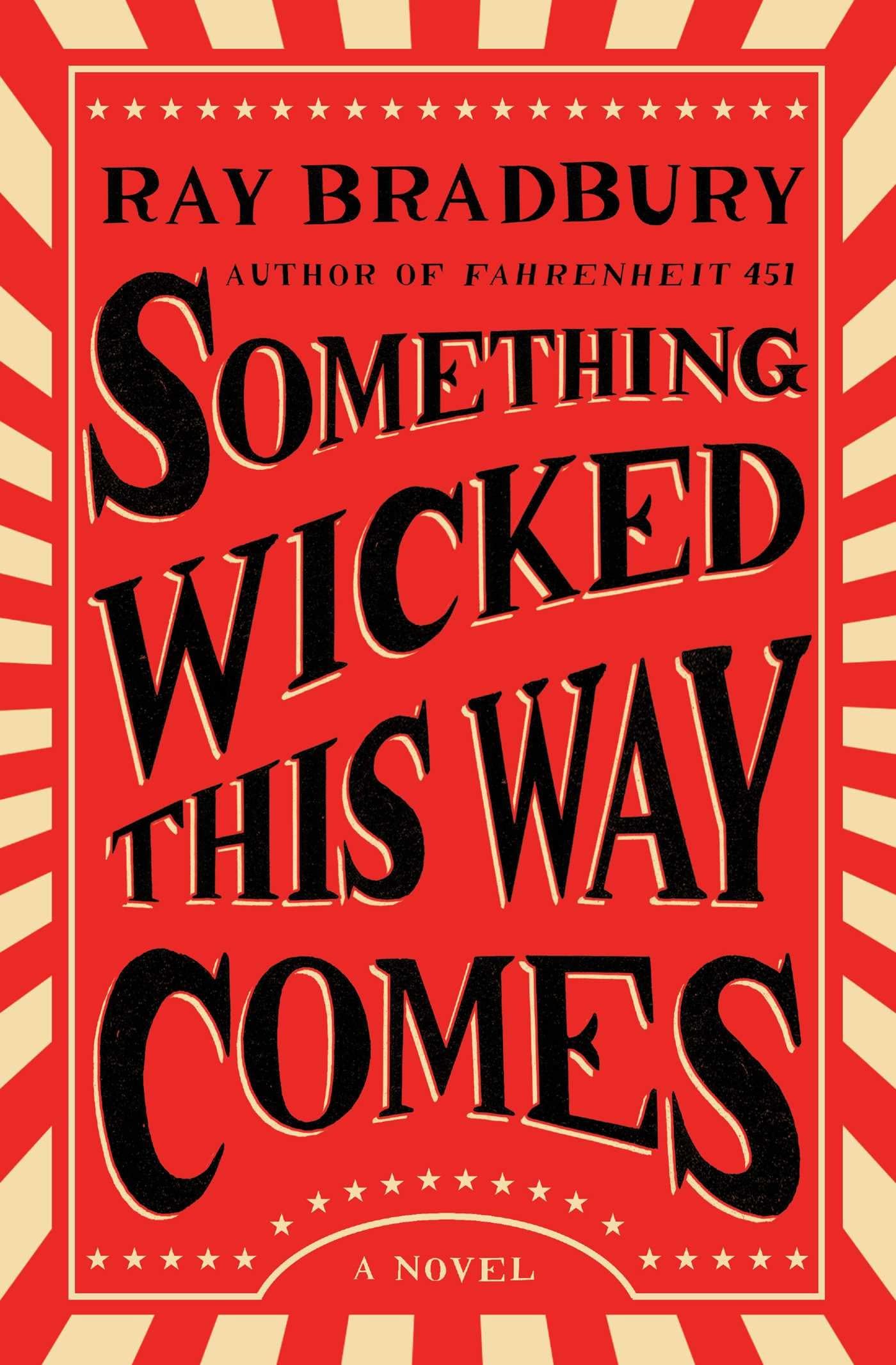
Something Wicked This Way Comes: A Novel [Bradbury, Ray] on desertcart.com. *FREE* shipping on qualifying offers. Something Wicked This Way Comes: A Novel Review: An American Classic - Ray Bradbury, like the picturesque old libraries or city halls found in many a marginalized American small town, was so ubiquitous that I often felt he was taken for granted. He was such a fixture of the literary landscape for so long, lauded as one of our great prose stylists and narrative dreamers so often, that it was easy to forget he was there. Comfy old chair-like ubiquity aside, Mr. Bradbury's work remained moving, vital, and fresh right until the very end. Something Wicked This Way Comes has been a favorite novel of mine since my early twenties, when I finally got around to reading it. On the surface, Bradbury's nostalgiac Middle American nightmare is simply a dark and evocative fable of childhood; a precursor to every evil-threatens-a-small-town novel written by Stephen King or Dean Koontz or anyone who followed in their footsteps. It is the story of two boys--Will Halloway and Jim Nightshade--twelve years old, on the cusp of adulthood, suddenly faced with temptation and damnation when a devilish autumn carnival invades their picturesque little Midwest town. Little by little, Will and Jim discover that the delights promised by the carnival (led by the sinister Mr. Dark, covered in moving tattoos representing the many souls he's dragged to perdition) are thorny roses to say the least, wishes granted with terrible fine print folded into their infernal contracts. In deft, evocative, poetic prose, Bradbury paints a vivid and memorable portrait of a serene if static world invaded by a malign and alien influence, insidious precisely because it uses the all-too-human frailties of the townsfolk against them. Perhaps most impressive is the master's ability to entice the reader with nostalgia, then use those very objects of nostalgia to instill pity and terror equal to any Greek tragedy. For a man renowned for his love of autumn, carnivals, and Halloween with all its funhouse trappings, Bradbury succeeds magnificently in turning the objects of his affection (and ours) into vessels of fear. This is, perhaps, a central aspect of Something Wicked's success: by turning the objects of nostalgia and affection into devil's snares for our fragile, aging souls, Bradbury reminds us that what we love can damn us as well as redeem us. The difference between one and the other often balances on a knife's edge between ecstatic self-destruction and ascetic, self-punishing virtuousness. Folded into Bradbury's meditation on childhood fears and adult regrets, one also finds a simple, elegant consideration of how goodness and happiness rarely walk hand in hand. Telling his father that he considers him a good man, and learning that Charles sees himself that way as well, Will is forced to ask, "Then, Dad, why aren't you happy?" Charles's response: "Since when did you think being good meant being happy?" Seeing that his son doesn't understand, Charles tries to elaborate on just what trying to be good has cost him. "I was so busy wrestling myself two falls out of three," Charles says, "I figured I couldn't marry until I had licked myself good and forever... Too late, I found you can't wait to become perfect, you got to go out and fall down and get up with everybody else... [but] you take a man half-bad and a woman half-bad and put their two good halves together and you got one human all good to share between. That's you, Will..." If anyone's ever written a better paen to marriage and child-rearing, I don't know what it is. Will's conversation with his father, and the revelations both share, strike me as beautiful and true. And that, ladies and gentlemen, is why Ray Bradbury was a national treasure. Although he created a vast and beautiful body of work, in this simple, lovely, spooky little novel, made up of barely 80,000 words, he not only encapsulated the terrible moments that portend adulthood--the realization that grown-ups are fragile and flawed; the reality of one's own, eventual death--but also their obverse: the moment in our adulthood when we finally realize just how far behind us childhood, safety, and dreams without regrets lie. Two boys realize that a world of compromise and moral hazard awaits them, followed by death; an old man realizes that death is nearer than ever before, and that the compromises and moral hazards left in his wake make its approach all the more tragic. And yet, in the midst of all this darkness, hope endures. That it never comes across as a cloying, false, or flashy hope is further evidence of the late master's genius. The silver lining to Bradbury's thunderclouds is simple laughter; a willful outpouring of joy and delight, to light the darkness and defy the doldrums of inexorable time and lurking mortality. "Everything that happens before Death is what counts" Bradbury tells us, and we can only believe him. From the realization that we're all in the same boat--that we all suffer the same doubts, the same regrets, the same self-deceptions--we draw some small measure of strength, and find some small measure of hope, even in the face of oblivion. As the book's Moby Dick-derived epigraph proclaims: "I know not what lies ahead, but whatever it is, I'll go to it laughing." Review: With purple prose Bradbury waxes nostalgic about childhood bogeymen, wonderfully creepy. - This book is part of Bradbury's loosely constructed Green Town trilogy (there's also a collection of related short stories). A sort of classic tale in its telling, the story unfolds as a nostalgic coming of age yarn mixed with horror involving two young boys. The main struggle explored by the author is that of desire and temptation. Chiefly this evolves between the contrasting main characters. The protagonists, Will and Jim, are best friends, with the main difference being that Will is a bit more cautious and Jim is a bit more adventurous with a slightly edgier worldview than his friend. Will's father (another main character), is old--to put it simply. Charles has come into fatherhood later in life and doesn't know how to make amends with that, as the youth of his son seems only to be a constant reminder of how aged he is. This dynamic sets the stage for things to come. Enter the horror. Bradbury's language is flowery, purple-colored prose from an older time. In looking at other reviews, it seems that this style is off-putting to some readers. Bradbury does not take a "window pane" approach to describing things (as author Brandon Sanderson might describe the style). His words fall from the abstract and are more akin to poetry. The author paints the scene with notes and chords and melody. The wording is thick and may take some chewing, depending on your mood or frame of reference. It's is rife with allusion. That's not to say that the story is not there--nor is it boring or stylized. There is real tension and suspense. But, Bradbury coats the story in vivid hues to invoke tone, mood and perhaps the nostalgia he must have been thinking of when he wrote this. Indeed, the story itself is inspired by the author's own real life childhood experience from when a carnival came to his hometown. Still, no matter the author's style, there is a clear framework of a story. At times, it may seem a bit long--but not much. It's easy to see how other authors (like Stephen King for instance) were inspired by someone like Bradbury, when you have scenes involving sewer hideaways and sideshow freaks stalking through town on ill intent missions to find the two pesky young boys. Each time the protagonists escape the clutches of the Carnival, a new struggle ensues with solid reversals of fortune. And there is also the ever-present worry, that nobody will ever believe what is really go on here. Another thing to note of Bradbury's style is his use of the language to construct scenes. His prose may be purpled--but it is not so verbose. He has a wonderful way of describing these evil things lurking about the town as they tangle with the protagonists, and he does this without resorting to overwrought, visceral descriptions of violence. I felt particularly creeped out by the Dust Witch, Mr. Dark and even the eviscerated Mr. Electro who drolled out stoic declarations like a half-dead toad. All the characters of this dark Carnival had a presence, though not described in complete physical detail-I still had a sense of them. I could feel the mood, the fear they put into the protagonists. The story is a tad romanticized, and perhaps the voice of the young boys feels out of age at times. Yet, it pretty much works. All the capers the two get into seem realistic enough and appropriate for their age. The evil of the Carnival provides a stark contrast to the idyllic air around the boys, which keeps the nostalgia from going overboard. Also wonderful is the way that Bradbury creates problems between the boys, who are the best of friends in every sense of the word (at times they seem like they are right out of a 1950's sitcom). However, the absence of Jim's father coupled with his curious and more daring side give him a darker edge and we are genuinely worried about him--just as Will is. This also rings true for Charles (Will's father) who starts off as a nice fellow, but weak. We get to know Charles and understand his feeling of helplessness and struggle through this with him as he must put aside all his neurotic worrying about getting old, embrace life, and understand that his age is what it is (and that it is not even close to as bad as he has convinced himself it is). This story started out as a short story first (check out the slightly darker version called "Black Ferris") and then morphed into a screenplay which Bradbury hoped his friend Gene Kelly would produce. That never happened so Bradbury took the time to turn the treatment into a full novel--which is what we have here. The book is a story of boyish adventure, yet Bradbury's style makes the stakes much grander. The Carnival is not just some group of street criminals meant to rip off the good townspeople. There is something more sinister at work. Jim, Will, Charles and the citizens of Greentown come face to face with the physical manifestations of evil of the world and learn that even their small idyllic town is not safe. The struggle is eternal, for today's struggle will be yesterday's battle. The war lasts a lifetime. Yet, it's not so heavy as all that, when the protagonists learn that they must trust to life's good graces to keep evil at bay. They find the necessary strength within themselves to arm against the evil "Autumn People" of the world. Lastly, the elixir of life plot device, which Bradbury plays with in this story, is also refreshingly simple and yet a wonderfully unique take on this common trope. What dangerous consequences lie behind the glorious promises of a fountain of youth? Read and find out. A heartfelt tale through and through. Podcast: If you enjoy my review (or this topic) this book and the movie based on it were further discussed/debated in a lively discussion on my podcast: "No Deodorant In Outer Space". The podcast is available on iTunes or our website.


| Best Sellers Rank | #9,081 in Books ( See Top 100 in Books ) #40 in Classic American Literature #84 in Contemporary Literature & Fiction #230 in Classic Literature & Fiction |
| Book 2 of 3 | Greentown |
| Customer Reviews | 4.4 4.4 out of 5 stars (7,990) |
| Dimensions | 5.5 x 0.7 x 8.38 inches |
| Edition | Reprint |
| ISBN-10 | 1501167715 |
| ISBN-13 | 978-1501167713 |
| Item Weight | 2.31 pounds |
| Language | English |
| Print length | 352 pages |
| Publication date | October 24, 2017 |
| Publisher | Simon & Schuster |
D**E
An American Classic
Ray Bradbury, like the picturesque old libraries or city halls found in many a marginalized American small town, was so ubiquitous that I often felt he was taken for granted. He was such a fixture of the literary landscape for so long, lauded as one of our great prose stylists and narrative dreamers so often, that it was easy to forget he was there. Comfy old chair-like ubiquity aside, Mr. Bradbury's work remained moving, vital, and fresh right until the very end. Something Wicked This Way Comes has been a favorite novel of mine since my early twenties, when I finally got around to reading it. On the surface, Bradbury's nostalgiac Middle American nightmare is simply a dark and evocative fable of childhood; a precursor to every evil-threatens-a-small-town novel written by Stephen King or Dean Koontz or anyone who followed in their footsteps. It is the story of two boys--Will Halloway and Jim Nightshade--twelve years old, on the cusp of adulthood, suddenly faced with temptation and damnation when a devilish autumn carnival invades their picturesque little Midwest town. Little by little, Will and Jim discover that the delights promised by the carnival (led by the sinister Mr. Dark, covered in moving tattoos representing the many souls he's dragged to perdition) are thorny roses to say the least, wishes granted with terrible fine print folded into their infernal contracts. In deft, evocative, poetic prose, Bradbury paints a vivid and memorable portrait of a serene if static world invaded by a malign and alien influence, insidious precisely because it uses the all-too-human frailties of the townsfolk against them. Perhaps most impressive is the master's ability to entice the reader with nostalgia, then use those very objects of nostalgia to instill pity and terror equal to any Greek tragedy. For a man renowned for his love of autumn, carnivals, and Halloween with all its funhouse trappings, Bradbury succeeds magnificently in turning the objects of his affection (and ours) into vessels of fear. This is, perhaps, a central aspect of Something Wicked's success: by turning the objects of nostalgia and affection into devil's snares for our fragile, aging souls, Bradbury reminds us that what we love can damn us as well as redeem us. The difference between one and the other often balances on a knife's edge between ecstatic self-destruction and ascetic, self-punishing virtuousness. Folded into Bradbury's meditation on childhood fears and adult regrets, one also finds a simple, elegant consideration of how goodness and happiness rarely walk hand in hand. Telling his father that he considers him a good man, and learning that Charles sees himself that way as well, Will is forced to ask, "Then, Dad, why aren't you happy?" Charles's response: "Since when did you think being good meant being happy?" Seeing that his son doesn't understand, Charles tries to elaborate on just what trying to be good has cost him. "I was so busy wrestling myself two falls out of three," Charles says, "I figured I couldn't marry until I had licked myself good and forever... Too late, I found you can't wait to become perfect, you got to go out and fall down and get up with everybody else... [but] you take a man half-bad and a woman half-bad and put their two good halves together and you got one human all good to share between. That's you, Will..." If anyone's ever written a better paen to marriage and child-rearing, I don't know what it is. Will's conversation with his father, and the revelations both share, strike me as beautiful and true. And that, ladies and gentlemen, is why Ray Bradbury was a national treasure. Although he created a vast and beautiful body of work, in this simple, lovely, spooky little novel, made up of barely 80,000 words, he not only encapsulated the terrible moments that portend adulthood--the realization that grown-ups are fragile and flawed; the reality of one's own, eventual death--but also their obverse: the moment in our adulthood when we finally realize just how far behind us childhood, safety, and dreams without regrets lie. Two boys realize that a world of compromise and moral hazard awaits them, followed by death; an old man realizes that death is nearer than ever before, and that the compromises and moral hazards left in his wake make its approach all the more tragic. And yet, in the midst of all this darkness, hope endures. That it never comes across as a cloying, false, or flashy hope is further evidence of the late master's genius. The silver lining to Bradbury's thunderclouds is simple laughter; a willful outpouring of joy and delight, to light the darkness and defy the doldrums of inexorable time and lurking mortality. "Everything that happens before Death is what counts" Bradbury tells us, and we can only believe him. From the realization that we're all in the same boat--that we all suffer the same doubts, the same regrets, the same self-deceptions--we draw some small measure of strength, and find some small measure of hope, even in the face of oblivion. As the book's Moby Dick-derived epigraph proclaims: "I know not what lies ahead, but whatever it is, I'll go to it laughing."
R**Y
With purple prose Bradbury waxes nostalgic about childhood bogeymen, wonderfully creepy.
This book is part of Bradbury's loosely constructed Green Town trilogy (there's also a collection of related short stories). A sort of classic tale in its telling, the story unfolds as a nostalgic coming of age yarn mixed with horror involving two young boys. The main struggle explored by the author is that of desire and temptation. Chiefly this evolves between the contrasting main characters. The protagonists, Will and Jim, are best friends, with the main difference being that Will is a bit more cautious and Jim is a bit more adventurous with a slightly edgier worldview than his friend. Will's father (another main character), is old--to put it simply. Charles has come into fatherhood later in life and doesn't know how to make amends with that, as the youth of his son seems only to be a constant reminder of how aged he is. This dynamic sets the stage for things to come. Enter the horror. Bradbury's language is flowery, purple-colored prose from an older time. In looking at other reviews, it seems that this style is off-putting to some readers. Bradbury does not take a "window pane" approach to describing things (as author Brandon Sanderson might describe the style). His words fall from the abstract and are more akin to poetry. The author paints the scene with notes and chords and melody. The wording is thick and may take some chewing, depending on your mood or frame of reference. It's is rife with allusion. That's not to say that the story is not there--nor is it boring or stylized. There is real tension and suspense. But, Bradbury coats the story in vivid hues to invoke tone, mood and perhaps the nostalgia he must have been thinking of when he wrote this. Indeed, the story itself is inspired by the author's own real life childhood experience from when a carnival came to his hometown. Still, no matter the author's style, there is a clear framework of a story. At times, it may seem a bit long--but not much. It's easy to see how other authors (like Stephen King for instance) were inspired by someone like Bradbury, when you have scenes involving sewer hideaways and sideshow freaks stalking through town on ill intent missions to find the two pesky young boys. Each time the protagonists escape the clutches of the Carnival, a new struggle ensues with solid reversals of fortune. And there is also the ever-present worry, that nobody will ever believe what is really go on here. Another thing to note of Bradbury's style is his use of the language to construct scenes. His prose may be purpled--but it is not so verbose. He has a wonderful way of describing these evil things lurking about the town as they tangle with the protagonists, and he does this without resorting to overwrought, visceral descriptions of violence. I felt particularly creeped out by the Dust Witch, Mr. Dark and even the eviscerated Mr. Electro who drolled out stoic declarations like a half-dead toad. All the characters of this dark Carnival had a presence, though not described in complete physical detail-I still had a sense of them. I could feel the mood, the fear they put into the protagonists. The story is a tad romanticized, and perhaps the voice of the young boys feels out of age at times. Yet, it pretty much works. All the capers the two get into seem realistic enough and appropriate for their age. The evil of the Carnival provides a stark contrast to the idyllic air around the boys, which keeps the nostalgia from going overboard. Also wonderful is the way that Bradbury creates problems between the boys, who are the best of friends in every sense of the word (at times they seem like they are right out of a 1950's sitcom). However, the absence of Jim's father coupled with his curious and more daring side give him a darker edge and we are genuinely worried about him--just as Will is. This also rings true for Charles (Will's father) who starts off as a nice fellow, but weak. We get to know Charles and understand his feeling of helplessness and struggle through this with him as he must put aside all his neurotic worrying about getting old, embrace life, and understand that his age is what it is (and that it is not even close to as bad as he has convinced himself it is). This story started out as a short story first (check out the slightly darker version called "Black Ferris") and then morphed into a screenplay which Bradbury hoped his friend Gene Kelly would produce. That never happened so Bradbury took the time to turn the treatment into a full novel--which is what we have here. The book is a story of boyish adventure, yet Bradbury's style makes the stakes much grander. The Carnival is not just some group of street criminals meant to rip off the good townspeople. There is something more sinister at work. Jim, Will, Charles and the citizens of Greentown come face to face with the physical manifestations of evil of the world and learn that even their small idyllic town is not safe. The struggle is eternal, for today's struggle will be yesterday's battle. The war lasts a lifetime. Yet, it's not so heavy as all that, when the protagonists learn that they must trust to life's good graces to keep evil at bay. They find the necessary strength within themselves to arm against the evil "Autumn People" of the world. Lastly, the elixir of life plot device, which Bradbury plays with in this story, is also refreshingly simple and yet a wonderfully unique take on this common trope. What dangerous consequences lie behind the glorious promises of a fountain of youth? Read and find out. A heartfelt tale through and through. Podcast: If you enjoy my review (or this topic) this book and the movie based on it were further discussed/debated in a lively discussion on my podcast: "No Deodorant In Outer Space". The podcast is available on iTunes or our website.
M**T
Somehow, I've reached my mid-forties without reading this and, as it was around Halloween, I decided to give it a try. And I'm so pleased I did. Deceptively simple, this tells the story of Jim Nightshade and William Halloway, both thirteen and one day apart, who live next door to one another. Jim's Dad is absent, Will's is a janitor at the library - a `much older' man in his early fifties - and they are the best of friends, Jim a bit reckless, Will less so, both of them keen on adventures. They live in Green Town, Illinois and one day see - whilst out after they should be in bed - the carnival - called Cooger & Dark's Pandemonium Shadow Show - arrive. They're thrilled to see it but both notice that it brings changes to the town, especially after what happens to Miss Foley in the Hall Of Mirrors. Then Mr Dark, who runs the carnival, becomes aware of them. This is a fantastic novel, perfectly capturing the joy and darkness of boyhood (and the power of adventures and friendship), painting a wonderful portrait of the father/son bond (the Halloways are fairly distant, Charles thinking he's too old for his son, even though he shares a lot of the same ideas and ideals) and describing late October so well you can almost smell the woodsmoke. It also speaks of a sense of mortality, as Charles thinks of old age slowing him down and separating him from his beloved son (which, as a forty-something reader and father, touched a nerve or two). From the boundless and upbeat energy of the opening, through the thrilling middle towards the climax that is powerful because it's so simple, this is funny and superbly realised, whilst also being shot through with dark threads of melancholy. At one point, Jim says: "Mom?" A long silence. "Can you remember Dad's face? Do I look like him?" "The day you go away is the day he leaves forever." Later, when they see what they see at the carnival (I won't spoil it for you), Bradbury does an excellent job of showing the internal conflict, that the boys know they need to act but that they also need to get away - "Oh, Will, I wish we could go home, I wish we could eat. But it's too late, we saw! We got to see more! Don't we?" The book has some superb set-pieces - Mr Cooger on the carousel, the witch and the balloon, the little girl under the tree (more frightening than you would think), Mr Electro's first appearance, Charles Halloway and Mr Dark talking (amongst many other unmentioned things) at the tobacconists, Charles' "something and nothing" speech, the library confrontation and the hall of mirrors - and it is held together with some of the most beautiful uses of language I think I've ever read, words seeming to tumble into themselves as they paint pictures of dark nights, moonlight and Autumn. The characterisation is very good (though the symbolism with the boys - light and dark - is a little obvious and heavy) and filled with great dialogue (at the carnival, on that first day, Jim says "You wouldn't leave me alone. You're always going to be around, aren't you, Will? To protect me?") and the moment that Will realises his Dad (who he thought was small and old) is tall brought a lump to my throat. Mr Dark is the perfect villain, menacing and seemingly unstoppable, whilst also appearing jolly and well meaning and the assorted freaks of the carnival are a menagerie of ghouls (made worse when you realise who and what they are). Absorbing, funny, horrifying and poignant, this is an essential read for any horror fan and I highly recommend it.
A**G
Una maravillosa historia.
N**A
A friend of mine suggested this book and I was not the least bit disappointed. Bradbury brings us to a small countryside village, that could really be anywhere, and from the very first page you feel like being there. The scary atmosphere of the dark carnival is well rendered, thanks to the choice of the slightly baroque language. The characters are interesting, although maybe I would have liked if he developed some of them a bit more. Overall, a very good book, easy to read (it will suck you in till late at night!) and strongly recommended.
T**N
Super
9**S
A tale of two diametric opposite, yet inseparable teenage boys, complementing in more ways than the two sides of a coin, yet dissimilar in more ways than a mammal and a reptile. This is the story of two friends; one, an almost ideal boy, another, a dark almost sociopath teen. A dark carnival's arrival to town and it's impact on the town people's life. You begin - "First of all, it was October, a rare month for the boys." and you are intoxicated. This is a fantastical adventure that explores the frailties of the human will and nature when confronted by desire and greed. The story dwells upon the trivial human desires and how easy it is to lure someone to do the unthinkable with just a mere promise of their desire's fulfillment. This is the story of a boy whose strange attraction to these dark powers is bringing himself closer to his destruction with every passing page and his friend's determination to not lose him. In this book Bradbury creates an exhilarating atmosphere that leads to a sleepless night and cover to cover reading session. The language is spellbinding too. I suggest this book to readers of all ages, there is enough for everyone here.
Trustpilot
3 days ago
2 months ago