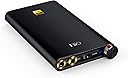
🎶 Elevate your sound game — because your ears deserve the best!
The FiiO Q1 Mark II is a compact, metal-encased DAC and amplifier that supports high-resolution audio formats including 384kHz/32bit PCM and DSD256. With 240mW output power, precision ADC volume control, and customizable gain and bass switches, it delivers transparent, powerful sound for PC and mobile users. Its robust design minimizes interference, making it an essential upgrade for serious listeners seeking portable, high-fidelity audio.


| ASIN | B0757MH46M |
| Best Sellers Rank | #658,867 in Electronics ( See Top 100 in Electronics ) #738 in Headphone Amps |
| Brand Name | FiiO |
| Customer Reviews | 4.3 4.3 out of 5 stars (1,410) |
| Global Trade Identification Number | 06953175750024 |
| Item Dimensions | 3.9 x 0.47 x 2.32 inches |
| Item Weight | 101 Grams |
| Manufacturer | FiiO |
| Material Type | Metal |
| Model | Q1 Mark II |
| Mounting Type | Surface Mount |
| Number of Channels | 2 |
| Output Power | 240 Milliwatts |
| Package Type Name | Box |
| Part Number | FiiO-Q1II |
| Specification Met | Japan Audio Society Hi-res Certification |
| Unit Count | 1 Count |
| Voltage | 5 Volts (DC) |
T**E
Still A Fantastic Portable Solution
This is Ver 2.0 of my Q1 Mark II review. TL;DR - Good portable system for the price. Slightly under-powered for full some full size headphones. Should come with the Fiio CL-06 and ML-06 Cables for Android phones, BUT DOES NOT. Having spent a considerable amount of time with this, utilizing both the balanced and single ended outputs, using a smattering of different headphones, from IEMs to the T50RP and HD 600. It's still a fine option but, being up front, it is NOT the most powerful portable DAC/Amp. While current isn't everything, some headphones really need more power than this can put out. That being said, I've run the HD 58X Jubilee (150 Ohm) both balanced and single ended, and balanced is definitely better for the extra power alone. Same story with the HD 600, though supposedly 300 Ohm is touching the limits of what this is capable of powering, and you're looking at IEMs levels of power there, like 22mW? This little thing puts out less power single ended than the Shanling M0 (80mW into 32 Ohm). That said, the point of a portable is that it'll power most of your headphones loud enough when you're on the go, and this will definitely do that. While T50's might be a bit beyond this little thing in my opinion, the HD 58X paired with this has been a fantastic companion for balanced output, or if you have IEMs with a balanced cable, like I put on the Mee Audio Pinacle PX IEMs, which are reletively inefficient, the 2.5mm balanced drives them great. Single-ended, this will drive almost any low-impedance IEMs to damaging-ly loud levels. Tested with the Sennheiser IE80 and it drove them about as well as I'd ever expect. The DAC is decently clean and sounds good. Only USB inputs, but there's a DAC chip for each channel. Also, it's MFi Certified and comes with a Lightning-MicroUSB Cable. Downsides: Lack of official Android support. This lacks any cables to work with Android phones, and unless the Fiio Branded CL-06 Cable for USB-C, or the ML-06 Cable for MicroUSB, most other USB OTG cables will cause the Q1 to suck your phone's power constantly. I've tested the CL-06 Cable with a Google Pixel (1st Gen) and a Shanling M0, and it works perfectly. No extra battery wear and does audio reproduction via USB with no issues. The Fiio ML-06 and CL-06 really should have been included by default. If your Android phone supports USB Audio Out, you can most likely use one of the above cables with the Q1 Mark II on your Android device. Fiio does say this will support their Android-based DAPs like the new M7 if also using one of the above cables. Some notes: This unit comes with a Micro USB cable for charging which is regular length, a short Lightning-Micro USB cable for Apple products, and short right angled 3.5mm-3.5mm jumper wire, which allows you to use this unit purely as an amplifier. All analog outputs are pre-outs. Yes, even the Line In/Out Combo port next to the volume knob. Functions as Analog out when the DAC is running via USB, and as a Line In when the DAC is NOT getting signal. There is a driver download for Windows as this does offer DSD Support. Windows 10 should allow up to 32-bit support without any drivers though. iOS, Mac, Linux, and Android required no driver support. EDIT (12/6/18): Win10 Creator's Update (Ver. 1703+) supports USB Audio Class 2, up to 32-bit, 384khz. This device supports higher frequencies via the drivers, up to 768khz, I think, as well as DSD up to DSD256. But without drivers it will work at the USB Audio Class 2 spec on Win10 Creator's confirmed on 3 different personal machines. Anything below Win10 will require drivers. As a side note, the 2.5mm jack uses the following Pinout: T = R- R1= R+ R2= L+ S = L- For adapter purposes, they must be wired for Fiio/Astell&Kern 2.5mm Balanced in order to work. The balanced output will NOT work with a single ended cable, even if you get an adapter. Please don't try.
S**G
Absolute pleasure to use. Thanks Fiio!!
Using decent or excellent headphones but using your phone or computer for playback? Stop.. Get this.. and get spotify premium for 320kbps playback. If your headphones are not great, put your money there fist. A dac/amp will get you that extra 20% sound quality and clarity. Im running set of Sennheiser HD650 at home (balanced) low gain and momentum 2 single ended at work. Plenty of juice for the hd650 using the trrs balanced port - not sure about the 3.5 single ended, its rated a little less. Been using it for a few weeks now and I cannot complain. I am pretty astonished actually. Crystal clear - transparent, stellar sound quality, great manufacturing and flexible enough for my needs. The bass boost circuit is well done. Maybe focuses a bit much on upper bass frequencies for my tastes, but well done either way. Situational for sure. It gives a breath of fresh air to AKG K545, but drags the warmer Sony MDR1A down a bit. I use a galaxy s8 or tab s3 at home, windows 7 laptop at work and have had zero connectivity issues. The packed in otg adapter with Samsung s8 models doesn't work. Suggest getting an OTG cable here. ***EDIT*** The small adapter does not work, but the large (type A) adapter included with the S8+ does work. There is a small current draw no matter which adapters I use ~ 6 or 7% consumed per hour at best so far. The type C to micro cables on the other hand, eat through the phone/tablet battery like butter. Not recommended. Hopefully, a future Android OS update or a Fiio app can fix this down the road for us. I stretched a few silicone bands around it to make 'feet' and use it all day at the office. It is a step up from the e10k for sure. Next stop... Fiio Q5 ((droool))
E**.
Nicely Made, Good Price, Underpowered.
I collect headphones and higher-end universal IEMs that I use in a variety of places like work, home, hiking, and commuting. I wanted a way to standardize the sound so that I could get excellent and consistent results no matter where I was or what device was hosting the music. From my phone to my iPad to my laptop to my Mac to my ugly and ancient tower at work, any of those should be able to deliver amazing sound to my headphones. I bought this Fiio Q1 ii with that in mind. My results have been mostly positive so far. I’m largely in agreement with the other positive reviews: the design is solid, the build quality seems excellent. The volume knob feels stiff and smooth, so that there’s not a problem with adjusting the volume accidentally, and the volume control feels very precise. It’s a big improvement over the push-button volume that the iPhone provides, which always delivers something either slightly too loud or slightly too soft. I was surprised to find that the Q1 does improve the sound quality I get compared to plugging IEMs directly into the little Lighting to 3.5mm dongle that comes with the iPhone. Specifically, I feel that the bass is a bit punchier and more detailed, while the rest of the spectrum is not hampered in any way. I have not felt it necessary or desirable to use the bass boost on any IEM I’ve connected. So far, I’ve only used the unit’s 3.5mm unbalanced output. I have some balanced cables on the way, and here’s why: I feel like the amp section of this thing is underpowered. The balanced output has more power, so we’ll see if it helps. But even with my supposedly sensitive IEMs (like the Westone W4r, the Shure SE 315, and the Sennheiser IE 80 and IE 800), at high gain, I’m running the volume at about 75%. That’s not good. I wonder just what the low gain setting is even for. Worse, hooking up my full size Sennheiser HD600s, I have to turn the output to 100% to get near to audiophile listening levels. Once again, buying $50 balanced cables for the HD600s and taking advantage of the balanced output might help… we’ll see. But why is the amp so underpowered that I have to crank it to 3:00 to listen to my balanced armature IEMS? In practice, this isn’t a serious issue for the IEMs. There’s plenty of power to drive them and they sound great. And because they use so much of the volume knob travel distance, there’s a great amount of precision you can get in the volume. But for full sized cans, the unbalanced output is a nonstarter. It’s just too weak. And I just wonder why the decision was made at Fiio to make the amp so mild. Perhaps I’ll edit this when I get the balanced cables. I’m a bit aggrieved that I have to spend another $100 on a couple of cables just to see if it helps. I personally feel balancing headphones is snake oil (makes no difference to the sound either way), and I believe that cables are cables… the stock ones are as good as any other cable. Spending $500 for oxygen free Himalayan copper blessed by virgin muses or whatever is for credulous people who don’t grasp science. At the end of the day, this device is nice. The price is right, the design is good, and it does help out with small headphones and IEMs. Just don’t buy it thinking you’re going to improve your full sized unbalanced headphones.
L**Z
Vorweg mein Setup welches zum Testen verwendet wurde: (man möge mir mangelnde groß-kleinschreibung verzeihen, es sollte dennoch erkannt werden worum es in meinem Text geht) Mein Background: Ausgebildeter Softwareingenieur und Tontechniker Vor dem FiiO Q1 Mark II habe ich den FiiO X3 (erste generation) über mehrere Jahre als Player und DAC verwendet, bis mir auf jenem die Kopfhörerbuchse aus den Lötstellen gebrochen ist. Verwendete Abspielgeräte: Selbstbau Gaming PC HP Elitebook 840 G3 Macbook Pro (von 2011) Samsung Galaxy S7+ Verwendete Kopfhörer: AKG K702 Sennheiser HD25-II Abespielte Medien: Diverse FLAC files in verschiedenen auflösungen bis 96/24 Spoitfy Google Play Music Optik, Haptik und Bedienung: Prinzipiell hat mir gleich mal gefallen dass das Ding kleiner ist als es auf den Bildern zu sein scheint. Gleichzeitig wirkt es ziemlich stabil, ist aber nicht zu schwer. Die Knöpfe wirken in der leichten Versenkung der Vorder und Rückseite geschützt vor eventuellen ein und aufschlägen. Am meisten hat mir schon vorweg der große Lautstärkenpoti sorgen gemacht. Ich war mir einfach nicht sicher ob das Ding 1: die tägliche Marter in meiner Hosentasche überlebt und ob es 2: sich nicht ständig in ebenjener Hosentasche verstellt. Mir wurde aber schon beim ersten Einschalten klar, dass ich mich hier umsonst gesorgt habe. Der Poti wirkt irre Stabil und lässt sich (zumindest jetzt, wo das Gerät noch relativ neu ist) nicht so leicht "aus versehen" verstellen. Die Bedienung ist denkbar einfach. Kabel rein, aufdrehen, eventuell Input Gain und/oder Bassanhebung einschalten (je nach Gusto) und es kann losgehen. Ausstattung und Technik: Die mitgelieferten Kabel machen mich nicht zu 100% glücklich. Ein Micro USB zu Micro USB OTG kabel mit dem man den FiiO an ein Android Gerät stecken könnte wäre nett gewesen, aber gut, sowas kriegt man zum glück so auch relativ schnell wo her. Technisch betrachtet vermisse ich die Möglichkeit direkt am Gerät (so wie beim X3) einen Equalizer zu haben. Keine 2 Kopfhörer sind identisch, die wenigsten >wirklich< neutral. Für so etwas sind Equalizer gut. Andererseits bei dem Preis ist die Ausstattung und Technik echt schwer in ordnung, zumal man zumindest auf Computern und in Poweramp am Android einen Software-equalizer zwischenschalten kann. Der Klang: Für den Preis wirklich sehr gut. Die einzigen dinger die mir zur "Perfektion" fehlen sind mehr Leistungsreserven in höheren Lautstärkepegeln sowie, gerade mit den Sennheiser HD25-II etwas mehr Leistung im unteren Frequenzspektrum. Ansonsten ist der Klang insgesamt bei dem Preis einfach als "Sehr Gut" zu beurteilen. In Kombination mit den AKG K702 hört man erstaunlich viele Details und bemerkt so manchen Schnittfehler in einigen Musikproduktionen. Bezüglich dem Mobilen Musikhören: Ich hab schon einigemale gelesen, dass die Gummibänder mit Smartpones keine gute Lösung sind (Touchscreen). Da ich für mein Handy, um es mit dem Motorrad als Navi zu verwenden, die QuadLock Hülle gekauft habe (samt Motorradhalterung), hatte ich die Idee, eine QuadLock halteplatte an den FiiO zu kleben, damit ich Handy und FiiO zusammenclippen kann. Dafür gibts schon fixfertig die sogenannte "Wallmount" von QuadLock. Wirklich Happy bin ich damit aber auch ned. Der Abstand zwischen FiiO und Handy ist damit so groß wie der FiiO selbst. Aber dafür haltet es sehr gut und Fest und dass ohne Gummibänder. Ich werd mal den Abstand mittels Sägen und Kleben verkürzen, vielleicht hilft das. Insgesamt ist mir diese Lösung aber viel lieber als die Gummibänder, denn es geht sehr schnell, haltet sehr gut und es ist nichts im Weg beim Tippen. Wenn ich den FiiO länger habe oder weitere Erfahrungen gesammelt habe, werd ich gerne Updaten. Bis dahin aber, 5/5 Sterne, da es für den Preis absolut hält was es Verspricht und es zu dem Preis noch keine Konkurrenz gibt! Bilder kommen auch noch, wenn ich welche gemacht habe.
H**S
positif : étant mon premier DAC je ne savais pas à quoi m'attendre mais à la première écoute j'ai été bluffé, un rendu son incroyable ! (j'utilise un Sennheiser 660 S et spotify premium sur un Galaxy S5 neo) bon packaging, respire la qualité. Le produit en lui meme à l'air résistant, rien à redire la dessus très bonne autonomie fournis une bonne puissance de sortie je fais fonctionner mon casque à 150 Ohm et sensibilité de 103 dB sans problème Fonctionne immédiatement sur mon PC sous windows 10, pas de téléchargement ou de paramétrage nécessaire, de même sur mon téléphone Une house de protection est fournis pour transporter le DAC, pas une super protection mais sympathique tout de même négatif : Ne possède pas de cable micro USB vers USB C (après quelques recherche, la marque à retirer ce cable et écrit que son produit n'est compatible uniquement avec des produits apple du à des problèmes avec certaines version d'android mais il est bien compatible avec la majorité des portables sous android) il faut un microscope pour lire les inscriptions à coter des boutons (en soit il y a 3 boutons donc on retiens rapidement lequel sert à quoi mais je fignole un peu) Il est fournis dans la boite des élastiques avec une plaque de caoutchouc pour attacher son téléphone avec le DAC c'est sympa, une petite touche en plus mais ils ont oublier un subtile détail, les élastiques recouvre l'écran empêchant d'utilise son téléphone ou même de changer de musique .... je ne vois pas qui les utilises Petit bémol après 6 mois d'utilisation : - je reviens sur le fait qu'il fournis assez de puissance pour mon casque, en effet ce DAC peut le faire fonctionner mais il y a un manque de profondeur, après avoir utiliser un DAC plus haut de gamme et fixe, je me rend compte que le Fiio Q1 M2 manque un peu de puissance, les basses sont un peu assourdis avec des aigues un peu floue. - Le rendu de la scène sonore est pas terrible, le son est plutôt bon mais la spatialisation est pas au rendez vous (même avec un bon fichier FLAC ou Hi res sur QOBUZ). - après avoir pris un nouveau téléphone (samsung galaxy s8+) je me rend compte que ce dac n'apporte rien de plus, ou pas grand chose quand on a un téléphone haut de gamme. - connecter par mini USB le son est légèrement mieux mais reste parfois un peu approximatif lorsque beaucoup d'instruments se superpose et manque de profondeur dans les basses et extrême aiguë par contre les médiums sont très bon. - le bouton pour augmenter les basses est un peu bourrin, ca donne plus l'impression d'être à l'extérieur d'une boite de nuit avec un son grave imposant mais étouffé. - La batterie tiens super bien et est de bonne qualité ! En conclusion : si vous voulez un son Hifi portatif sans vous ruinez, je ne vois pas de meilleurs produit mais faites attention à l'utilisation que vous voulez en faire (il est fait pour être nomade connecté sur un baladeur en mousse ou sur un portable avec un son pas terrible) et attention si votre casque est très gourmand en énergie, ce DAC n'est pas fait pour çà !
R**J
FiiO Q1 Mark II Native DSD DAC & AMP for iPhone/iPod/iPad (Q1II/Q1MK2/Q1MKII) So...I've bought it. I'm using it with the Balanced output and the FiiO FH1 Dual Drivers. This has to be the cheapest combo with the best sound that I've ever own. I also have the K18 Kunlun which is quite good, anyway, this little dac amp, on the balanced output is powerful enough to drive some demanding headphone ( only with the balanced output which activate the other half of the dual amp and make it much more powerful) . I'm using it right now with some Audio-Technica ATH-MSR7GM on the NON balanced...normal output. The volume is at 2/3 , if i use the gain button at the back the volume is half way. The sound is still very decent but not as crisp and lively as the balanced output. It's still much better than a recent motherboard but not super great if you don't use the balanced output. It work on android with a normal cable..there are some cables now with usb c and mini usb. DSD play well on the computer with DSD Asio drivers... VERY GOOD. ( with the balanced output.) I've bought 2 normal cables and they both work. Both are using the power from the phone ... The difference between a phone usb ,a tablet usb and a computer 3.1 usb is phenomenal. Using this small DAC with a PC would be a great idea.They have an ASIO driver for windows. The Fiio Q1 is Small like a playcard , light and classy.
G**A
La mia recensione ad orecchio: Uso questo magico aggeggetto normalmente come DAC usb collegato al PC, con Foobar 2000 e musica per lo più ad alta risoluzione in formato FLAC. Ho provato anche files DSD 64/128/256, giusto per curiosità. Inoltre l'ho collegato qualche volta al mio smartphone Meizu M5S (Android 6) che l'ha riconosciuto al volo. Idem con un tablet android: funziona al volo senza impostare nulla. Lo uso la maggior parte del tempo a lavoro, abbinato a delle cuffiette in-ear considerate entry level, le XIAOMI Hybryd PRO HD. Credo che l'accoppiata sia perfetta: le PRO HD con il Q1 sulle alte e medie frequenze sono nitide e precise come una lama, ma per nulla fredde. Allo stesso modo i bassi sono presenti puliti e goduriosi. Probabilmente il DAC, un AK4452, come gli altri AKM noto per le sue doti di musicalità (AKM lo definisce VELVET Sound), si accorda bene alla caretteristica enfasi sulle alte frequenze delle XIAOMI. Comunque i due insieme sono adorabili. Provatele con la classica, magari la ricomposizione de Le Quattro Stagioni di Max Richter, in silenzio ed al buio -> una goduria pura. A casa, uso il Q1 come dac esterno al notebook, collegato ad un amplificatore Indiana Line Puro 500 e delle casse Tesi 260. Il suono è precisamente quello che volevo: piatti e cimbali, in particolare, sembra vederli suonare davanti agli occhi. Per gli interessati, l'ho testato anche come scheda esterna per un Raspberry PI B+ + Volumio = riconosciuto al volo e ben suonante. E' uno dei migliori regali che mi sono fatto ultimamente.
A**O
Me encontre esta descripcion del producto... FiiO Q1 II, máxima calidad de sonido en formato portátil Con el nuevo FiiO Q1 II, podremos obtener la máxima definición sonora pudiendo llevarlo a cualquier parte en nuestro bolsillo. Esta nueva unidad cuenta con características nuevas como la certificación Hi-Res además de compatibilidad con dispositivos Apple gracias al certificado MFI. Por si esto fuera poco, también contaremos con salida balanceada para poder disfrutar de nuestros auriculares sacándoles todo el jugo. Decodificación DSD nativa El FiiO Q1 II al venir equipado con la plataforma XMOS, es capaz de decodificar más formatos con una calidad sonora espectacular. Es capaz de decodificar hasta hasta 384 kHz/ 32bit en formato PCM así como hasta DSD256 de forma totalmente nativa. Todo esto combinado con dos osciladores de cristal independientes, cada uno destinado para ocuparse de las diferentes frecuencias, podemos obtener la conversión digital a analógica más precisa. De esta forma el Q1 II se convierte en un producto que combina un precio económico con el mejor rendimiento y versatilidad. Un inteligente diseño de DAC y amplificador En el caso del FiiO Q1 II se han utilizado los mejores componentes y se han conjuntado siguiendo un diseño bien planificado. El chip DAC empleado en esta ocasión es el AKM AK4452, el cual decodifica frecuencias de muestreo manteniendo un ruido bajísimo y una distorsión casi inexistente. Los chips utilizados para la sección de amplificación son los mismos que se han utilizado en el diseño del módulo AM3A para el FiiO X7 II. En concreto se trata del OPA926 el cual cuenta con un desempeño excepcional, manteniendo un ruido de fondo ultra bajo. Finalmente, las operaciones de filtro de paso bajo para la salida de linea son desempeñadas por el OPA1662 de Texas Instruments. Certificación Hi-Res El FiiO Q1 II ha sido certificado por la Japan Audio Society. Con esto puedes estar seguro de que te va a proporcionar una experiencia en escucha de audio fidedigna a todos los niveles. Compatible con iOS Con la nueva certificación MFI de Apple, el FiiO Q1 II es compatible con todos los dispositivos de la marca americana. Actualmente solo el 2% de productos pasan los test para obtener esta certificación. Gracias a esto, el Q1 II no solo es compatible con los dispositivos de Apple sino que también nos asegura que su estándar de calidad es excepcionalmente elevado. Especialmente diseñado para iPhone Conectando el cable Lightning a micro USB desde tu iPhone al FiiO Q1 II puedes continuar usando tus auriculares de jack 3.5mm para obtener la mejor calidad en audio posible. Con el nuevo Q1 II alcanzarás un nivel de escucha desconocido para ti hasta el momento. Conexión con Sony Walkman soportada Usando un cable diseñado especialmente para este propósito podrás conectar el FiiO Q1 II a tu Sony Walkman a través del puerto WM (si está disponible en tu modelo). De esta forma todo tu audio será decodificado por el Q1 II obteniendo una mejora sustancial en la calidad de la reproducción musical. Este adaptador será comercializado por FiiO en un futuro próximo. El mejor compañero de tu ordenador El FiiO Q1 II puede ser usado como DAC USB y emparejado a un PC o MAC, para decodificar formatos de audio de hasta 384 kHz/ 32bit. Con MAC el Q1 II es automáticamente reconocido cuando se conecta y no hace falta instalar un driver por separado. En Windows se deberá usar el driver proporcionado por FiiO en su página web que habilita al Q1 para dar salida ASIO. Un gran combo para reproductores y amplificadores La salida de 3.5mm presente en el FiiO Q1 II es multifunción, por lo que puede ser usada como entrada o salida de línea. Cuando es usada como entrada de línea el Q1 II actúa como amplificador puro para ser usado con otro DAC o reproductor. Cuando este conector multifunción se usa como salida de línea el Q1 II puede ser emparejado con un amplificador externo y actuará como DAC puro. Tecnología ADC de ajuste de volumen Para el control de volumen en el FiiO Q1 II se ha optado por un mecanismo ADC que reconstruye de forma precisa la curva ADC y resuelve problemas como el desbalanceo ente canales izquierdo y derecho. También se evita el ruido de fondo a la hora de operar la rueda de volumen así como se incrementa la precisión en los pasos de volumen. Rueda de volumen rediseñada La rueda de ajuste de volumen presente en el FiiO Q1II se ha diseñado en una forma redondeada que maximiza su diámetro para que sea más fácil de rotar a la vez que ocupa poco espacio en el chasis. También cuenta con unas pequeñas estrias en 45º que mejoran el agarre de la rueda para que pueda ser operada de forma precisa. Construcción totalmente metálica El exterior del FiiO Q1 II está completamente construido en metal, lo que no solo otorga una visión moderna y atractiva, sino que también ofrece protección contra las interferencias electromagnéticas, asegurando que la calidad sonora no queda comprometida cuando se usa en conjunto con un iPhone. Todo el conjunto recibe un tratamiento de anodizado para que el Q1 II tenga un tacto agradable a la mano y goce de buen grip para evitar caídas y golpes. Cambia entre salida normal y balanceada El nuevo FiiO Q1 II viene con salidas normal y balanceada independientes para que puedas experimentar con el audio de tus auriculares. Conectando tus auriculares a la salida normal obtendrás un sonido definido y claro, pero usando la balanceada podrás percibir aún más matices y un sonido más rico y expansivo. Control de ganancia y realce de graves El FiiO Q1 II cuenta con interruptores para controlar la ganancia y con función de realce en graves. Con el control de ganancia puedes controlar la potencia que ofrece este dispositivo para adecuarlo al uso de auriculares In Ear u orejeros que demanden más potencia debido a impedancias altas. Por otra parte, con la función de realce en graves obtendrás más "punch" en las frecuencias bajas para acomodar la experiencia auditiva a tus gustos musicales. Gran surtido de accesorios incluidos Incluidos con el FiiO Q1 II vienen un cable de Lightning a micro USB, un cable micro USB para conectar al ordenador, un cable de audio de 3.5mm, 4 bandas de silicona para adaptarlo a otros dispositivos, una banda antideslizante de goma y una funda de transporte Especificaciones Potencia de salida: 75mW a 32 Ohm por salida normal, 220mW a 32 Ohm por balanceada THD+N: <0.003% (USB DAC), < 0.002% (AUX IN) Frecuencias de muestreo soportadas: 384 kHz/32 bit Soporte DSD: DSD64/128/256 Capacidad de batería 1800 mAh SNR: >115dB (AUX IN), >110dB (USB DAC) Impedancias compatibles: 16-150 Ohm (BAL) Duración de baterría: >20h (AUX IN), >10h (USB DAC) Dimensiones: 99 x 59 x 12.5mm Peso: 101,5g En lo personal el DAC me encanto, mejora la calidad del audio y le da mas potencia a mis audífonos, lo uso con unos Bose 25, unos Sennheiser HD700, unos Marley Libérate, incluso con unos beat y suenan todos mucho mejor, a los Sennheiser HD700 que requieren más poder para sonar bien los llena sin problema, muy recomendables
Trustpilot
1 month ago
2 months ago