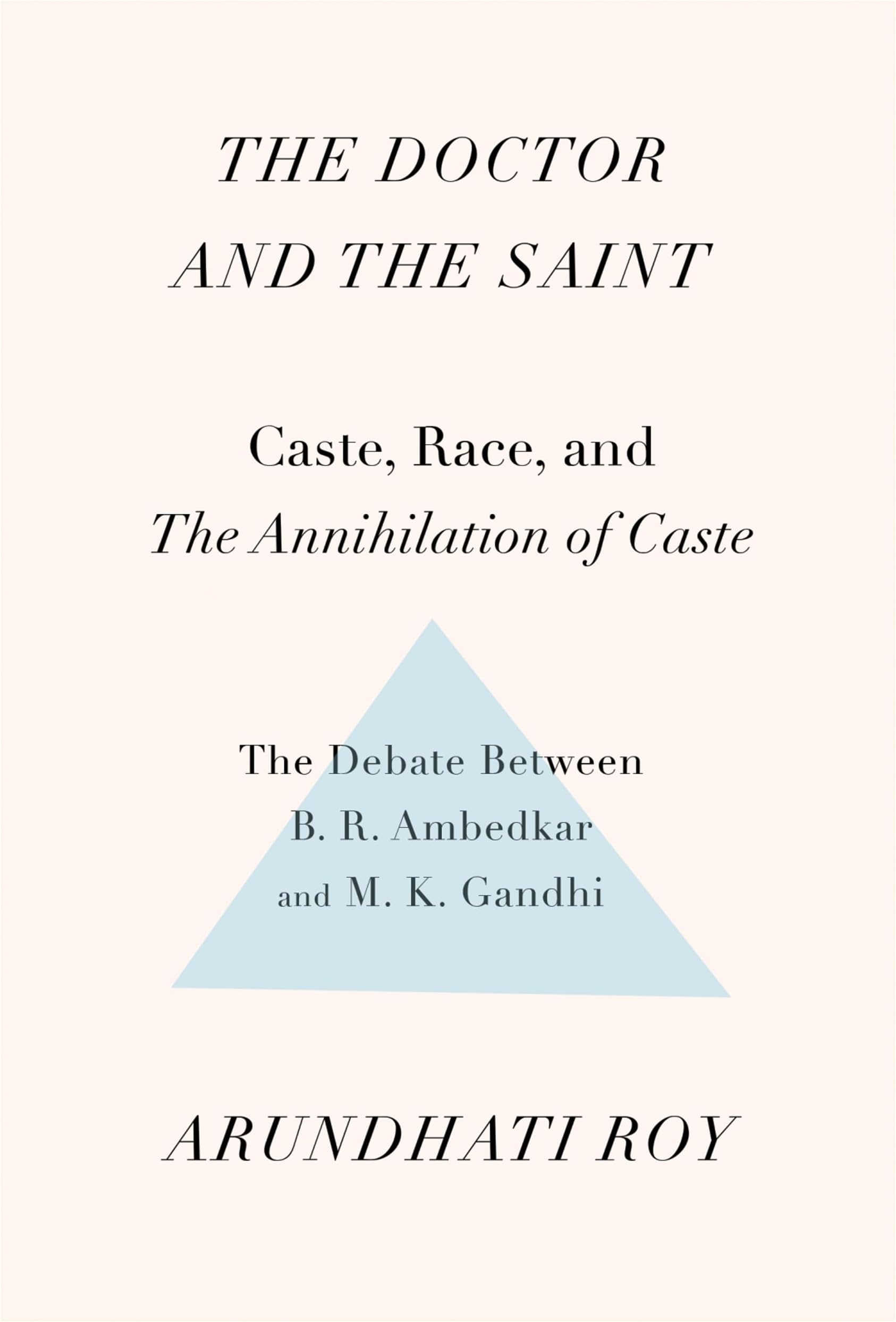
The Doctor and the Saint: Caste, Race, and Annihilation of Caste, the Debate Between B.R. Ambedkar and M.K. Gandhi
Product ID: 42653691
Buy anything from 5,000+ international stores. One checkout price. No surprise fees. Join 2M+ shoppers on Desertcart.
Desertcart purchases this item on your behalf and handles shipping, customs, and support to Colombia.
To best understand and address the inequality in India today, Arundhati Roy insists we must examine both the political development and influence of M. K. Gandhi and why B. R. Ambedkar’s brilliant challenge to his near-divine status was suppressed by India’s elite. In Roy’s analysis, we see that Ambedkar’s fight for justice was systematically sidelined in favor of policies that reinforced caste, resulting in the current nation of India: independent of British rule, globally powerful, and marked to this day by the caste system. This book situates Ambedkar’s arguments in their vital historical context— namely, as an extended public political debate with Mohandas Gandhi. “For more than half a century—throughout his adult life—[Gandhi’s] pronouncements on the inherent qualities of black Africans, untouchables and the laboring classes remained consistently insulting,” writes Roy. “His refusal to allow working-class people and untouchables to create their own political organizations and elect their own representatives remained consistent too.” In The Doctor and the Saint, Roy exposes some uncomfortable, controversial, and even surprising truths about the political thought and career of India’s most famous and most revered figure. In doing so she makes the case for why Ambedkar’s revolutionary intellectual achievements must be resurrected, not only in India but throughout the world. “Arundhati Roy is incandescent in her brilliance and her fearlessness.” — Junot Díaz “The fierceness with which Arundhati Roy loves humanity moves my heart.” — Alice Walker Review: Great Writer - Roy is a fantastic writer. Review: A must read for anyone who are curious about Indian law markets! - Just in 124 pages, Roy changes our perspective about Hinduism, Ghandi and a lot of events of Indian independence movement as we know it.. The book delves deep into the historical oppression of dalits by casteist Hindus, their transformation into political fodder by opportunist political parties during independence movement and how Gandhi(the saint) and Ambedkar (the doctor), end up in a face-off situation with regards to the rights and acceptance of the untouchables of India.. Reading Gandhi’s hypocritical, racist , castiest statements in his own words could make us uncomfortable.. makes us question the credibility of history lessons we were taught in schools.. reveals deeply embedded insitutionalised forms of discrimination on the basis of caste
| Best Sellers Rank | #154,764 in Books ( See Top 100 in Books ) #54 in India History #118 in Asian Politics #159 in Sociology of Class |
| Customer Reviews | 4.6 out of 5 stars 967 Reviews |
S**R
Great Writer
Roy is a fantastic writer.
P**A
A must read for anyone who are curious about Indian law markets!
Just in 124 pages, Roy changes our perspective about Hinduism, Ghandi and a lot of events of Indian independence movement as we know it.. The book delves deep into the historical oppression of dalits by casteist Hindus, their transformation into political fodder by opportunist political parties during independence movement and how Gandhi(the saint) and Ambedkar (the doctor), end up in a face-off situation with regards to the rights and acceptance of the untouchables of India.. Reading Gandhi’s hypocritical, racist , castiest statements in his own words could make us uncomfortable.. makes us question the credibility of history lessons we were taught in schools.. reveals deeply embedded insitutionalised forms of discrimination on the basis of caste
D**R
A Clash of Titans
In this 2014 introduction to B R Ambedkar's undelivered 1936 speech, "Annihilation of Caste", Arunhati Roy reveals the shameful treatment of India's untouchables, the Dalits. The famous but forgotten debate on caste between the great soul Gandhi and Ambedkar, drafter of the constitution and champion of the downtrodden, helped to define the era. Roy examines the plight of the outcastes with an economy of words, yet in heart rending detail. Their condition is described from colony to republic, within the framework of religion and politics. Short biographies of Gandhi and Ambedkar are given, as well an analysis of the demographic upheavals that occurred during the partition of Pakistan. For Gandhi, the living saint, an end to caste struck at the heart of Hinduism. His movement did not challenge caste except to condemn untouchability and encourage intermixing. Rights to public water, schools and roads would need to be fought for. Ambedkar's faith lay in separate electorates and reserved appointments for Dalits. Gandhi opposed these with his life. Mass conversions to Islam and other religions resulted from Hindu society's rejection of the outcastes. British rule exacerbated the problem by an institutional reduction of four thousand castes into four. Ambedkar, outcaste and convert, came to view Buddhism as a reaction against the caste system. Gandhi's campaign to embrace the Dalits would greatly stem the tide. This is work is best read alongside the text of the address, and the subsequent debates of Gandhi and Ambedkar. The combined tracts are available in a different edition. If you read one book on the social background of modern India this might be it. There are also good insights into the roles Hindu nationalism and Marxism have played upon the public stage.
S**A
Brave and unflinching
Roy’s ability to write difficult truths without flinching, to make connections that damn the halo of the Mahatma is admirable and exhilarating. It is a revolutionary call to overthrow a system of discrimination, even if that system is a religion.
A**A
Must read as a primer or foreword to reading Ambedkar
Demolishing myths and shining a light on Babasaheb Ambedkar that helps us understand this incredible and complex man and his incredible work. Rescuing Dr. Ambedkar from the dustbins of history, Arundhati writes with erudition, skill and great anger. She is unsparing of all. Not to be missed.
W**E
A very useful introduction to the subject.
As usual, Aaron. Arundhati Roy writes knowledgeably and clearly about the subject of race and caste and the classic Indian book on the subject.
M**G
Painful truth behind the image
In only 124 pages, Arundhati Roy completely deconstructs everything you thought you knew about Gandhi, Hinduism, and India.
T**N
Five Stars
excellent
K**E
Great book
Must must buy
L**E
Ghandi & Ambedkar - an attempt at healing that continues to this day
A powerful, searing look into the hearts of two men advocating the same principle yet so opposite in their understanding of humanity. The painful reality of their cultures and the layered barriers to cultivating change is relentlessly peeled away by Arundhati Roy at her best.
P**A
Arundhati Roy's Eye-Opening Exposition, 'The Doctor and the Saint'
Arundhati Roy’s ‘The Doctor and the Saint’ is an extremely well-researched and enviably erudite rendition of the Ambedkar/Gandhi debate. Even though it is a scholarly record of key events and verbatim quotes, it reads like a page-turner, primarily because the real-life details are more shocking than fiction itself. What surprised me the most was that even though I had been educated in India, I had only ever heard the name ‘Ambedkar’ in passing and had been told a wholly sanitised version of Gandhi’s life and philosophies. The only chink into Gandhi’s questionable behaviour was his dubious attitudes to his wife and his retinue of young women. Sadly, this was not referred to at all in the book, but perhaps Roy felt it unnecessary, as that aspect had been done to death by many writers and critics, especially feminist writers. I do not want to go into detail about the contents because that would spoil it for the reader. Suffice it to say, apart from the sheer gravity of the prejudices and the horror these prejudices engendered, I was beginning to suspect by the middle of the book that Roy had mistakenly transmogrified Ambedkar to the level of a saint as well. It was when his reflections on the Adivasis (tribal aboriginal people, living largely outside mainstream Indian society) began to unfold that I started to think about the human condition of one-upmanship, the game psychologists call ‘ingroup/outgroup’ or the ‘us and them’ syndrome. I had to delve deep into my own heart to admit to many uncomfortable preconceptions. The new phenomenon of the cancel culture is merely another version of this: ‘Our views are superior to yours, so you must be silenced because you are wrong’. For me, the shock was ultimately less about deeply held societal prejudices and more about the horrifying outcome of these prejudices, not to mention the universal nature of some of humanity’s patently illogical views.
D**I
Schnelle Lieferung, Produkt sehr gut
Schnelle Lieferung, Produkt sehr gut
U**L
The cover is really nice (blue one)
I was apprehensive about the quality of the book but it certainly exceeded my expectations.
Trustpilot
2 months ago
3 weeks ago