Buy anything from 5,000+ international stores. One checkout price. No surprise fees. Join 2M+ shoppers on Desertcart.
Desertcart purchases this item on your behalf and handles shipping, customs, and support to Colombia.
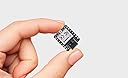
🚀 Tiny Tech Titan: Power-packed microcontroller that fits in your palm!
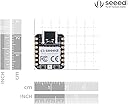
The Seeed Studio XIAO RP2040 is a compact microcontroller featuring a dual-core ARM Cortex M0+ processor running at 133MHz, equipped with 2MB Flash and 264KB SRAM. It offers a rich set of interfaces including digital, analog, I2C, UART, and SPI pins, making it ideal for wearable and small-scale projects. Fully compatible with Arduino, MicroPython, and CircuitPython, this thumb-sized board delivers professional-grade performance in a minimalist design.


| Brand | Seeed Studio |
| CPU model | Cortex |
| CPU speed | 133 MHz |
| Installed RAM memory size | 264 KB |
| Memory storage capacity | 2 MB |
| Model name | XIAO RP2040 |
G**V
Great choice for small electronic devices
RP2040 has recently become my favorite microboard for building relatively simple and compact electronic devices (which usually contain a couple of inputs, a couple of outputs, a couple of buttons, a potentiometer or two and an I2C OLED display). For simple status signaling, it has a very bright built-in RGB LED which doesn't use any of the onboard pins, of which there is a limited number. I have already made a laser control box, a temperature control board for a custom-built 3D printer and a spot welder based on this board, and all of them work well. Sure, this board is not as powerful as Teensy 4.0, but it is not as expensive either, and noticeably more compact. Kudos for including the USB-C port, which is much more convenient than Teensy's micro USB. RP2040 can be soldered to one side of a PCB, leaving the other side completely free to run traces for other components, without pin holes getting in the way. For the types of devices I mentioned before, it has more than enough processing power. If such power is not needed, the clock speed of the CPU along with power consumption can be dialed down at compile stage, which helps RP2040 to run much longer when powered by battery. The PWM library is not what you would call an Arduino standard, but once you're familiar with it it's just as fast and capable. Overall, nice and very usable microboard.
G**K
Quality RP2040
Good quality RP2040, this is the first seeed I’ve used but it worked as intended, inexpensive, and I got it in 3-4 days
O**N
This is the future
Tons of processing power in a package the size of your thumb. So tiny that any USB cable plugged into it has to be secured as it weighs more than the MCU itself. Barely uses any power even while operating at full tilt, and absolutely just barely sips on a battery while in standby mode. You’d think that the GPIO would leave something to be desired, but given its size I wouldn’t say that’s much of an issue. If you need more pins, get an expansion board or use a different model. Super useful if you’re trying to shrink down your projects - pairs well with displays and other components from Adafruit, Waveshare, etc.
R**S
No instructions.
Haven't used yet, because I'm a beginning learner with such. No instructions, not even a link. Somewhat understandable though, it being tiny.
K**.
RP2350 has no MicroPython support (yet).
While I want to give a good review to the RP2350, there is currently no functional version of MicroPython which will run on this board, unless you know how to compile it yourself. I do not; as such this board is useless to me until they release a compatible uf2. The RP2040 is top-notch. The RP2350 should turn out to be a fantastic upgrade, once I can finally use it.
Trustpilot
1 month ago
4 days ago