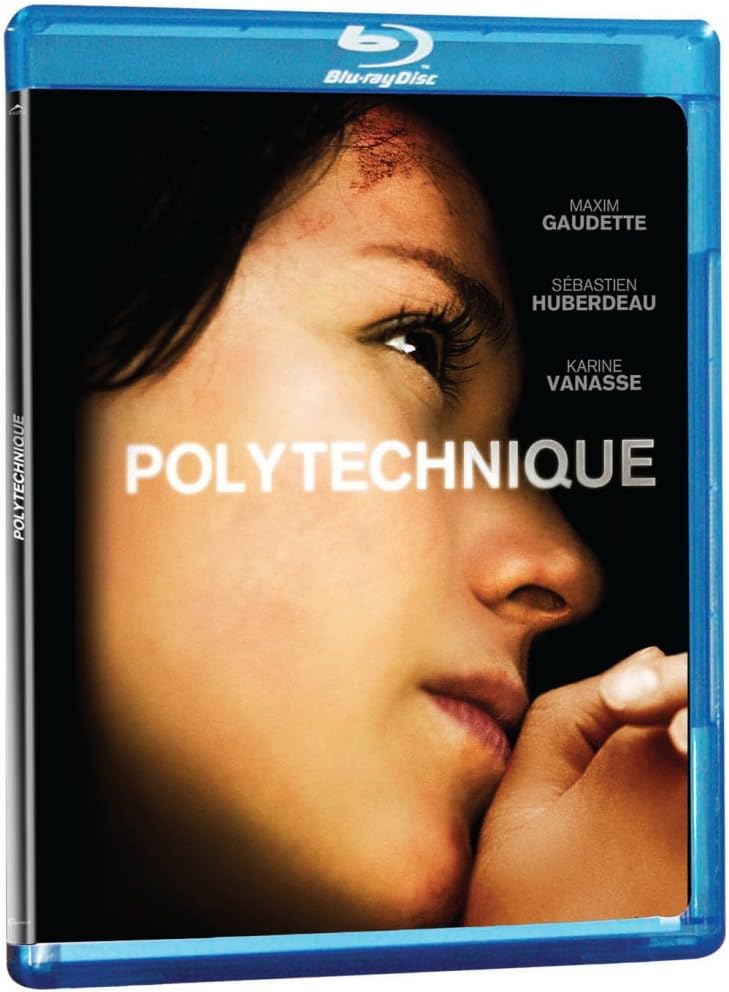

Polytechnique
Product ID: 35235797
Buy anything from 5,000+ international stores. One checkout price. No surprise fees. Join 2M+ shoppers on Desertcart.
Desertcart purchases this item on your behalf and handles shipping, customs, and support to Colombia.
Based on the true events that occurred on December 6, 1989, at the Montreal’s Polytechnique School, the movie tells us about that specific day through the eyes of two students, Valérie and Jean-François, whose lives have been changed forever, when a young man entered the school with one idea in mind: kill himself and take with him as many women as possible. Review: Amazing, respectful movie based on a real tragedy - I remember all too well the tragedy in Canada; l was horrified that a fellow classmate would want to kill others in a hard science environment simply based on being female. The movie captured the setup well by using flashbacks; the scenes with the killer were as creepy and believable as a standard "major motion picture" villain, which made the banality of evil in this mass murder even more terrifying. The small scene where one of the female characters is hit with an inappropriate (and actionable) gender-biased question on an interview for an internship, showing that sexism was still openly pervasive in the workplace in the 1980's - back-to-back with a scene where the killer describes all of the "advantages" women have over men - was especially ironic and disturbing. Writing, acting, directing...all were fantastic, for a film covering such a difficult subject. One of the best films I've ever seen in this genre. Watch it - it is well worth the time, given how many school shootings now occur. Review: Exceptionally immersive... - Polytechnique is a 2009 Canadian drama film directed by Denis Villeneuve and written by Villeneuve and Jacques Davidts. Starring Maxim Gaudette, Sebastien Huberdeau, and Karine Vanasse, the film is based on the 1989 École Polytechnique massacre (also known as the "Montreal Massacre") and re-enacts the events of the incident through the eyes of two students (Huberdeau and Vanasse) who witness a gunman (Gaudette) murder fourteen young women. Honestly, I could speak to the Praises I have of this film all day and because of that I would like to start with my biggest criticism of it. I am not sure if this is a complaint for a pet peeve of mine, but this film would have benefited from the director being more explicit in making the audience aware of how much time is theoretically passing in this film. In doing my own research it has been claimed that the average amount of time that lapses during a school shooting is approximately 12.5 minutes and the average amount of time it takes for emergency Personnel to respond is a little more than 18 minutes. The reason I bring this up as a point is because the totality of life that is stolen in such a brief amount of time speaks to the amount of trauma and loss that can occur in what may feel like the blink of an eye. I fear that this shortcoming is easily exploited by people that consistently discredit the witnesses and victims of these horrendous actions, and that warrants Some challenges being posed to the collaborative effort needed to make ‘Polytechnique’ as successful as it ends up being. Many times after these events occur one question is often posed: Why? These tragedies conjure our curiosity, and the inability to get straight answers is naturally frustrating. The honest and yet sad truth is that there is rarely ever one element to “blame” for thebehavior seen in this film, and the intrinsic and extrinsic factors that may have contributed are meaningfully explored in what is sometimes a subliminal way. it is made quite clear that the GunMan has experienced some amount of rejection in his life - In both romantic and professional contexts - and it becomes easier over time to accept this as a incestious desire to have control over this arguably troubled individual's surroundings. The film does not stop here, however, and makes the point of inserting interactions the victims and survivors have with people that are not the gunman that paint a bigger picture in regards to the ideologies and belief systems that make this behavior seemingly justified (I should emphasize - justified by the perpetrator). This draws some briefly noted empathy for someone we dare not compare ourselves to; notably, there is one particular interaction where one of the survivors is exposed to an explicit amount of sexism in a moment that is arguably and brazenly inappropriate. Scenes like this one - regardless of how frivolous they are in nature - pose a serious question to audience members that are willing to think deeply about the interactions they have with other people; we must stop and ask ourselves: I may not be shooting the gun, but am I accidentally providing the metaphorical ammo for it? I want to know whose decision it was to make this film entirely in black and white and give them an award myself. This choice alone speaks to the amount of Engagement the director is hoping to compel out of audience members. When the color of a scene is taken out of the equation viewers have no choice but to process what is going on without drawing any inferences that may be hastily made otherwise. It encourages audience members to accept these events as conceivable and elevates every intentional moment of silence with a terrifying echo. My heart pounded. My soul raced. The very fiber of my existence was forcibly exposed. Rest in peace to Geneviève Bergeron. Rest in peace to Hélène Colgan. Rest in peace to Nathalie Croteau . Rest in peace to Barbara Daigneault. Rest in peace to Anne-Marie Edward. Rest in peace to Maud Haviernick Rest in peace to Maryse Laganière Rest in peace to Maryse Leclair Rest in peace to Anne-Marie Lemay Rest in peace to Sonia Pelletier Rest in peace to Michèle Richard Rest in peace to Annie St-Arneault Rest in peace to Annie Turcotte Rest in peace to Barbara Klucznik-Widajewicz I am so sorry that your beautiful lives and the gifts you were ready to share with the world were so violently taken from you. ‘Polytechnique’ can be described as many words I don’t often find myself using to describe a film: Raw. Powerful. Exceptionally rare. I would recommend!
| ASIN | B002E01LWA |
| Actors | Maxim Gaudette, Sebastien Huberdeau |
| Best Sellers Rank | #294,758 in Movies & TV ( See Top 100 in Movies & TV ) #71,205 in Blu-ray |
| Customer Reviews | 4.2 4.2 out of 5 stars (198) |
| Director | Denis Villeneuve |
| Package Dimensions | 7.1 x 5.42 x 0.58 inches; 2.93 ounces |
W**E
Amazing, respectful movie based on a real tragedy
I remember all too well the tragedy in Canada; l was horrified that a fellow classmate would want to kill others in a hard science environment simply based on being female. The movie captured the setup well by using flashbacks; the scenes with the killer were as creepy and believable as a standard "major motion picture" villain, which made the banality of evil in this mass murder even more terrifying. The small scene where one of the female characters is hit with an inappropriate (and actionable) gender-biased question on an interview for an internship, showing that sexism was still openly pervasive in the workplace in the 1980's - back-to-back with a scene where the killer describes all of the "advantages" women have over men - was especially ironic and disturbing. Writing, acting, directing...all were fantastic, for a film covering such a difficult subject. One of the best films I've ever seen in this genre. Watch it - it is well worth the time, given how many school shootings now occur.
C**S
Exceptionally immersive...
Polytechnique is a 2009 Canadian drama film directed by Denis Villeneuve and written by Villeneuve and Jacques Davidts. Starring Maxim Gaudette, Sebastien Huberdeau, and Karine Vanasse, the film is based on the 1989 École Polytechnique massacre (also known as the "Montreal Massacre") and re-enacts the events of the incident through the eyes of two students (Huberdeau and Vanasse) who witness a gunman (Gaudette) murder fourteen young women. Honestly, I could speak to the Praises I have of this film all day and because of that I would like to start with my biggest criticism of it. I am not sure if this is a complaint for a pet peeve of mine, but this film would have benefited from the director being more explicit in making the audience aware of how much time is theoretically passing in this film. In doing my own research it has been claimed that the average amount of time that lapses during a school shooting is approximately 12.5 minutes and the average amount of time it takes for emergency Personnel to respond is a little more than 18 minutes. The reason I bring this up as a point is because the totality of life that is stolen in such a brief amount of time speaks to the amount of trauma and loss that can occur in what may feel like the blink of an eye. I fear that this shortcoming is easily exploited by people that consistently discredit the witnesses and victims of these horrendous actions, and that warrants Some challenges being posed to the collaborative effort needed to make ‘Polytechnique’ as successful as it ends up being. Many times after these events occur one question is often posed: Why? These tragedies conjure our curiosity, and the inability to get straight answers is naturally frustrating. The honest and yet sad truth is that there is rarely ever one element to “blame” for thebehavior seen in this film, and the intrinsic and extrinsic factors that may have contributed are meaningfully explored in what is sometimes a subliminal way. it is made quite clear that the GunMan has experienced some amount of rejection in his life - In both romantic and professional contexts - and it becomes easier over time to accept this as a incestious desire to have control over this arguably troubled individual's surroundings. The film does not stop here, however, and makes the point of inserting interactions the victims and survivors have with people that are not the gunman that paint a bigger picture in regards to the ideologies and belief systems that make this behavior seemingly justified (I should emphasize - justified by the perpetrator). This draws some briefly noted empathy for someone we dare not compare ourselves to; notably, there is one particular interaction where one of the survivors is exposed to an explicit amount of sexism in a moment that is arguably and brazenly inappropriate. Scenes like this one - regardless of how frivolous they are in nature - pose a serious question to audience members that are willing to think deeply about the interactions they have with other people; we must stop and ask ourselves: I may not be shooting the gun, but am I accidentally providing the metaphorical ammo for it? I want to know whose decision it was to make this film entirely in black and white and give them an award myself. This choice alone speaks to the amount of Engagement the director is hoping to compel out of audience members. When the color of a scene is taken out of the equation viewers have no choice but to process what is going on without drawing any inferences that may be hastily made otherwise. It encourages audience members to accept these events as conceivable and elevates every intentional moment of silence with a terrifying echo. My heart pounded. My soul raced. The very fiber of my existence was forcibly exposed. Rest in peace to Geneviève Bergeron. Rest in peace to Hélène Colgan. Rest in peace to Nathalie Croteau . Rest in peace to Barbara Daigneault. Rest in peace to Anne-Marie Edward. Rest in peace to Maud Haviernick Rest in peace to Maryse Laganière Rest in peace to Maryse Leclair Rest in peace to Anne-Marie Lemay Rest in peace to Sonia Pelletier Rest in peace to Michèle Richard Rest in peace to Annie St-Arneault Rest in peace to Annie Turcotte Rest in peace to Barbara Klucznik-Widajewicz I am so sorry that your beautiful lives and the gifts you were ready to share with the world were so violently taken from you. ‘Polytechnique’ can be described as many words I don’t often find myself using to describe a film: Raw. Powerful. Exceptionally rare. I would recommend!
E**S
This film is cold.
Great depths to the characters, sophisticated directing that depicts the bleak or focused awareness of each situation taking place, good acting (serious, determined body language which helped display this kind of story), the story may seem lengthy but it's due to capturing a normal day (like any other) turned into a shockingly unsettling day that leaves consequences.
D**T
Scrupulously true.
We can assume that the students here vary in their academic abilities. The shooter's narration insists that, though he makes little effort and does not turn in required work, he is doing fine. That seems improbable to me. Likely his non engaged attitude was an obstacle to his getting anywhere with his studies. The other featured male student similarly struggles. He spills he beverage on his work; he can't understand things, he borrows notes. Although they appear to be opposites, one in a rage, the other looking to kindness, they both seem marginalized here with regard to academic success. By contrast the featured female student is very able academically. Each of these more or less takes their stand; we are given what information we need to make their approaches seem credible, and to see the fruits of them. We do not make ourselves. I don't say we are absolved for our choices. I think we could help each other, but the system is not designed for that. There is some footage here of a physics class that speaks to the effect of pressure. Our heroine mentions, along the way, that if she has a girl, she would tell her the world is hers; if she has a boy she would teach him to love. I think the first step is to recognize the baby's love and need. Sometimes this might be difficult, even impossible. Starting with love, acceptance and attention is a good foundation for future independent connectedness and solidarity. The film suggests that solidarity is evidenced among the females and not so much among the males, I think that is often so, though male bonding does happen.. As indicated elsewhere, this was dedicated to those who were slain in this event. I don't know whether other viewers became uneasy by the compliance on view; hard to imagine softer targets. Very nice young men and women, except one.
D**R
Nothing Redeeming
Suffers from a disjointed telling of the horror that happened. Clearly the filmmakers are struggling to drag this story out to feature length, which they admit is fiction in the case of the personal details of the victims. Tragically, there really isn't much to say here. Its just the chronicle of the slaughter of other human beings by a madman. Its hard to find anything redeeming in the retelling of this story.
D**E
Polytechnique di Denis Villeneuve è un film crudo e angosciante che racconta il tragico massacro avvenuto nel 1989 presso l’École Polytechnique di Montreal. La regia sobria e delicata di Villeneuve riesce a restituire la tensione emotiva senza cadere nel sensazionalismo. Il film non si limita a narrare i fatti, ma esplora anche gli effetti devastanti che una tragedia del genere ha sulle vittime, i sopravvissuti e l'intera comunità. La scelta di raccontare la storia da diverse prospettive (due studentesse e un ragazzo) dà profondità al film, che, pur trattando un tema estremamente doloroso, è un’opera riflessiva e mai banale. Polytechnique è un film che lascia il segno, e non si dimentica facilmente. Un film imprescindibile per chi è interessato a storie vere e a riflessioni sulla violenza e sul genere.
F**9
An astonishingly underrated film from French-Canadian cineaste Denis Villeneuve, based on the 1989 École Polytechnique massacre. Faithful to the victims, survivors and their families, this is a powerful story about what could have been a better outcome had things happened differently that day. I also recommend Villeneuve's other French/Quebecois film Incendies (2010) along with his other English-langauge features Prisoners and Enemy (both 2013)
M**D
Als er noch zu erzählen wusste...
Q**8
film choc, a voir absolument
P**A
Some real heart felt emotions and scary moments of people's lives being taken etc.
Trustpilot
2 weeks ago
1 day ago