We remain fully operational. Our teams are working around the clock to ensure your deliveries continue safely.

DOWNLOAD THE APP


Copyright © 2025 Desertcart Holdings Limited
DOWNLOAD THE APP

Buy anything from 5,000+ international stores. One checkout price. No surprise fees. Join 2M+ shoppers on Desertcart.
Desertcart purchases this item on your behalf and handles shipping, customs, and support to Colombia.
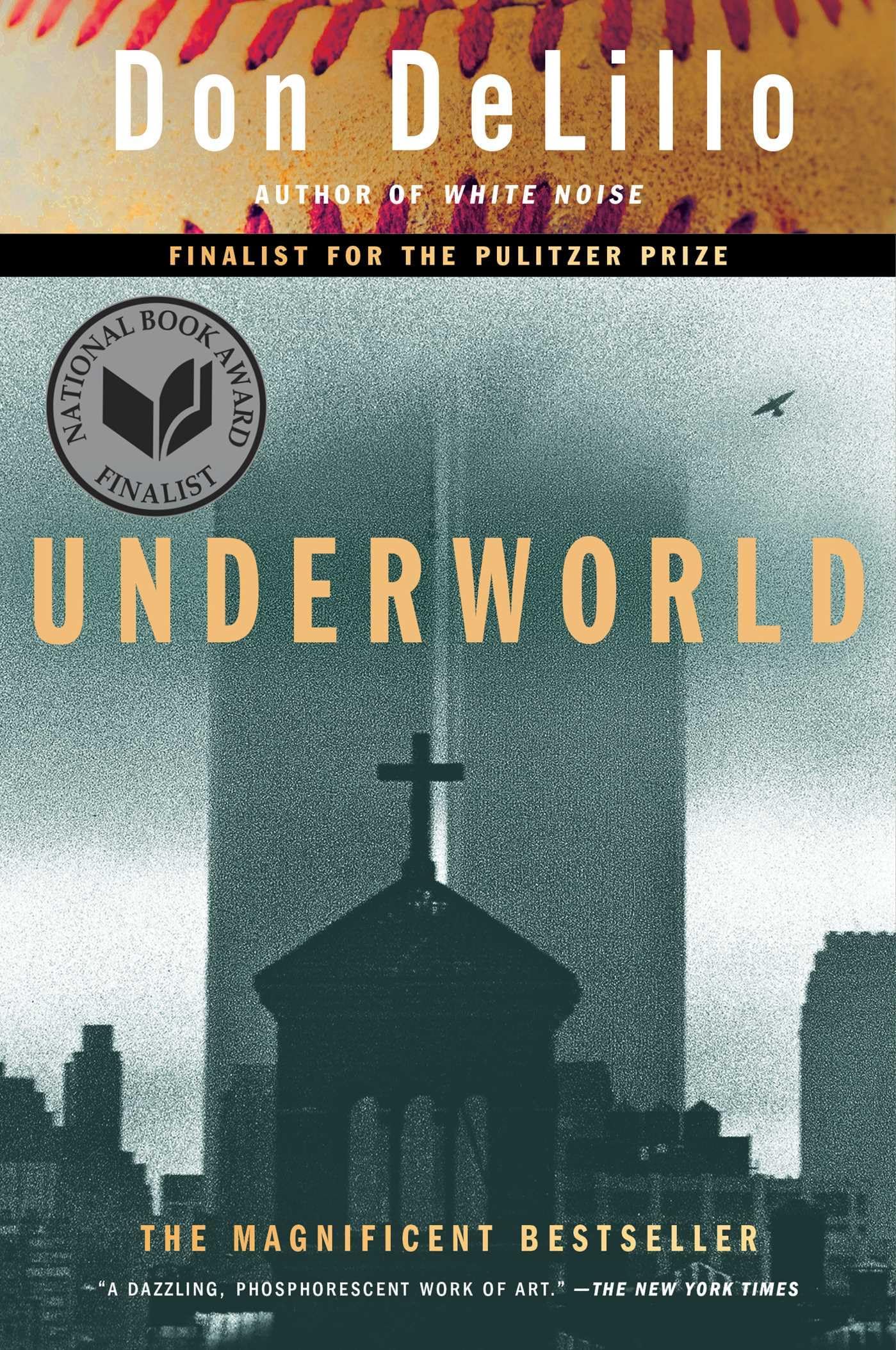
Buy Scribner Book Company Underworld by Delillo, Don online on desertcart.ae at best prices. ✓ Fast and free shipping ✓ free returns ✓ cash on delivery available on eligible purchase. Review: UNDERWORLD is so large in scope, its sprawling 800+ pages can barely contain it. It reminds me of a Pynchon romp, which is a good thing. UNDERWORLD encompasses nearly a half century of American life and history, following a cast of characters through the Cold War, the duck-and-cover drills, the Vietnam War, sixties unrest, the civil rights movement, the Cuban Missile Crisis, the 1965 Northeast US Blackout, among other major events. It begins with a 60-page prologue putting the reader at the Polo Grounds in New York on that day in October 1951 when Bobby Thompson hits a pennant-winning home run for the NY Giants off of Brooklyn Dodger pitcher Ralph Branca. It came to be called “The Shot Heard Round the World.” Though in reality the home run ball was never found, DeLillo imagines it recovered by a scrawny kid, Cotter Martin, and proceeds loosely to follow the ownership of that ball, in a sort of six-degrees of separation manner, down through the decades. Their paths crisscross, intersect and overlap in an amazing display of literary skill. For example, on page 608 we see Charles Wainwright Jr., one time owner of the ball, navigating a B-52 bomber over Vietnam in 1969, the very same B-52 dubbed ‘Long Tall Sally’ -- with cheeky nose art to prove it -- the very same plane mothballed and depicted in the opening chapters circa 1992 as the canvas for Klara Sax and her band of desert artists. There are many such links, past, present, future. There is nothing here in UNDERWORLD that passes for a plot. Not really. DeLillo builds his edifice with vignettes, short clipped sections, sometimes abruptly shifting in person, place and time. UNDERWORLD is visual, cinematic, in style. His dialogue, unlike any author I’ve read, rings true, authentic, and captures that pragmatic, nonverbal element in conversation, the way shared histories, context, and physical gestures fill in the gaps. And then there’s the conversations that don’t click at all, people just talking past one another. But something else important happened on that day when Thompson hit the home run, something of a more ominous sort that would change lives: the Soviet Union exploded their first atomic bomb. Another “shot heard round the world.” From the 1951 events, the Giants-Dodgers game and the Soviet test explosion, DeLillo jumps to 1992 and the Arizona desert and a group of artists using mothballed B-52s as their canvass. From there, the novel moves backward chronologically, back to 1951. Was this to mimic the countdown of a rocket, or atomic blast? No matter, it works. We see some of the characters in their full development in 1992, then over the next 700+ pages learn how they got that way. It’s a huge cast of characters, many historical figures like J. Edgar Hoover, Frank Sinatra, Lenny Bruce, Jackie Gleason, and Harry Caray. If there is an overriding theme or motif in the novel, it is the obsession with trash. Garbage. Where the home run baseball is the antithesis of trash - a treasured piece of baseball history - the atomic bomb has the ability to turn the world to trash. And then there’s the problem of the spent plutonium, that ultimate of all hazardous wastes. Even one of the main characters, Nick Shay, owner of the 1951 baseball, works for an international waste company. The Jesuits taught me to examine things for second meanings and deeper connections. Were they thinking about waste? We were waste managers, waste giants, we processed universal waste. Waste has a solemn aura now, an aspect of untouchability. White containers of plutonium waste with yellow caution tags. Handle carefully. Even the lowest household trash is closely observed. People look at their garbage differently now, seeing every bottle and crushed carton in a planetary context. [88] The writing is as good as it gets. And while there is certainly joy in the first reading, I’m finding it equally entertaining after turning that final page to return to the first chapters and reacquaint myself with the characters I just left, forty years older in DeLillo’s reverse chronology, and a few months after I’d begun reading. Like a lot of post-modern literature, UNDERWORLD isn’t for those looking for linear plotting, or plotting at all, for that matter. And the characters are not particularly fleshed out. But the journey is certainly worth the time and effort. Review: Magnífiico libro. Muy bien escrito: uno de los libros que se quedarán en mi biblioteca y seguro reeleré. Lo recomiendo fervientemente.


| Best Sellers Rank | #232,199 in Books ( See Top 100 in Books ) #1,356 in Classic Literature & Fiction #2,197 in Contemporary Literature & Fiction #4,035 in Literary Fiction |
| Customer reviews | 4.4 4.4 out of 5 stars (373) |
| Dimensions | 13.34 x 4.57 x 20.32 cm |
| Edition | First Edition |
| ISBN-10 | 0684848155 |
| ISBN-13 | 978-0684848150 |
| Item weight | 658 g |
| Language | English |
| Print length | 848 pages |
| Publication date | 9 July 1998 |
| Publisher | Scribner |
M**N
UNDERWORLD is so large in scope, its sprawling 800+ pages can barely contain it. It reminds me of a Pynchon romp, which is a good thing. UNDERWORLD encompasses nearly a half century of American life and history, following a cast of characters through the Cold War, the duck-and-cover drills, the Vietnam War, sixties unrest, the civil rights movement, the Cuban Missile Crisis, the 1965 Northeast US Blackout, among other major events. It begins with a 60-page prologue putting the reader at the Polo Grounds in New York on that day in October 1951 when Bobby Thompson hits a pennant-winning home run for the NY Giants off of Brooklyn Dodger pitcher Ralph Branca. It came to be called “The Shot Heard Round the World.” Though in reality the home run ball was never found, DeLillo imagines it recovered by a scrawny kid, Cotter Martin, and proceeds loosely to follow the ownership of that ball, in a sort of six-degrees of separation manner, down through the decades. Their paths crisscross, intersect and overlap in an amazing display of literary skill. For example, on page 608 we see Charles Wainwright Jr., one time owner of the ball, navigating a B-52 bomber over Vietnam in 1969, the very same B-52 dubbed ‘Long Tall Sally’ -- with cheeky nose art to prove it -- the very same plane mothballed and depicted in the opening chapters circa 1992 as the canvas for Klara Sax and her band of desert artists. There are many such links, past, present, future. There is nothing here in UNDERWORLD that passes for a plot. Not really. DeLillo builds his edifice with vignettes, short clipped sections, sometimes abruptly shifting in person, place and time. UNDERWORLD is visual, cinematic, in style. His dialogue, unlike any author I’ve read, rings true, authentic, and captures that pragmatic, nonverbal element in conversation, the way shared histories, context, and physical gestures fill in the gaps. And then there’s the conversations that don’t click at all, people just talking past one another. But something else important happened on that day when Thompson hit the home run, something of a more ominous sort that would change lives: the Soviet Union exploded their first atomic bomb. Another “shot heard round the world.” From the 1951 events, the Giants-Dodgers game and the Soviet test explosion, DeLillo jumps to 1992 and the Arizona desert and a group of artists using mothballed B-52s as their canvass. From there, the novel moves backward chronologically, back to 1951. Was this to mimic the countdown of a rocket, or atomic blast? No matter, it works. We see some of the characters in their full development in 1992, then over the next 700+ pages learn how they got that way. It’s a huge cast of characters, many historical figures like J. Edgar Hoover, Frank Sinatra, Lenny Bruce, Jackie Gleason, and Harry Caray. If there is an overriding theme or motif in the novel, it is the obsession with trash. Garbage. Where the home run baseball is the antithesis of trash - a treasured piece of baseball history - the atomic bomb has the ability to turn the world to trash. And then there’s the problem of the spent plutonium, that ultimate of all hazardous wastes. Even one of the main characters, Nick Shay, owner of the 1951 baseball, works for an international waste company. The Jesuits taught me to examine things for second meanings and deeper connections. Were they thinking about waste? We were waste managers, waste giants, we processed universal waste. Waste has a solemn aura now, an aspect of untouchability. White containers of plutonium waste with yellow caution tags. Handle carefully. Even the lowest household trash is closely observed. People look at their garbage differently now, seeing every bottle and crushed carton in a planetary context. [88] The writing is as good as it gets. And while there is certainly joy in the first reading, I’m finding it equally entertaining after turning that final page to return to the first chapters and reacquaint myself with the characters I just left, forty years older in DeLillo’s reverse chronology, and a few months after I’d begun reading. Like a lot of post-modern literature, UNDERWORLD isn’t for those looking for linear plotting, or plotting at all, for that matter. And the characters are not particularly fleshed out. But the journey is certainly worth the time and effort.
M**L
Magnífiico libro. Muy bien escrito: uno de los libros que se quedarán en mi biblioteca y seguro reeleré. Lo recomiendo fervientemente.
V**A
Delillo è in grado di passare dal grandangolare allo zoom estremo senza farti perdere il filo. Un maestro.
A**E
Around the time I started reading this book, a critic said that reading a novel can be a significant act. Having taken around four months to read this from start to finish and having read six books at the same time, I can safely say that at a physical level, this is a book that is a significant act in its reading: you will feel that you have accomplished something at the end of it, in the same way you might feel after having read 'Bonfire of the Vanities' or 'Gravity's Rainbow', two other examples of the great American novel. Therefore, it goes without saying that in its writing, this is also a significant act. The craft with which Delillo reveals the characters, with the vista of the Cold War roaring across savannahs and cities throughout the US takes you to that time and place. His sense of rhythm in speech is unmatched in American writing: it is perhaps only Amis of the English writers who can compare and I am never certain if he is serious or deliberately tabloid in his patter. The art really is in Delillo's ability to make the banal into a prism not far short of ecstasy. This is a novel about waste and rubbish, trash and garbage, which, as he says, 'will end up consuming you'. This book will have the same effect: its proclivity for consuming hours of your time, before bed, over weekends, is unmatched and unrivalled. Its subject matter and its length make it perhaps the perfect book for our ages. It is a semi-fictional (with some real characters and places) account of the world teetering on the edge of tomorrow, with atomic warfare only moments away. Given where we are now, unable to experience the world with our senses and only through screens, means that this story is perhaps the ideal lockdown book: you will not regret reading this and it may even change the way you look at our history and your present. A note of caution: I tried to read this book over ten years ago and couldn't manage it. Then, last summer I picked up 'White Noise' and worked through Delillo's work before ending up with this. I would recommend, if you are unfamiliar with his writing to try 'White Noise', 'Mao II' or 'Libra' before this as they are more 'conventional' in the sense that they tell a tale through their progressive narrative. You won't be disappointed with any of these, but I believe that Underworld stands apart as the most significant act by one of the world's greatest living writers in the English language.
M**I
Ok, wow. A little long but well worth plowing through. I love this author and highly recommend his work, particularly this one.
Trustpilot
1 month ago
2 weeks ago