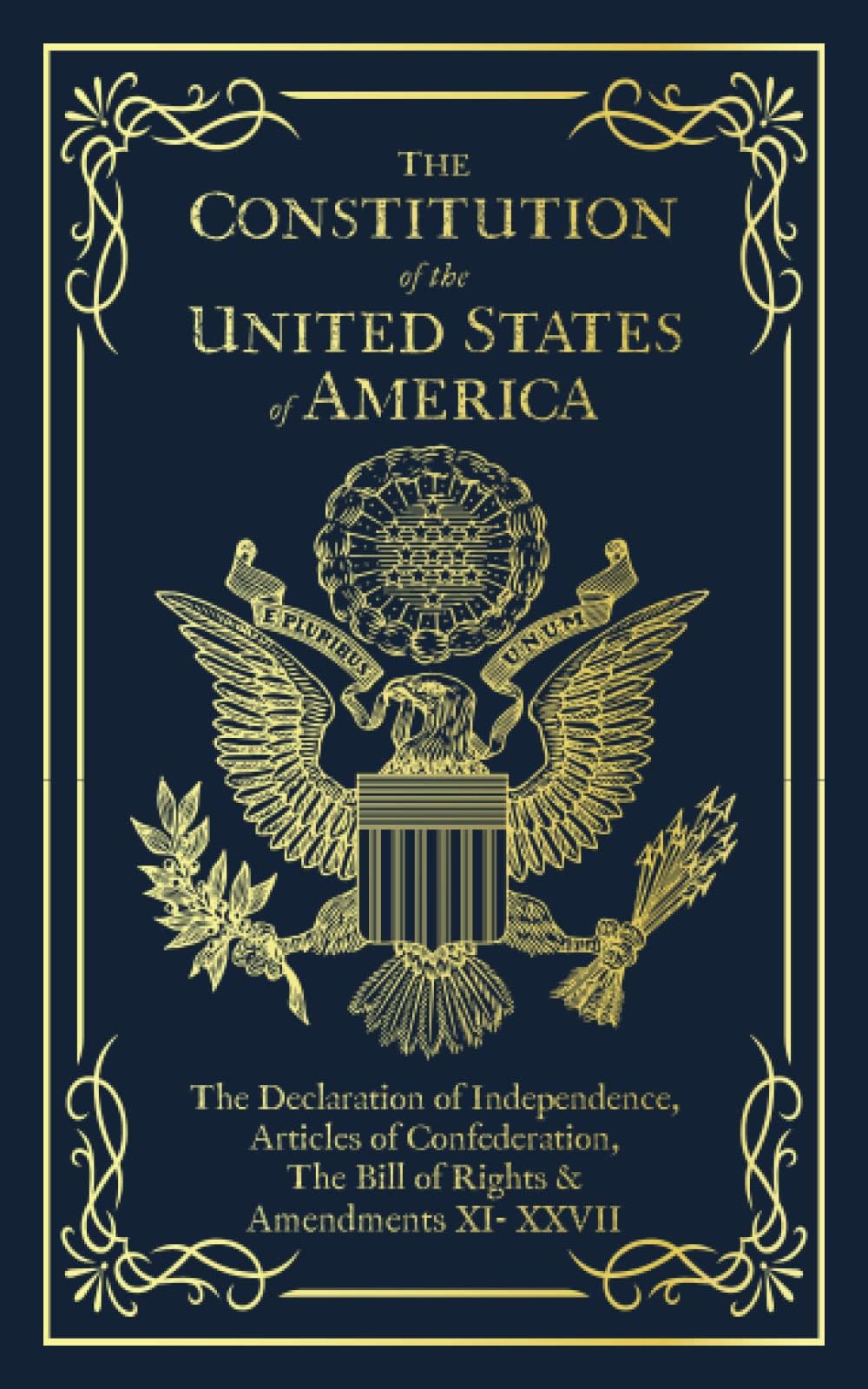
The Constitution of the United States of America: The Declaration of Independence, The Bill of Rights
Product ID: 229486024
Buy anything from 5,000+ international stores. One checkout price. No surprise fees. Join 2M+ shoppers on Desertcart.
Desertcart purchases this item on your behalf and handles shipping, customs, and support to Colombia.
This book is a public collection of the four original documents in the founding of the United States of America and include, the Declaration of Independence, the Articles of Confederation, the Constitutions, and the Bill of Rights. Combined these documents are excellent primary historical sources for the American Revolution and the formation of the new republican state. The Constitution of the United States of America is the ultimate law of the country. The document embodies the doctrine of the separations of the executive powers of the federal government. The Declaration of Independence outlines the grievances of the Thirteen Colonies and explains why they are at war with the Kingdom of Great Britain. It was signed by representatives of all original Thirteen Colonies. The Articles of Confederation setup the original wartime government of the states. The Bill of Rights records the first ten amendments or additions to the United States Constitution, written after the successful American Revolution, and the creation of the republican government. The Bill of Rights added specific guarantees of political rights and personal freedoms to the original Constitution. The newly founded American government borrowed heavily from English political traditions of public representation and individual liberty inherited from the Manga Carta and more recently inspired by English enlightenment philosophers like John Locke. The Constitution of the United States of America Paperback Book — Includes the Declaration of Independence, Articles of Confederation, Bills of Rights and Amendments 11-27 — Learn About American Rights from the Founding Fathers. AMERICAN HISTORY IN YOUR HANDS: This paperback book will allow you to read the documents that helped to create the United States of America. Included in the book are the Declaration of Independence, the Constitution, the Bill of Rights, and Amendments 11-27. The compact book is not a recreation of the original documents, but an easy-to-read word-for-word reprint. THE USA CONSTITUTION: Signed on September 17, 1787, the United States Constitution laid the framework for how the nation's government was to be set up. Within the document is the famous "We the People" Preamble as well as Articles I-VII. With your own eyes, you'll have the chance to read about the separation of powers between the legislative, judicial, and executive branches of government. It is printed in a clear font so you can absorb every word from this sacred national document. THE DECLARATION OF INDEPENDENCE: The Declaration of Independence is one of the most important documents in our nation's history. Signed by the Continental Congress on July 4, 1776, it proudly declared that the 13 North American Colonies were separating from Great Britain. This section is sure to fill your heart with pride and show you the beginnings of this great nation. THE ARTICLES OF CONFEDERATION: The Articles of Confederation is the original agreement between the 13 States that setup a comparatively weak central government. The original powers granted to the central government were limited to the powers which the 13 Colonies recognized belonged to the British Parliament and King. THE BILLS OF RIGHTS: A separate section of the book is dedicated to the United States Bill of Rights, which contains the first ten amendments of the Constitution. These personal freedoms and rights are the backbone of the United States government. AMENDMENTS 11-27: These important amendments to the Constitution cover some of the country’s most cherished rights. Included are the abolishment of slavery (13th Amendment), the right to citizenship (14th Amendment), and women's voting rights (19th Amendment). This compact paperback will allow you to read America's most important documents. This US Constitution book is a great teaching tool or a refresher for history buffs and patriots alike. Review: Know the Constitution - The Importance of the Constitution and the Need to Protect Our Rights The Constitution of the United States is the foundation of our nation’s legal and political system. It serves as the supreme law of the land, outlining the framework for our government, defining the separation of powers, and protecting the fundamental rights of individuals. Understanding its importance is not just a matter of historical interest—it is essential for safeguarding the freedoms and liberties that are vital to a democratic society. Why the Constitution is Important 1. Protecting Individual Rights One of the most critical functions of the Constitution is to protect the rights of individuals against government overreach. The Bill of Rights, which comprises the first ten amendments, explicitly safeguards freedoms such as speech, religion, press, assembly, and the right to a fair trial. These rights are not just theoretical principles; they are practical protections that ensure citizens can live without fear of unjust persecution or oppression. 2. Limiting Government Power The Constitution was designed to prevent the concentration of power in any single branch of government. By establishing the system of checks and balances, it ensures that the legislative, executive, and judicial branches operate independently and can limit each other’s powers. This separation is crucial to preventing tyranny and maintaining a government that serves the people, rather than ruling over them. 3. Establishing Rule of Law The Constitution establishes the rule of law, meaning that everyone—regardless of status or position—is subject to the law. This principle ensures that laws are applied fairly and consistently, providing a stable and predictable legal system. It is this stability that allows society to function smoothly, giving individuals and businesses the confidence to plan for the future. 4. Promoting Justice and Equality The Constitution embodies ideals of justice and equality. Amendments such as the 13th, 14th, and 15th, which abolished slavery, established equal protection under the law, and prohibited racial discrimination in voting, demonstrate the Constitution’s role in advancing civil rights. It is a living document that has been amended over time to reflect society’s evolving standards of justice and fairness. 5. Empowering Citizens Perhaps most importantly, the Constitution empowers citizens to hold their government accountable. Through mechanisms like the right to vote, the freedom to assemble, and the ability to petition the government, the Constitution provides the tools necessary for public participation in democracy. It is a guide for citizens to understand their role in the governance of their country and to take action when those in power do not uphold the principles it enshrines. Why We Need to Know the Constitution to Protect Our Rights 1. Knowledge is Power Simply put, you cannot protect your rights if you do not know what they are. An understanding of the Constitution allows citizens to recognize when their rights are being infringed upon and to take appropriate action. This knowledge empowers individuals to challenge unjust laws, defend themselves in court, and advocate for policy changes. 2. Defending Against Government Overreach In a time when governments and corporations increasingly encroach on personal freedoms, knowing your constitutional rights is essential. Whether it is issues related to privacy, free speech, or due process, an informed citizenry is the best defense against the erosion of liberties. By understanding the Constitution, individuals can resist unlawful intrusions and demand accountability from their leaders. 3. Promoting Civic Engagement Civic engagement is more than just voting; it involves participating in all aspects of public life to influence how communities are governed. Understanding the Constitution enhances your ability to engage in civic activities like advocating for policy changes, participating in peaceful protests, or simply staying informed about the actions of your government. Knowledge of the Constitution fosters a more active, engaged, and responsible citizenry. 4. Resisting Misinformation In an era where misinformation and disinformation are rampant, a solid understanding of the Constitution can help individuals discern truth from falsehood. Many times, political rhetoric can distort constitutional principles to serve particular agendas. By knowing the actual contents and intent of the Constitution, citizens are better equipped to challenge misleading narratives and make informed decisions. 5. Protecting Future Generations Finally, by educating ourselves about the Constitution, we ensure that the rights and freedoms we enjoy today are preserved for future generations. The Constitution is not just a relic of the past; it is a living document that requires active engagement to keep it relevant. Teaching the next generation about its principles ensures that they, too, will be able to defend their freedoms and uphold the values that define our society. Conclusion The Constitution is more than a set of rules for governance—it is a blueprint for freedom. It is the protector of our individual rights and the guardian of our liberties. Understanding its provisions is not just the responsibility of lawyers and politicians; it is a duty of every citizen. Knowing the Constitution is the first step in protecting your rights and ensuring that the freedoms we cherish are preserved for generations to come. In a world where those rights can easily be threatened, an informed and vigilant populace is the best safeguard against the erosion of liberty. Review: A must read for all U.S. citizens - The Declaration of Independence, Constitution, and Bill of Rights are the foundation of the U.S. I wish I would have read this earlier. Interesting how an earlier amendment gave the right to vote to people regardless of race, but not regardless of sex, that came with a later amendment. It has citizen’s requirements for political office. Seemingly to set minimum experience for life in the U.S. It has many more important rights and rules. It is interesting that many of the Founders made remarks during their life, that such a constitution can only be maintained by a moral and religious people. One of my favorite Founders was Ben Franklin who was a writer, publisher, inventor, and politician. He said something to the effect… By failing to plan you are planning to fail. He started a growth group (often referred to as a mastermind group) called the Junto, with the purpose to improve themselves and their communities. He said something to the effect… Either write something worth reading, or do something worth writing about. He was an advocate for continued education, and thought it was important for everyone to constantly improve themselves. With people in his growth group, he cofounded the first public library in order to help everyone gain important knowledge. He said something to the effect… Being ignorant is not as bad as being unwilling to learn… Knowledge pays the best interest. He helped advance inventions in electricity. He said something to the effect… I didn’t fail, I just found 100 ways to not do it. He was a much respected member of the first congress and a diplomat to England and later to France. He said something to the effect… Instead of cursing the darkness, light a candle. He was an advocate of personal responsibility. He said something to the effect… Do not put off until tomorrow, what you can do today… Be at war with your vices, at peace with your neighbors, and let each new year find you a better person… A penny saved is a penny earned. Despite not fully embracing Christianity, like his parents, he claimed a belief in God and was an advocate for religious tolerance. He said something to the effect… We cannot be too careful choosing the value system of our thoughts and actions. To know God governs human affairs, and rewards them who diligently seek him, is a powerful regulator of human behavior… Christians claim to oppose persecution, but practice it on one another. He was also a big advocate of freedom. He said something to the effect… Those who give up essential freedoms for a little safety deserve neither.


| Best Sellers Rank | #1,754 in Books ( See Top 100 in Books ) #1 in Civil Rights Law (Books) #2 in Constitutions (Books) #14 in U.S. Revolution & Founding History |
| Customer Reviews | 4.8 out of 5 stars 6,906 Reviews |
R**D
Know the Constitution
The Importance of the Constitution and the Need to Protect Our Rights The Constitution of the United States is the foundation of our nation’s legal and political system. It serves as the supreme law of the land, outlining the framework for our government, defining the separation of powers, and protecting the fundamental rights of individuals. Understanding its importance is not just a matter of historical interest—it is essential for safeguarding the freedoms and liberties that are vital to a democratic society. Why the Constitution is Important 1. Protecting Individual Rights One of the most critical functions of the Constitution is to protect the rights of individuals against government overreach. The Bill of Rights, which comprises the first ten amendments, explicitly safeguards freedoms such as speech, religion, press, assembly, and the right to a fair trial. These rights are not just theoretical principles; they are practical protections that ensure citizens can live without fear of unjust persecution or oppression. 2. Limiting Government Power The Constitution was designed to prevent the concentration of power in any single branch of government. By establishing the system of checks and balances, it ensures that the legislative, executive, and judicial branches operate independently and can limit each other’s powers. This separation is crucial to preventing tyranny and maintaining a government that serves the people, rather than ruling over them. 3. Establishing Rule of Law The Constitution establishes the rule of law, meaning that everyone—regardless of status or position—is subject to the law. This principle ensures that laws are applied fairly and consistently, providing a stable and predictable legal system. It is this stability that allows society to function smoothly, giving individuals and businesses the confidence to plan for the future. 4. Promoting Justice and Equality The Constitution embodies ideals of justice and equality. Amendments such as the 13th, 14th, and 15th, which abolished slavery, established equal protection under the law, and prohibited racial discrimination in voting, demonstrate the Constitution’s role in advancing civil rights. It is a living document that has been amended over time to reflect society’s evolving standards of justice and fairness. 5. Empowering Citizens Perhaps most importantly, the Constitution empowers citizens to hold their government accountable. Through mechanisms like the right to vote, the freedom to assemble, and the ability to petition the government, the Constitution provides the tools necessary for public participation in democracy. It is a guide for citizens to understand their role in the governance of their country and to take action when those in power do not uphold the principles it enshrines. Why We Need to Know the Constitution to Protect Our Rights 1. Knowledge is Power Simply put, you cannot protect your rights if you do not know what they are. An understanding of the Constitution allows citizens to recognize when their rights are being infringed upon and to take appropriate action. This knowledge empowers individuals to challenge unjust laws, defend themselves in court, and advocate for policy changes. 2. Defending Against Government Overreach In a time when governments and corporations increasingly encroach on personal freedoms, knowing your constitutional rights is essential. Whether it is issues related to privacy, free speech, or due process, an informed citizenry is the best defense against the erosion of liberties. By understanding the Constitution, individuals can resist unlawful intrusions and demand accountability from their leaders. 3. Promoting Civic Engagement Civic engagement is more than just voting; it involves participating in all aspects of public life to influence how communities are governed. Understanding the Constitution enhances your ability to engage in civic activities like advocating for policy changes, participating in peaceful protests, or simply staying informed about the actions of your government. Knowledge of the Constitution fosters a more active, engaged, and responsible citizenry. 4. Resisting Misinformation In an era where misinformation and disinformation are rampant, a solid understanding of the Constitution can help individuals discern truth from falsehood. Many times, political rhetoric can distort constitutional principles to serve particular agendas. By knowing the actual contents and intent of the Constitution, citizens are better equipped to challenge misleading narratives and make informed decisions. 5. Protecting Future Generations Finally, by educating ourselves about the Constitution, we ensure that the rights and freedoms we enjoy today are preserved for future generations. The Constitution is not just a relic of the past; it is a living document that requires active engagement to keep it relevant. Teaching the next generation about its principles ensures that they, too, will be able to defend their freedoms and uphold the values that define our society. Conclusion The Constitution is more than a set of rules for governance—it is a blueprint for freedom. It is the protector of our individual rights and the guardian of our liberties. Understanding its provisions is not just the responsibility of lawyers and politicians; it is a duty of every citizen. Knowing the Constitution is the first step in protecting your rights and ensuring that the freedoms we cherish are preserved for generations to come. In a world where those rights can easily be threatened, an informed and vigilant populace is the best safeguard against the erosion of liberty.
J**K
A must read for all U.S. citizens
The Declaration of Independence, Constitution, and Bill of Rights are the foundation of the U.S. I wish I would have read this earlier. Interesting how an earlier amendment gave the right to vote to people regardless of race, but not regardless of sex, that came with a later amendment. It has citizen’s requirements for political office. Seemingly to set minimum experience for life in the U.S. It has many more important rights and rules. It is interesting that many of the Founders made remarks during their life, that such a constitution can only be maintained by a moral and religious people. One of my favorite Founders was Ben Franklin who was a writer, publisher, inventor, and politician. He said something to the effect… By failing to plan you are planning to fail. He started a growth group (often referred to as a mastermind group) called the Junto, with the purpose to improve themselves and their communities. He said something to the effect… Either write something worth reading, or do something worth writing about. He was an advocate for continued education, and thought it was important for everyone to constantly improve themselves. With people in his growth group, he cofounded the first public library in order to help everyone gain important knowledge. He said something to the effect… Being ignorant is not as bad as being unwilling to learn… Knowledge pays the best interest. He helped advance inventions in electricity. He said something to the effect… I didn’t fail, I just found 100 ways to not do it. He was a much respected member of the first congress and a diplomat to England and later to France. He said something to the effect… Instead of cursing the darkness, light a candle. He was an advocate of personal responsibility. He said something to the effect… Do not put off until tomorrow, what you can do today… Be at war with your vices, at peace with your neighbors, and let each new year find you a better person… A penny saved is a penny earned. Despite not fully embracing Christianity, like his parents, he claimed a belief in God and was an advocate for religious tolerance. He said something to the effect… We cannot be too careful choosing the value system of our thoughts and actions. To know God governs human affairs, and rewards them who diligently seek him, is a powerful regulator of human behavior… Christians claim to oppose persecution, but practice it on one another. He was also a big advocate of freedom. He said something to the effect… Those who give up essential freedoms for a little safety deserve neither.
K**P
Informative
Very informative and should be mandatory reading in high school history classes.
J**R
Very Important to have in your household.
Love, love, love ! Every household should own one of these ! I bought one for us and 3 more for family members ! Buy , Buy, Buy !
E**T
Very informative......
With everything going on in our world....our rights being taken away...wanted to see for myself what our constitution read....
S**E
The point of view was from Canadian not a American
It was written by a Canadians point of view
K**H
Everyone should read
Brilliant document. Should be memorized by everyone in the United States. Everyone should own a copy to refer to on an ongoing basis.
P**.
Education
Product was exactly as advertised and arrived ahead of schedule. I will buy from this seller again, I had a great buying experience.
M**I
Soddisfacente
Testo in lingua originale, completo e fedele alla descrizione
A**É
A recommander aux amateurs .
Très bien fait .
F**T
The adequacy of government
The greatness lying in this book is phenomenal.
J**B
Level up.
Proud to be an American because at least you know you’re free? Incomprehensible evil runs the world and this document was written in blood. Know what your rights are because it can’t hurt you to know things. It’s a must-read.
P**N
VERY IMPORTANT to have these days
Exactly what I wanted
Trustpilot
1 month ago
3 weeks ago