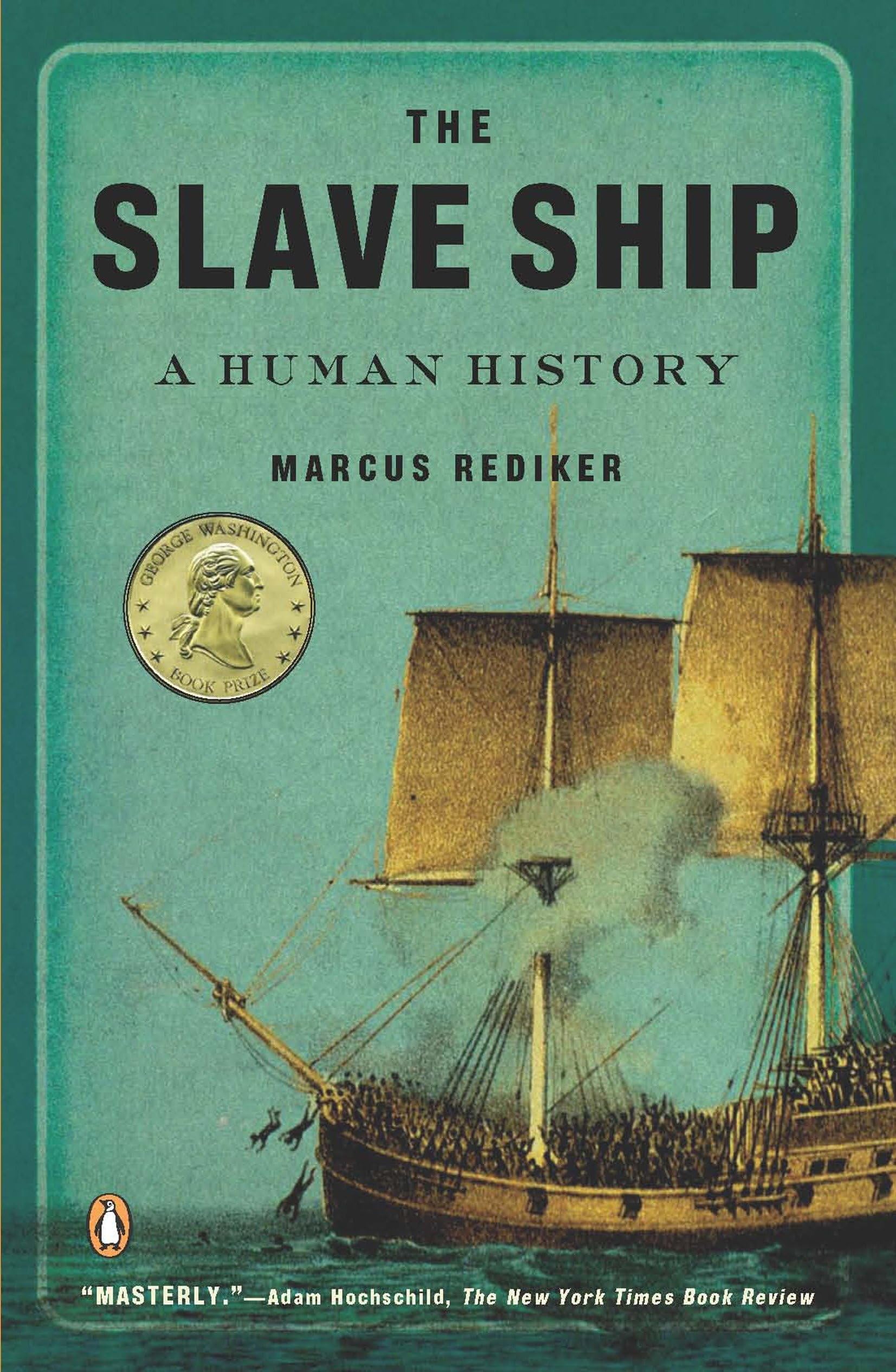
The Slave Ship: A Human History
Product ID: 1705939
Buy anything from 5,000+ international stores. One checkout price. No surprise fees. Join 2M+ shoppers on Desertcart.
Desertcart purchases this item on your behalf and handles shipping, customs, and support to Colombia.
In a chilling exploration of a nearly forgotten chapter of history, Marcus Rediker delves into the dark depths of slave ships in the 18th century. In this widely praised history of an infamous institution, award-winning scholar Marcus Rediker shines a light into the darkest corners of the British and American slave ships of the eighteenth century. With meticulous detail, Rediker uncovers the harsh realities of the slave trade, shedding light on the inhumane treatment of captives and the power dynamics aboard the ships. From the economic motivations driving the trade to the efforts of abolitionists, this book reveals the birth of African American culture amidst a backdrop of horror and despair. Drawing on thirty years of research in maritime archives, court records, diaries, and firsthand accounts, The Slave Ship is riveting and sobering in its revelations, reconstructing in chilling detail a world nearly lost to history: the "floating dungeons" at the forefront of the birth of African American culture. This is a powerful and important addition to the study of history, shedding light on a tragedy that should never be forgotten. Review: Astounding detailed facts about the slave trade - This 434 page book "The slave ship" by Marcus Rediker is a complete detailed account of the 400 years of legal slave trading that officially ended May 1st,1807.It relates all the details,including the hardware and tools used (drawings since no photography was invented yet) used to keep the prisoners,the netting surrounding the ship to prevent escapes,even down to a vivid description of the sharks who constantly circled the waters of such vessels eagerly awaiting any dead thrown overboard.In this book are 1st hand accounts of slaves,captains and deck hands of every color and background.In this book are accounts of who captured them and why and from where.Included are various drawings of the various sized ships and the legal slave capacity of 2 slaves per ton of ship weight as established by the slave carrying bill of 1799 and the Dolben act of 1788 and the exact science and logistics thereof of trafficking in human cargo.Maps of the areas are also included in this book .How many dead (both crew and slaves)were acceptable to make a profit to the owners of these ships.In short this book is a "how they did it" in easy to read thou often gruesome words are employed. An entire chapter(and then some) is devoted to John Newton,the slave captain who later renounced his allegiance to the slave trade and turned Christian and who also wrote the Gospel hymn "Amazing Grace"A reading of John Newtons bio is in order to get a fuller picture of the slave trade he objected to but still did. There are detailed notes on each chapter for further study if desired as well as a full alphabetical index to look up names or people. While reading this book I noticed quite a few silimarites between the slave trade and the abortion issue that were not mentioned in the book.Here are a few I quickly jotted down: 1.Both not considered human,thus any treatment was at the discression of the owner. 2.Both pratices were considered uncomfortable with the general public 3.Both were promoted on the backs of the poor 4.Both are mere property of their owners 5.Both were done for "the victims own good" Review: Painful truth - Outstanding, heartbreaking, informative, the most eye openig book about the horrific slave trade I have ever read. A must read for anyone with the desire to understand the seldom mentioned srart of slavery in the western hemisphere.
| Best Sellers Rank | #271,574 in Books ( See Top 100 in Books ) #70 in Slavery & Emancipation History #562 in Discrimination & Racism #874 in African American Demographic Studies (Books) |
| Customer Reviews | 4.6 out of 5 stars 698 Reviews |
2**E
Astounding detailed facts about the slave trade
This 434 page book "The slave ship" by Marcus Rediker is a complete detailed account of the 400 years of legal slave trading that officially ended May 1st,1807.It relates all the details,including the hardware and tools used (drawings since no photography was invented yet) used to keep the prisoners,the netting surrounding the ship to prevent escapes,even down to a vivid description of the sharks who constantly circled the waters of such vessels eagerly awaiting any dead thrown overboard.In this book are 1st hand accounts of slaves,captains and deck hands of every color and background.In this book are accounts of who captured them and why and from where.Included are various drawings of the various sized ships and the legal slave capacity of 2 slaves per ton of ship weight as established by the slave carrying bill of 1799 and the Dolben act of 1788 and the exact science and logistics thereof of trafficking in human cargo.Maps of the areas are also included in this book .How many dead (both crew and slaves)were acceptable to make a profit to the owners of these ships.In short this book is a "how they did it" in easy to read thou often gruesome words are employed. An entire chapter(and then some) is devoted to John Newton,the slave captain who later renounced his allegiance to the slave trade and turned Christian and who also wrote the Gospel hymn "Amazing Grace"A reading of John Newtons bio is in order to get a fuller picture of the slave trade he objected to but still did. There are detailed notes on each chapter for further study if desired as well as a full alphabetical index to look up names or people. While reading this book I noticed quite a few silimarites between the slave trade and the abortion issue that were not mentioned in the book.Here are a few I quickly jotted down: 1.Both not considered human,thus any treatment was at the discression of the owner. 2.Both pratices were considered uncomfortable with the general public 3.Both were promoted on the backs of the poor 4.Both are mere property of their owners 5.Both were done for "the victims own good"
W**.
Painful truth
Outstanding, heartbreaking, informative, the most eye openig book about the horrific slave trade I have ever read. A must read for anyone with the desire to understand the seldom mentioned srart of slavery in the western hemisphere.
L**E
The middle passage from stem to stern
The book is written in crisp clean prose. It is highly educational. It contains a wide variety of anecdotes and interesting short stories that are all connected in the context of slavery. This vast human drama is set against the details of doing business in the slave trade: funding voyages, outfitting ships, recruiting sailors, kidnapping victims, buying and selling people on both sides of the Atlantic, securing, guarding, and sustaining captives, maintaining order through fear, terror, and torture, controlling rebels and squelching uprisings, dealing with illness, death, despondency, and mutiny, and the role of sharks in keeping discipline. The book goes into some detail about the embryonic abolition movement with specific focus on the slave ship Brooks and the efforts of Thomas Clarkson. It also sheds light on the life and times of John Newton, author of the hymn Amazing Grace. Oddly enough, no mention is made of the Amistad (but that saga is thoroughly described elsewhere). The book includes about 40 pages of notes. Maps of West African slaving areas with labels for ethnic groups and towns are printed near the front of the book. It also contains a small collection of illustrations and photos on glossy paper. The book ends with a pitch for reparations which seemed a bit off kilter to me. A considerably longer essay could be devote to that contentious subject. Atonement by this generation for the monstrous deeds of the past is a prickly subject fraught with legal issues and bureaucratic snafus. It's also a political hot potato.
R**S
Superb
Terrific historical writing
S**T
Academically stunning in depth study of slavery and shipping
Academically stunning, and finally an in depth study of the entire merchant system and the ships that made it possible. Multiple viewpoints of the same events, such as the collection of Africans from the coasts of Africa, yields a layered view of how those events unfolded for the different participants. Occasionally repetitive, since quoting the same testimony for different points of view. Since this book is primarily about the ships, and their pivotal mechanism and technology as it was applied to the merchant trade and growth of capitalism not only in the Americas, but also throughout the rest of the Western world, it is appropriate that much of the book's discussion and evidence given, supports the use of the ships in their evil service rather than how the slaves, mates and sailors felt about what was happening around and to them. My main disappointment (and understandable since the testimony of sailors employed on the ships engaged in the slave trade was more acceptable to Parliment than that of the transported slaves) was that there were precious few quotes from the Africans themselves who experienced the horror of the Middle Passage. Their experiences were reported tangentially through others, such as ship's surgeons, mates and sailors; but rarely in their own words. Regardless of my personal disappointments, the research presented and the the depth of the discussion have left a sobering impression, with little doubt as to the disregard, callousness and abject evil of the merchants, governments, traders and the entire plantation system that led to the inhuman transport of more than 12 million souls, against their will, to service the purposes and greed of an entire merchant system without the slightest interest in those humans welfare, only insofar as it serviced their own interests.
W**N
the honest truth
This book was outstanding and the author deserves some award. The history he has chronicled is required for all who want some understanding of the American system we now live under. The capitalists system then and now has victims and bullys. The English kept copious notes of their outrageous escapades, and the author, Rediker, captures the most scintillating perspective of the participants, including slaves and traffickers. The world is full of histories of oppression, but the book has captured the horrific nature of then existing English/American terrorism. The abolitionist were truly to be applauded but it seems so little so late. Nevertheless the book is excellent, moving, compelling and highly recommended by me because the historical perspective is overwhelmingly brilliant. Great source work and detail.
S**T
Great Read on a Controversial Topic
I read the kindle edition, and being a student of history this book contains excellent descriptive stories of the horrid experiences on board the slave ship. Rediker paints a vivid scene of the death machine known as the slave ship, and this human variable affecting slave mortality is made well known through his specific examples of the evil treatment on the slaves. This title is a must read for anyone interested on the topic, and is a excellent diversion from those historians and statisticians who tend to manipulate the numbers and the bogus statistics in order to conclude their arguments about the specifics of mortality on board slave ships. Rediker reveals to the reader that not all ships were the same, and that goes the same for the crew. Human involvement during this time was the quintessential variable impacting the slave trade and that is made crystal clear by Rediker's gruesome, descriptive writing. This is a definite must have for anyone's collection on this material.
C**B
Heart Wrenching but History Must Not Be Forgotten
This book tells of the horrendous events that occurred to our fellow humans who suffered horrors and atrocities that no person should ever suffer. For those who are in denial about the mistreatment of humans based on skin color, this book is a wake up call to understand the sufferings of those who have gone before us, and the evild that greedy people were willing to treat humans as if they were less than goods, less than human, treating them with insufferable horrors unimaginable -- and they did this for money. This book tells the truth. This book is hard to read - it should have never happened. Heart wrenching. Shed some tears for your fellow human and be in disbelief because of the atrocities committed and the horrible unspeakable sufferings they endured.
N**L
A shocking record of this barbaric trade
Very well written. Shocking record of this barbaric era.
M**D
Top Knotch History Book
The reviews above cover the ground quite adequately, so let me just add this: The Slave Ship is a powerful piece of essential background for all who live in today's capitalist economies. As one reviewer elsewhere so poignantly put it (Alice Walker), this book is homework of the most insistent order. The very least that we, especially the descendents of the slave-dealing participants, must do for those who suffered this terrible criminality, is try to comprehend what happened and why. Reading this book brings to mind Primo Levi's insistent plea that we listen; we, the generations who now can view the whole sorry disgrace that was the slave trade with the comfort of hindsight, have an obligation and a need to do so. That said, it is both galling and deeply sad that there exist so precious few accounts from the slaves and participants themselves. This book tries to offer some redress, and succeeds. The one image which remains to haunt you from this masterful history book, is the one of the slaves singing. Often in chains, usually in the stink of the cramped below-decks, and most movingly at night, as they were wrenched ever further away from their homes in the fetid Hell that was the floating dungeon of their slave ship, the Africans would sing on the high seas, sometimes in a call and response around the hold, to give voice to their extreme misfortune. Did they know that there was no happy ending, that they were headed to a certain death through toil and hard labour on a different continent, all to keep the coiffured whitefolks in sugar and cotton? It must have been the Blues as we have never heard it and only God and the Ocean can.
C**N
Disappointing.
I have read a lot about the vile despicable Slave Trade-the only thing i would put on a par with the Nazi Holocaust. This book should have been excellent but it is badly written and leaves out much about the middle passage and just how greedy and disgusting the British (especially!) were. To me, it reads more like a whitewash.
U**Z
Required study on Post Slavery by Accounting and Testimonials
Required study on Post Slavery by Accounting and Testimonials A full heart achingly documented witnessing of the curses from Deuteronomy 28. Living Hell on Waters 💧 is their DNA account of generational Post Slavery Traumatized Melanated Israelites.
U**A
excellent, rare to find any other book on this ...
excellent ,rare to find any other book on this subject.painful to know miseries and attrocities committed during the 400 years of trans atlantic slave trade, in the name of building up capitalism...A very well researched book..with a collection of facts lost in time...
Trustpilot
2 weeks ago
1 month ago