
Buy anything from 5,000+ international stores. One checkout price. No surprise fees. Join 2M+ shoppers on Desertcart.
Desertcart purchases this item on your behalf and handles shipping, customs, and support to Colombia.
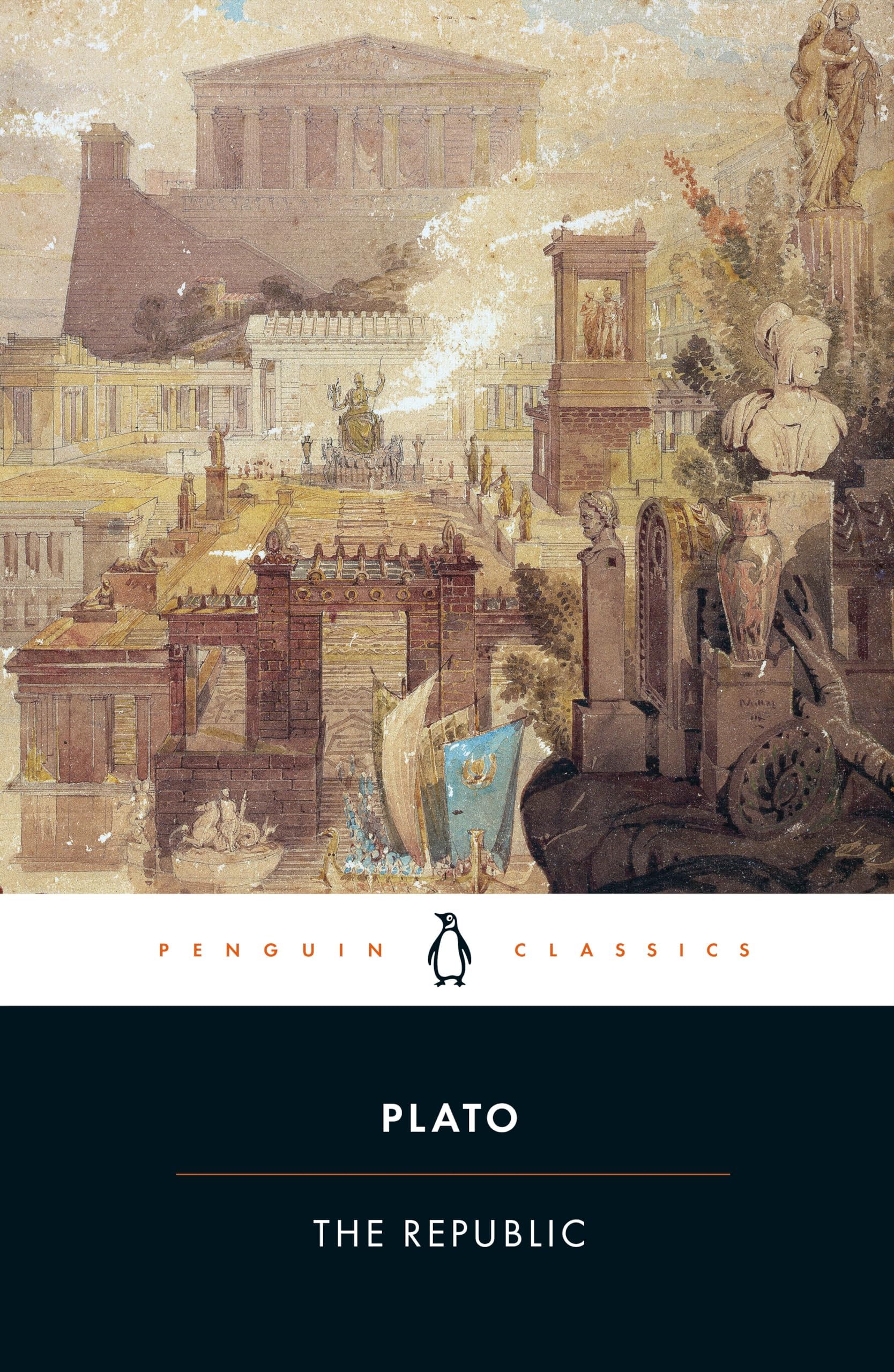
Plato's The Republic is widely acknowledged as the cornerstone of Western philosophy. Presented in the form of a dialogue between Socrates and three different interlocutors, it is an inquiry into the notion of a perfect community and the ideal individual within it. During the conversation other questions are raised: what is goodness; what is reality; what is knowledge? The Republic also addresses the purpose of education and the role of both women and men as "guardians" of the people. With remarkable lucidity and deft use of allegory, Plato arrives at a depiction of a state bound by harmony and ruled by "philosopher kings." For more than seventy years, Penguin has been the leading publisher of classic literature in the English-speaking world. With more than 1,700 titles, Penguin Classics represents a global bookshelf of the best works throughout history and across genres and disciplines. Readers trust the series to provide authoritative texts enhanced by introductions and notes by distinguished scholars and contemporary authors, as well as up-to-date translations by award-winning translators. Review: Great - The Republic is a foundational work of Western philosophy that combines political theory, ethics, metaphysics, and epistemology into a sustained dialectical inquiry framed as a dialogue led by Socrates. Its central question—what is justice—expands into an ambitious vision of the just soul and the just city, culminating in the theory of Forms and the famous allegory of the cave, which articulates Plato’s hierarchy of reality and knowledge. The work is intellectually demanding, at times abstract and structurally repetitive, but that repetition serves the argumentative method, forcing the reader to confront assumptions about virtue, power, education, and truth. While some political proposals, such as the communal structure of the guardian class, can appear extreme or impractical, they function philosophically rather than programmatically, illustrating deeper claims about order and moral formation. As a text, it rewards slow, analytical reading and remains indispensable for anyone serious about philosophy, political theory, or the intellectual roots of Western civilization. Review: A classic edition-though an alternative would be welcome - Desmond Lee's translation is no doubt very learned yet easy and convenient to read. His endnotes and annotations are on the whole exceedingly helpful. Still, an alternative edition, of the same quality standard but with a slightly different character, would be welcome, so that it could be read side by side with Lee's edition. Re the translation, one wonders whether Lee, in a bid to accommodate the modern reader, goes too far in rendering Plato's terms in a variety of modern terms. For some of the key concepts, Lee provides the original in endnotes, which is helpful but involves a lot of going back and forth (footnotes might have been preferable). For many concepts, he does not. This is not a call for having the original next to the translation, but for a more literal translation. Re Lee's annotations and appendices, they are helpful analytically but not as much philosophically. I would have loved to have brief philosophical essays on the key similes or concepts in the appendix. The list of secondary readings, which is almost entirely by so-called "analytical" philosophers, hence extremely one-sided and curtailed, gives it away: this edition is produced in an "analytical" tradition. The alternative edition I'd hope for would be furbished by philosophers. One finds them in German or French, of course, but I'd like to see that in English, too.


| Best Sellers Rank | #8,735 in Books ( See Top 100 in Books ) #5 in Foreign Language Materials |
| Customer Reviews | 4.6 out of 5 stars 2,600 Reviews |
A**R
Great
The Republic is a foundational work of Western philosophy that combines political theory, ethics, metaphysics, and epistemology into a sustained dialectical inquiry framed as a dialogue led by Socrates. Its central question—what is justice—expands into an ambitious vision of the just soul and the just city, culminating in the theory of Forms and the famous allegory of the cave, which articulates Plato’s hierarchy of reality and knowledge. The work is intellectually demanding, at times abstract and structurally repetitive, but that repetition serves the argumentative method, forcing the reader to confront assumptions about virtue, power, education, and truth. While some political proposals, such as the communal structure of the guardian class, can appear extreme or impractical, they function philosophically rather than programmatically, illustrating deeper claims about order and moral formation. As a text, it rewards slow, analytical reading and remains indispensable for anyone serious about philosophy, political theory, or the intellectual roots of Western civilization.
M**Z
A classic edition-though an alternative would be welcome
Desmond Lee's translation is no doubt very learned yet easy and convenient to read. His endnotes and annotations are on the whole exceedingly helpful. Still, an alternative edition, of the same quality standard but with a slightly different character, would be welcome, so that it could be read side by side with Lee's edition. Re the translation, one wonders whether Lee, in a bid to accommodate the modern reader, goes too far in rendering Plato's terms in a variety of modern terms. For some of the key concepts, Lee provides the original in endnotes, which is helpful but involves a lot of going back and forth (footnotes might have been preferable). For many concepts, he does not. This is not a call for having the original next to the translation, but for a more literal translation. Re Lee's annotations and appendices, they are helpful analytically but not as much philosophically. I would have loved to have brief philosophical essays on the key similes or concepts in the appendix. The list of secondary readings, which is almost entirely by so-called "analytical" philosophers, hence extremely one-sided and curtailed, gives it away: this edition is produced in an "analytical" tradition. The alternative edition I'd hope for would be furbished by philosophers. One finds them in German or French, of course, but I'd like to see that in English, too.
S**I
Very good
Very good
B**G
Classic everyone should read
Was a gift for a friend, he seemed to like it
W**N
Plato's Republic
classic to be read.
T**O
An Interesting Look into Justice and the Perfect State
The Republic, by Plato, is a very thoughtful and explorative writing about the perfect state, the role of justice in it, and how it could be materialized. Plato explores how a state should function, in terms of justice, and he discusses what justice is, how it governs human actions, and why it is so important. The society, according to him, has 3 classes, workers, warriors, and rulers, who must all coexist and work together. They are governed by appetite, spirit(honor), and thought, respectively. Someone who is governed by one thing, say appetite, but holds a position that should be governed by another idea(say ruler), becomes a bad thing for society, in this case a tyrant. Who should hold each postitions, how they should be trained, and what types of things should be allowed in the society, and in their lives are all discussed by Plato, but he does come to the conclusion, that although money can satisfy the appetite, it cannot satisfy the mind, and thought and understanding brings true happiness, and justice brings true good. Education should ensure that good rules the minds of society, for great knowlege combined with evil intentions causes trouble. The world inself has a visible and mental form, and Thinkers and Philosophers are those who access most the mental world. Justice however, is inherently good, and brings the most true good to a society. Plato's analysis of the state is quite a profound and interesting one, and this book is a simple translation to read and understand and is recommendable to anyone. It is truly a must read, especially in greek literature, as Plato is one of the great thinkers of all time.
K**R
Fantastic
This read was enormously imperative for a student of philosophy. Learning importances of formations of different governments and how childhoods attribute towards such formations, relativity of the soul, and it's influences and immortality, the definition of the Forms, the illusions of life as depicted by Plato, and the importance of dialogue in philosophy such as dialects and many more. Congratulations to the initiator of this read as you will come out on the other end a far greater knower of the importance of knowledge and it's levels of ranking.
D**N
Better than I expected
To those unfamiliar, The Republic is written in the form of a "Socratic dialogue", which is a long, continuous conversation between Socrates and his pupils. Sort of like an ancient podcast. That being said, this is not a very easy read, and you should probably read one of Plato's other works first before diving in. In particular, I recommend reading The Apology first, which mirrors the tone of this book. In The Apology, the superior wisdom and moral clarity of Socrates ultimately leads to his downfall at the hands of the Athenian state. In contrast, The Republic has a more optimistic vision; Socrates constructs a utopian state grounded by virtue and ruled by philosophers. I thought the translator did a fantastic job of preserving Socrates's playful style without compromising on the fundamental ideas. The summary/context at the beginning of each section was helpful, too. Even without today's advanced technology, Plato was able to pinpoint some of life's most valuable epistemological truths. This is why I love classical philosophy. The Republic is a life raft that guides us toward a kind of dialectic knowledge that is often overlooked in our chaotic, unfocused world.
H**.
Arka kısım zedeli geldi
R**P
Fantastic Translation and Notes
I personally always prefer a Penguin because of the fantastic essays before the book actually begins. Any praise I could give for Melissa Lane's essay would be inadequate to describe how great it actually is. It is brief yet it puts the book in perspective for a reader who is not very well acquainted with Plato's writings. Those who are more acquainted would not find the essay as fantastic. The translation is not 2013 modern but it is translated into intelligible modern English (no "art thou's" or other archaic Shakespearian sounding English). I have not completed reading the book but I have completed reading part one (the introduction) and in my opinion it is a fantastic translation. As a religion student I have taken my share of ancient Greek classes so I appreciate the translators notes on the difficulty of translating certain sections. Because I know the dead language I can see why somethings would be difficult especially with Plato's τέχνη (techne) analogies in section one. These notes aren't just there to mark where the translation is difficult but also to give the reader an introduction to the following argument to help the reader keep up with Plato's thoughts (especially when they begin to get complicated and intertwined with ancient modern ideas that we are ignorant about). If you are debating between this copy or another, I recommend this one.
P**S
Too good
Please go for it the book quality is too good thank you
L**S
Decent book, but not an easy read
Decent book, but it’s very easy to get lost & there’s many words that probably you will have to look up to understand.
V**A
True to Description
The book is in good condition and looks exactly like it did in the picture.
Trustpilot
2 weeks ago
3 days ago