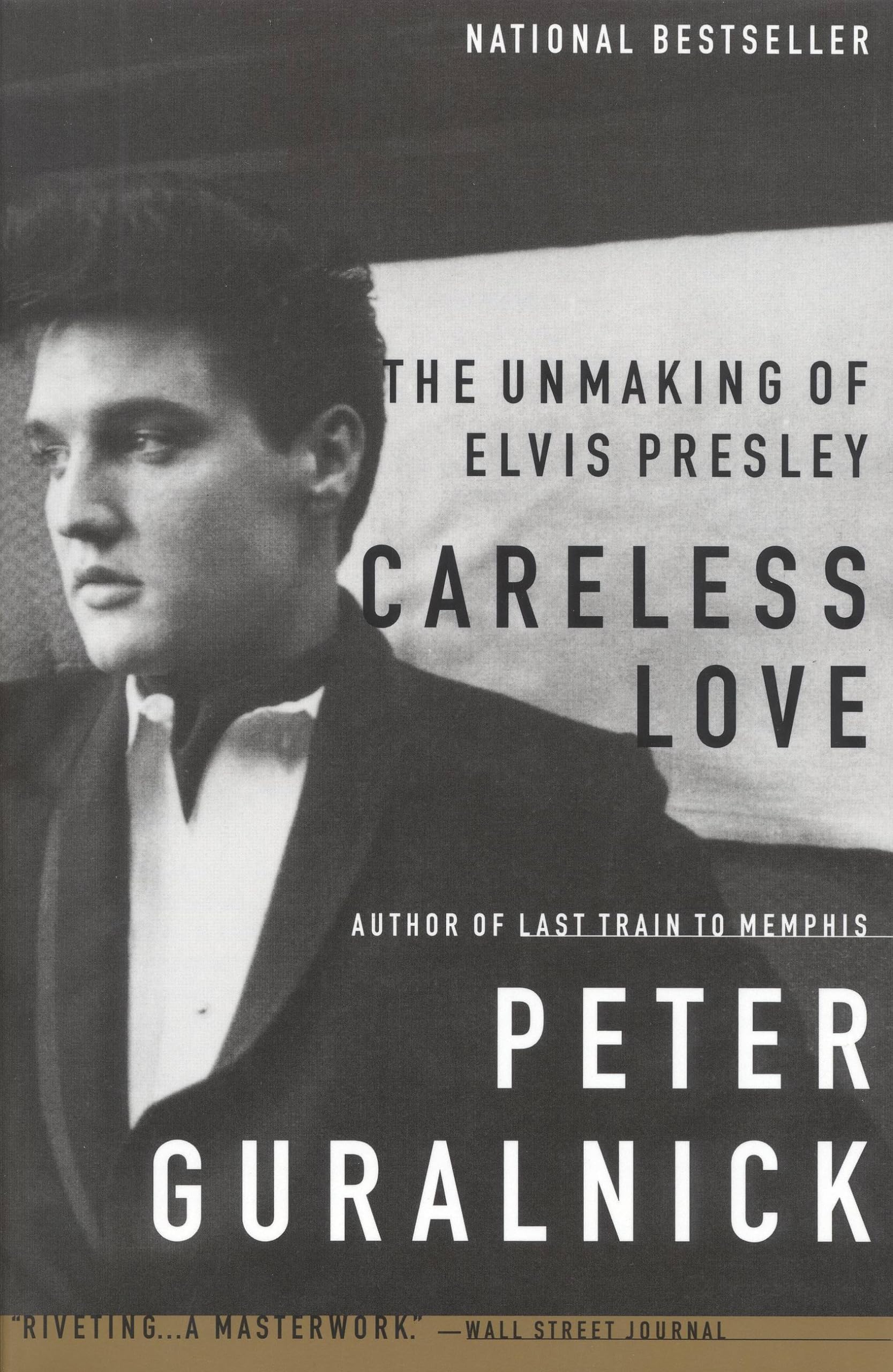
Careless Love: The Unmaking of Elvis Presley
Product ID: 1608949
Buy anything from 5,000+ international stores. One checkout price. No surprise fees. Join 2M+ shoppers on Desertcart.
Desertcart purchases this item on your behalf and handles shipping, customs, and support to Colombia.
Careless Love is the full, true, and mesmerizing story of Elvis Presley's last two decades, in the long-awaited second volume of Peter Guralnick's masterful two-part biography. "A masterwork." ― Wall Street Journal Last Train to Memphis , the first part of Guralnick's two-volume life of Elvis Presley, was acclaimed by the New York Times as "a triumph of biographical art." This concluding volume recounts the second half of Elvis' life in rich and previously unimagined detail, and confirms Guralnick's status as one of the great biographers of our time. Beginning with Presley's army service in Germany in 1958 and ending with his death in Memphis in 1977, Careless Love chronicles the unravelling of the dream that once shone so brightly, homing in on the complex playing-out of Elvis' relationship with his Machiavellian manager, Colonel Tom Parker. It's a breathtaking revelatory drama that for the first time places the events of a too-often mistold tale in a fresh, believable, and understandable context. Elvis' changes during these years form a tragic mystery that Careless Love unlocks for the first time. This is the quintessential American story, encompassing elements of race, class, wealth, sex, music, religion, and personal transformation. Written with grace, sensitivity, and passion, Careless Love is a unique contribution to our understanding of American popular culture and the nature of success, giving us true insight at last into one of the most misunderstood public figures of our times. Winner of the Ralph J. Gleason Music Book Award Winner of the Southern Book Critics' Circle Award for Non-Fiction A New York Times Notable Book of the Year A Los Angeles Times Best Book of the Year A Publishers Weekly 's Best Book of the Year An Esquire Distinguished Book of the Year Salon Magazine ’s Top Five Non-Fiction Books of the Year Winner of the 1999 Salon Book Award People Magazine’s Best Rock And Roll Books Billboard 's 100 Greatest Music Books of All Time Review: Great book-very sad read - Careless Love, the second half of Guralnick's excellent bio of Elvis, is much harder to stomach than Part 1, due to the subject matter. Where Part I, Last Train to Memphis, told the story of Elvis during his glory years and rise to stardom, when he was literally on fire, Part II, especially the latter sections, is virtually the depiction of a prolonged death march. Elvis descends into drug dependency, mental instability, financial insecurity, decline of record sales and popularity, and hastily thrown together, financially motivated tours, combined with his getting fat and fuzzy and ill-fated love affairs. Elvis's inevitable death sitting on the toilet in Graceland while trying to defecate really comes as no surprise. However, as sad as all that is, Guralnick's portrait allows us to empathize with a really human Elvis, who, once a god, disintegrates into a jumpsuited pile of self loathing, self-pity and self-destruction. The reasons for this are many and Guralnick exposes them all: the death of his mother, so called friends and family who use him for his money, the Colonial mercilessly trying to push Elvis product, no matter the cost to Elvis himself, an apparent predilection for feeling "high", Feelgood "doctors" who provide Elvis with crazy amounts of "prescribed" drugs (the toxicity report stemming from the autopsy is disgusting), and a self-loathing that equals anything in Shakespeare's great tragedies. Elvis really had no one to blame but himself for what happened-as this book makes clear. But the book also makes clear the price he pays for the otherworldly success he experienced in the first Book, in which he was depicted, rightly so, as a virtual god, and treated as such by fans and those around him. The sad thing is that the book really gets across that what really mattered to Elvis was the music and his ability to communicate through music and his performances with fans, and as his ability to do so diminished over time, for all the reasons mentioned above, his own self worth and will to live diminished as well. Elvis went from the heights of fame and fortune, and ended up by the end of this book as an overweight, delusional, whining mess who ends up dying while defecating laying in the bathroom in a pool of his own vomit. Not pretty stuff folks, and the book doesn't flinch or shy away from the grim reality that Elvis ended up experiencing. One can point to the Memphis Mafia and the stupid "tell all" book they wrote that precipitated and possibly even hastened his death (what kind of "friends" would do that to someone? and I don't buy their BS excuse that they sold the book in order to "help their friend, who otherwise wouldn't listen to him", come on, complete bull), or the Colonial who really could care less for Elvis as a person, or for anyone else for that matter as this book makes clear, (see the "Colonial's" treatment of his own family), or Ginger, his last "girlfriend" who comes across as self-serving and motivated by her family to "marry him quick before he dies" for his money, or even his dad Vernon who was ineffectual in truly being there for Elvis emotionally and was clearly on the gravy train as well. But ultimately, Elvis was responsible for Elvis. And he simply could not handle being a mature person, couldn't handle growing old. Sad. But this is a great book, well researched, well written, and sad as it is, the depth and skill of the writing allows us to really feel for Elvis. Its just too bad that those around him seemed to never have really loved him as a person. His music, legacy and influence will stand the test of time. I think it is time for a re-evaluation of Elvis the artist. Sinatra and others have experienced revivals of their music, and I think Elvis's time will come, once the caricatures and jokes disappear. Review: "Elvis always kept his own world with him"--Lamar Fike - This review is for the audio cassette version. In order to play it, the listener will need either a player with left and right balance control or an adapter into which to plug speakers or headphones so as to listen to the left or right side at one time. The set includes 9 cassettes which are played twice--the entire cassette listening to only the left speaker and then the same cassette again listening to the right. This second volume of Peter Guralnick's exhaustive biography begins with Elvis's time in Germany as a member of the Army and finishes with his sudden death and media-frenzied funeral. The reader, curiously not named on the box or tape cases but listed here as J. Charles, progresses through the unabridged book at a brisk rate, but not too fast as to be difficult to follow. When reading dialog, he changes his voice. A lot of the people in this story he gives a hick accent which is a bit amusing but probably accurate. Careless Love is an extremely thorough book of Elvis's day-to-day life. He lived in his own self-contained world which was surprisingly even more pronounced when he was in the Army. His personal and professional life are told and analyzed. Guralnick chronicles recording sessions with excellent almost day-to-day, track-by-track detail. The artistic and political battles behind the 1968 television special are well described. Certain tracks and performances are given special attention and it is here where the author shows his fondest appreciation for his subject. Elvis's movie roles, on the other hand, are mostly criticized not only for the films' plots but also for Elvis's sometimes disinterested portrayals, although he fancied himself a serious actor. Other highlights include the background story behind Elvis's famous meeting with President Nixon and the rather ironic award of the Bureau of Narcotics and Dangerous Drugs badge. Elvis was strongly patriotic and believed the counter-culture influenced by the Beatles to be a significant threat to American youth. Guralnick paints an often unflattering but fair picture of Elvis in his inner circle. Elvis was extremely self-centered and very demanding. He wanted to mold his girlfriends to fulfill his needs which were often childlike. He also, from back when he was in the Army on, pushed his amphetamine use on his friends so they could stay up with him and live by his schedule. Where the listener gets a more sympathetic view of Elvis regards his philosophical side--especially in the chapters where he discusses books, spirituality, and the loneliness and hollowness of his life with hairdresser Larry Geller (beginning on tape 3, side 2a). But again, in his selfish way, he forced his book-reading on Priscilla (she did adopt his love of karate, however). Still, as much as Elvis was the center of his own world, he didn't always wield much control. He was often influenced by the guys in his entourage, especially when he wanted to try new things musically. The Colonel Tom Parker also had a powerful influence over Elvis even if the King of Rock & Roll disagreed with him. Those interested in the fall of the King will find the last chapters of this book fascinating. Guralnick covers with excellent detail Elvis's rapid decline. In his later performances, Elvis is obviously described as overweight and disinterested and often complains about the venue and humiliates his musicians. His dependence on drugs lead to several scary moments where whichever girlfriend he had at the time would find him unconscious (once in a bowl of soup). He would lavish his friends and family with elaborate gifts yet display mood swings that were increasingly violent and threatening. The ignominious condition of his body once discovered is also described. This study is hardly sycophantic and goes into a lot of ugliness, but it appears honest and shows things as they were which is more often than not less than glamorous. For readers who want a thorough look at the latter half of Elvis's life to the point of almost feeling as though you were along for the ride, Careless Love is highly recommended.




| Best Sellers Rank | #79,101 in Books ( See Top 100 in Books ) #23 in Rock Music (Books) #32 in Rock Band Biographies #151 in Actor & Entertainer Biographies |
| Customer Reviews | 4.6 out of 5 stars 1,663 Reviews |
C**N
Great book-very sad read
Careless Love, the second half of Guralnick's excellent bio of Elvis, is much harder to stomach than Part 1, due to the subject matter. Where Part I, Last Train to Memphis, told the story of Elvis during his glory years and rise to stardom, when he was literally on fire, Part II, especially the latter sections, is virtually the depiction of a prolonged death march. Elvis descends into drug dependency, mental instability, financial insecurity, decline of record sales and popularity, and hastily thrown together, financially motivated tours, combined with his getting fat and fuzzy and ill-fated love affairs. Elvis's inevitable death sitting on the toilet in Graceland while trying to defecate really comes as no surprise. However, as sad as all that is, Guralnick's portrait allows us to empathize with a really human Elvis, who, once a god, disintegrates into a jumpsuited pile of self loathing, self-pity and self-destruction. The reasons for this are many and Guralnick exposes them all: the death of his mother, so called friends and family who use him for his money, the Colonial mercilessly trying to push Elvis product, no matter the cost to Elvis himself, an apparent predilection for feeling "high", Feelgood "doctors" who provide Elvis with crazy amounts of "prescribed" drugs (the toxicity report stemming from the autopsy is disgusting), and a self-loathing that equals anything in Shakespeare's great tragedies. Elvis really had no one to blame but himself for what happened-as this book makes clear. But the book also makes clear the price he pays for the otherworldly success he experienced in the first Book, in which he was depicted, rightly so, as a virtual god, and treated as such by fans and those around him. The sad thing is that the book really gets across that what really mattered to Elvis was the music and his ability to communicate through music and his performances with fans, and as his ability to do so diminished over time, for all the reasons mentioned above, his own self worth and will to live diminished as well. Elvis went from the heights of fame and fortune, and ended up by the end of this book as an overweight, delusional, whining mess who ends up dying while defecating laying in the bathroom in a pool of his own vomit. Not pretty stuff folks, and the book doesn't flinch or shy away from the grim reality that Elvis ended up experiencing. One can point to the Memphis Mafia and the stupid "tell all" book they wrote that precipitated and possibly even hastened his death (what kind of "friends" would do that to someone? and I don't buy their BS excuse that they sold the book in order to "help their friend, who otherwise wouldn't listen to him", come on, complete bull), or the Colonial who really could care less for Elvis as a person, or for anyone else for that matter as this book makes clear, (see the "Colonial's" treatment of his own family), or Ginger, his last "girlfriend" who comes across as self-serving and motivated by her family to "marry him quick before he dies" for his money, or even his dad Vernon who was ineffectual in truly being there for Elvis emotionally and was clearly on the gravy train as well. But ultimately, Elvis was responsible for Elvis. And he simply could not handle being a mature person, couldn't handle growing old. Sad. But this is a great book, well researched, well written, and sad as it is, the depth and skill of the writing allows us to really feel for Elvis. Its just too bad that those around him seemed to never have really loved him as a person. His music, legacy and influence will stand the test of time. I think it is time for a re-evaluation of Elvis the artist. Sinatra and others have experienced revivals of their music, and I think Elvis's time will come, once the caricatures and jokes disappear.
M**W
"Elvis always kept his own world with him"--Lamar Fike
This review is for the audio cassette version. In order to play it, the listener will need either a player with left and right balance control or an adapter into which to plug speakers or headphones so as to listen to the left or right side at one time. The set includes 9 cassettes which are played twice--the entire cassette listening to only the left speaker and then the same cassette again listening to the right. This second volume of Peter Guralnick's exhaustive biography begins with Elvis's time in Germany as a member of the Army and finishes with his sudden death and media-frenzied funeral. The reader, curiously not named on the box or tape cases but listed here as J. Charles, progresses through the unabridged book at a brisk rate, but not too fast as to be difficult to follow. When reading dialog, he changes his voice. A lot of the people in this story he gives a hick accent which is a bit amusing but probably accurate. Careless Love is an extremely thorough book of Elvis's day-to-day life. He lived in his own self-contained world which was surprisingly even more pronounced when he was in the Army. His personal and professional life are told and analyzed. Guralnick chronicles recording sessions with excellent almost day-to-day, track-by-track detail. The artistic and political battles behind the 1968 television special are well described. Certain tracks and performances are given special attention and it is here where the author shows his fondest appreciation for his subject. Elvis's movie roles, on the other hand, are mostly criticized not only for the films' plots but also for Elvis's sometimes disinterested portrayals, although he fancied himself a serious actor. Other highlights include the background story behind Elvis's famous meeting with President Nixon and the rather ironic award of the Bureau of Narcotics and Dangerous Drugs badge. Elvis was strongly patriotic and believed the counter-culture influenced by the Beatles to be a significant threat to American youth. Guralnick paints an often unflattering but fair picture of Elvis in his inner circle. Elvis was extremely self-centered and very demanding. He wanted to mold his girlfriends to fulfill his needs which were often childlike. He also, from back when he was in the Army on, pushed his amphetamine use on his friends so they could stay up with him and live by his schedule. Where the listener gets a more sympathetic view of Elvis regards his philosophical side--especially in the chapters where he discusses books, spirituality, and the loneliness and hollowness of his life with hairdresser Larry Geller (beginning on tape 3, side 2a). But again, in his selfish way, he forced his book-reading on Priscilla (she did adopt his love of karate, however). Still, as much as Elvis was the center of his own world, he didn't always wield much control. He was often influenced by the guys in his entourage, especially when he wanted to try new things musically. The Colonel Tom Parker also had a powerful influence over Elvis even if the King of Rock & Roll disagreed with him. Those interested in the fall of the King will find the last chapters of this book fascinating. Guralnick covers with excellent detail Elvis's rapid decline. In his later performances, Elvis is obviously described as overweight and disinterested and often complains about the venue and humiliates his musicians. His dependence on drugs lead to several scary moments where whichever girlfriend he had at the time would find him unconscious (once in a bowl of soup). He would lavish his friends and family with elaborate gifts yet display mood swings that were increasingly violent and threatening. The ignominious condition of his body once discovered is also described. This study is hardly sycophantic and goes into a lot of ugliness, but it appears honest and shows things as they were which is more often than not less than glamorous. For readers who want a thorough look at the latter half of Elvis's life to the point of almost feeling as though you were along for the ride, Careless Love is highly recommended.
M**M
Still a Fan
For several years I've considered reading this and "Last Train to Memphis". I kept putting it off because I knew the ending was, inevitably, the saddest possible ending anyone could ever write. Also, after reading other reviews and hearing what some people described as the most intimate, detailed book of the "real" Elvis, I was afraid it would leave me feeling like [less] of a fan than I'd been all these years. I just didn't want to face the truth and all of it's painful details. Gladly, it has not changed my mind about Elvis. Guralnick's stories have been described as "too wordy, too full of details". I must say that I fully appreciate all of the specifics. The finely tuned descriptions and numerous accounts from those closest to Elvis made the story come alive. There are few things, although somewhat trivial, that I took issue with.... In "Last Train", Guralnick says that there was an absence of body hair that gave Elvis a somewhat effeminate look. Not so! In photos, he clearly has chest hair. If there was anything at all feminine about the man, it was his use of mascara, his pink, ruffled shirts and his affinity for jewelry. Of course this could have also described Prince, God rest his soul. Then there is the issue of his weight. We all saw how Elvis not only looks heavier in later years, but it is obvious that he's not only overweight, he's also swollen. But this isn't the only time that he's criticized for his girth. Early on in his career, specifically when he's making the movie "Frankie and Jonny, the director complains that he needs to go on a diet because he's "fat". I've seen that movie and many pictures from that time. I'm not sure what they were seeing, but he's not fat. Then there are the songs...Guralnick claims that Elvis "overpowered Bridge Over Troubled Water" and describes "I'm Leavin" as "another of Elvis's over-the-top-ballads". Ballads, by their very nature are poetic, sentimental. It was in Elvis's nature to pour out his heart and soul. As for "Bridge", saying that he overpowered it is completely silly. That song in particular stands as a testament to his vocal ability and monumental talent. It's nothing less than amazing that Elvis could [rock out] on songs like Polk Salad Annie or Jailhouse Rock then switch gears and perform an American aria of sorts, like "Bridge Over Troubled Water". For me, this song in particular is like "going to church". It's moving, comforting, uplifting, hopeful. I was blessed to have seen him live in concert. It was a defining moment in my life, as it was for thousands of other fans. And Peter Guralnick does an outstanding job of presenting each of his concerts in his books. Not to mention the nearly day-by-day account of his entire life. These books should stand as a blueprint for what not to do if you're an entertainer. As well as a blueprint for how to be the best entertainer you can be. The juxtaposition of an insecure Elvis with the Patriot Elvis is astounding. His dedication to the Jaycee's speech, for instance, it's contents and eloquence a testament to everything he was and could have been, yet wasn't. That evening after he received the award, he and Priscilla entertained guests at Graceland. Then again later at a local restaurant. To Priscilla, he was strong, brilliant, fully in control. How sad that he was so animated, so full of hope, only to forfeit it all and fall back into the same old traps. Somewhat like his excitement over the 68' Comeback Special. There is a palpable expectancy, and then, at the end as he sings "If I Can Dream", it's as though he is pleading not only for equality for mankind, but for his own freedom. And then the show ends, he walks away, satisfied that it was a success. The relationship that he'd formed with Steve Binder, left behind, forgotten. Binder had been so hopeful, so sure that Elvis could be so much more than the side show that Tom Parker had created. A prisoner to his own life. Trapped in a jaded castle with a gate and guards. Guards who would later turn on him. The contrast of Elvis's respect for and total disgust with Tom Parker is amazing. Parker's constant assurance that he only had Elvis's best interests at heart was his attempt to cover his own dishonest ass. The only thing he was ever interested in was keeping his cash cow on the road, on stage, making money. (Yet, he passes up a tremendous opportunity to really cash in on a serious movie when Streisand asks Elvis to co-star with her in "A Star is Born".)There was no movie terrible enough that he'd pass it up. There was no level of exhaustion on Elvis's part that would keep Parker from booking yet another concert. He simply didn't care. The most evident example of this is when Elvis finally expires. Parker is just too busy to shed a tear. He immediately launches into new plans to take full advantage of his death to make a buck. The women...There are so very many of them. He was like a kid in a candy store and all he wanted was a taste of everything. Just as he had no filter on how many cars he could buy, how many pieces of jewelry he would own, or how many bacon sandwiches he might eat at one sitting, he also had no limit to the number of women he would juggle at any given time. I remember considering how I might react if, while I was attending his concert, he would give out kisses to the women as they waited in line. Would I be one of them? (Of course I was only a kid of 14 at the time. I like to joke that I was probably just the right age.) And then I discovered that I was actually quite repulsed by the notion of waiting to be the next one to "swap spit" with Elvis, right after another girl/woman had just done that! If kissing him after numerous others had made me a bit nauseous I can't imagine how all of those women bedded down with him, many of them fully aware that another girl had either just left his bed or one was waiting in the wings to be the "next in line". And then, there is his unrelenting religious beliefs. There were times when he "searched" for answers outside of the bible, outside of Almighty God's Word. He often looked to other "paths", but ultimately he seemed to stick with the Christian upbringing that he'd had with his parents. As a fellow believer, I truly hope this is the case. And I hope that upon taking his last breath he was immediately in the presence of the Saviour. And lastly, I hope to some day see him and hear him singing again. In heaven. But that's just me... Overall, Peter Guralnick conveys Elvis's heart. His true feelings, his desire to reach people, to help those who were less fortunate. He never forgot where he came from. And he always gave the fans credit for his success, fame and wealth. These books are two of the best accounts of a life filled with hope, with fear, with fun, with anticipation and a life filled with the insecurities that are born out of fear. Out of poverty, out of a lack of education. Despite the lack of education, Elvis was quite intelligent and showed an appreciation for books of all sorts. His talent is almost indescribable. He set the stage for those who would follow in his footsteps. They have big shoes to fill. So far no one else has ever done what he did. No one ever could. He was the first. And Peter Guralnick has done an outstanding job of gifting us with the Story of Elvis Presley. If you are a fan you will get "it". If you're not a fan, shame on you. You should be.
S**E
Seems to be well researched...
I've read a number of the Elvis Presley Books - and this is one of two of the best ... the other being "The Inner Elvis" which explains SO MUCH about why Elvis was the way he was and why he did the things he did. Careless Love was, of course, not a "happy" book - the last years of his life were tragic. I do feel, however, he lived more in 42 years than most of us live in 82...he actually did have people around, was able to do most of what he wanted to do - with his friends, travelel...had houses in Los Angelos, Palm Springs, Memphis - vacationed any time he wanted in Hawaii - how many of us get to do that! Elvis was literally a sick man when he passed away - he suffered from many things - and, of course, the drugs did not help. READ "THE INNER ELVIS" About the book - it can be confusing at times, as the author drops in too much information and interrupts his sentences when he is telling about an episode...i.e, he will mention a name and then go into a two-page discourse on that person before he gets back to what he is saying; and, in that sense, I think it could have been edited better...sometimes, I had to just skip pages because it just wasn't making sense. Also noticed several mistakes in historical history in the book. But, still an interesting read - and, yes, the last half is just so sad to see this VERY gifted man just destroy himself. Just so sad.
R**N
A Modern Tragedy
I have a friend who's as much an Elvis-Sun Records-Rockabilly nut as I am, and while he read, enjoyed, and admired the first volume of Guralnick's definitive biography, was able to read only a little of this second volume. As he put it: "It was unbearably sad to read about Elvis's sordid and degrading decline." I agree that Elvis's decline is a tragedy, but given Guralnick's meticulous research and writing skills, I couldn't help turning pages until I reached the end. The first volume proved one thing: that Elvis was the most significant figure in 20th century popular music. The second volume proved another: that Colonel Tom Parker was a money-grubbing philistine who wasn't worthy of dominating the life and career of a great artist like Elvis. In fact, the hero of this biography is the genius Sam C. Phillips, who released five recordings by Elvis in 1954-55 that are unquestionably his finest recorded work. Another hero is the great Scotty Moore, Elvis' lead guitarist, who created guitar fills and solos that are among the most inventive and memorable ever heard in recorded rockabilly. That Phillips had the best ear among 1950's independent record producers working in the blues and related styles of music is undeniable. His technical prowess was awesome in the true sense of the word. For example, when Elvis when to RCA in 1955-56, Steve Sholes and his recording engineers literally didn't know how to reproduce the sound Phillips had achieved with Elvis using minimalist equipment in a very small studio, known as "the chicken coop surrounded by Cadillacs". Elvis ability to transform the blues into, as Phillips put it, "something different, near about a pop record", was unprecedented. Listen to his third Sun release (#215 "Milkcow Blues Boogie") where he fuses the blues original by Kokomo Arnold and the Western Swing version of Johnny Lee Willis and comes up with the most downhome rockabilly 78 ever (abetted by Scotty's masterful guitar solo and Sam Phillip's hot hands on the controls). Parker destroyed everything. His often quoted statement that "the boy had a million dollars of talent when I took him on, and now he has a million dollars" turns my stomach. This ex-carny huckster would probably have drawn a moustache on the Mona Lisa just to draw a crowd. His worst offense, in my opinion, was to play on Elvis' adolescent desire to be a "movie star", casting him in a series of grade Z drive-in movies that appealed to morons who would have been unable to tell the difference in quality between "That's Alll Right" and "Let Me Be Your Teddy Bear". The movies made money and there was rarely a suggestion of musical taste in the ludicrous songs that filled the gaps of the mindless "plots". Elvis's recording career after Phillips had a few high spots, but again partly because of the Colonel and partly because of Elvis's often dubious taste his RCA recordings after the late 1950s are mostly third-rate trash. When Elvis first appeared at Sun studios, he thought of himself as a popular crooner like Dean Martin, a tendency that Sam Phillips fortunately ignored, excepting a B side or two and some unissued material. One can't help wondering what would have happened if Sam Phillips or someone equally creative continued to record Elvis. Obviously Sun was too small a label to achieve the publicity and distribution of RCA, but if Parker had never entered the picture, if Elvis' contract had been sold to the Chess brothers or Ahmet Ertugen of Atlantic, if Phillips had somehow stayed in the picture as an advisor of some kind, would there be a lot more than the 5 glorious Sun singles and some of the RCA releases to stand as Elvis' musical legacy?
S**)
SUPERB!!! Elvis as I never knew him!
I have just finished that last of the two book series by Peter Guralnick. I was absulutely enraptured throughout! I was just becoming a teenager when Elvis came along. I recall just being in front of the TV set when he first appeared on network television on the Tommy and Jimmy Dorsey summer replacement show during Jackie Gleason’s summer vacation. After that performance, EVERY kid I knew who had also seen Elvis’ performance couldn’t stop talking about it. OUR music was introduced by that “young man from Tupelo, Mississippi” who became OURS from that point on! There was so much I never knew about Elvis. We kids grew up, assumed many roles and travels, and pretty much lost touch with OUR HERO. Mr. Guralnick has filled in all the blanks, and I, even at this late age, feel he has supplied information that makes “the Elvis story” now complete in my mind. I had other books “in the queue,” but absolutely could NOT put these two books down without reading them to the very end. Peter Guralnick: I am indebted. Thank you!
W**E
A cautionary tale of fame for music lovers
Combined with Last Train to Memphis, Guralnick’s definitive biographies chronicle the meteoric rise and tragic fall of Elvis Presley. In Last Train to Memphis, Elvis explodes onto the music scene as a barrier-breaking talent whose extraordinary voice, inventive style, and impassioned drive led him to the forefront of cultural trends before others knew there was a musical landscape that needed reinvention. As a result, he will always be a cultural landmark, a trend-setting icon, and the first true rock star. Careless Love picks up with Elvis serving his stint in the Army; a big-hearted country boy relishing the spotlight and rewards of fame even as he tries to fit in. But the culture of celebrity eventually overtakes Elvis as manager Tom Parker and a cast of hangers-on push Elvis towards decisions driven more by their potential for lucrative outcomes than for the creativity that made him a musical phenomenon. As Elvis struggles through seismic levels of fame and synchophancy he withdraws into a insular world of pharmaceuticals and possessions. Although he makes periodic and sometimes successful stabs at relevance, the music of the 60’s moves on without him. The sad fact is the parasites that fed off this generous and brilliant singer eventually killed their host. Between the two books there’s over a thousand pages and sometimes Guralnick can be heavy on peripheral details like contractual arrangements, but this thorough account of a singular talent snuffed out by the toxicity of fame is both a cautionary tale and a fascinating examination of the life of the King.
A**A
His own worst enemy
Following on the heels of Guralnick’s first Elvis volume, “Last Train to Memphis,” “Careless Love” begins during Elvis’ days in the army and soon after Elvis’ mother’s death. Despondent over his loss and worried that his fans had forgotten him, Elvis makes the best of his time by putting forth his top efforts for his country while trying to retain his inner circle of family and friends at his rented home in Bad Nauheim. It is in Germany where Elvis meets his future wife, Priscilla, and where he is innocently introduced to narcotics to help him keep up with his army schedule and to get his rest after a night of raucous fun. The reader is swept up in the fabulous world of Elvis, a world where seemingly everyone is more than anxious to indulge Elvis’ every whim and indulge it with him; needless to say, it’s a wild ride. Upon his return home, the Colonel wastes no time in implementing the finagled plans and contracts that he pulled together while Elvis was away. For Elvis, the movie deals are a dream come true and he’s anxious to develop his acting skills and to pursue his movie career. But it’s not long before Elvis realizes that the movies that have been contracted are a far cry from the quality dramas that he’d dreamed of. The movies exploit Elvis’ inherent innocence, sexuality and musical talents via corny scripts, unrealistic settings and insipid songs. It was amazing to me how the Colonel managed to glean thousands upon thousands of more dollars with each contract; yet while the money continued to pour in, Elvis continued to become more disillusioned and depressed. By the mid- to late-1960s the movies’ profits begin to sag and the Colonel is desperate to find another profitable venue for “his boy.” It is then that the spectacular ’68 Comeback Special was conceived and implemented. I remember having seen it on television when I was 12 years old. Even at that tender age and while not necessarily having been an Elvis “fan”, I was totally enthralled with the special and wished that I could have been one of the girls on the edge of the stage, able to catch Elvis’ precious attention. Numerous recording sessions followed the special where Elvis seemed to become one with his music. Other concerts and tours are scheduled which were destined, like the ’68 Comeback Special, to become legendary. And for Elvis, there was no question that during those years, he was truly the “King of Rock ‘N’ Roll.” But everything gradually takes a 180-degree turn as the 1970s decade kicks in. Not that the seeds of the problems experienced then weren’t already in place, namely the drugs. Elvis lived an incredibly fast, unbelievable life and the only way he could keep up with it was with his penchant for various “medications”. There is no doubt, in my mind anyway, that it was the drugs that initially and inevitably did Elvis in. It’s gut-wrenching to read how so many people who were closest to him begged him to get off the drugs, pleaded with him to get help – yet Elvis always contended that he “had it under control”, that he could “quit anytime he wanted.” It’s heartbreaking as you read about his onstage disasters and yet, despite Elvis’ obvious ineptitude by that time, the fans still loved him and wanted even more. Elvis’ life had been one of excess: excess partying, play, women, drugs, sex, and money. Yet despite it all, he was often lonely, depressed, isolated, while searching for a spiritual tranquility that eluded him at every turn. As other reviewers have mentioned, Guralnick tells his readers that this story is a tragedy. Even though we know how the story ends, its ending is still, decades later, disheartening beyond words. As I finished the book, I couldn’t help thinking… “if only….” Yet sadly, I realized that even the “if only’s” probably would not have been enough to save the king.
P**A
Detailed, but missed out the human side
Detailed book. But brought out mostly the negatives, heavily informed by some individuals/sources which are cited frequently, detailing Mr. Elvis Presley’s overweight, bad concert reviews, erratic behavior and moods, and so on. There are unnecessary words, maybe meant to be humorous (e.g., “over power Bridge over troubled water”, “an equally defining moment”, "giant bat", “Hollywood monster”). These words/expressions are unwarranted, given that this is the life story of an iconic music legend with unbelievable and unparalleled talent, a man who faced pressures which ordinary people cannot even imagine, having been thrown into the limelight at the young age of 20/21, and struggled to cope with the image that came with his superstar status, as well as inhuman work schedules - and tragically became dependent on prescription drugs (not illicit drugs), which included exhibiting mood swings and erratic behavior which can, at least in part, be explained by the potent drugs he used. Drug dependence is not a moral weakness or flaw. Many who become trapped in dependence want to break free, but are unable to, without proper medical attention, guidance and support. But the understanding that even prescription drugs are addictive has dawned only in the last 15 years or so. Back in Mr. Presley’s time, it is possible that even the medical fraternity had no complete knowledge of the damage that prescription drugs can do. As reflected in the various other books, interviews and other sources available out there, Mr. Presley was essentially a person who embodied decency, kindness, sensitivity, generosity, and spirituality – and these inbuilt traits continued to be part of him till the end, despite the drugs, failing health, and other adversities he may have faced, known only to him and God (although at the same time he was human and prone to shortcomings like any of us). But the book, Careless Love, acknowledges Mr. Presley’s great qualities mostly only in the last two pages. Except for this, his struggle, pain, suffering, have been undermined.
V**T
Subtle. Insightful. Sad.
This book is the well-documented, well-written, pleasant-to-read tale of the sad self-destruction of a kind but weak and deeply self-involved human being, to which we would in fact not really pay attention, if he wasn't also a mesmerizing entertainer and performer... A brilliantly subtle depiction of how much our own shortcomings are indeed responsible for our fate.
T**A
No sólo excelente por hablar del Rey, es toda la época
Excelente narración y descripción de la época del Rey, la forma de docuemntar la biografía lo hace muy interesante. Estupendo!
G**Y
Elvis
Ho incrementato la mia collezione
M**.
Muito bem escrito. Pena que é uma parte bem triste da vida do Elvis
Gostei muito do livro. O Peter Guralnick é excelente escritor. Não conseguia fechar o livro
Trustpilot
5 days ago
1 month ago