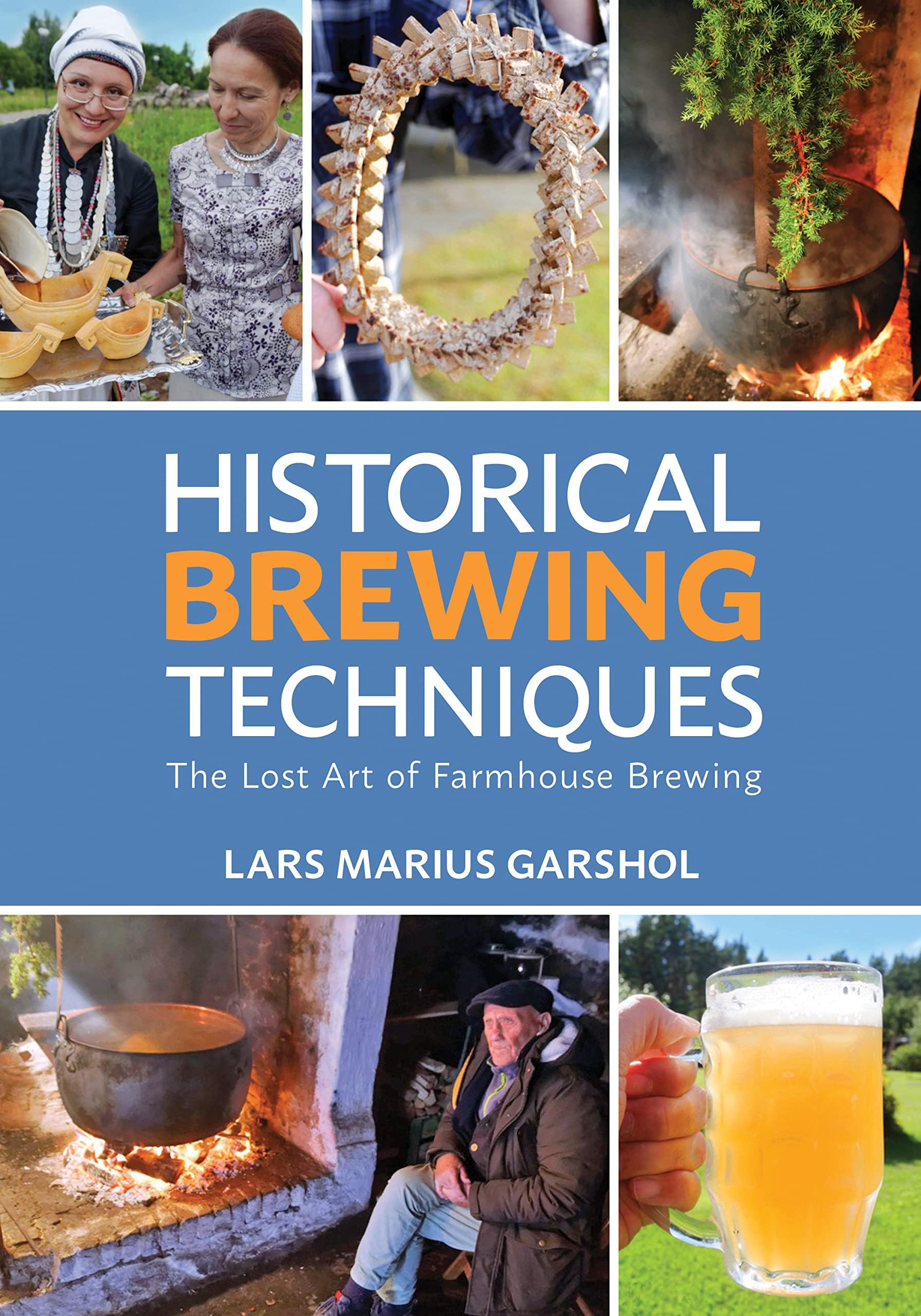
Historical Brewing Techniques: The Lost Art of Farmhouse Brewing
Product ID: 159763879
Buy anything from 5,000+ international stores. One checkout price. No surprise fees. Join 2M+ shoppers on Desertcart.
Desertcart purchases this item on your behalf and handles shipping, customs, and support to Colombia.
Ancient brewing traditions and techniques have been passed generation to generation on farms throughout remote areas of northern Europe. With these traditions facing near extinction, author Lars Marius Garshol set out to explore and document the lost art of brewing using traditional local methods. Equal parts history, cultural anthropology, social science, and travelogue, this book describes brewing and fermentation techniques that are vastly different from modern craft brewing and preserves them for posterity and exploration. Learn about uncovering an unusual strain of yeast, called kveik, which can ferment a batch to completion in just 36 hours. Discover how to make keptinis by baking the mash in the oven. Explore using juniper boughs for various stages of the brewing process. Test your own hand by brewing recipes gleaned from years of travel and research in the farmlands of northern Europe. Meet the brewers and delve into the ingredients that have kept these traditional methods alive. Discover the regional and stylistic differences between farmhouse brewers today and throughout history. Review: Fascinating read, I couldn't put it down - As a craft brewer, most of the information here is completely alien, which makes it eyepopping. I'm usually not good with textbooks, but I basically read this thing in one giant 7 hour session (it was a miserable rainy day) with various breaks. So much interesting information on every page. For instance, 'normal' modern brewing is you mash some (already malted) grain, maybe using a single step, step mash, or decoction mash, then you lauter the wort off and boil it and add the hops as you go, then you cool it, add yeast, done. Ales and lagers are a little different but not hugely. Well, imagine being told you can make perfectly cromulent beer by boiling the mash itself, or that you don't even need to boil the wort. Or that you don't even need malted grain or yeast, you can use some rye grain and let its enzymes and yeast do the work instead. The results aren't anything like what we normally consider beer to taste like, but people drank it for thousands of years and it's undeniably beer. Lots of fascinating info on the farmhouse ale culture too, and why most commercial beers that call themselves 'farmhouse' are not (it's not farmhouse just because you use wild yeast, and most farmhouse ales didn't use wild yeast). The only sad part is realizing that as a brewer in the US whose family has no tradition of brewing I can't really make an authentic farmhouse ale, but I can darn well make one that's 'in the tradition of'. Review: I suspect I won't be brewing in Lithuania anytime soon, so this is the next best thing. - A great reference to beers that have (mostly) not blipped on my brewing radar. Unfortunately this book has sent me down a few rabbit holes that I need to explore and new beers to brew (which is a good thing)! The author has done a great job of writing about these relatively obscure beers and the people who brew them in way that is educational, insightful, and entertaining. Highly recommended!


| Best Sellers Rank | #1,047,888 in Books ( See Top 100 in Books ) #242 in Beer (Books) #712 in Homebrewing, Distilling & Wine Making #850 in Food Science (Books) |
| Customer Reviews | 4.8 out of 5 stars 251 Reviews |
S**A
Fascinating read, I couldn't put it down
As a craft brewer, most of the information here is completely alien, which makes it eyepopping. I'm usually not good with textbooks, but I basically read this thing in one giant 7 hour session (it was a miserable rainy day) with various breaks. So much interesting information on every page. For instance, 'normal' modern brewing is you mash some (already malted) grain, maybe using a single step, step mash, or decoction mash, then you lauter the wort off and boil it and add the hops as you go, then you cool it, add yeast, done. Ales and lagers are a little different but not hugely. Well, imagine being told you can make perfectly cromulent beer by boiling the mash itself, or that you don't even need to boil the wort. Or that you don't even need malted grain or yeast, you can use some rye grain and let its enzymes and yeast do the work instead. The results aren't anything like what we normally consider beer to taste like, but people drank it for thousands of years and it's undeniably beer. Lots of fascinating info on the farmhouse ale culture too, and why most commercial beers that call themselves 'farmhouse' are not (it's not farmhouse just because you use wild yeast, and most farmhouse ales didn't use wild yeast). The only sad part is realizing that as a brewer in the US whose family has no tradition of brewing I can't really make an authentic farmhouse ale, but I can darn well make one that's 'in the tradition of'.
E**3
I suspect I won't be brewing in Lithuania anytime soon, so this is the next best thing.
A great reference to beers that have (mostly) not blipped on my brewing radar. Unfortunately this book has sent me down a few rabbit holes that I need to explore and new beers to brew (which is a good thing)! The author has done a great job of writing about these relatively obscure beers and the people who brew them in way that is educational, insightful, and entertaining. Highly recommended!
A**R
A read both enjoyable and informational
This book was an inspiration to try new ingredients, techniques and methods for brewing beer. There’s a lot to learn from all the brewing stories here and this book was a satisfactory replacement for not being able to experience the beers and brewing methods myself. I hope the true farmhouse ale tradition lives on and that it will grow as a result of this book.
K**R
Husband loves this book!
Lots of neat historical facts and goes through the old farmhouse brew processes. My husband is excited to try some of the non-traditional beer brewing techniques out!
J**I
Interesting history
There's not much in the way of practical knowledge here, although a few recipes are included. It mostly describes the oldest known traditional brewing methods used at farms across northern Europe, Scandinavia, and Russia. Interesting read, and useful for an adventurous home brewer.
C**S
Great historical book
Great book
A**L
fantastic! clear writing, important research
there is nothing better than a book the clearly outlines the facts and history of a story in a way that is easy to understand. This book adds a lot of context to the traditions of farmhouse brewing and widens the scope from the typical saison/biere de garde conversation. I really appreciate the original research and wider point of view
J**M
Well done, coherent and well researched and organized
Well written and informative. The author has clearly put a lot of work into the book. Interesting and, on occasion, funny. The reader should do their own research in the values of the the yeasts lauded in the book. It is questionable if they produce useful results in general brewing .
A**A
Buen libro sobre cerveza
El libro fue para un regalo a una persona especial y le encantó. Cuenta con todo detalle la historia de la cerveza. Está en inglés pero se lee fácil.
M**L
Fantastic
This book is spectacular ... learning from the past and how beers were brewed opens our mind to new and unique experiences - Congratulations Lars
G**E
If you like kveik you will love this
Fantastic book, easy to read and very informative and entertaining. Well put together. If you want to learn kveik start here!
J**E
Great read
It's like reading a story about farmers and beers. Very unique information.
A**R
Knowing heritage to innovate in brewing
One of the best beer books I have ever read !
Trustpilot
3 weeks ago
1 month ago