
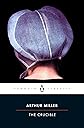
The Crucible: A Play in Four Acts
Product ID: 1363302
Buy anything from 5,000+ international stores. One checkout price. No surprise fees. Join 2M+ shoppers on Desertcart.
Desertcart purchases this item on your behalf and handles shipping, customs, and support to Colombia.
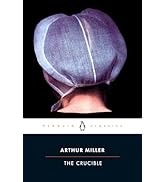
A haunting examination of groupthink and mass hysteria in a rural community A Penguin Classic "I believe that the reader will discover here the essential nature of one of the strangest and most awful chapters in human history," Arthur Miller wrote in an introduction to The Crucible , his classic play about the witch-hunts and trials in seventeenth-century Salem, Massachusetts. Based on historical people and real events, Miller's drama is a searing portrait of a community engulfed by hysteria. In the rigid theocracy of Salem, rumors that women are practicing witchcraft galvanize the town's most basic fears and suspicions; and when a young girl accuses Elizabeth Proctor of being a witch, self-righteous church leaders and townspeople insist that Elizabeth be brought to trial. The ruthlessness of the prosecutors and the eagerness of neighbor to testify against neighbor brilliantly illuminate the destructive power of socially sanctioned violence. Written in 1953, The Crucible is a mirror Miller uses to reflect the anti-communist hysteria inspired by Senator Joseph McCarthy's "witch-hunts" in the United States. Within the text itself, Miller contemplates the parallels, writing: "Political opposition...is given an inhumane overlay, which then justifies the abrogation of all normally applied customs of civilized behavior. A political policy is equated with moral right, and opposition to it with diabolical malevolence." For more than seventy years, Penguin has been the leading publisher of classic literature in the English-speaking world. With more than 1,700 titles, Penguin Classics represents a global bookshelf of the best works throughout history and across genres and disciplines. Readers trust the series to provide authoritative texts enhanced by introductions and notes by distinguished scholars and contemporary authors, as well as up-to-date translations by award-winning translators. Review: Theology a smudge on American histor. An upsetting good read. - I had to read the slowly and take notes because there were so many characters and I wanted to be able to thoughtfully follow the plot and each character's part in this misfortunate event in history. It's seemed to be quite unfortunate that the first person to make an accusation was taken at their word and some people were given the benefit of Doubt because of their position. Review: “It is still impossible for man to organize his social life without repressions… - … and the balance has yet to be struck between order and freedom.” Arthur Miller wrote this play in 1953, in a not very subtle allegory about McCarthyism, another “witch-hunt” in America, but in the version of ’53, the “witches” were the communists, who were purportedly under every bed. One of my favorite quips was made by Voltaire: “It is amazing how few witches there are since we stopped burning them.” (Ain’t that the truth about the Communists too, now that they buy our T-Bills?) Miller’s play is roughly based on the historical events in Salem, Massachusetts, and environs, which occurred in 1692-93. These events are commonly called the “Salem Witch Trials.” As a result of these trials, 20 individuals would be executed, 14 of whom were women. It was one more example, but a dominant one for American history, of mass hysteria and the dangers of a theocracy, be it how a few old men understand the “will” of a bearded one on a heavenly throne, or the “will” of a slightly more abstract notion of a “free-market.” The play commences in the spring of 1692, with the Reverend Samuel Parris leaning over his daughter, Betty Parris, age 10, who is unconscious in bed. Is she physical ill or is it witchcraft? Miller thereafter introduces a number of other characters who live in, or near, this small frontier village. Abigail Williams is 17, and she had been caught dancing in the forest with Betty; in shades of Macbeth (Folger Shakespeare Library) , they were purportedly dancing around a cooking pot. Were there toads in it? That is one of the questions asked. Tituba is a slave from Barbados, in her 40’s, who belongs to Reverend Parris, and can speak to the dead. Ann Putnam is a twisted soul of 45 who is haunted by dreams. Her husband, Thomas Putnam, is a man of grievances; his brother-in-law was denied the minister position and he was shorted in his father’s will, in favor of his stepbrother. Proctor, the protagonist, in his middle 30’s, an independent farmer, skeptical of the preachers, and the overall role of religion, and with a sick wife, Elizabeth. Proctor has the eye for Abigail, and she flaunts it. Mary Warren, a 17 year old subservient, lonely girl, works for Proctor, and his wife, as a maid. Rebecca Nurse, 72, 11 kids, lots of grandkids, with her husband, Frances, form their own town of Topsfield, near Salem. There is the itinerant preacher, Reverend Hale, and, the actually judges and bailiffs. Like that proverbial cooking pot in the forest, the above characters form a heady mixture, with those eternal concerns of money, community status, power, and sex. Miller brilliantly stirs the pot. Abigail Williams is “not without sin,” to use the Biblical phrase, but she is the prime stone thrower, hurling the charge of “witchcraft,” while manipulating a youthful “Amen” chorus. Such charges fall upon the fertile ground of “land-lust,” with the principles being the Putnam’s and the Nurse’s. And there is just plain ol’ lust, between Proctor and Abigail. Miller does “nuance” by having Proctor’s wife, Elizabeth, state: “I have sins of my own to count. It needs a cold wife to prompt lechery.” The power of hysteria is incisively depicted in the scene where Abigail sees “the bird,” and Mary Warren recants. It requires the abuse of authority, in terms of power-crazed judges, to fulfill the tragedy. In one of the asides, Miller states: “… the people of Salem developed a theocracy, a combine of state and religious power whose function was to keep the community together…the witch-hunt was a perverse manifestation of the panic which set in among all classes when the balance began to turn toward greater individual freedom.” History does not repeat, but it does rhyme, as the old quip has it. Murky, no doubt forever, “Operation Phoenix” in Vietnam led to the death of truly an uncounted number of Vietnamese civilians, with an estimate as high as 50,000 in Binh Dinh province alone. That “pot” was spiced up by Americans who could not speak the language, but were all too willing to accept the word of one Vietnamese farmer against another, who was denounced as “a communist.” Rhyming again in Afghanistan, where such farmer denunciations of “terrorists” lead to an all-expenses paid trip to Gitmo. And as I write this, the Democratic Party in the USA is searching for “witches” to explain its recent electoral loss, and coming full circle as it were, a leading “witch” is a former Russian commie. Miller has written a play for all the ages, and provided an eternal lament that is the subject line. 5-stars, plus.






| Best Sellers Rank | #14,384 in Books ( See Top 100 in Books ) #1 in Drama & Play Anthologies (Books) #226 in Classic Literature & Fiction #883 in Literary Fiction (Books) |
| Customer Reviews | 4.5 out of 5 stars 9,661 Reviews |
B**N
Theology a smudge on American histor. An upsetting good read.
I had to read the slowly and take notes because there were so many characters and I wanted to be able to thoughtfully follow the plot and each character's part in this misfortunate event in history. It's seemed to be quite unfortunate that the first person to make an accusation was taken at their word and some people were given the benefit of Doubt because of their position.
J**I
“It is still impossible for man to organize his social life without repressions…
… and the balance has yet to be struck between order and freedom.” Arthur Miller wrote this play in 1953, in a not very subtle allegory about McCarthyism, another “witch-hunt” in America, but in the version of ’53, the “witches” were the communists, who were purportedly under every bed. One of my favorite quips was made by Voltaire: “It is amazing how few witches there are since we stopped burning them.” (Ain’t that the truth about the Communists too, now that they buy our T-Bills?) Miller’s play is roughly based on the historical events in Salem, Massachusetts, and environs, which occurred in 1692-93. These events are commonly called the “Salem Witch Trials.” As a result of these trials, 20 individuals would be executed, 14 of whom were women. It was one more example, but a dominant one for American history, of mass hysteria and the dangers of a theocracy, be it how a few old men understand the “will” of a bearded one on a heavenly throne, or the “will” of a slightly more abstract notion of a “free-market.” The play commences in the spring of 1692, with the Reverend Samuel Parris leaning over his daughter, Betty Parris, age 10, who is unconscious in bed. Is she physical ill or is it witchcraft? Miller thereafter introduces a number of other characters who live in, or near, this small frontier village. Abigail Williams is 17, and she had been caught dancing in the forest with Betty; in shades of Macbeth (Folger Shakespeare Library) , they were purportedly dancing around a cooking pot. Were there toads in it? That is one of the questions asked. Tituba is a slave from Barbados, in her 40’s, who belongs to Reverend Parris, and can speak to the dead. Ann Putnam is a twisted soul of 45 who is haunted by dreams. Her husband, Thomas Putnam, is a man of grievances; his brother-in-law was denied the minister position and he was shorted in his father’s will, in favor of his stepbrother. Proctor, the protagonist, in his middle 30’s, an independent farmer, skeptical of the preachers, and the overall role of religion, and with a sick wife, Elizabeth. Proctor has the eye for Abigail, and she flaunts it. Mary Warren, a 17 year old subservient, lonely girl, works for Proctor, and his wife, as a maid. Rebecca Nurse, 72, 11 kids, lots of grandkids, with her husband, Frances, form their own town of Topsfield, near Salem. There is the itinerant preacher, Reverend Hale, and, the actually judges and bailiffs. Like that proverbial cooking pot in the forest, the above characters form a heady mixture, with those eternal concerns of money, community status, power, and sex. Miller brilliantly stirs the pot. Abigail Williams is “not without sin,” to use the Biblical phrase, but she is the prime stone thrower, hurling the charge of “witchcraft,” while manipulating a youthful “Amen” chorus. Such charges fall upon the fertile ground of “land-lust,” with the principles being the Putnam’s and the Nurse’s. And there is just plain ol’ lust, between Proctor and Abigail. Miller does “nuance” by having Proctor’s wife, Elizabeth, state: “I have sins of my own to count. It needs a cold wife to prompt lechery.” The power of hysteria is incisively depicted in the scene where Abigail sees “the bird,” and Mary Warren recants. It requires the abuse of authority, in terms of power-crazed judges, to fulfill the tragedy. In one of the asides, Miller states: “… the people of Salem developed a theocracy, a combine of state and religious power whose function was to keep the community together…the witch-hunt was a perverse manifestation of the panic which set in among all classes when the balance began to turn toward greater individual freedom.” History does not repeat, but it does rhyme, as the old quip has it. Murky, no doubt forever, “Operation Phoenix” in Vietnam led to the death of truly an uncounted number of Vietnamese civilians, with an estimate as high as 50,000 in Binh Dinh province alone. That “pot” was spiced up by Americans who could not speak the language, but were all too willing to accept the word of one Vietnamese farmer against another, who was denounced as “a communist.” Rhyming again in Afghanistan, where such farmer denunciations of “terrorists” lead to an all-expenses paid trip to Gitmo. And as I write this, the Democratic Party in the USA is searching for “witches” to explain its recent electoral loss, and coming full circle as it were, a leading “witch” is a former Russian commie. Miller has written a play for all the ages, and provided an eternal lament that is the subject line. 5-stars, plus.
B**D
Tremendous Historical Play
I rarely read plays. But the subject matter of this one (a play about the Salem witchcraft madness!?) caught my eye so I bought this inexpensive Kindle version and read it. Wow, a powerfully written and compelling account of this tragedy (and of the perils of theocracy generally). A story fully told yet with an economy of prose that is admirable. I reserved the 5th star only because this Kindle version seems somehow machine generated without the benefit of human proofreading, there are many annoying errors that are quickly and irritatingly evident to a human reader. If you want to avoid the annoyance find a different version of this play to read. But DO read this play 👍😀
M**E
A Haunting Exploration of Hysteria and the Human Condition
"The Crucible: A Play in Four Acts" by Arthur Miller is a powerful and chilling examination of mass hysteria that delves deep into the dangerous consequences of fear and groupthink within a rigidly theocratic community. Set during the notorious witch trials of 17th-century Salem, Massachusetts, the play follows the unfolding chaos as rumors of witchcraft spread, compelling townspeople to betray one another and judicial systems to abandon common decency in the face of perceived moral righteousness. Miller's portrayal of a society driven to madness reflects not only the historical events of the Salem witch trials but also serves as an allegory for the anti-communist witch hunts of the 1950s, particularly under Senator Joseph McCarthy. Through characters caught in a web of suspicion and moral conflict, Miller forces the audience to confront the darker aspects of humanity and the perilous nature of political and social fervor. With its timeless themes of integrity, justice, and the consequences of fear, "The Crucible" remains a relevant and thought-provoking classic, inviting readers to reflect on the fragility of societal norms and the cost of moral conviction.
K**Y
Favorite play
I think this is my fourth or fifth time reading The Crucible on my own. Like everyone else, I have also read the play back in high school. This play is about mass hysteria leading to the 1692 Salem witch trials, judgment, consequences & justice, and reputation along with a few other things. The Crucible is set in a theocratic society. With church and state being one and religion is strict, it is no wonder why people were afraid to be accused of being witches and seen with the devil! Deviation from their norms was not allowed as it would be seen as a threat to God, religion, and the public. We can see this with John Proctor—Mr. Forgets one of the Ten Commandments that is of course, Thou shalt not commit adultery. The themes mentioned above come into play for John especially toward the end of the play with his reputation. Proctor wants to keep his good name which leads him to not to make a false confession and to go to his death without signing his name to an untrue statement. ”Because it is my name. Because I cannot have another in my life! How may I live without my name? I have given you my soul; leave me my name!” Names are important, they mean something. Once your name is tarnished and dragged through the mud, its hard to fix that reputation and clear your name. And Giles Corey! A man who truly did nothing but bring up mention of his wife hiding books for him and in turn is accused of witchcraft and killed because of it. Although this is my favorite play, it is problematic, and there is racism involved. But that also is historically accurate for the time period. It was time I wrote a proper review of my favorite play.
G**E
Worthwhile to read or re-read again!
One for the current times. This is not exactly an easy read, but it has a timeless message. The play does not include all the background given in the introduction (by Christopher Bigsby) or where the playwright sets the stage for each act. This provides a deeper understanding of this tiny chapter in history - and its relevance for the current day.
L**N
Great Story, Mini Print
I love the story. The Crucible was well written with a great storyline. The only thing I have to complain about it the micro mini print. I don’t know if I could continue with this book but I have purchased another book by a different publisher. It’s still a classic!
J**E
One of those rare classics that not only lives up to its status - it exceeds it
Yes, it's true; I had somehow gone my whole life without ever actually reading The Crucible. Of course, I knew the story behind the book, the gist of the Salem Witch Trials, the impact of McCarthyism on it all...in short, I knew everything but the play itself. Having finally read it, though, it goes into that rare class of masterpieces that still pack an emotional impact, even if you think you know the story. Miller's dialogue is deceptively simple; while his research into the dialect of the times is evident at all times, the characters' speech never feels as though it's coming from the hands of a writer. Instead, it feels like the natural outcome of years of village tensions, feuds, grudges, and fears...all of which makes the inevitable explosion all the more devastating. Miller never shirks from the horrors of what he's depicting, but he also never misses a chance to let his characters breathe and live on their own terms, whether it's John Proctor's failed attempts to make his wife smile or Giles Corey's lawsuit-wielding threats. Even in the darkness, Miller finds room for the humanity of these characters, and there's not a one who's not understandable and sympathetic, even as they do horrible things. More to the point, while the book is inextricably linked to McCarthyism, there's something far more universal at work here, something that makes the book resonate all these years later. Whether it's the dangers of unchecked authority or the weighing of one's own sins, Miller makes the history specific and yet utterly human, which makes the historical context both fascinating and yet irrelevant to the play's greatness. Instead, The Crucible becomes far more universal and timeless than you might expect, so much so that the play's universality is almost comical - how else could a play inspired by McCarthy about a Colonial era trial feel so resonant in the post-9/11 era of terrorism suspicions? It's the kind of classic that earns its label, and does so by telling not just a great story, but doing so in an unmistakably human way.
J**F
A MUST-READ!!!
Quote: "We read stories for pleasure; they entertain us. And we read stories for profit; they enlighten us... They enlarge our understanding of ourselves, and they deepen our appreciation of life." A study of the devastating effects of mass hysteria, allowing one's reputation to dictate how they behave (a concept embodied by the characters of Rev. Parris and Judge Danforth), and how children can become empowered; everyone with capable enough reading skills should read Miller's play "The Crucible." I would also suggest buying notes to go with this copy- or finding essays online such as those of Cliff Notes or Spark Notes- so that you get both enlightenment and (intrinsically) entertainment from it!
H**A
The Original Fake News
The best books remain relevant generation after generation because the core of human nature does not change. And The Crucible is one of the best. Fake news, especially on social media, is a trending topic. How lies disguised with half truths succeed in changing the opinions people hold. The Crucible is about one set of lies that led to mass hangings in Salem in the 17th century. The obvious parallel was the McCarthyism of the 1950s in America, but if you read between the lines you can see similar forces distorting our perceptions of reality today. If you have not read the book, order it at once. Even if have read the book earlier, it is always worth a second read.
N**A
Todo perfecto
Llego en muy buen estado y es exactamente como en la foto. Muchas gracias!
B**N
Livro lindo
O livro é a coisa mais linda, a capa tem as ilustrações com referência a obra, textura soft touch (o problema dessa textura é que empoeira rápido ), páginas amareladas, com boa diagramação e tamanho de fonte e papel gostoso e de bom. Eu amo quando abonequem lança edições com o corte repicado, dando um ar de antigo. Ainda não li o texto mas é um clássico do teatro e que deu origem a filmes e a outros diretores e escritores! Mal posso esperar
P**.
Sehr schnell
Ein Buch für die Schule für meine Tochter , hier geht es immer super schnell
Trustpilot
3 weeks ago
2 months ago