
Buy anything from 5,000+ international stores. One checkout price. No surprise fees. Join 2M+ shoppers on Desertcart.
Desertcart purchases this item on your behalf and handles shipping, customs, and support to Colombia.
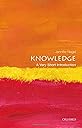
What is knowledge? How does it differ from mere belief? Do you need to be able to justify a claim in order to count as knowing it? How can we know that the outer world is real and not a dream? Questions like these are ancient ones, and the branch of philosophy dedicated to answering them - epistemology - has been active for thousands of years. In this thought-provoking Very Short Introduction, Jennifer Nagel considers these classic questions alongside new puzzles arising from recent discoveries about humanity, language, and the mind. Nagel explains the formation of major historical theories of knowledge, and shows how contemporary philosophers have developed new ways of understanding knowledge, using ideas from logic, linguistics, and psychology. Covering topics ranging from relativism and the problem of scepticism to the trustworthiness of internet sources, Nagel examines how progress has been made in understanding knowledge, using everyday examples to explain the key issues and debates ABOUT THE SERIES: The Very Short Introductions series from Oxford University Press contains hundreds of titles in almost every subject area. These pocket-sized books are the perfect way to get ahead in a new subject quickly. Our expert authors combine facts, analysis, perspective, new ideas, and enthusiasm to make interesting and challenging topics highly readable. Review: S knows that p? Maybe! - I bought this book for supplemental reading while taking a upper division course in epistemology. I referred to it while writing papers. The essay regarding Nozick's tracking theory was very helpful in one of my papers. After completing my course, I re-read the book. Following is my review. Prima facie the book gets a five start rating. However, the book has some short comings along with the content that is very good. It would be a very difficult task to write a short introduction of any subject that has its origins and roots tied to Plato (Theaetetus). It would be especially difficult since the subject matter has an on going debate to this day thanks to Gettier. My epistemology class was a ten week term meeting three times a week. That was thirty hours of study and lecture by a PhD philosopher. Our course content only hit the high notes of well known philosophers (Plato to Quine). So based on the scope and nature of A Short Introduction it gets five out of five stars. Not having a chapter on “The problem of Induction” and not mentioning David Hume is the only major short coming of this book. Review: Good introduction - Good introduction to the various areas considered by epistemology. Easy read for someone who (like me) has little background in the subject.


| Best Sellers Rank | #129,361 in Books ( See Top 100 in Books ) #6 in Epistemology (Books) #39 in Epistemology Philosophy |
| Customer Reviews | 4.5 out of 5 stars 498 Reviews |
R**T
S knows that p? Maybe!
I bought this book for supplemental reading while taking a upper division course in epistemology. I referred to it while writing papers. The essay regarding Nozick's tracking theory was very helpful in one of my papers. After completing my course, I re-read the book. Following is my review. Prima facie the book gets a five start rating. However, the book has some short comings along with the content that is very good. It would be a very difficult task to write a short introduction of any subject that has its origins and roots tied to Plato (Theaetetus). It would be especially difficult since the subject matter has an on going debate to this day thanks to Gettier. My epistemology class was a ten week term meeting three times a week. That was thirty hours of study and lecture by a PhD philosopher. Our course content only hit the high notes of well known philosophers (Plato to Quine). So based on the scope and nature of A Short Introduction it gets five out of five stars. Not having a chapter on “The problem of Induction” and not mentioning David Hume is the only major short coming of this book.
G**C
Good introduction
Good introduction to the various areas considered by epistemology. Easy read for someone who (like me) has little background in the subject.
T**K
There's a wonderful 'Further Reading' section at the end that gives sources ...
I picked up Nagel's book as a little refresher of epistemology. It is well-written, clear, and Nagel explains the basics of epistemology. Given it is a very short introduction, Nagel just scratches the surface. There's a wonderful 'Further Reading' section at the end that gives sources for further study.
C**N
Wittgenstein for the win
As a Professor in Philosophy I love this books mainly because they ever so lightly cover the topics enough to get even the most critical proponent of any kind of philosophical though enough to get their gears working and at the bare minimum a question implanted. Then they realize that most people have been a student of philosophy all their lives.
K**Y
Excellent
If the very sight of the word “epistemology” makes you quiver, give this terrific entry in the VSI series a go—you’ll come away steady as a rock. Or not 😄.
D**S
A well written introduction
This book gives a very clear introduction to epistemology. It leaves one with the impression that epistemology mostly deals with simplistic artificial cases. I’d like to have seen more recognition of scientific methods and results.
A**N
Five Stars
A clear, concise, thoughtful and critical introduction to theorizing about knowledge.
J**D
This book is particularly well suited for female readers. ...
This book is particularly well suited for female readers. Why, you ask? Well, let me point out that there were many points at which I was unable to identify with the viewpoint of the text, that viewpoint being female. Let us demonstrate this with some examples. p. 9 "the speaker is projecting herself into a past frame of mind ... the speaker is distancing herself from that frame of mind ..." p. 49 "Imagine a detective investigating a broad-daylight assault. She interviews a dozen witnesses ..." p. 55 "The person who is taken in by a very realistic holographic projection of a muffin isn't crazy ... she is being perfectly reasonable,even if what she believes is false or only coincidentally true." p. 67 "the subject has to be able to see something for herself, simply by reflection, or some form of immediate awareness" p. 78 "the local reductionist suggests that you look for specific positive reasons, in any given situation, to accept the word of the person you are hearing on the topic she is speaking about." et passim I find myself unable to relate to these uses of female pronouns as "generic" pronominal uses.
A**D
Muy buena compra
Excelente lectura tanto para el lector que inicia su formación en epistemología como para el investigador que busca formas diversas de expresar problemas básicos del área.
G**S
A great addition to an excellent series
I bought this book on the basis of a very enthusiastic review in the Guardian and the high expectations which the review raised were more than met. The book sets out some complex in clear and accessible language, being 'popular' without ever becoming patronising. The book combines approaches by classic thinkers, such as Descartes, with more recent work and has a useful set of references at the back for those who want to explore issues in more detail. It is very fair-minded to those whose work it discusses, pointing out the objections which can be raised to each approach and showing how different schools of thought would reply to each other. I actually found it to be a 'gripping' read and I have already recommended this book to other people. It is a great addition to this excellent series. I found the one-star reviews of this book bewildering - but then, as my grandmother liked to say, some people like carrots and others prefer turnips! I intend to see what else this author has written although I do not imagine it will be as accessible as this introductory guide.
S**A
Professor Nagel’s Epistemology Primer: A Former Student’s Review
Hi Professor Nagel! I loved your course, PHL105Y, at UTM. Has anyone topped my 93 yet? This book is a great layman’s primer on Epistemology!
F**S
Knowledge
I guess the book is too much introductory…is almost a set of common places. Some interesting questions about knowledge are not mentioned.
R**J
An excellent introduction
On the quality of the kindle version : the kindle version downloaded correctly and has no font issues which is awesome ;) On the book : Ms. Nagel did a tremendous job condensing a complex subject. This book is really easy to read which in no way reduces the quality of the content.
Trustpilot
3 days ago
2 months ago