
Buy anything from 5,000+ international stores. One checkout price. No surprise fees. Join 2M+ shoppers on Desertcart.
Desertcart purchases this item on your behalf and handles shipping, customs, and support to Colombia.
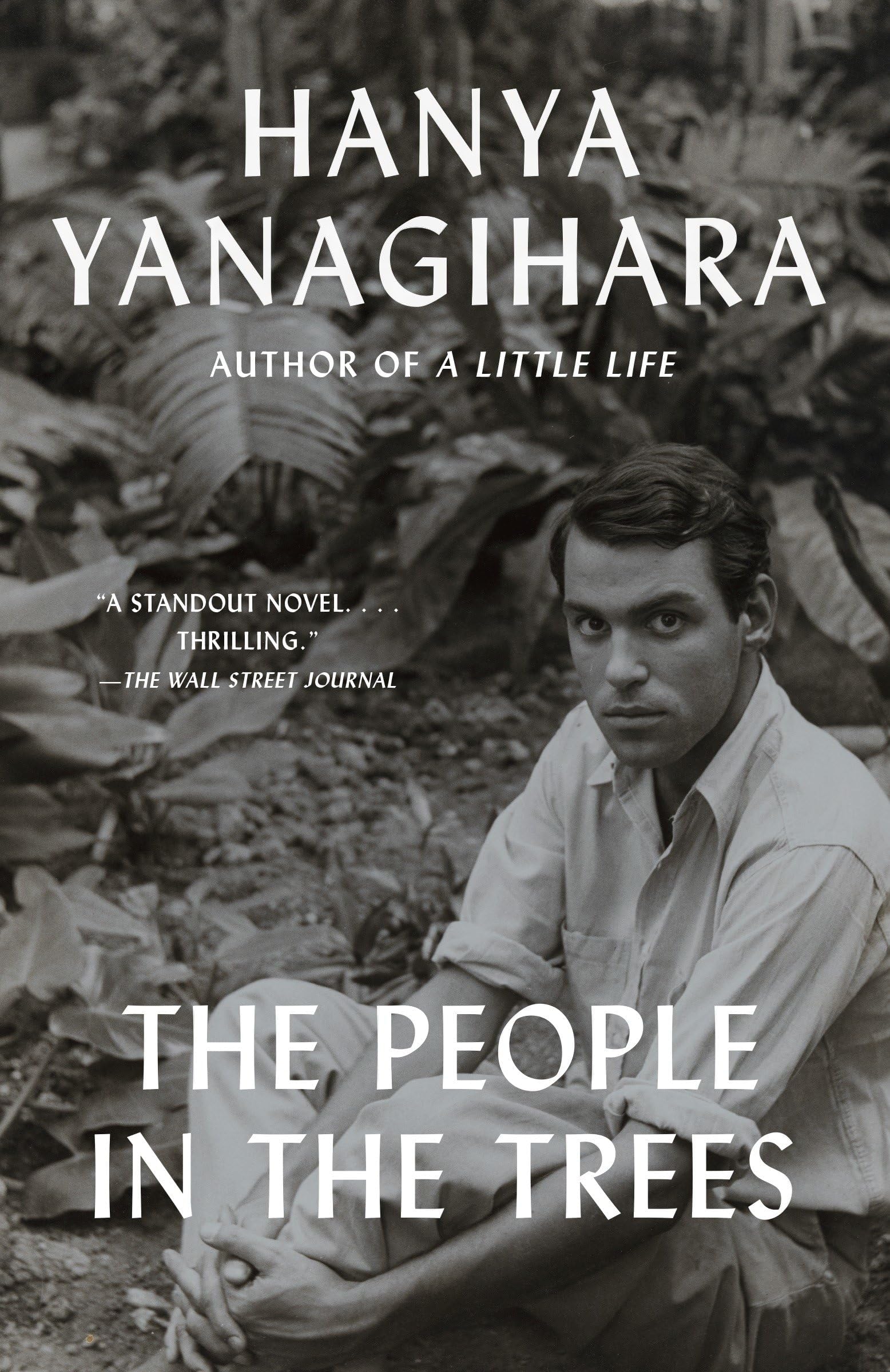
A thrilling anthropological adventure story with a profound and tragic vision of what happens when cultures collide —from the bestselling author of National Book Award–nominated modern classic, A Little Life “Provokes discussions about science, morality and our obsession with youth.” — Chicago Tribune It is 1950 when Norton Perina, a young doctor, embarks on an expedition to a remote Micronesian island in search of a rumored lost tribe. There he encounters a strange group of forest dwellers who appear to have attained a form of immortality that preserves the body but not the mind. Perina uncovers their secret and returns with it to America, where he soon finds great success. But his discovery has come at a terrible cost, not only for the islanders, but for Perina himself. Look for Hanya Yanagihara’s latest bestselling novel, To Paradise. Review: Great fictionalization of a famous episode in the an nals of anthropology - I am an anthropologist by training with a degree (1970) from the University of Chicago. When I was studying the societies of Polynesia and Micronesia, one of the famous case studies involved Dr. Daniel Gajdusek and the disease of kuru amount the South Fore people of New Guinea. Kuru was the first prion disease (think "mad-cow" disease now) discovered in humans and was found only in New Guinea. It turned out to be transmitted mainly by cannibalism - when one tribe defeated another in battle, to honor the dead and take on the most heroic qualities of the dead, the victorious tribe would eat the brains of the vanquished. The irony was, the one quality of the dead which thereby was taken on was the neurological disease of kuru, which was transmitted through the brain tissue of the dead. The People in the Trees is a great re-imagining, and novelizaton of this whole story. I urge you to read the book first, and then check out Daniel Gajdusek on Wikipedia. You'll see what a great job the novelist has done in using this story as a jumping off point for the novel. The book reminds me a lot of State of Wonder, by Ann Patchett, a book which received much acclaim and was nominated for numerous awards. I love Ann Patchett and her novels State of Wonder and Bel Canto, bt I think The People in the Trees outshines State of Wonder. It gets more into the crucial issues in anthropology of how studying a people can negatively impact those people and their culture and how in seeking to "rescue" primitive cultures and people you can destroy them. This book is a must read, both for how engrossing and well-written it is, and for the big questions it asks. It is brilliant. Review: A Strong Debut Novel About a Cunning Narcissist - After reading "A Little Life", Hanya Yanagihara's second novel, my favorite book in a look time and a story that totally captivated me, I was ready to devour her debut novel, "The People in the Trees". I didn't come to the story with any knowledge of the real life individual that the core of this books was based upon, only learning more once I finished the story. The book is written in the form of memoirs from Dr. Norton Perina, rationalizing his life, brilliance and ultimate demise (alluded to in the very beginning of the book). After medical school in 1950, Perina travels to a small islands near Micronesia with two anthropologists to study a "lost people". It is on these islands where he makes a profound discovery --- certain tribal members ("The Dreamers") live 5 to 6 times normal human life spans, remaining physically healthy while ultimately losing mental capacity --- that leads to his Nobel Prize in 1974. Perina discovers this condition is the result of eating an indigenous turtle, the Opa'ivu'eke. While on the island, he decides to bring back four "Dreamers" and turtle meat to conduct studies and validate his hypothesis. During his initial time on the island, we begin to see the see the darker side of Perina shine through --- his arrogance, both toward the native culture and his American anthropologist partners, Tallent and Duff, who he views with scorn and disdain. Upon his return to the US, Perina conducts his research, publishes his findings and generally castigates those who questioned him and his findings until they were replicated by a more recognized scientists. Over time, Perina continues making bi-annual trips and adopting native children as the size of his "family" swells to over 40. His motivations are never super-explicit, although his conceit starts to surface as he becomes more famous and older, in the form of saving the savages by acculturating them into Western life. By the final chapter of Perina's memoir, his narcissism and egomaniacal nature fully bubble to the surface. While I enjoyed this novel, I don't believe it approaches the brilliance of "A Little Life". The first 50-75 pages were a little slow and I didn't emotionally connect with any of the characters like in her other novel. Also, I felt the overall pacing of the book was a little uneven and found my mind wandering throughout several sections. I'll profess to prefer novels that tackle tough and controversial subjects. Unlike some other reviewers, I don't believe Yanagihara some of the touchier items in a gratuitous manner. If people prefer uplifting subject matter, books that avoid deeply flawed characters or non-Western based cultural norms, they should do research beforehand and choose other books to read. I did appreciate Yanagihara's ability to write the novel in memoir form, striking the delicate balance of allowing Perina to both tell his story in his own self-serving way while ensuring his hubris and arrogant nature came through. One thing I regret is having read an desertcart review before starting the book that ruined the ending for me. As a result, I was even more attuned to the duplictious nature of Perina than I otherwise would have been. This was definitely a great debut novel that announced Yanagihara as an author to pay attention to and she certainly didn't disappoint with her second effort, "A Little Life". I'll be anxiously awaiting her next effort and definitely will start reading it as soon as it is released.
| Best Sellers Rank | #119,564 in Books ( See Top 100 in Books ) #143 in Cultural Heritage Fiction #2,530 in Literary Fiction (Books) #4,509 in American Literature (Books) |
| Customer Reviews | 3.9 out of 5 stars 3,199 Reviews |
K**S
Great fictionalization of a famous episode in the an nals of anthropology
I am an anthropologist by training with a degree (1970) from the University of Chicago. When I was studying the societies of Polynesia and Micronesia, one of the famous case studies involved Dr. Daniel Gajdusek and the disease of kuru amount the South Fore people of New Guinea. Kuru was the first prion disease (think "mad-cow" disease now) discovered in humans and was found only in New Guinea. It turned out to be transmitted mainly by cannibalism - when one tribe defeated another in battle, to honor the dead and take on the most heroic qualities of the dead, the victorious tribe would eat the brains of the vanquished. The irony was, the one quality of the dead which thereby was taken on was the neurological disease of kuru, which was transmitted through the brain tissue of the dead. The People in the Trees is a great re-imagining, and novelizaton of this whole story. I urge you to read the book first, and then check out Daniel Gajdusek on Wikipedia. You'll see what a great job the novelist has done in using this story as a jumping off point for the novel. The book reminds me a lot of State of Wonder, by Ann Patchett, a book which received much acclaim and was nominated for numerous awards. I love Ann Patchett and her novels State of Wonder and Bel Canto, bt I think The People in the Trees outshines State of Wonder. It gets more into the crucial issues in anthropology of how studying a people can negatively impact those people and their culture and how in seeking to "rescue" primitive cultures and people you can destroy them. This book is a must read, both for how engrossing and well-written it is, and for the big questions it asks. It is brilliant.
W**O
A Strong Debut Novel About a Cunning Narcissist
After reading "A Little Life", Hanya Yanagihara's second novel, my favorite book in a look time and a story that totally captivated me, I was ready to devour her debut novel, "The People in the Trees". I didn't come to the story with any knowledge of the real life individual that the core of this books was based upon, only learning more once I finished the story. The book is written in the form of memoirs from Dr. Norton Perina, rationalizing his life, brilliance and ultimate demise (alluded to in the very beginning of the book). After medical school in 1950, Perina travels to a small islands near Micronesia with two anthropologists to study a "lost people". It is on these islands where he makes a profound discovery --- certain tribal members ("The Dreamers") live 5 to 6 times normal human life spans, remaining physically healthy while ultimately losing mental capacity --- that leads to his Nobel Prize in 1974. Perina discovers this condition is the result of eating an indigenous turtle, the Opa'ivu'eke. While on the island, he decides to bring back four "Dreamers" and turtle meat to conduct studies and validate his hypothesis. During his initial time on the island, we begin to see the see the darker side of Perina shine through --- his arrogance, both toward the native culture and his American anthropologist partners, Tallent and Duff, who he views with scorn and disdain. Upon his return to the US, Perina conducts his research, publishes his findings and generally castigates those who questioned him and his findings until they were replicated by a more recognized scientists. Over time, Perina continues making bi-annual trips and adopting native children as the size of his "family" swells to over 40. His motivations are never super-explicit, although his conceit starts to surface as he becomes more famous and older, in the form of saving the savages by acculturating them into Western life. By the final chapter of Perina's memoir, his narcissism and egomaniacal nature fully bubble to the surface. While I enjoyed this novel, I don't believe it approaches the brilliance of "A Little Life". The first 50-75 pages were a little slow and I didn't emotionally connect with any of the characters like in her other novel. Also, I felt the overall pacing of the book was a little uneven and found my mind wandering throughout several sections. I'll profess to prefer novels that tackle tough and controversial subjects. Unlike some other reviewers, I don't believe Yanagihara some of the touchier items in a gratuitous manner. If people prefer uplifting subject matter, books that avoid deeply flawed characters or non-Western based cultural norms, they should do research beforehand and choose other books to read. I did appreciate Yanagihara's ability to write the novel in memoir form, striking the delicate balance of allowing Perina to both tell his story in his own self-serving way while ensuring his hubris and arrogant nature came through. One thing I regret is having read an Amazon review before starting the book that ruined the ending for me. As a result, I was even more attuned to the duplictious nature of Perina than I otherwise would have been. This was definitely a great debut novel that announced Yanagihara as an author to pay attention to and she certainly didn't disappoint with her second effort, "A Little Life". I'll be anxiously awaiting her next effort and definitely will start reading it as soon as it is released.
J**S
wierdly fascinating
I am not sure what to make of this book . it was really two separate stories. the first in the jungle was too unbelievable but the writing was very descriptive and amazing. but the story was really creepy to the point that it was revolting at times. the second story with the orphans was way over the top. it would be legally impossible for this to happen . i liked the way it was written with the footnotes. but all in all i can't say I enjoyed this book or was entertained. i think the arrogance of one culture destroying another for greed was a good premise but this went way off the rails. the whole thing kind of made my skin crawl on too many levels.
A**R
Exquisite writing
"The People in the Trees" is a magnificent book, but with some disturbing elements. The writing is incredibly beautiful in style and imagery. Character development was complex. The story is intellectually engaging, adventurous and philosophical without ever being boring. The contrast between what is good, what is evil and the murky mix that sometimes lies between them was thoughtfully presented. Some difficult to read incidents occur with children and with animals which may be too disturbing for some readers, but are necessary to plot development. Questions are raised, but left open-ended,such as whether a life can be judged for either good or bad based on one aspect of a person's personality, or can a good person sometimes do bad things -- or conversly, can a bad person sometimes accomplish good things, or whether (and where) limits should be set for scientific exploration, and is experimentation on animals (or humans) justified by future lives that may be improved or saved, and exactly what is culture and to what extent are people obligated to perserve it? This is a many themed book written by an extremely talented author. I can hardly wait for Ms.Yanagihara's next novel.
M**T
Sad and unsettling
Primitive peoples, anthropology, narcissism, pedophilia -- it's all here. Very well written and organized, this is truly a multi-layered novel. Told as if a scientist friend is editing the memoirs of Dr. Norton Perina, this is the story of a self-described brilliant scientist who goes on an anthropological trip to a remote island and discovers that primitive humans there can live indefinitely if they consume the meat of a wild turtle. Indefinite life does not mean they retain their mental faculties and these people are banished from their civilization only to wander aimlessly and pathetically in the jungle. Perina unethically brings this meat and his findings to the United States and is eventually awarded the Noble Prize. Intellectually brilliant, but without any sense of human connection or emotion, Perina eventually adopts forty some children from this civilization. The novel opens as Perina is found guilty of sexual abuse of children and sent to prison. This is really a story of a man so caught up in his own brilliance and ego that he is totally unable to comprehend the feelings of others, whether it be his twin brother, his fellow scientists, the people he studied, or the children he adopted. A sad and unsettling story. There are numerous footnotes used throughout the story that give it a realistic tone, but are difficult to maneuver on the Kindle.
V**A
Remarkable & Creepy Read
It's a stunning achievement when an author creates an inherently unlikeable anti-hero, and his enabler, and then allows them to tell an exceedingly creepy story which turns out to be literate, compelling, provocative and engrossing. I felt the heebie-jeebies at several points but it would have taken a natural disaster in my neighborhood to make me stop reading this astonishing first novel. Our anti-hero is Norton, an eminent and dangerously narcissistic scientist. Picture Sheldon Cooper from "Big Bang Theory" and you have the basis for this character. Add "well intentioned" evi to the narcissism, plus the literary power to tell his own story to his own advantage, and rather than feel joy for his well-deserved self-destruction, we instead might feel some pity for this chretien. Not a lot but his undoing is his own creation and it is tragic for all concerned. Further, I always enjoy the brazen & unreliable narrator and Norton is one of the best I have encountered since "As Meat Loves Salt". Delusional, self-righteous, dangerous, compelling. Additionally, the author writes in a clear but enriching manner. Her characters include anthropologists and other scientists so the level of discourse is high and rewarding. She introduces many usual words and finding their meaning is one of the small delights of this book. Since the book concerns the discovery of a compound which will greatly extends life, Yanagihara has many opportunities to explore the themes of human morality and ethics for scientists. Neither of these themes are overbearing but again, they are rewarding elements in an excellent read. This book can be enjoyed from many perspectives, not the least of which as a literary power-house which will likely grasp you, inform you, creep you out, then live in your memory for a bit while the dust settles.
R**E
Don't waste your time reading this
I am going to be more critical of this highly acclaimed novel than most of the other reviewers here. I almost put it aside about 50% of the way through on the basis that reading it seemed a waste of my time. I only slogged my way to the end based on the many 5-star reviews, only to wind up disappointed. Let me first of all say this novel is not what it appears to be about. For example, if you think it is about anthropology, it is not. Spoiler alert - stop reading this review now if you prefer to waste your time reading this novel, because I am about to give away what this novel is really about. This novel is a first-person account written by a highly detestable character who turns out to be a pedophile. We discover this fact about 95% of the way through (although hints are dropped along the way). He pretends to be an medical researcher and anthropologist in order to procure his child victims. One problem with the book is that both the anthropology and the pharmacology is completely ridiculous . No such lost native people exists on any Micronesian island, their purported culture is completely implausible, and the premise that there exists a species of turtle that, if ingested, makes people immortal, is also completely absurd. The book uses the "unreliable narrator" plot device. However, this does not justify the fact that the plot is based on a set of absurd premises. Frankly, I am confused by the authors intention. Are we to believe the basic (absurd) story is true, and the narrator's unreliability is limited to hiding his pedophile nature? Or are we to believe that the *entire* story is a set of lies made up by an unreliable narrator? Either explanation leads to the conclusion that reading this novel is a waste of time. If you want to read a first-person account of a pedophile, read Nabokov's classic and brilliant Lolita. Skip this book.
A**N
A long and unpleasant read
This book is well written and the editing and formatting for Kindle was well done. That said, the word that keeps popping up in my head when I think about it is "smarmy". I read it to the end and the only feeling of closure was that it was finally over and I could just move on to something hopefully better. On the plus side, the plot seems original and that's always good. But in the end, no character was likeable or admirable or even very interesting. The writer has talent, I am sure, but I just did not like this book and will avoid others by the same author. If this seems subjective - it is. The book, the characters and even the plot is smarmy and I can't think of anything I learned from it that was worth hanging onto.
D**.
Fiction goes Science
This is one of the best books I have read in a while. Hanya Yanagihara wrote a fascinating novel, which comes along as an autobiography of Dr. Abraham Norton Perina a famous scientist and 1974 Nobel Laureate with along track history in several fields and medical anthropology. The autobiography is edited by his life long friend Dr. Kubodera. The story starts with two newspaper clippings that inform the reader that in 1995 Norton Perina is charged with rape and in 1997 sentenced to 2 years in prison. In confinement Perina starts to write his biography, his upbringing with a twin brother, parents and the start in academic training. This is a work of fiction but the description of the daily scores as a lab hand at the bottom of the lab hierarchy , working with other students being ignored by researchers and hassled by supervisors is perfect reading and actually reads like the autobiography of a real scientist, as if Francis Crick or James Watson had written this. In the middle of the book Perina joins a team of scientists to do field work on a small, remote Micronesian island. This part has indeed renderings to Conrad’s “Heart of Darkness”, the difficult approach to the islands and to find the inhabitants and the actual study of their daily lives. Here Perina’s research starts and against the warning of his colleagues Perina - driven by relentless ambition and without considering what might happen to the island and its people, once he publishes his research results on the retarded aging of some of the islanders – he goes ahead and makes his findings public. This will make him famous and Perina will eventually win the Nobel Prize. The last part of the autobiography concentrates on Perina’s large family of adopted children, whom he all brings back form the Micronesian island and the story of why and how Perina falls from grace. I am not giving away how the story ends, but it left me stunned. Read it and read to the end. What is more, Yanagihara – as if the novel is actually some kind of real biography of a real scientist, comes up with a timeline and 83 footnotes explaining parts of the text and even giving a somewhat scientific explanation on the longer life span of the islanders.
C**H
Response Summary
In this first person debut novel of Yanigihara’s lives the narrator Ronald Kubodera. An unreliable fictitious editor, who writes the preface to the protagonist’s - Norton Perina’s memoirs. The author includes footnotes in the pages to fill in backstories in this fictional world which is unique and as a writer I am interested to experiment with this. In the first, second, third, fifth, sixth, eighth and ninth sentence the narrator writes the words ‘I am’. Yanigihara (2015,p.5) This enables the reader to realise that the narrator is full of self importance. In the second paragraph the narrator places a hook and draws the reader in - ‘mind you, just 18 months ago I would not have even needed to say this.’ Yanigihara (2015,p.5) leading to the reader questioning what happened? The narrator talks at lengths of an unhealthy relationship with the protagonist Norton Perina - They need to see or contact each other daily. The narrator expresses sympathy towards the protagonist who is jailed for the rape of a minor and he dismisses the crime as irrelevant. He also refers to family and friends walking away from Norton as ‘disloyal and duplicitous’. Yanigihara (2015,p.7) This viewpoint causes the reader to judge the character as unlikeable. The reader is left with knowledge that the narrator sees himself and Norton to be above the rules of society. However, when Ron describes a dinner with West, (one of Norton’s previous research fellows) the reader is left wondering if perhaps the narrator in fact believes that Norton is innocent after all? Yanigihara (2015,p.9) The next unreliable narrator Norton Perina starts his memoirs from his birth. He describes an unhealthy relationship with his Mother. He and his twin brother Owen have a distinct lack of respect for her and even enjoy making her question her sanity. (This theme of women hating and seeing the virginal form in disgust throughout his memoirs is key to Norton’s character development.) When Norton is given a job in a lab during his third year in medical school Norton uses his first sexist and insulting metaphor ‘…that admiring preen that women affect upon encountering a mirrored surface”. Yanigihara (2015,p.50). After finishing medical school he seizes the opportunity for some adventure and goes to work on the island U’ivu for an undisclosed reason. An unhealthy relationship occurs between Tallent (The anthropologist in charge of the expedition) and Norton who develops somewhat of a conflicting infatuation with him. ‘disgusted by the ache I felt and yet enjoying it too.’ Yanigihara (2015,p.76) He then meets Esme Duff Tallent’s research associate. Norton’s dislike for her is instantaneous and intensifies during the stay on U’ivu. He views her increasingly physically as grotesque. This is suggestive of an amalgamation of Norton competing against Duff’s relationship with Tallent, and his general women hating. On U’ivi Norton discovers the secret to slowing down the ageing process, but also causes a form of progressive dementia; by eating a type of turtle indigenous to the area. Consequently after much research and interest the island is westernised and the turtles become extinct. Norton goes on to win a nobel prize for the discovery. On the island we meet a society where sodomising young boys is involved in an acceptable ceremony as a normal way of life. The author suggests that Norton has sodomised a boy though does not go into any detail and creates a dreamlike image using poetic language. As the events are surreal and so far from reality the reader can almost forgive Norton for this one off act. There is no ill effect or psychological scarring for the boy as it’s normal. This leads the reader to unwillingly question whether it is ethically or morally a crime. This is not law of nature, but laws made by the society we reside in. After returning to western civilisation Norton continues his work as a scientist and adopts 40+ children from U’ivu from his multiple visits. Norton suggests that this is maybe due to guilt from the disaster that has become of U’ivu combined with trying to create a plutonic affectionate relationship with another small boy on the island. His various relationships with his children appears to be wholesome. Though there is one particular child Victor, who appears to be more than a handful perhaps verging on evil. Yanigihara took inspiration from the medical researcher Daniel Carleton Gajdusek who won a nobel prize for his work on Kuru. A disease in New Guinea caused by funerary cannibalism. He was later charged with child molestation. One of the symptoms of Kuru is risus sardonicus a muscle spasm which causes raised eyebrows and an open grin. This can appear sardonic or malevolent and the author used a sinister white smile as one of the behaviours displayed by Victor in his altercations with Norton. To the naive reader the postscript turns the whole story on its head. It contains Norton’s memoirs of raping Victor several times as well as a few of his other adopted boys. If it were not for this confession the reader may have thought Norton innocent. After the reader recovers from the initial disappointment in Norton and feeling unwashed from having to read the accounts there starts an enlightenment. Victor is clearly affected by Norton sodomising him living in western society, but had this been U’ivu, nothing would have been made of it. Feeling conflicted the reader asks - Is the pain we suffer actually real or just a reflection of societal values?
S**U
Beautiful, Brilliant & Captivating Story!!
A brilliant and mesmerising story... Hanya has portrayed the island of Ivu'ivu so beautifully that I was literally immersed in it--- the colourful jungle with various shades of greens, the flora n fauna, the creepy living beings inside fruits that are eaten vigorously, the strange yet respectable tribe of immortal beings, the rituals and habits of the tribe, and of course, of Norton Perina himself... I don't know if we should call him an "anti-protagonist". Sometimes Perina does appear as inhuman, sometimes as careless, a few times caring, but mostly as selfish. Even though he does adopt and provide shelter to 43 homeless children, there is still his underlying motive which is unsettling. Since I had already read earlier Hanya's 2nd novel- A Little Life, I had high expectations from this debut novel as well and she didn't disappoint at all... but the theme is pretty different here from The Little Life. Her subject matter of Homosexuality / Gay is here as well, albeit in a very subtle manner (like testing the waters before deep diving full with her feelings in The Little Life)... through Norton's attraction towards Tallent, but of course, through narrator, colleague & only remaining friend Ronald Kubodera's great feelings and protectiveness towards Norton from the very beginning to the end of the novel, even though never told directly. I was literally lost in the world of the tribe, the forest, the greenery, the turtle, the disturbing yet captivating tribal ceremonies and definitely Kubodera's affection for Norton. This book can be made into a wonderful movie, with Leonardo DiCaprio acting in the role of Perina- mean, ruthless, selfish- he would portray amazingly.
O**S
novela fantástica intrascendente
una novela que me recomendaron, pero desde mi humilde opinión, no tiene ni pies ni cabeza
P**R
A useless book
This is the second book that I read from Hanyaghiara. Very disappointing. A fantasy book where "fantasy" is constrained and bound. A book without emotions, a chronicle totally invented, without any hope. You get to the end of the book and realise that's pointless.
Trustpilot
1 month ago
3 weeks ago