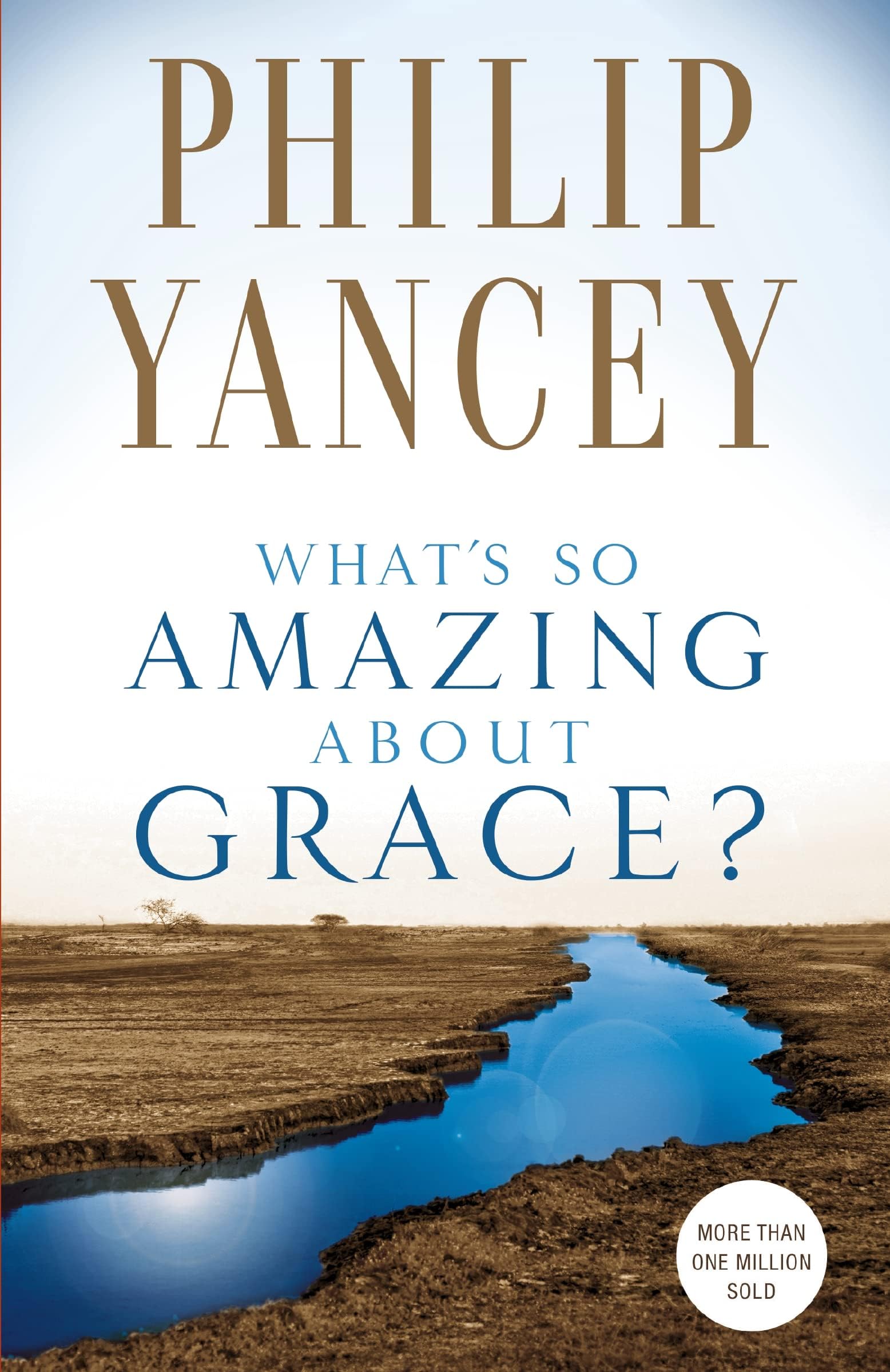
What's So Amazing About Grace?
Product ID: 1695365
Buy anything from 5,000+ international stores. One checkout price. No surprise fees. Join 2M+ shoppers on Desertcart.
Desertcart purchases this item on your behalf and handles shipping, customs, and support to Colombia.
OVER ONE MILLION COPIES SOLD! Discover grace as you've never known it before: the most powerful force in the universe and our only hope for love and forgiveness. Grace is the church's great distinctive. It's the one thing the world cannot duplicate, and the one thing it craves above all else--for only grace can bring hope and transformation to a jaded world. In What's So Amazing About Grace? award-winning author Philip Yancey explores grace at street level. If grace is God's love for the undeserving, he asks, then what does it look like in action? And if Christians are its sole dispensers, then how are we doing at lavishing grace on a world that knows far more of cruelty and unforgiveness than it does of mercy? Yancey sets grace in the midst of life's stark images, tests its mettle against horrific "ungrace": Can grace survive in the midst of such atrocities as the Nazi holocaust? Can it triumph over the brutality of the Ku Klux Klan? Should any grace at all be shown to the likes of Jeffrey Dahmer, who killed and cannibalized seventeen young men? Grace does not excuse sin, says Yancey, but it treasures the sinner. True grace is shocking, scandalous. It shakes our conventions with its insistence on getting close to sinners and touching them with mercy and hope. It forgives the unfaithful spouse, the racist, the child abuser. It loves today's AIDS-ridden addict as much as the tax collector of Jesus's day. In his most personal and provocative book ever, Yancey offers compelling, true portraits of grace's life-changing power. He searches for its presence in his own life and in the church. He asks, How can Christians contend graciously with moral issues that threaten all they hold dear? And he challenges us to become living answers to a world that desperately wants to know, What's So Amazing About Grace? Review: Amazing Book About Grace - This book came highly recommended by my wife and from a member of Peace Church. Yancey says that he would rather convey grace than explain it, which is why he writes with stories rather than syllogisms (Yancey 1997, 16). There are certainly a lot of stories in this book. Part one is about the sweetness of grace. Yancey tells the story of Babette, a woman who served as a housekeeper for twelve years for two sisters, Martina and Philippa. The sisters had lived difficult, graceless lives. Babette wins the lottery, and the sisters fear she will leave. But Babette spends all the money on a lavish French feast for Philippa and Martina and their guests in honor of the anniversary of their father's birth. Grace came to them in the form of a feast and in the form of a loyal friend (Yancey 1997, 19-26). Yancey tells the story of Peter Greaves, who was angry at God and life because he contracted leprosy while stationed in India. But he testifies that he experienced grace through music while at Bible college. He played piano for hours on end. He also experienced grace through the beauty of nature, as he walked through pine forests, watching dragonflies and flocks of birds. He then experienced grace by falling in love and these experiences gradually led him back to his childhood faith in Christ (Yancey 1997, 40-42). Yancey also tells a modern day version of the prodigal son story, where a teenage girl runs away from her home in Traverse City, Michigan. She heads down to Detroit, gets into drugs and prostitution to make ends meet. But she misses her family. One day, she writes her parents and tells them that she will be taking the bus home. She arrives at the Traverse City bus station at midnight. She is shocked to discover her family and about forty other relatives waiting for her, wearing party hats and saying "Welcome home!" She hugs her dad and tries to apologize, but he says "There's no time for apologies. We need to get home and celebrate. There's a big banquet waiting for you" (Yancey 1997, 49-51). That's grace. Part two deals with breaking the cycle of "ungrace." Yancey tells stories of people who lived bitter, miserable lives because they harbored anger and could not forgive (Yancey 1997, 75-81). Yancey says that we should forgive because forgiveness offers a way for us to start broken relationships over and to heal the hurts of the past (Yancey 1997, '98-99). He tells the story of Jean Valjean, the French prisoner from Les Miserables, whose life was transformed by grace (Yancey 1997, 101-2). There is also the story of Rebecca, whose clergy husband cheated on him with a woman named Julianne. She was bitter, but she phoned them one day and "I choose to forgive you." Years later, Julianne phoned Rebecca to say that the man had been doing the same thing to her and she needed someone to tell. The women got together, and Rebecca led Julianne to Christ, and they became friends (Yancey 1997, 104-6). That is grace. The rest of the book is in the same vein, pictures of grace, mixed with the occasional picture of ungrace. The researcher has already used the Les Miserables story in a recent sermon, but this book is a veritable treasure trove of grace stories that can be mined for future sermons. But taken as a whole, What's So Amazing About Grace? was one of the most enjoyable and heartwarming books on the reading plan. Review: An Absolute Must Read - This book was one of several options that I had to chose from for a class assignment. I chose it not because I particularly wanted to read it, but rather because it looked less boring than the other choices. I am so thankful that I picked What's So Amazing About Grace? to read for my class. It was absolutely inspirational. Yancy does a fantastic job of establishing his stand on the subject of grace and then backing up his claims with significant evidence. I personally am a Christian and I believe that having grace in one's life can be life-changing. Yancy, however, points out that grace, while it is the only “good” word left, is lacking in some areas of the world where we as Christians would expect it to be. The church should be the home of grace, yet it has become to many a place of judgment. One particular section of this book stuck with me. Yancy said that church should be a place we go to get cleaned up, not a place where we have to clean up before going to. Grace is so important and this book really stresses that, but it also shows how as Christians we have become recognized as ungraceful. Yancy does such an amazing job of telling his thoughts on grace without making this a difficult read. He uses stories to illustrate a point and then analyzes key sections from that story afterwards. The analysis is where the reflection happens. This reflection is what makes the book so inspirational. Yancy's analysis make the reader think about their own lives and how they could improve with the addition of grace into their daily lives. The only thing he could have done better was to strengthen his transitions between stories, yet that is so minor when compared to everything that is done so well in this book. Overall, this book is well worth reading. It is interesting and will make one think about how they could be more grace-filled in their every day life. I recommend this to everyone, but specifically Christians. It is humbling because Yancy places a lot of the blame for why Christians are viewed as ungraceful in today's society on those who call themselves 'Christians'. He says that in order to change how Christianity is viewed, we must change how Christians are viewed by the world. It is absolutely a must read.


| Best Sellers Rank | #171,618 in Books ( See Top 100 in Books ) #2,266 in Christian Personal Growth #2,306 in Christian Inspirational #5,080 in Christian Spiritual Growth (Books) |
| Customer Reviews | 4.7 out of 5 stars 1,143 Reviews |
D**D
Amazing Book About Grace
This book came highly recommended by my wife and from a member of Peace Church. Yancey says that he would rather convey grace than explain it, which is why he writes with stories rather than syllogisms (Yancey 1997, 16). There are certainly a lot of stories in this book. Part one is about the sweetness of grace. Yancey tells the story of Babette, a woman who served as a housekeeper for twelve years for two sisters, Martina and Philippa. The sisters had lived difficult, graceless lives. Babette wins the lottery, and the sisters fear she will leave. But Babette spends all the money on a lavish French feast for Philippa and Martina and their guests in honor of the anniversary of their father's birth. Grace came to them in the form of a feast and in the form of a loyal friend (Yancey 1997, 19-26). Yancey tells the story of Peter Greaves, who was angry at God and life because he contracted leprosy while stationed in India. But he testifies that he experienced grace through music while at Bible college. He played piano for hours on end. He also experienced grace through the beauty of nature, as he walked through pine forests, watching dragonflies and flocks of birds. He then experienced grace by falling in love and these experiences gradually led him back to his childhood faith in Christ (Yancey 1997, 40-42). Yancey also tells a modern day version of the prodigal son story, where a teenage girl runs away from her home in Traverse City, Michigan. She heads down to Detroit, gets into drugs and prostitution to make ends meet. But she misses her family. One day, she writes her parents and tells them that she will be taking the bus home. She arrives at the Traverse City bus station at midnight. She is shocked to discover her family and about forty other relatives waiting for her, wearing party hats and saying "Welcome home!" She hugs her dad and tries to apologize, but he says "There's no time for apologies. We need to get home and celebrate. There's a big banquet waiting for you" (Yancey 1997, 49-51). That's grace. Part two deals with breaking the cycle of "ungrace." Yancey tells stories of people who lived bitter, miserable lives because they harbored anger and could not forgive (Yancey 1997, 75-81). Yancey says that we should forgive because forgiveness offers a way for us to start broken relationships over and to heal the hurts of the past (Yancey 1997, '98-99). He tells the story of Jean Valjean, the French prisoner from Les Miserables, whose life was transformed by grace (Yancey 1997, 101-2). There is also the story of Rebecca, whose clergy husband cheated on him with a woman named Julianne. She was bitter, but she phoned them one day and "I choose to forgive you." Years later, Julianne phoned Rebecca to say that the man had been doing the same thing to her and she needed someone to tell. The women got together, and Rebecca led Julianne to Christ, and they became friends (Yancey 1997, 104-6). That is grace. The rest of the book is in the same vein, pictures of grace, mixed with the occasional picture of ungrace. The researcher has already used the Les Miserables story in a recent sermon, but this book is a veritable treasure trove of grace stories that can be mined for future sermons. But taken as a whole, What's So Amazing About Grace? was one of the most enjoyable and heartwarming books on the reading plan.
A**N
An Absolute Must Read
This book was one of several options that I had to chose from for a class assignment. I chose it not because I particularly wanted to read it, but rather because it looked less boring than the other choices. I am so thankful that I picked What's So Amazing About Grace? to read for my class. It was absolutely inspirational. Yancy does a fantastic job of establishing his stand on the subject of grace and then backing up his claims with significant evidence. I personally am a Christian and I believe that having grace in one's life can be life-changing. Yancy, however, points out that grace, while it is the only “good” word left, is lacking in some areas of the world where we as Christians would expect it to be. The church should be the home of grace, yet it has become to many a place of judgment. One particular section of this book stuck with me. Yancy said that church should be a place we go to get cleaned up, not a place where we have to clean up before going to. Grace is so important and this book really stresses that, but it also shows how as Christians we have become recognized as ungraceful. Yancy does such an amazing job of telling his thoughts on grace without making this a difficult read. He uses stories to illustrate a point and then analyzes key sections from that story afterwards. The analysis is where the reflection happens. This reflection is what makes the book so inspirational. Yancy's analysis make the reader think about their own lives and how they could improve with the addition of grace into their daily lives. The only thing he could have done better was to strengthen his transitions between stories, yet that is so minor when compared to everything that is done so well in this book. Overall, this book is well worth reading. It is interesting and will make one think about how they could be more grace-filled in their every day life. I recommend this to everyone, but specifically Christians. It is humbling because Yancy places a lot of the blame for why Christians are viewed as ungraceful in today's society on those who call themselves 'Christians'. He says that in order to change how Christianity is viewed, we must change how Christians are viewed by the world. It is absolutely a must read.
A**Y
Everything!
Grace is something that is incredibly simple in theory, deeply personal and very difficult to implement in our everyday lives. Grace is the defining element of Christianity and it is beautiful. Yet, the idea that we are loved and there is nothing that we can do that will change that love is met with skepticism at best and usually suspicion. Yancey makes it clear how very beautiful and simple Grace is. But he also covers "Grace Abuse" and forgiveness. All of this was thought provoking and inspired many conversations in our house. Throughout the book Yancey makes clear how very powerful Grace can be... it's just not easy. In a world marred by ungrace I was drawn to this book to see where we had gone wrong in Western society. Yancey's book really helps with working through that thought process. Yancey discusses "legalism" as an enemy of grace and he focuses particularly on the involvement of the church in politics. In the end I came away with the message that it is up to each of us as individuals to live a life of grace and carry that message out into the world. If the world you see reflected back is not one with grace, it is up to us to act differently to change that. I could write more about the intertwining of grace and politics but in the end such discussions seem pointless when grace is just absent. Perhaps we should all just start with the end in mind, and that may be as simple as a recognition of the fact that Grace can change the world.
J**Y
Grace is always welcome
I love this book. It is on a needed topic. It is written in typical Philip Yancey style, as a friendly conversation with lots of relevant anecdotes. Those of us, who love the Bible and understand it to be God's Word, often get so caught up in legalism that we forget to express grace. Yet so much grace has been and is extended to us, that we are commanded repeatedly to extend it to others. The world is often graceless and starved for the grace of God, expressed through His people. That grace draws people to God's love and is healing. There are many Bible references within the book, and additional references and interesting discussion questions in the available study guide. The book is suitable for individual or group study. The chapters should not be read out of the context of the book as a whole. I am using this book in a small group home Bible study class, along with the available study guide and The Bible. So far, it has stimulated a lot of interesting discussion, reflection, application and questions, as well as bonding and mutual prayer among the group members.
N**R
Good Advice for Legalistic Churches; Weak on Judgment, Homosexuallity, and Other Religions
If you grew up in a legalistic church, this is the book for you! Yancey does a great job challenging the church to be a place where criminals and prostitutes come for help and healing . . . where anybody can relax in God's unconditional love . . . rather than a place of judgment and self-righteous hypocrisy. He tells some great stories that inspired me and that I can use as sermon illustrations. I liked how he used Jesus as a role model. I think he was spot on there. I think the book would have been even better if he engaged the issue of God's judgment and grace. He quotes lots of Scripture about God's unconditional love but doesn't take on Jesus' warnings. My theory is that even the painful consequences of sin are a form of grace in that they motivate us to change or to have more compassion for our fellow sufferers. I also believe the consequences of sin are temporary corrections, not eternal torment. Since I'm out on a theological limb there, it would have been good to hear his thoughts. It also bugs me Yancey won't take a stand on the morality of homosexuality. One way or the other is better than "I don't know." It's hard to believe he doesn't have a leading from the Spirit considering he has written about God and sexuality, is friends with Mel White, and interprets Christianity for a living. I guess that's OK if he honestly doesn't have an opinion; not OK if he's trying save his career with Christianity Today. It's sad he and his church were initially on the wrong side of the civil rights movement and now, in my humble opinion, he has missed the boat again on the civil rights issue of our generation. Finally, he's just wrong about Christianity owning a monopoly on grace. Hinduism and Buddhism were preaching "love your enemy" before Jesus even came to earth!
S**A
Grace and Ungrace and Why It Matters
This is the fifth book I've read by Philip Yancey, and they've all been sizzlingly alive and inspiring. Many types of Christian books annoy me: they're either heavy-handed and doctrinal, or simplistic and trite. In contrast, Yancey stands on the same scruffy ground the rest of us stand on, and he tells stories about people we might know or might be. Sadly, the history of the Church contains much ungrace, which has driven and still drives people away from Christ. Yancey says, "...the Gospels make clear the connection: God forgives my debts as I forgive my debtors. The reverse is also true: Only by living in the stream of God's grace will I find the strength to respond with grace toward others." Yancey also points out the danger of mixing politics and religion. Though the book was published in 1997, it rings hauntingly true today: "...while a coziness between church and state may be good for the state, it is bad for the church....The state which runs by the rules of ungrace, gradually drowns out the church's sublime message of grace." Yancy has the courage - and the humility - to stare straight-faced at both church and society and describe in plain English what he sees, and why God cares.
V**O
Life-changing
While this is not a new book, it is well-written, with excellent stories and illustrations of grace, and is truly timeless. I have used it in every church I have served over the last 23 years, and it has been very well received in each church. For many of my folks it has been life-changing. Grace - God's grace, and our own ability to give and receive grace - is so badly needed in this day and age, and this is just the book to explain what grace is and to help us foster it in our own lives.
J**G
The best book I've read in years?
For some unknown reason, I resisted Yancey's work for years. I'd see it on the shelf and go blechh!!!, having never read a word he wrote. Finally in desperation for something to read, I picked this up. Later that night after a reading binge, I put the book down, finshed in one sitting. Ever since I've been haunted by one sentance. "There's nothing we can do to make God love us more, and there's nothing we can do to make God love us less. In that one sentence, Yancey hits the paradox of grace. As people of faith we are caught between the demands of law and the gift of grace. As one reads scripture, it almost seems as if the biblical writers still had not resolved the balance for themselves. Yancey tries to negotiate the balance between the Jesus who offers himself in unconditional relationship with us and the same Jesus who says I didn't come to eliminate one line of the law. Yancey does this largely through stories that make grace seem really accessible and really costly. If you were to buy one book for someone who wanted to know what it meant to be a Christian in the 21st century, grab this one and give it to them. I've already gone through 5 copies.
V**.
A WAKE UP CALL for ANY spiritual person but particularly for "CHRISTIANS"
Arrived on time and the quality was just as described from the second-hand seller. Is a book hard to put down and so well written that it feels effortless... like watching a good story :) It speaks about the word "Grace", it's usages in history, law, in the communities around the world and in religion. It goes on to explain how we keep pushing the "Doctrine of Purity," which is what Jesus came to destroy and replace with the "Doctrine of Compassion." The doctrine of purity is what the Pharisees did and is something that many fanatical Christians still like doing and want to keep perpetrating, instead of ACTUALLY mimicking what Jesus taught: Don't judge, just love and this love and compassion will attract and change people's hearts. A WAKE UP CALL TO ALL...
J**N
This is a very amazing book about Amazing Grace
This is a very amazing book about Amazing Grace! Somehow despite all the knowledge we have, we still underestimate the grace of God. Yancey is a gifted writer and Praise God that Yancey's gifts are benefiting so many all over the world. Fell in love with his writing when I read - The Jesus I never Knew.
A**.
Eyeopener for the heart
One of the first books I read on my faith journey. It was a very easy read but transformative. Grace is a word that is said so lightly sometimes without the depth of what it means for our life and the way we go through it. Definitely recommend this one!
M**.
Excellent
Excellent
M**C
An amazing book
This book has become one of the standard texts for the Christian believer to understand what God's grace is and it's importance in our lives. The author writes from his own experience of God's grace in his life and a biblical perspective. He illustrates the points well with examples from films, novels and true-life incidents. Excellent read. Add to your reading list
Trustpilot
5 days ago
2 weeks ago