We remain fully operational. Our teams are working around the clock to ensure your deliveries continue safely.

Descargar la aplicación


Servicios al cliente
Sobre nosotros
Copyright © 2025 Desertcart Holdings Limited
Descargar la aplicación


Buy anything from 5,000+ international stores. One checkout price. No surprise fees. Join 2M+ shoppers on Desertcart.
Desertcart purchases this item on your behalf and handles shipping, customs, and support to Colombia.
📸 Elevate your visual storytelling—because your moments deserve pro-level clarity!
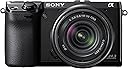
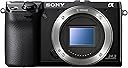
The Sony NEX-7/B is a high-performance mirrorless digital camera featuring a 24.3MP APS-C CMOS sensor, ultra-fast 1/4000s shutter speed, and Full HD 1080p video recording. Designed for professionals and enthusiasts alike, it offers a versatile ISO range up to 16000, a bright 3-inch swivel LCD, and a lightweight metal body at just 291 grams. With advanced autofocus modes, electronic viewfinder, and compatibility with Sony E-mount lenses, it delivers exceptional image quality and creative flexibility in a compact form factor.
| Package Dimensions L x W x H | 22.1 x 16.3 x 13.7 centimetres |
| Package Weight | 0.64 Kilograms |
| Product Dimensions L x W x H | 43 x 70 x 121 millimetres |
| Item Weight | 292 g |
| Brand | Sony |
| Camera Lens | 18-55mm zoom lens |
| Colour | Black |
| Continuous shooting speed | 1E+1 FPS |
| Has image stabilisation | Yes |
| Included components | USB. |
| ISO Range | 100, 200, 400, 800, 1600, 3200, 6400, 12800, 16000 |
| Memory Slots Available | 1 |
| Min Focal Length | 18 Millimetres |
| Minimum shutter speed | 30 seconds |
| Model year | 2013 |
| Plug profile | Sony E Mount |
| Part number | NEX7/B |
| Viewfinder Magnification | 1.09x |
| Water Resistance Level | Not Water Resistant |
| Zoom Type | Optical Zoom |
| Expanded ISO Maximum | 16000 |
| Autofocus Points | 25 |
| Focus type | Auto Focus |
| Maximum shutter speed | 1/4000 Seconds |
| Aperture Modes | F3.5–F5.6 |
| Maximum Format Size | APS-C |
| Effective still resolution | 24.3 |
| Guaranteed software updates until | unknown |
A**R
Let me start by saying that I have been an avid, but not an expert photographer for 50 years. I carry a camera with me everywhere I go. My recent cameras have included the Nikon D7000, and the Sony Alpha Nex C3 and 5n. But I have had Canon and Panasonic cameras and video cameras I also love. Anyway, this time, I got my wife the Nex 3c for Christmas because it shares the same 16 mp processor that is in the Nikon D7000. To put an APS-c processor in such an inexpensive camera, I thought, would open the world of natural light photography to my wife with a sensor that's a proven winner in a small, convenient camera with interface designed for point and shoot photographers. When I got home, my wife had our six month old daughter dressed in a Santa outfit... Break out the camera...Out of the box in five minutes the most incredible, clear, good color gorgeous detailed photos, all in natural light...we were so excited we rushed to print a Christmas card. That simple incident has caused my wife to finally get interested in a camera more rewarding than her Casio Ex Slim. Reading more, I decided to get myself the 5n. Same processor but with more capabilities and controls. I got many wonderful photos with the kit 18-55 but not as good as my D7000. But then I bought the Sony 18-200 lens for the 5n. The photos and detail with this lens knocked my socks off and was every bit the quality I was getting from the D7000 for which I have an equivalent lens. It was this experience that made me interested in the 24 mp Nex 7. I read a few reviews of the Nex 7. I read of many features, but mainly stunning image quality. Some commentators think that 24 mp is about the equivalent of the detail you can achieve with a film camera. I was interested. But the one think this excercise has brought home to me, if you're seeking detail, then there's alot of other things that go into image clarity than just the sensor. And the other things get more and more evident as the megapixels are pushed. First on this list is whether you have a lens that will deliver enough detail to take advantage of the megapixels. I did crave the detail, I had the lens. So I bought the camera. The Sony Nex 7 takes some getting used to. Its three dial system is ingenious and provides easy quick access to an functions including by example, creativity settings, saturation and sharpness, settings to expand dynamic range, aperture, speed and iso, so that with practice you can reset all of these for every shot almost instantly. There are many other great features also. But mainly, when I got the settings right, the quality of the pictures was just something I never saw before from any camera. There are things that could be done a little better, as there always are. The flash unit is incredibly cheesy. The movie button is placed so that I have taken many movies I did not intend. Good thing they can be erased. And there is no case that fits this incredible little camera. And it is almost shocking that with all the settings available, there is no way to save a custom profile once you have everything just the way you want it. There are other things as well. But overall, it delivers an incredible array of capabilities and unequaled image quality for an APS-C sensor that has to be seen to be believed. With good lenses, that can translate into superior photos in most conditions. How does it compare to the 5n? Honestly for people shots, and especially for shots indoors at night in natural light, the 5n is just as good or better.(My favorite professional reviewers are DPreview.com. Their tests showed that the 5n is better in low light, but if they resampled the 5n image up to 24 mp then the images were equal. This is stupid. They had to downgrade the 5n image to make it equal the 7.) The extra pixels are just not needed and they do reduce low light sensitivity. But in low light both are better than my Nikon D7000 which honestly, I still love and will also use. (The nikon has a quality usable flash.) At half the price for the camera plus the kit lens, the 5n is definitely a better value than the Nex 7 for all but the true enthusiast. Only with the purchase of expensive extra glass, and a lot of testing and practice, will the potential better photo qualities emerge. But when they do the results are stunning to a discerning eye. Now after two months, I would add the following: This camera is even better than I thought, I think in part due to the 18-200 lens being just superb. All my shots are better than all my shots were before. After figuring out the three wheel system and using it, it is fast and convenient. Need to be careful not to bump a wheel and change a setting by mistake. One nice feature. When you set the camera the way you want it in program and aperture modes, then turn it off, the settings are the same when you turn it back on. I am not using my Nikon D7000 at all. I keep trying to find comparable shots where the Nikon will equal this camera. No can do. In daylight, same picture, the Sony Nex 7 produces considerably better pictures. The detail is sharper, and when you learn to use the dynamic range settings they are incredibly better so you get better detail in the light and in the shadows. The depth of field is greater than with the Nikon. The distortion controls are wonderful and are making my pictures better. The articulating screen makes it easy to compose your shot from low and high angles. With zoom and so many pixels it's easy to let camera movement destroy a shot. So finding something to rest the camera against to take a shot always helps, and depending on the height of the object you use, the articulating screen makes it easier to compose your shot. I just love this camera and I believe it is making my photographs better than they ever were.
C**O
There are hundreds of reviews, including those by technical publications. I'll concentrate on things that may not be so apparent to a lot of people. This is a well-made camera with lots of attention to details that will make you appreciate it over time. It is not tiny or light, just much more compact than the typical DSLR. The most fabulous feature is its ability to use just about every lens ever made! That is astonishing. And it does it well with different ways to focus manual lenses. There is a multi-shot system that works to produce sharp photos with any lens in about any lighting condition. I even used an old Nikon telephoto that would only work with a tripod on the Nikon, but was even sharper hand held on the Nex! Non-Sony lenses are mounted by adapters that are available on Amazon and elsewhere. Most are fairly rudimentary little devices made in China under a hundred different brand names, but they work. One thing to consider is to use lenses that have a manual aperture control ring. Newer lenses were often made just for automatic cameras and you have to use adapters that have their own aperture control built in and these are not as nice to use. Those old lenses are coming out of the closet and off the shelves at camera stores where they have been gathering dust forever. The prices are going up, especially for the more revered models. In any case, the Nex-7 certainly makes tons of sense for anyone who has some nice old lenses languishing in the drawer. Be aware that wide angles made for rangefinder cameras often produce a magenta cast in the corners of this Nex. A lot of this is variable depending on subject and lighting, but it is causing much consternation for some people. There is a software solution (Cornerfix) and lenses made for SLRs do not have that problem, but they are bigger and require a longer adapter. Sony's published roadmap indicates that new Sony wide angles are on the way, so that would be a solution for many people. Also causing some complaining is the menu system. There are a lot of settings and it is a formidable task to dive in and find your way around. Sony gave this camera a number of knobs and buttons and a click wheel for direct access to menu sub-sets. And you can customize these settings to some extent to fit your needs. Still, there is no way but to jump in and practice and practice until you get it right. The battery drains pretty fast, especially when the proximity sensor turns it on when in a case or you accidentally hit the prominent video button. I highly suggest the outrageously priced Sony model as the aftermart batteries are worthless and maybe harmful to your device. I think a car charger would be very useful. THE NEX-7 DOES NOT COME WITH A MEMORY CARD. I got a Sony memory stick, only 8gb to start. I read a compelling argument that it is better to have several small ones than to put all your photos on one big one that might fail during an important assignment or on your bucket list vacation. Either the memory stick or a Class 10 will handle everything as fast as possible. BTW, a regular old USB cable downloads the camera quite fast with the memory stick at least, so no need for a card reader. Some people don't like their expensive cameras physically attached to a computer and I see their point. All the special tricks this camera does are done well. Panoramas, HDR, etc are all implemented very well. A wrist strap is just perfect with this camera. I'll promote Gordy. Sound is a big deal with video. At the ocean the wind noise was pretty bad, even with the setting for that activated. I hope to buy the little Sony mic someday. This camera has the large "C" sized sensor with nearly 25mps. When it came out there was much wailing and bitterness from the Noise People, those who do not think resolution is as important as the noise issue. As it turns out, noise is very much in control at anything like a normal ISO and with the technology you don't have to go to high ISOs anyway. Coming from a 6mp camera, I certainly see the vastly better resolution and appreciate it. My old Core 2 Duo computer still handles the files fairly well and I don't keep a high percentage of my shots, so haven't run into storage problems yet. Sony software is horrid, still considers Apple as an afterthought evidently. The manual, though, is excellent. I suggest downloading it to get an idea of how it all works. And one more thing about the lenses. Sony has been criticized because the E-mount lenses because they are big on the camera. They do incorporate motors and anti-shake mechanisms and are very light. Some of the size problem is that the camera is small by comparison. They are very attractive and modern looking I am just astonished at how sharp the 55-210 is. I just took a 100mm shot of a building hundreds of yards away, then blew that up to 100% and you can see the twirls in a little rope. Just amazing in combination with the Nex-7. Far beyond any system I have ever used. I think this is a wonderful camera that gives you every chance to make a great photograph or movie. You can't ask for more than that.
A**B
Bought a new new-7 from amazon less than 2 weeks ago. Second time shooting a football match and the EVF failed - flashed an error saying it was disabled and allow it to cool (odd given it was not much above freezing) - over 24 hours later and still the same problem and no functional EVF which was a big reason for buying the camera. Sent it back for a replacement since overall I was pleased with its performance except for the error which seems fairly rare judging by other internet commentary hence why I was willing to get another one. Received the replacement today and it's a used/refurb one! This is just an absolute DISGRACE. I pay $1,000+ for a camera that fails in less than 2 weeks and Amazon think they can send a refurb to replace it - AMAZON YOU SHOULD BE ASHAMED! Then had to go through Customer service because the returns center would not permit a refund! (as though I'd trust them to send another replacement!). I'd advise anyone else returning for a replacement to check the contents carefully - new ones come with various stickers and tags on and sealed packaging - if yours doesn't have this then send it back, you bought a new one so the replacement should be new. Back to the camera. (which I would give 4 stars to outside of the EVF failure and Amazon's replacement policy.) The sensor has superb resolution and the 55-210mm lens is an excellent accompaniment. The only thing I've found it to be less good at than my 5D MkII is for getting a rapid AF and the sharpness of images from those football matches. (In fairness the high ISO performance which many criticize it for, I found to be extremely good and the football game I was shooting in the evening under the lights produced images that were no worse than the 5D MkII did under similar conditions and in some cases better.) In good light though the percentage of truly sharp action shots is less than I had with the 5D MkII but the 5D MkII is over twice the cost and the lens I was shooting with is about 5 times the cost of the 55-210mm so it's not really a fair comparison and taken in that context I think it performed extremely well. Of course it isn't designed to be a sports shooter with contrast detect AF but I think it does it better than many would expect with a little perseverance. I tried the LA-EA2 adapter and an A-Mount 85mm f/2.8 lens with it to try and get the advantage of the phase detection AF but although the AF was faster, though still not as fast as regular DSLR AF, the lens itself just didn't have enough reach for a football game (and I didn't care for the bokeh either to be honest). Sadly Sony don't appear to produce a reasonably priced fast long telephoto lens so I have returned the LA-EA2 and the 85mm and will look into some of the alternate adapters for my canon lenses instead (although of course I'll be limited to either slow AF or MF with those adapters) For macro and studio set shots I found the results to have more realistic color balance and a better overall image quality than the 5D MkII which is certainly saying something. Haven't done much in the way of landscape work with it yet to really comment on that front but I expect it to be of similar quality. For a lightweight compact camera it produces truly amazing images, I only hope the EVF problem is not to be repeated. 16mm wide angle lens I purchased had an optical flaw (apparently quite common for this lens) so I can't comment much on it. But surprisingly the wide angle extender lens that fits onto the 16mm lens really didn't reduce the image quality noticeably in the tests I ran (within the limits of the optical flaw on the 16mm lens) so I'd recommend it given the price and the great degree of wide angle you get as a result - 16mm equivalent. Overall it's a great performer and given its size and weight is fantastic to just carry around - I'm far more likely to take it with me than my DSLR and therefore am much more likely to get decent pictures where before I would have none or phone camera pictures. Oh and be sure to read the manuals, the interface takes a little getting used to but is well worth the investment in time.
F**0
A little background: I've been a film user probably forever. Only 7 years ago I decided to go digital with a Canon EOS30D and never looked back. I'm in no way a "pro" by definition, but I do know what I want to do and what "tools" to achieve them with. Fast forward to the NEX-7. What a piece of technology! First things first: This is not a camera you want to "upgrade" to if you come from a point-n-shoot background or basic DSLR's. Smaller, compact and radical menu designs will quickly frustrate even the most seasoned pro DSLR users. But if you take the time to learn about it, just like how you would learn going from film to digital, it is a VERY powerful camera. With respect to other reviewers on this site the Tri-Nav system IS highly "customizable" [Gary L. Friedman covers this in his NEX-7 ebook]. I had rented it from our local camera shop [with the kit 18-55mm] to try it out. At first I was totally unimpressed and brought it back. The clerk offered me the Zeiss F1.8 to try with the NEX-7. What a night & day difference! YES! to take advantage of the Sony sensor you NEED quality glass to compliment it. So I bought the body only and purchased the Zeiss F1.8 & a Tamron Zoom lens [for traveling]. My passion for photography is ignited again and I'm excited to build a system about the NEX. Yes, there are limitations right now because there are not a lot of accessories and lenses for the NEX system. Sony has always been slow in that regard. But, I also purchased an adaptor to use my older Canon lenses [unfortunately, manual F-stop and focus] and am able to get those shots I so desire. OK, so pros & cons for me: PROS 1) Compact body LOADED with features. 2) Electronic View Finder [EVF] is a big game changer enabling me to "see" what the sensor sees. 3) Tilt-screen lets me get those overhead shots or low to the ground POV scenes that I like for street photography. 4) With fast SD cards I can get action shots in RAW at about 4 to 7fps depending on the scene. I get 10 to 12fps with JPG. 5) "Peeking" focus assist helps with the telephoto shots 6) FAST startup and responsive controls. You hardly ever miss any shots you want to take. 7) LIVE VIEW mode is maintained through continuous shooting up to about 5fps 8) All the data overlays on the live view screen helps set up shots. 9) Low light shots are/at equal to the DSLR 'cousins'. 10) and, of course, the Image Quality is the best! [with good glass!]. Pixel peepers may even find it hard to fault the images. CONS 1) There is no way at this time [firmware?] to save different shoot settings like the way DSLRs cans save 2 or 3 settings. So unless you are in iA mode you have to think about every shot you do. This is one reason why point-n-shoot upgraders WILL get frustrated with this camera. 2) Auto ISO is only limited to 1600 max. 3) Auto Bracketing is limited [+/- 0.7 is not a lot to work with] *note firmware 1.01 now adds ev +3 or -3 with 3 shots auto. 4) Battery life sucks so I have auto off feature ON and I carry a spare battery. With the fast startup I won't miss much. 5) The hot-shoe is Sony proprietary so unless you have an adaptor it uses only Sony flashes and accessories. 6) Pop-up flash will cast shadows on zoom lenses 7) Not many good E-Lenses. . . YET! 8) In low light the EV is VERY grainy. Hard to compose shots. Switching to the Live View glows on your face too much. 9) Sometimes it takes time for the NEX to track in low light. [Uses Contrast AF. Wish it was Phase like the Sony DSLRs] [FYI if you want to see what I use this with you are free to take a look at some of my pics: [...]] Movie Mode: I admit I have not used this feature a lot since I am mostly a stills photographer. But it works well enough. I did not take many movies with it, but I was impressed at the high-quality, the autofocusing, and the overall ease. Overall this is an amazing piece of technology coming from a film background. It does take some getting used to handling and using. I took the time to learn and found this easy to setup. Not as easy as it's bigger DSLR cousins, but easy enough for what it does. Sony has got a winner with the NEX. Can't wait to see what else is coming!
M**O
Right now, Sony is making the best sensor/smallest bodies out there. Yes, I'm aware of the A7 and A7r, but those barely have any lenses yet...again. Everything only matters if you print. Read that again. It has better low ISO resolution than my Nex 5n. At high ISO (3200 or above), I turn the NR to low to preserve detail. All the review sites use default and it smudges all the detail. It is also true that the default metering is a bit dark. I don't know if that is to preserve the highlights because some cameras tend to do that, too. I got this at discount because my 5n has dark dust underneath the AA filter and I'm reluctant to send it in because there is probably nothing they can do except replace the sensor. An upcoming wedding at the end of the month necessitated getting a small body to use with my Nex lenses. Although 16MP may be enough, I make 30x40 prints that could use a hair more detail. The Nex 7 has just enough detail to squeeze out a little more for my prints to call it an improvement. Having experiencing the Nex system from the beginning, I believe that the Nex 7 was designed at the same time as the original Nex 3, 5. The Tri dial control is nice, but none of it is labelled like a traditional camera- I may label it myself with tape and a silver marker. The Nex 6 body is a huge ergonomic improvement and the A7 also completes the gap on user interface. It is getting a bit outdated, but I need the pixels. Yes, the A7/A7r are better, but I need a whole slew of new lenses. Even the current 16-70 Zeiss came out a little late to the party- I am to used to the 18/55 and it's sweet spots. One of the biggest flaws is the autoISO limits at 1600. That is probably because noise at 3200 is pretty high compared to a 16MP Nex body. I don't mind the noise because I can Photoshop it out, but Sony's NR is way too strong to preserve detail at 3200. The back of the camera heats up much faster than my 5n, but you can lift away the viewing screen to help cool down the camera. That is probably a factor in higher noise as the pixel/size is reaching the limits. The relatively new 20.2 sensor in the A3000 fake SLR is probably a good compromise from what I've seen. The much lauded viewfinder is nice, but I am one of those people who have gotten used to framing the entire shot at arm's length. It still feels like you are peering into a low quality video camera even though it is way better than others. Plus pre-2012, the Nex 7 doesn't come with the $15 eye cup, thereby scratching your glasses easily. Right now, if your needs don't require an A7r (and expenditures + lenses), the Nex 7 will suffice even if the controls/style are a bit first Nex generation. I am not going back to the Canon 5D/Nikon to use my fisheye to 200 and ability to use virtually any lenses out there.
Trustpilot
Hace 1 mes
Hace 1 mes