We remain fully operational. Our teams are working around the clock to ensure your deliveries continue safely.

Descargar la aplicación


Servicios al cliente
Sobre nosotros
Copyright © 2025 Desertcart Holdings Limited
Descargar la aplicación

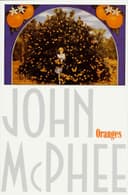

Oranges [McPhee, John] on desertcart.com. *FREE* shipping on qualifying offers. Oranges Review: Fruit, Economics, Agriculture and History Made Fascinating - I picked up this book because I was traveling to Florida and wanted something . . . . Florida-ish. Good pick! John McPhee, a New Yorker stalwart and author of at least 25 books, started out to write a New Yorker article on the subject of the orange industry in 1966 and ended up material with enough to create a book, which became Oranges. This particular edition came out in 2000 and bears a preface by the author, which explains his early career with The New Yorker and how and why the book got written. The text itself is not updated or appended to register changes in the industry since the mid-1960s, but that's okay. This is a surprisingly compelling and atmospheric narrative, even though it is fact-packed with economics and agricultural statistics. McPhee's inspiration was simply that he liked orange juice and wanted to find out where it came from. That took him to Florida where he found scientists, growers, and the entire history of a piece of fruit most of us take for granted, a native of China that was unknown in the Holy Land and the Western hemisphere at the time of Christ, that would not make it to the Americas until Columbus. For all its ubiquity in the modern world, citrus is a temperamental plant that requires particular soil and climatic conditions, not to mention careful grafting to maintain true products. There are many varieties of oranges--not just seedy, seedless and tangerine--and across history they have been valued by kings and inspired poetry. Ponce de Leon may have introduced them to the Florida mainland in the 16th century, to sustain troops. The coming of the railroad and improved shipping popularized the fruit produced in the Jacksonville, St. John's River basin and Indian River regions (northern and central Florida) in the 19th century, and an international industry was born. Fast forward to the 1960s and McPhee puts the reader in the midst of a highly evolved industry populated with creative entrepreneurs and scientists and power brokers who might be kings. McPhee concludes his tour at a time when juice concentrate is king in America. This book could benefit from a coda updating how the trends for organic and fresh ("never from concentrate," my bottle brags) have affected the industry, as well as the real estate development that has overrun former growing areas. Review: Sunshine in your Glass - For those of us who have had a glass of orange juice nearly every day of our lives, it is rather fascinating to learn a bit about the history and quality control of the modern industry that brings that delicacy to our kitchen. This is one of McPhee's earliest books, so it is a bit dated. But that doesn't matter. McPhee is such a talented writer and he packs so much information and insight in to a small book that it is well worth reading even though a half century has passed since it was first published. The ancient history of the fruit is still germane, and the description of the technological breakthroughs that brought us flash frozen, "concentrate", and flavor packs are still fascinating and relevant. Also, gaining a feeling for the many varieties of oranges, the weather and predator challenges faced by orange growers, and the rise of massive corporate producers as well as the place for some remaining family farms is worth placing in perspective. McPhee started with the simple joy of a small vendor peeling fresh oranges in the old Pennsylvania Station in New York City. Savoring an orange is still far more satisfying than drinking a technologically synthesized universal product, although that is what the vast majority of people settle for in this fast moving world.
| Best Sellers Rank | #321,432 in Books ( See Top 100 in Books ) #307 in Nature Writing & Essays #405 in Essays (Books) #2,614 in Contemporary Literature & Fiction |
| Customer Reviews | 4.4 4.4 out of 5 stars (556) |
| Dimensions | 5.4 x 0.6 x 8.2 inches |
| Edition | Reissue |
| ISBN-10 | 0374512973 |
| ISBN-13 | 978-0374512972 |
| Item Weight | 2.31 pounds |
| Language | English |
| Print length | 176 pages |
| Publication date | January 1, 1975 |
| Publisher | Farrar, Straus and Giroux |
C**G
Fruit, Economics, Agriculture and History Made Fascinating
I picked up this book because I was traveling to Florida and wanted something . . . . Florida-ish. Good pick! John McPhee, a New Yorker stalwart and author of at least 25 books, started out to write a New Yorker article on the subject of the orange industry in 1966 and ended up material with enough to create a book, which became Oranges. This particular edition came out in 2000 and bears a preface by the author, which explains his early career with The New Yorker and how and why the book got written. The text itself is not updated or appended to register changes in the industry since the mid-1960s, but that's okay. This is a surprisingly compelling and atmospheric narrative, even though it is fact-packed with economics and agricultural statistics. McPhee's inspiration was simply that he liked orange juice and wanted to find out where it came from. That took him to Florida where he found scientists, growers, and the entire history of a piece of fruit most of us take for granted, a native of China that was unknown in the Holy Land and the Western hemisphere at the time of Christ, that would not make it to the Americas until Columbus. For all its ubiquity in the modern world, citrus is a temperamental plant that requires particular soil and climatic conditions, not to mention careful grafting to maintain true products. There are many varieties of oranges--not just seedy, seedless and tangerine--and across history they have been valued by kings and inspired poetry. Ponce de Leon may have introduced them to the Florida mainland in the 16th century, to sustain troops. The coming of the railroad and improved shipping popularized the fruit produced in the Jacksonville, St. John's River basin and Indian River regions (northern and central Florida) in the 19th century, and an international industry was born. Fast forward to the 1960s and McPhee puts the reader in the midst of a highly evolved industry populated with creative entrepreneurs and scientists and power brokers who might be kings. McPhee concludes his tour at a time when juice concentrate is king in America. This book could benefit from a coda updating how the trends for organic and fresh ("never from concentrate," my bottle brags) have affected the industry, as well as the real estate development that has overrun former growing areas.
U**4
Sunshine in your Glass
For those of us who have had a glass of orange juice nearly every day of our lives, it is rather fascinating to learn a bit about the history and quality control of the modern industry that brings that delicacy to our kitchen. This is one of McPhee's earliest books, so it is a bit dated. But that doesn't matter. McPhee is such a talented writer and he packs so much information and insight in to a small book that it is well worth reading even though a half century has passed since it was first published. The ancient history of the fruit is still germane, and the description of the technological breakthroughs that brought us flash frozen, "concentrate", and flavor packs are still fascinating and relevant. Also, gaining a feeling for the many varieties of oranges, the weather and predator challenges faced by orange growers, and the rise of massive corporate producers as well as the place for some remaining family farms is worth placing in perspective. McPhee started with the simple joy of a small vendor peeling fresh oranges in the old Pennsylvania Station in New York City. Savoring an orange is still far more satisfying than drinking a technologically synthesized universal product, although that is what the vast majority of people settle for in this fast moving world.
J**A
Great book if you like oranges
This book will tell you where everything there is to know about oranges, including the vast number of varieties, how they are grown and other information. It's pretty old, but still useful. And the author is an excellent writer.
S**E
Great Book
This book is so much fun to read!It is well written with information about oranges and I wanted to learn about!
M**N
Who Knew?
I love oranges, but there may not be many people who could make reading about them so interesting. There are two things to be said: McPhee is a wonderful writer; and this book, originally written in the 1960s, tells you pretty much everything you need to know about oranges. (Did YOU know that most orange trees are not grown from orange seeds, and may grow from trunks of different citrus trees entirely--lemon, say? Did you know that in the 1960s, the annual orange crop in Florida alone was around 25 billion-with-a-b oranges? Have you ever heard of degrees Brix? And so on.) McPhee knows more about oranges than I thought was knowable except to an orange grower, and his writing is so good that you end up wishing he'd move all the way up and down the food pyramid, just because your meals would then be so much more interesting. But he does write on other topics. Read those books, too.
E**Y
Great history of Florida’s citrus industry
I was born and raised in Florida and attended Florida Presbyterian College, now Eckerd College. One of the benefactors was Ben Hill Griffen.
K**E
Oranges ist in der Tat ein fantastisches Buch. Ich bin hochgradig fasziniert davon, wie packend der Autor hunderte von Seiten über den Anbau von Orangen in Florida schreiben kann. Voll von interessanten Fakten und Persönlichkeiten.
C**R
Highly recommended if travelling through Florida or California. A bit old but it’s still holds up.
L**W
The reviews warned me it was dated and it was. However that didn’t detract from the history of oranges and their cultivation. It left me wanting an industry update. I will say one thing - I grew up in America and left about the time this book was published. I could never abide the artificial and chemical taste of orange juice concentrate and even now only drink fresh squeezed juice. How anyone can bear the processed taste is beyond my comprehension. The book, despite being dated, is fascinating and worth reading.
N**U
When McPhee was pitching ideas to the master editor of The New Yorker, arguably the highest quality magazine for writers at the time, he finally won with the response "Oranges, oh yes!" and went on to research everything about oranges. This book is a masterpiece of nonfiction, and should be required reading for anyone who wants to make a career out of writing and excellent story-telling.
Q**A
Absolutely not the sort of book I usually read but it’s a fascinating account of the cultivation of orange trees. So well written, give it a go, it’s not long.
Trustpilot
Hace 1 mes
Hace 1 semana