We remain fully operational. Our teams are working around the clock to ensure your deliveries continue safely.

Descargar la aplicación


Servicios al cliente
Sobre nosotros
Copyright © 2025 Desertcart Holdings Limited
Descargar la aplicación


🌍 Stay connected, stay secure—your pocket-sized digital fortress!
The GL.iNet GL-MT300N-V2 (Mango) is a lightweight, portable travel router featuring dual Ethernet ports, 300 Mbps Wi-Fi 4 connectivity on 2.4 GHz, and pre-installed OpenWrt firmware. It supports OpenVPN and WireGuard for robust VPN security, offers easy setup through a user-friendly admin panel and mobile app, and is powered via USB for ultimate portability. Ideal for professionals seeking secure, flexible internet access on the move.





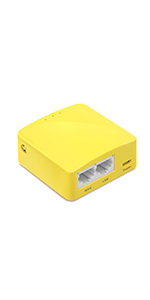
| ASIN | B073TSK26W |
| Antenna Location | Business |
| Antenna Type | Internal |
| Best Sellers Rank | #3,388 in Electronics ( See Top 100 in Electronics ) #34 in Computer Routers |
| Brand | GL.iNet |
| Built-In Media | GL-MT300N-V2 (Mango) mini router (2-year Warranty), USB cable, Ethernet cable, User Manual. |
| Color | Blue, Grey, Black |
| Compatible Devices | Personal Computer, Smartphone, Tablet, Gaming Console, Smart Television, Printer, Security Camera |
| Connectivity Protocol | Ethernet, Wi-Fi |
| Connectivity Technology | Ethernet, USB, Wi-Fi |
| Control Method | App |
| Controller Type | App Control |
| Coverage | Personal use and travel |
| Customer Reviews | 4.2 out of 5 stars 12,823 Reviews |
| Data Transfer Rate | 300 Megabits Per Second |
| EU Spare Part Availability Duration | 2 Years |
| Frequency | 2.4 GHz |
| Frequency Band Class | Single-Band |
| Has Internet Connectivity | Yes |
| Has Security Updates | Yes |
| Is Electric | Yes |
| Is Modem Compatible | Yes |
| Item Dimensions L x W x H | 2.28"L x 2.28"W x 0.98"H |
| Item Weight | 40 Grams |
| LAN Port Bandwidth | 100 megabits_per_second |
| Manufacturer | GL Technologies |
| Maximum Upstream Data Transfer Rate | 300 Megabits Per Second |
| Mfr Part Number | GL-MT300N-V2_SML |
| Model Name | GL-MT300N-V2 |
| Model Number | GL-MT300N-V2 |
| Number of Ports | 2 |
| Operating System | OpenWrt |
| Other Special Features of the Product | Access Point Mode, Internet Security |
| RAM Memory Installed | 128 MB |
| Router Firewall Security Level | High |
| Router Network Type | multi-mode |
| Security Protocol | WPA2-PSK |
| Special Feature | Access Point Mode, Internet Security |
| Unit Count | 1 Count |
| Voltage | 5 Volts |
| Warranty Description | 2 Years |
| Wi-Fi Generation | Wi-Fi 4 |
| Wireless Communication Standard | 802.11bgn |
| Wireless Compability | 802.11bgn |
D**.
A tiny device that's easy to configure and use. Simple VPN setup with on/off toggle switch.
This is the best travel modem out there. It's tiny. It's light. It's full featured and incredibly configurable through a simple administrative panel that's easy and intuitive to use. It uses open source OpenWrt firmware but the Admin Panel tames all the complexity. It's just so darn useful. The main function is the repeater mode where you can login to a public Wi-Fi connection, and the device creates another Wi-Fi connection you or your entire party can login to. It's also easy to add a VPN (OpenVPN or Wireguard) to the connection and has a little toggle switch to enable and disable the VPN as you want. It can get Internet from any Wi-Fi source or through tethering from your smartphone or from a cellular data dongle if you have one of those. It also has an ethernet WAN port if your Internet connection is wired and an Internet LAN port if you want to connect your computer wired to the router. They thought of everything. The configuration panel makes all these various setups easy to select and configure. It's a really good device and so small and easy to travel with. Whatever your situation, this little device works and works well. It's 2 Ghz only but has 300 mbps throughput. No power supply is included, just the USB power cord and a short flat Ethernet cable are included. Since it supports OpenWrt, you can install custom firmware if you want and use this for something else. It has a built in system to install factory firmware from scratch if you have to. The GL.iNet people have done a great job with this little thing.
A**N
Nice travel router
2025 Update: Took the rating from 3 stars to 5. First: Mainline OpenWRT now supports the device chipset which means I can use official downloads instead of ones made by the company that did not provide source code. Second: While the Ad-hoc/IBSS mode is not supported by the chipset, 802.11s mesh point mode *is* supported. This is a better long-term solution, and works great. I wanted to do B.A.T.M.A.N with some Pi Zero units (which can only do Ad-hoc, station, and AP modes), but that project fizzled out. Combining these with my home router also setup with 802.11s gave a very reliable mesh network (these provided extended wifi out on the patio). Original review: First, let me say that I did not purchase these (I bought two) to use in their intended purpose as a travel router. I was more interested in them as a cost-efficient learning platform for building a batman-adv mesh network. Unfortunately, the chipset in this little device is a MediaTek MT7628AN v1 which doesn't seem to have mainline OpenWRT support. The manufacturer does maintain several firmware images and an opkg repository, but I do not see any source code posted for their customized OpenWRT images (GPL violation?). The good: * Small and travel friendly. * Sufficient wifi signal * Easy to set up and use its basic functionality out of the box. Easily sets up as a wifi repeater. * Has a custom web UI that simplifies the most frequent, basic configurations. For more advanced options, LuCI is also available. The bad: * The wireless chipset doesn't support ad-hoc / IBSS mode which means they're useless as-intended for my batman-adv mesh project. * Can't even query the capabilities of the wireless chipset. "iw phy" returns nothing, and all of the radio interfaces seem to be "hardwired" into pre-defined modes (ra0 = iface used for AP mode, apcli0 = iface used in STA mode, wds0-3 for WDS). * I honestly don't trust this device not to send every secret that flows through it to Beijing, and the next thing I do will be a WireShark analysis. Assuming the silicon itself isn't compromised, I was hoping to simply reflash a vanilla OpenWRT image and build on that, but the architecture is not supported in mainline, and the chipset of the device was not published in the product description. Before giving up on these, I'm going to look into setting up a build environment for the chipset and compile my own image. * The OpenVPN client is garbage. It periodically disconnects and refuses to reconnect without several reboots. Clients lose internet access completely. Internet is otherwise solid with VPN disabled. Working on setting up WireGuard to see if it is any better. This is pretty much a core advertised feature of the product, so this is pretty unforgivable. * Chipset isn't supported in mainline OpenWRT. While the manufacturer's opkg repo does provide packages for that architecture, and that repo has so-far covered my needs, it makes me solely rely on the manufacturer. I suppose I could mirror their repo locally, but community support would be much preferred. * 3rd party OpenWRT packages are pretty much off the table. As with OpenWRT itself on this device, I'm looking into compiling the packages from source myself to bypass this limitation.
T**Y
Great little device! Multiple functionality, great interface. Great price!
I bought this to pair with my iPhone's hotspot so that my kids could connect and form a Lan game while on the road. Even without internet, if provides great routing for their purposes. The most exciting thing is that this was so easy to set up, and even gives you Wan/Lan control of one of the ports so up to two laptops can hardwire in. Best bang for the money and works well when pairing with hotel internets to give the kids their Lan games ports public internet sometimes restrict. Super Value - Great product. The size is super small so it fits in my cords bag (It's actually smaller than my mouse!) and uses the popular USB micro b to power it up so I don't have to bring a cord I'm not already carrying (like the cord to charge other devices: headphones, tablets, or android phones). Con: This only runs on the 2.4g/100mbps max wireless and seems to only support 10/100 speeds even when hardwired (at least that's what my networking settings on my laptop said), but it comes with a CAT 6 flat cable which was really a nice touch). But this is fine because my main focus is sharing iPhone hotspot internet which is below 100mbps anyway. If my purpose was to give myself a private network at faster speeds, I would spend the extra money to get a device with gigabit ports and more LAN ports. But at under $30, this has everything I need and some.
J**K
Updated - Works well once you get past setup (otherwise would be 5 star).
Update: I'm leaving this at 4 stars due to setup and restart issues but this device is definitely worthwhile owning. I used it on a month long cruise as a repeater for a single device captive login and after learning how to configure it, it was flawless in operation and permitted multiple devices to easily connect. The primary setup difficulties have to do with using an IPhone as the interface (I don't know if Android phones will experience the same issues). With the IPhone, I found it necessary to turn off the DNS attack protection feature. Then, when restarting the router using my IPhone, it was necessary to turn off my phone WiFi, turn it back on and select the router (enter router password if necessary) to get the captive (Cruise ship) login to pop up. Once the captive login credentials were entered, my other devices were able to connect to the router. Note - using my MacBookPro to connect, it wasn't necessary to turn off WiFi for the captive login to pop up automatically. I haven't tested using the MacBook with the device's DNS option in its default state though. (Original Review) Gave this only 4 stars because of setup issues. I initialized the GL-MT300N-V2-ed1 mini router per instructions and personalized the admin password and SSID. I set it up as a repeater for my 2.4G Xfinity home router, however the mini router kept saying “internet not connected”. I also set the “remember” button when I selected the Xfinity router. Thinking I might have done something wrong, I reset the mini router (reset button 10+ seconds) and reinitialized/set up the same way (did not need the defaults “goodlife” admin pw after first reset). I repeated the admin reinitialization and (repeater) wifi setup with the same negative internet warning. Also checked my Xfinity router admin page and saw that the mini router was connected but still not passing data. Tried moving away from Xfinity router, incase the Xfinity signal was swamping the mini router signal, without success. I then shut down the mini router for a while and after about 10 minutes, I powered the mini router up again. With my IPhone connected to the mini router SSID (cellular data off), I logged back into mini router admin using the previously personalized pw and was astonished to see it was connected to Xfinity router and passing data (the wireless led was blinking). I tried browsing several different sites and was initially rebuffed by an Xfinity “device paused” warning page. After several attempts accessing different sites, I tried ignoring the Xfinity warning and discovered that reloading immediately brought up the desired site. After that, I was able to power down (disconnect) and automatically reconnect to the remembered wifi connection on power up without any login password. Some other notes: online help pages mention a green power led and a red wireless connection led - however, all the leds are white. The power led comes on quickly once the mini router has power, but it takes about a minute for the wireless led to light up. Also, the slide switch next to the reset button is apparently a programmable function switch that by default has no function. I've only tested this with a 2.4G wifi signal but the online literature suggests that it is also capable of 5G with a different wireless channel selection. Overall, once I got past the initial hiccups, the mini router works like a charm and I’m looking forward to using it with multiple devices on an upcoming cruise (cruise wifi only permits a single device connection).
C**H
Makes Nintendo Switch work in Hotels
My requirement for this device was fairly specific. I travel every week for work and have begun bringing my Nintendo Switch on these trips with me. The problem is that the Nintendo Switch is notoriously horrible at connecting to wifi with a captive portal (aka registration splash screen). Such as hotels or other public wifi might require for confirmation to connect via a browser window. Basically the Switch hidden browser is worthless for these situations and hardly ever works. So I bought this device as a work around. By using this router to connect to the hotel wifi I only need it to make the connection and then it rebroadcasts my own private network. Which the Nintendo Switch can connect to just like any normal wifi that doesn't use captive portals within internet browsers (such as your home network). Setup was fairly straightforward. Granted I am a Network Engineer so I have a slight advantage. However, I found the instructions easy enough for anyone. My only minor complaint is that the router doesn't start broadcasting unless you toggle the "mode" switch located on the side (next to the reset button). The instructions aren't clear on that and the toggle switch itself isn't even labelled (but it is called out in the manual). Anyway turn that on first. Once I had setup the router per the instructions. I went ahead and pre-connected all of my devices (phone, laptop, Nintendo) while it was connected to my home network. Then a few days later I setup the router in a hotel. Using my phone I went to the router IP address (admin menus) and connected it to the hotel wifi. Then I launched a browser via my phone to do the hotel wifi registration. Done. Now the router is on the hotel wifi and all of my devices are connected to the router. One IP address. One registration (instead of having to register multiple times for multiple devices). Turned on my Nintendo Switch and it worked perfectly. No messing around with the Nintendo browser. So in summary. The router works on hotel wifi with captive portal. You only need to perform the hotel registration once and all of your devices are good. For $20 something bucks this just saved me a month of hotel registration headaches that I have been fighting. Thumbs up and highly recommend for anyone else in a similar situation. Side bonus this will give your personal devices an extra layer of protection from those public networks. This router is also very small (about 2x2 inches) so it easily fits inside a Nintendo Switch travel case if you own one.
R**E
A good router
I recently purchased this Wi-Fi router, and I’m really impressed with its performance. The setup was straightforward, and it works seamlessly with all my devices. The signal strength is strong throughout my home, even in rooms far from the router. Streaming movies and online gaming are smooth, without any noticeable lag. The security features give me peace of mind, and I appreciate the parental controls for managing internet access. Overall, it’s a reliable router that delivers excellent speed and coverage at a reasonable price. Highly recommend!
J**.
Works on captive portals. Cheap toy feel. 50% loss of downstream bandwidth. Somewhat flaky.
I was pretty impressed with just how cheap this thing feels because it made me realize just how little of a form factor was required for the functionality this thing has. It's almost like a Raspberry Pi except more like a Banana Pi. Well, so the really cool upside is that this thing works on my captive portal effortlessly (password required in browser after WiFi connection), and the UI for the router management interface is very nice. However, this is a WiFi repeater, so if you're not using it over Ethernet, it's taking your WiFi signal and broadcasting it out milliseconds after. This results in a noticeable loss of bandwidth, but not enough to make your browsing sessions totally sluggish. An Ookla speed test showed about a 50% downstream/upstream reduction. (I did not try a LAN transfer but did successfully connect peer-to-peer devices.) I was hoping that I'd be able to use this little guy to have a private network of my own and use accessories like my HomePod. While it was effective, despite the bandwidth drawback, the real reason I decided to box this up and return it back to Amazon is that there were blatant connectivity gaps where I would experience 100% packet loss and a stalled connection that would have no real solution outside of taking down the network interface and bringing it back up. That was unacceptable, unfortunately. I had a hard time giving this thing less than 3 stars because I could still see use cases for it, such as while traveling in a hotel for an extended (but finite) period of time. Unless I got a dud (and I doubt it), this probably isn't the device you want for a home WiFi repeater/extender. You might find yourself wanting to chuck it across the room, and it's unfortunately not heavy enough to be satisfying for that either. It'd be like tossing a plastic container lid. Just doesn't have the effect you want.
D**N
Works as advertised so far.
We purchased the product so we could use it on a cruise. As people may know, cruise ships charge for each device you connect to the WiFi, so we should be able to connect a router, and then connect our phones and tablets to the router. 1. That "shared repeater" part worked. As long as we were in the room, we were able to connect two phones and an iPad to a single purchased WiFi. It takes a while to connect, and runs a little on the slow side, but it was usable, and good for the price. 2. This device does not have a built-in battery. If you want to carry it around the ship, you will need to plug it into a battery pack or some such. You will also need to keep an eye on cables, because it seems to come unplugged very easily or to at least lose the WiFi it is repeating. (The good news is that I could fit the modem and battery in a waterproof bag.) 3. The device allows use of two common VPN protocols (OpenVPN, WireGuard), but our cruise ship disconnected us when I tried to install WireGuard. I have no idea how it knew, so this may be user error. But if you are planning to use this with a VPN, then I would suggest you install and test it before you travel. 4. You have to be careful about the login and logoff, because our phones seemed to be identifying to the router using the same codes that the router was using to link to the ship's WiFi. So if the router turns off, then the ship might think that line is still connected, and not let anyone else connect on that account. This seems like pretty common behavior when a router is used as a repeater, so plan accordingly. 5. We did not use the Mango for USB modem, tethering, or ethernet. I have no reason to believe these don't work, it was just not what we were looking for. 6. This was almost a five-star review, but it was not as easy to set up as I had wanted. If you wait to get to the cruise ship before you try to set it up, you might spend a few hours of your cruise trying to figure out the instructions. This was only slightly harder than a regular modem repeater, but I had been trying to do the set-up on the flaky ship's Wifi, it would have been much harder.
Trustpilot
Hace 2 semanas
Hace 1 mes