We remain fully operational. Our teams are working around the clock to ensure your deliveries continue safely.

Descargar la aplicación


Servicios al cliente
Sobre nosotros
Copyright © 2025 Desertcart Holdings Limited
Descargar la aplicación
Buy anything from 5,000+ international stores. One checkout price. No surprise fees. Join 2M+ shoppers on Desertcart.
Desertcart purchases this item on your behalf and handles shipping, customs, and support to Colombia.
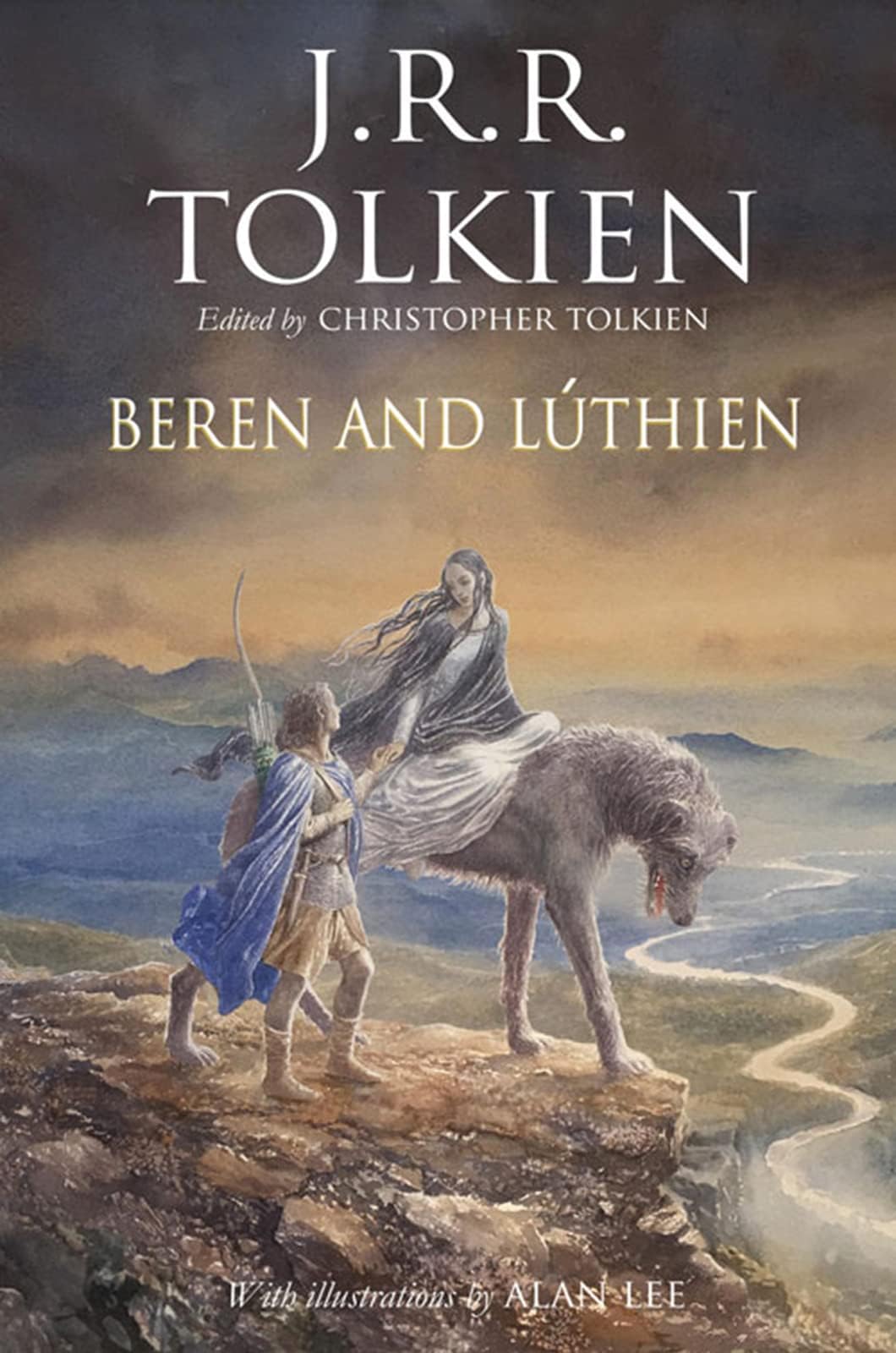
desertcart.com: Beren And Lúthien: 9781328791825: Tolkien, J.R.R., Tolkien, Christopher: Books Review: Not What I Expected, But Fantastic Nonetheless! - This book was not what I expected. I must not have read the pre-order description carefully enough. I was expecting another “Children of Hurin”. A narrative built from existing Beren and Luthien sources. But it was not that. It was several versions of the prose and verse story along with commentary and notes by Christopher Tolkien. Had I understood what was contained in the book I still would have ordered it, I just would have had different expectations. And I still will give it five stars. “The Lay of Leithian” is my favorite of Tolkien’s poems, and the fact that it remained unfinished is, to me, a great tragedy. It is actually my favorite of Tolkien’s posthumously published works. This includes “The Children Of Hurin”, which I thought was very well crafted from the various sources. That is not to say I didn’t enjoy “The Children Of Hurin”, I did. But I just liked “The Lay of Leithian” better, both as writing and as a story. But the fact that Christopher Tolkien did such a good job assembling “The Children Of Hurin”, raised my hopes that this new volume would be just like that: a prose story assembled from various sources, including the unfinished “Lay of Leithian”, with minimal editorial commentary. It was not. That is not to say that it wasn’t well done. Because of the story and the material it is certainly going to be a well written and a well plotted story. And that it was. The highlight is the section culled from the “Lay of Leithian” (the 1930s version). These verses are magical to me. Of course I can read this at any time in the previously published “The Lays Of Beleriand”, and I do periodically read through it. The original story, where Beren is an elf, is nice to read, since I was not as familiar with it. And it was interesting to see how many changes the story went through over the various versions. Tolkien seemed to have it in for cats, at least based on this early version of the story. But Tevildo was not quite as menacing as Thu (Sauron). Nonetheless, it was very entertaining. The main characters, Beren and Luthien, are fairly well fleshed out in the poem, at least with respect to their personalities. There’s very little in the way of physical description of Beren, but Luthien is described a little more fully, usually referred to as “the most beautiful” elf-maid ever. But her determination comes through much more than Beren’s. She is the one with the magic and ability to mesmerize even Morgoth. Luthien Tuniviel is just as much a hero in this story as Beren. The characters of the hound Huan and his evil counterpart the wolf Carcharoth, were well developed in the limited space. The description of Carcharoth’s whelping and growth were sufficiently grim and greatly added to the atmosphere around the Gate of Angband. It is a much fuller description than the one in the Silmarillion. And the fact that we occasionally seem to get in to Carcharoth’s head is a nice touch. The ending, as we know it from various notes or short narratives, is possibly the most happy of any of the major First Age stories. Certainly there is tragedy, but nothing on the scale of Turin’s tragic story or the fall of Gondolin. And Beren and Luthien, after their tragedy, explicitly get to live out their days in relative happiness. In spite of the curse of the Oath of Feanor. In Middle-Earth terms this is a very happy ending indeed! As I mentioned above, the story is one of Tolkien’s major stories of the First Age of Middle-Earth. It is foundational to much of what we glimpse in “The Lord Of The Rings”, especially the Aragorn/Arwen love story, which it somewhat parallels. This makes the new volume a very good addition to any Tolkien library. So now the whole story (as it exists) is available in one book, rather than searching through various other volumes. And then there are the Alan Lee illustrations. Starting with the cover, which is a great depiction of Luthien riding Huan with Beren at their side, they are very evocative of the First Age of Middle-Earth. Everything is grim and grey – which is to be expected throughout most of the journey. Though I would have hoped for a little more color in Doriath. But these compare favorably to the illustrations in “The Children Of Hurin”. I would say that this is a worthwhile purchase, if you are looking for a single source for all versions of the story. It is not, however, a stand-alone narrative like “The Children Of Hurin”, which is what I was expecting and hoping for. But that’s on me and doesn’t prevent this from earning five stars. One thing I would point out as a shortcoming (to me) is the lack of a map. It's not like there doesn't exist a map of Beleriand that could easily have been inserted in the back of the book. It would have made the journey of Beren and Luthien that much more real to me. This is apparently going to be the last of his father’s work that Christopher Tolkien publishes, so unless there is a new literary executor, this may be the last we get from JRRT Tolkien. Perhaps what I was expecting, a completed prose narrative, is impossible to do with the writings that are left. Review: Great quality - Great quality


| Best Sellers Rank | #35,577 in Books ( See Top 100 in Books ) #685 in Epic Fantasy (Books) #736 in Classic Literature & Fiction #1,075 in Action & Adventure Fantasy (Books) |
| Customer Reviews | 4.6 4.6 out of 5 stars (4,560) |
| Dimensions | 5.5 x 1.02 x 8.25 inches |
| Edition | Illustrated |
| ISBN-10 | 1328791823 |
| ISBN-13 | 978-1328791825 |
| Item Weight | 15.3 ounces |
| Language | English |
| Print length | 288 pages |
| Publication date | June 1, 2017 |
| Publisher | William Morrow |
C**B
Not What I Expected, But Fantastic Nonetheless!
This book was not what I expected. I must not have read the pre-order description carefully enough. I was expecting another “Children of Hurin”. A narrative built from existing Beren and Luthien sources. But it was not that. It was several versions of the prose and verse story along with commentary and notes by Christopher Tolkien. Had I understood what was contained in the book I still would have ordered it, I just would have had different expectations. And I still will give it five stars. “The Lay of Leithian” is my favorite of Tolkien’s poems, and the fact that it remained unfinished is, to me, a great tragedy. It is actually my favorite of Tolkien’s posthumously published works. This includes “The Children Of Hurin”, which I thought was very well crafted from the various sources. That is not to say I didn’t enjoy “The Children Of Hurin”, I did. But I just liked “The Lay of Leithian” better, both as writing and as a story. But the fact that Christopher Tolkien did such a good job assembling “The Children Of Hurin”, raised my hopes that this new volume would be just like that: a prose story assembled from various sources, including the unfinished “Lay of Leithian”, with minimal editorial commentary. It was not. That is not to say that it wasn’t well done. Because of the story and the material it is certainly going to be a well written and a well plotted story. And that it was. The highlight is the section culled from the “Lay of Leithian” (the 1930s version). These verses are magical to me. Of course I can read this at any time in the previously published “The Lays Of Beleriand”, and I do periodically read through it. The original story, where Beren is an elf, is nice to read, since I was not as familiar with it. And it was interesting to see how many changes the story went through over the various versions. Tolkien seemed to have it in for cats, at least based on this early version of the story. But Tevildo was not quite as menacing as Thu (Sauron). Nonetheless, it was very entertaining. The main characters, Beren and Luthien, are fairly well fleshed out in the poem, at least with respect to their personalities. There’s very little in the way of physical description of Beren, but Luthien is described a little more fully, usually referred to as “the most beautiful” elf-maid ever. But her determination comes through much more than Beren’s. She is the one with the magic and ability to mesmerize even Morgoth. Luthien Tuniviel is just as much a hero in this story as Beren. The characters of the hound Huan and his evil counterpart the wolf Carcharoth, were well developed in the limited space. The description of Carcharoth’s whelping and growth were sufficiently grim and greatly added to the atmosphere around the Gate of Angband. It is a much fuller description than the one in the Silmarillion. And the fact that we occasionally seem to get in to Carcharoth’s head is a nice touch. The ending, as we know it from various notes or short narratives, is possibly the most happy of any of the major First Age stories. Certainly there is tragedy, but nothing on the scale of Turin’s tragic story or the fall of Gondolin. And Beren and Luthien, after their tragedy, explicitly get to live out their days in relative happiness. In spite of the curse of the Oath of Feanor. In Middle-Earth terms this is a very happy ending indeed! As I mentioned above, the story is one of Tolkien’s major stories of the First Age of Middle-Earth. It is foundational to much of what we glimpse in “The Lord Of The Rings”, especially the Aragorn/Arwen love story, which it somewhat parallels. This makes the new volume a very good addition to any Tolkien library. So now the whole story (as it exists) is available in one book, rather than searching through various other volumes. And then there are the Alan Lee illustrations. Starting with the cover, which is a great depiction of Luthien riding Huan with Beren at their side, they are very evocative of the First Age of Middle-Earth. Everything is grim and grey – which is to be expected throughout most of the journey. Though I would have hoped for a little more color in Doriath. But these compare favorably to the illustrations in “The Children Of Hurin”. I would say that this is a worthwhile purchase, if you are looking for a single source for all versions of the story. It is not, however, a stand-alone narrative like “The Children Of Hurin”, which is what I was expecting and hoping for. But that’s on me and doesn’t prevent this from earning five stars. One thing I would point out as a shortcoming (to me) is the lack of a map. It's not like there doesn't exist a map of Beleriand that could easily have been inserted in the back of the book. It would have made the journey of Beren and Luthien that much more real to me. This is apparently going to be the last of his father’s work that Christopher Tolkien publishes, so unless there is a new literary executor, this may be the last we get from JRRT Tolkien. Perhaps what I was expecting, a completed prose narrative, is impossible to do with the writings that are left.
A**A
Great quality
Great quality
G**G
Continuing the grand mythology of Middle Earth
Christopher Tolkien, the youngest of J.R.R. Tolkien’s three sons, will be 93 this year. He is his father’s literary executor, and he has spent the years since his father’s death in 1973 poring over papers and files, considering an array of various texts, different versions of stories and poems, staying true to his father’s vision and helping publish a considerable number of books that represent both wonderful stories and insights into The Hobbit and The Lord of the Rings. It is because of Christopher that we have The Silmarillion, The Children of Hurin, many of the lost tales, the elder Tolkien’s translation of Beowulf, and many other works. The latest, and possibly the last, is “Beren and Luthien,”a love story between Beren, a mortal man in exile after his father and clanare killed, and Luthien, an Elf princess (the idea of which was carried over into “The Lord of the Rings”). Luthien is also called Tinuviel by Beren, and it is by that name we see her part in the story. Beren sees Luthien dancing in the woods and falls in love with her. Her father isn’t exactly pleased, and he agrees to the marriage only if Beren can steal a Silmaril, a jewel in the crown of Melkor, the Black Enemy, also known as Morgoth – and a forerunner of Sauron in the trilogy. He’s captured and enslaved in the kitchen, and Luthien travels to his rescue. With the help of a giant dog (who tricks an evil cat), she succeeds in Beren, and then more adventures happen. Tolkien wrote “Beren and Luthien” when he returned to England to recover from illness after the Battle of the Somme in World War I, the longest battle (July 1 – November 18, 1916) and the bloodiest battle (one million men killed or wounded) of the war. The story was written and rewritten many times, in prose and verse forms. Numerous ideas found their way into his other works, and especially the trilogy and “The Hobbit.” What Christopher Tolkien has done with this publication is something special. He includes the original story, and he also includes various prose and verse sections that his father worked on over a period of some 14 years. This is an insider’s view of the working of a story by one of the most creative minds of the 20th century. Here is a section from one of the verse amplifications of the story, which explains the beginning of Beren’s exile. Then Beren walking swiftly sought his sword and bow, and sped like wind that cuts with knives the branches thinned of autumn trees. At last he came, his heart afire with burning flame, where Barahir his father lay; he came too late. At dawn of day he found the homes of hunted men, a wooded island in the fen and birds rose up in sudden cloud – no fen-fowl were they crying loud. The raven and the carrion-crow sat in the alders all a-row; one croaked: “Ha! Beren comes too late’, and answered all: ‘Too late! Too late!’ Then Beren buried his father’s bones, and piled a heap of boulder-stones, and cursed the name of Morgoth thrice, but wept not, for his heart was ice. The prose and the verses are the stuff of myth and legend, of stories told and passed down through the generations. They are full of heroism and courage in the face of insurmountable odds, of heroes using trickery when necessary, of love winning in the end even when it loses. Tolkien had the names “Luthien” and "Beren" inscribed on the tombstone for his wife Edith and himself, which suggests some of the deep personal connections he felt to the story he had written. The volume includes wonderful illustrations by Alan Lee, who has illustrated a number of Tolkien publications. In one sense, the writings we know as Tolkien’s began with “Beren and Luthien,” and it takes its place in the grand mythology of Middle Earth that Tolkien devoted so much of his life to. It is fitting that this first story may also be the last to be published.
A**E
This is probably from the most recent version of the story of Beren and Luthien. This story is most complete and detailed version than the one in The Silmarillon. It keeps most of its origin from Tolkien's writing with some edits from his son. Really good book, however its good to note that the writing style of this book is very different from LOTR and The Silmarillon; but still very appealing.
J**.
Great edition for LOTR fans
T**S
Beautiful book, great illustrations and the history of the tale is told magnificently with lots of interesting discarded versions. Pretty neat if you ask me.
B**C
This review is for the Deluxe Edition and I had it shipped to the U.S. It’s a very high quality edition, printed on very good paper and comes in a slipcase. I also purchased the U.S. standard edition of the book and the rest of this review is from the Amazon U.S. posting I made. This book was not what I expected. I must not have read the pre-order description carefully enough. I was expecting another “Children of Hurin”. A narrative built from existing Beren and Luthien sources. But it was not that. It was several versions of the prose and verse story along with commentary and notes by Christopher Tolkien. Had I understood what was contained in the book I still would have ordered it, I just would have had different expectations. And I still will give it five stars. “The Lay of Leithian” is my favorite of Tolkien’s poems, and the fact that it remained unfinished is, to me, a great tragedy. It is actually my favorite of Tolkien’s posthumously published works. This includes “The Children Of Hurin”, which I thought was very well crafted from the various sources. That is not to say I didn’t enjoy “The Children Of Hurin”, I did. But I just liked “The Lay of Leithian” better, both as writing and as a story. But the fact that Christopher Tolkien did such a good job assembling “The Children Of Hurin”, raised my hopes that this new volume would be just like that: a prose story assembled from various sources, including the unfinished “Lay of Leithian”, with minimal editorial commentary. It was not. That is not to say that it wasn’t well done. Because of the story and the material it is certainly going to be a well written and a well plotted story. And that it was. The highlight is the section culled from the “Lay of Leithian” (the 1930s version). These verses are magical to me. Of course I can read this at any time in the previously published “The Lays Of Beleriand”, and I do periodically read through it. The original story, where Beren is an elf, is nice to read, since I was not as familiar with it. And it was interesting to see how many changes the story went through over the various versions. Tolkien seemed to have it in for cats, at least based on this early version of the story. But Tevildo was not quite as menacing as Thu (Sauron). Nonetheless, it was very entertaining. The main characters, Beren and Luthien, are fairly well fleshed out in the poem, at least with respect to their personalities. There’s very little in the way of physical description of Beren, but Luthien is described a little more fully, usually referred to as “the most beautiful” elf-maid ever. But her determination comes through much more than Beren’s. She is the one with the magic and ability to mesmerize even Morgoth. Luthien Tuniviel is just as much a hero in this story as Beren. The characters of the hound Huan and his evil counterpart the wolf Carcharoth, were well developed in the limited space. The description of Carcharoth’s whelping and growth were sufficiently grim and greatly added to the atmosphere around the Gate of Angband. It is a much fuller description than the one in the Silmarillion. And the fact that we occasionally seem to get in to Carcharoth’s head is a nice touch. The ending, as we know it from various notes or short narratives, is possibly the most happy of any of the major First Age stories. Certainly there is tragedy, but nothing on the scale of Turin’s tragic story or the fall of Gondolin. And Beren and Luthien, after their tragedy, explicitly get to live out their days in relative happiness. In spite of the curse of the Oath of Feanor. In Middle-Earth terms this is a very happy ending indeed! As I mentioned above, the story is one of Tolkien’s major stories of the First Age of Middle-Earth. It is foundational to much of what we glimpse in “The Lord Of The Rings”, especially the Aragorn/Arwen love story, which it somewhat parallels. This makes the new volume a very good addition to any Tolkien library. So now the whole story (as it exists) is available in one book, rather than searching through various other volumes. And then there are the Alan Lee illustrations. Starting with the cover, which is a great depiction of Luthien riding Huan with Beren at their side, they are very evocative of the First Age of Middle-Earth. Everything is grim and grey – which is to be expected throughout most of the journey. Though I would have hoped for a little more color in Doriath. But these compare favorably to the illustrations in “The Children Of Hurin”. I would say that this is a worthwhile purchase, if you are looking for a single source for all versions of the story. It is not, however, a stand-alone narrative like “The Children Of Hurin”, which is what I was expecting and hoping for. But that’s on me and doesn’t prevent this from earning five stars. One thing I would point out as a shortcoming (to me) is the lack of a map. It's not like there doesn't exist a map of Beleriand that could easily have been inserted in the back of the book. It would have made the journey of Beren and Luthien that much more real to me. This is apparently going to be the last of his father’s work that Christopher Tolkien publishes, so unless there is a new literary executor, this may be the last we get from JRR Tolkien. Perhaps what I was expecting, a completed prose narrative, is impossible to do with the writings that are left.
D**N
One of the great tales of the First Age, some 6500 years before The Lord of Rings era. Romance, fantasy, questing & gothic horror. High Elves, Sauron, Morgoth & the protagonists, Beren & Luthien. Tolkien at his best.
Trustpilot
Hace 2 meses
Hace 2 meses