We remain fully operational. Our teams are working around the clock to ensure your deliveries continue safely.

Descargar la aplicación


Servicios al cliente
Sobre nosotros
Copyright © 2025 Desertcart Holdings Limited
Descargar la aplicación
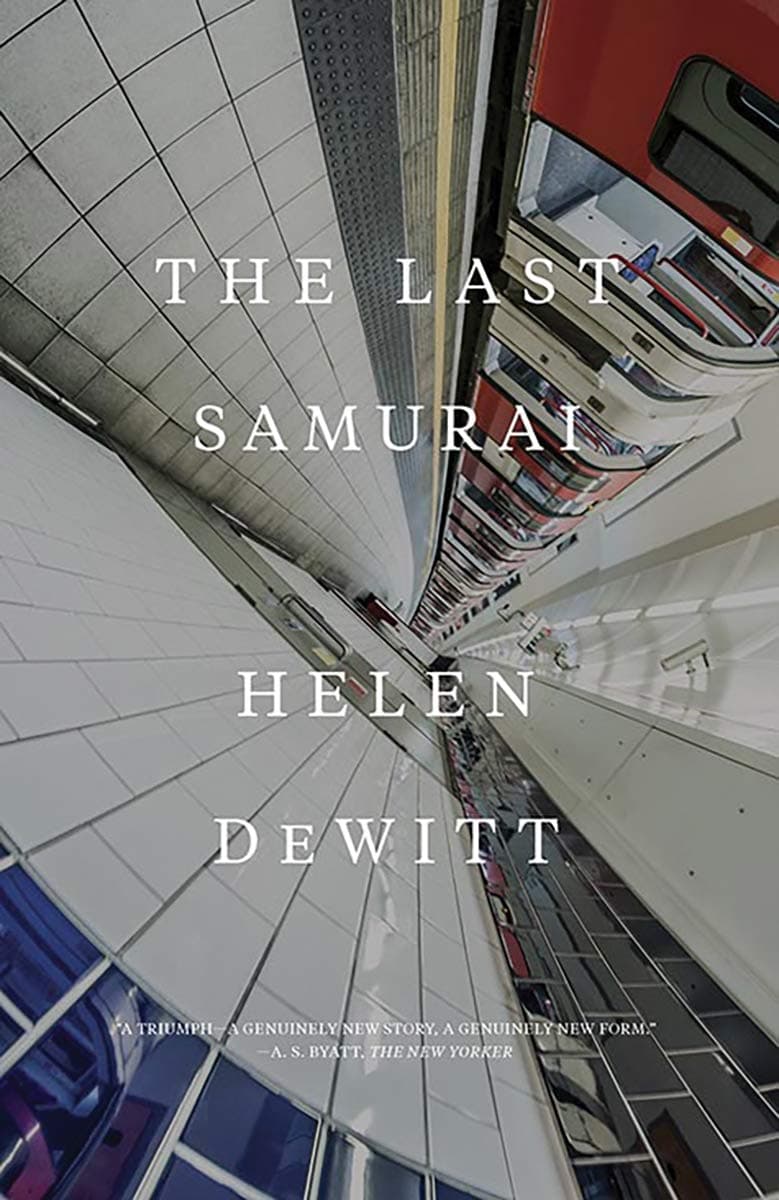
The Last Samurai [DeWitt, Helen] on desertcart.com. *FREE* shipping on qualifying offers. The Last Samurai Review: Masterful and entertaining novel - Although much has been said already in the glowing reviews this book has justly gotten, I want to add my own voice to the chorus of praise. Helen De Witt's late debut (it's not polite to point out a lady's age but one can say most writers debut quite earlier than she did) is one of the most entertaining novels I have read in a long time. The book is about Sybilla, an American single mother eking out an existence in London as a transscriber of old magazines while at the same time trying to deal with having a miraculously smart child, Ludo. Since Ludo lacks a father, she raises him on countless viewings of Akira Kurosawa's masterwork "The Seven Samurai", as well as spending her little income on buying second-hand books on languages, physics, astronomy and other subjects. Ludo masters all these things at a shockingly young age; so much so in fact that his short attempt to attend an actual school is a dismal failure. As he grows up though, Ludo wants to find out who his father is, hoping to find a rolemodel in him as well as a support for his often despondent and potentially suicidal mother, for whom "boredom is a fate worse than death". The book traces Ludo's quest for his father and the various odd and over the top characters that he considers, while at the same time describing the intense bond between a single mother and her son. De Witt's writing is highly inventive and original and makes maximal use of page layout and changes in pace and style, without this becoming a gimmick like it does with Danielewski. Although the mother Sybilla is unabashedly based on herself, the way De Witt captures the mind of the strong-willed wunderkind is definitely the best characterization in the book, and this alone makes it worth reading. Add to that the solid structure of the book (I don't understand why some reviewers found this meandering, when it's more compact and structured than most famous 19th century novels put together), the inspiring erudition of the various interludes on linguistics, foreign lands, physics, astronomy, and Kurosawa, and finally the unpredictability and novelty of the book as a whole, and you have a definite masterpiece. If it is true that a writer's first book is usually one of their weaker ones, then we have a enormous talent in Helen De Witt. Review: Great book - I have a hard time writing a review for this book because it was way too smart for me, but I loved it


M**L
Masterful and entertaining novel
Although much has been said already in the glowing reviews this book has justly gotten, I want to add my own voice to the chorus of praise. Helen De Witt's late debut (it's not polite to point out a lady's age but one can say most writers debut quite earlier than she did) is one of the most entertaining novels I have read in a long time. The book is about Sybilla, an American single mother eking out an existence in London as a transscriber of old magazines while at the same time trying to deal with having a miraculously smart child, Ludo. Since Ludo lacks a father, she raises him on countless viewings of Akira Kurosawa's masterwork "The Seven Samurai", as well as spending her little income on buying second-hand books on languages, physics, astronomy and other subjects. Ludo masters all these things at a shockingly young age; so much so in fact that his short attempt to attend an actual school is a dismal failure. As he grows up though, Ludo wants to find out who his father is, hoping to find a rolemodel in him as well as a support for his often despondent and potentially suicidal mother, for whom "boredom is a fate worse than death". The book traces Ludo's quest for his father and the various odd and over the top characters that he considers, while at the same time describing the intense bond between a single mother and her son. De Witt's writing is highly inventive and original and makes maximal use of page layout and changes in pace and style, without this becoming a gimmick like it does with Danielewski. Although the mother Sybilla is unabashedly based on herself, the way De Witt captures the mind of the strong-willed wunderkind is definitely the best characterization in the book, and this alone makes it worth reading. Add to that the solid structure of the book (I don't understand why some reviewers found this meandering, when it's more compact and structured than most famous 19th century novels put together), the inspiring erudition of the various interludes on linguistics, foreign lands, physics, astronomy, and Kurosawa, and finally the unpredictability and novelty of the book as a whole, and you have a definite masterpiece. If it is true that a writer's first book is usually one of their weaker ones, then we have a enormous talent in Helen De Witt.
A**E
Great book
I have a hard time writing a review for this book because it was way too smart for me, but I loved it
J**R
"A good samurai will parry the blow"
(Reviewed this on my blog, might as well copy the review here where people might actually read it) She must have loved that quote, I lost track of how often she quoted it. It can't have been too many, because that would be wrong -- and for me there was nothing wrong with this book. I'm not sure which book this one pushes off my top ten list, but it's position is secure. Art, science, religion, philosophy, growing up, settling vs. striving....this book weaves them all into a fabric that wraps reality and dreams together. At various points I might have told friends what I though this book was about, but that changes as you read it. Unlike Cien Años de Soledad, which also follows a family through the generations, this book comes into sharper and sharper focus as the years go by, and you realize the character you at first enjoyed is really background for the more vibrant character you are enjoying now. One point that should be kept in mind: this book has no relation to the Tom Cruise movie of the same name, and only a passing relation to samurais - the title is an allusion to the Kurosawa movie "The Seven Samurai", which is a favorite of one of the characters. It does have some negative criticism for the movie: Cast your mind back to this film for one moment. Identify, if you can, a suitable moment at which to place your arm around the shoulders of your companion and kiss her. You cannot? No more could I. After half an hour, no suitable moment presenting itself, I chose an unsuitable moment -- I was rebuked. I really want to recommend this book, but I'm not sure that everybody can appreciate it. Although the book has no sluggish parts, it does use some techniques that might be confusing and off-putting if you don't get them. There will be things beyond your comprehension you might want to just skip over, but they are brief. If you are contemplating suicide, there are some helpful techniques to avoid it (for example, watching "The Importance of Being Earnest"), but they might not work -- but if you do commit suicide after reading this book, it is not because the book depressed you, it is because the depression was just too deep for the book to lift.
M**X
Out, standing in her field
It would be ridiculous for me to attempt in 20 words what the world has not done in 20 years. Ok, sorry, that was flippant and probably unhelpful to folks deciding whether to invest time in reading "The Last Samurai" (or perhaps trying to decide whether to buy it as a gift for someone). I like this book. I like it so much that I have given away a half-dozen copies to various friends and family. I like it so much that I have re-read it five or six times myself. I like it for its unflinching treatment of depression and related psychological illness in loved ones. I like it for its unorthodox protagonists. I like its twisted take on The Hero's Journey. Actually, trying to think of something about this book I *don't* like, I'm coming up short. It doesn't mention Linux, at all. (But then, it's not really much about computers. And it was written before I'd even installed Mandrake for the first time. So, it's totally unfair to hold such a triviality against the author.) Who is this book for? I would say, it's for "effete intellectual snobs", and friends of said. And it's for people who think the world would be better if we did a better job of *not* discouraging the curiosity of children. Who is this book *not* for? I would say, it's not for the kind of political leaders who win their elections with 99.9% of the vote of their adoring public. And it's not for the people who think that the world would be better with more tyranny. (And it's probably not a great choice for people with logophobia.)
C**Y
A brave, new hope for writers?
I couldn't think of what to title this review, but by "brave new hope" I mean that writers should be excited by the fact this book was published at all. If an agent could find a publisher for this, then anything is possible. That's not a negative review however, because there is a great story buried under all the "effects" Helen Dewitt has heaped onto this novel. The basic story is of a woman who moves herself to London, has a child by a famous writer, then once the boy comes of age, refuses to tell the obviously brilliant child who he is. The boy, Ludo, is so smart at such a young age that he is almost and idiot savant. As he grows older, his search for his father is sad and poignant. The mother is a useless, self-absorbed woman who could arguably be brought up on child abuse charges. When Ludo finally figures out who is father is, he is so disappointed in his mother's choice of one night stands, that he searches out other literary figures and tells them he is their son. Meanwhile, the mother sits home endlessly watching "The Seven Samurai" on video. Dewitt's obvious obsession with the film and how she works it into the novel is at once fantastic and off-putting. It almost comes off as advert. If you haven't seen "The Seven Samurai," much of this book will be lost on you, although Dewitt exhaustively explains scenes in detail (with dialogue). The narrative of the story is often broken as it switches from the mother's perspective to Ludo's and back again. Not to mention the endless lists, math equations and long passages of text in other languages with no translations. This book is a challenge and not for the average fiction reader. However, I would love to meet Helen Dewitt's agent and editor and find out just how they got this book to publication. It's almost a miracle.
P**O
One of the most original books I have encountered
A book that ranges across language and mathematics and art to pull together the things that make a mind. That the mind being made is that of a prodigy makes for an exhilarating ride, but one can see it’s a ride not everyone will enjoy. But if you surrender to the book you will be carried along. I should give it five stars but I know I will get more out of it next time through, so it can never be complete, can it?
M**S
Just Jump In
The Last Samurai will kind of ruin the next book you read because the next book you read will inevitably be not as good. It's a tough act to follow. Consider me a vote for those who are not sure if they are getting in over their heads. I stepped into this book a little reluctantly. 500+ pages of big words and the nature of genius seemed a little intimidating to me. After an hour of reading I was a little put off honestly. It can get a little crazy and I was not sure I was understanding anything. Thankfully I read some reviews that encourage you not to take in every little detail but rather enjoy the book as a whole. That turned out to be great advice. I encourage others to do the same. It turned out to be a great ride. Don't be afraid to jump in.
M**G
Loved this.. One of the best reads of my year.
Brilliant. Funny. Delightful. Thank you Helen DeWitt. For those who couldn't get through the big words... be aware that's one of the plot points. Being smart doesn't mean you don't struggle with insecurity, arrogance, fear.. Don't get bogged down in in intellectual minutiae, stick with the big picture plot for maximum reading pleasure. Even when it rambles down the road it has a destination. One of those books I closed with a sigh regretting the fact that there aren't enough like it. Basically, it is the story of a highly intelligent, socially akward young american woman and her highly intelligent 11 year old son. The are very poor financially and quite isolated although they live in London, but survive and in some ways even thrive making the most of other resources such as their wits, the library, public transportation...
Trustpilot
Hace 2 semanas
Hace 4 días