
Descargar la aplicación


Servicios al cliente
Sobre nosotros
Copyright © 2025 Desertcart Holdings Limited
Descargar la aplicación
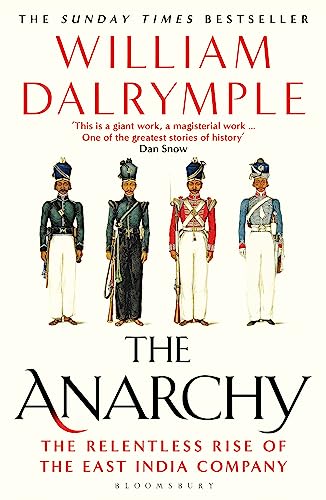
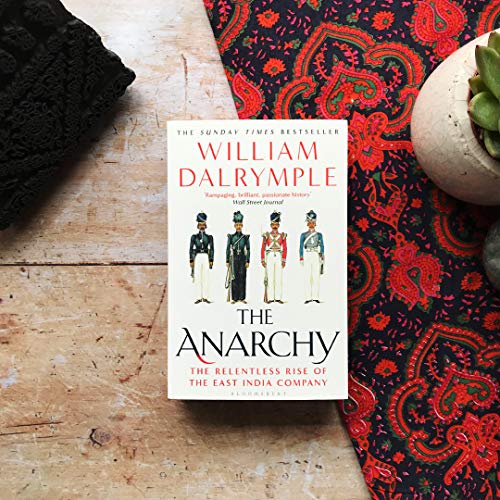


The Anarchy : Dalrymple, William: desertcart.in: Books Review: British Rule Summarised - The Anarchy: The East India Company, Corporate Violence, and the Pillage of an Empire by William Dalrymple is a meticulously researched and compellingly written historical account that delves into the rise and fall of the East India Company (EIC). Here are the key aspects of the book: Historical Insight Dalrymple provides a vivid and detailed narrative of the EIC, from its inception as a modest trading entity in the early 17th century to its transformation into a powerful corporate juggernaut that controlled vast swathes of India. The book chronicles the period from 1599, when the EIC was established, to 1803, when it conquered Delhi, marking the beginning of British colonial rule in India. Corporate Exploitation and Violence The title "The Anarchy" reflects the chaotic and violent period in Indian history during which the EIC exploited local rivalries and leveraged its growing military power to establish dominance. Dalrymple highlights the corporate greed and ruthless tactics employed by the EIC, emphasizing how it operated more like a predatory private enterprise than a traditional colonial power. The book underscores the devastating impact of the EIC's policies on Indian society, economy, and polity. Personalities and Politics Dalrymple brings to life a range of historical figures, from EIC officials like Robert Clive and Warren Hastings to Indian rulers such as Mughal Emperor Shah Alam II and Nawab Siraj-ud-Daula. He examines their motivations, strategies, and the interplay of personalities and politics that shaped this tumultuous era. The narrative is enriched by Dalrymple's use of primary sources, including letters, diaries, and contemporary accounts, which provide authenticity and depth. Literary Style Dalrymple's writing is both scholarly and accessible, making "The Anarchy" suitable for both academic audiences and general readers interested in history. His storytelling prowess keeps the reader engaged, and his ability to contextualize historical events within broader social and economic trends adds layers of understanding. Critical Reception "The Anarchy" has been praised for its thorough research, balanced perspective, and engaging prose. Critics have lauded Dalrymple for shedding light on a critical but often overlooked aspect of colonial history and for his ability to convey the complexities of this period in a nuanced manner. The book has also sparked discussions about the legacy of colonialism and the role of corporate power in shaping world history. William Dalrymple's "The Anarchy" is a masterful account of the East India Company's rise to power and its profound impact on India. It offers valuable insights into the mechanisms of corporate exploitation and the historical consequences of unchecked corporate power. The book is a must-read for anyone interested in the history of India, colonialism, and the dynamics of corporate imperialism. Review: Unputdownable book - An absolutely fascinating account of how a bunch of traders from a small London-based company managed to dethrone the mighty Mughals, the richest empire in the world at that time, and got to become rulers of India. A must read not only for everyone interested in Indian history, but also for highlighting the ills of unbridled corporate greed and personal enrichment that the East India Company displayed. Perhaps the best historical book that I have ever read, and I have read quite a few! Meticulous research, attention to fine detail and a racy style combine to make this a great book!!
| Best Sellers Rank | #767,288 in Books ( See Top 100 in Books ) #1 in Colonialism & Imperialism History #22 in Economics Books #28 in Politics |
| Customer Reviews | 4.6 4.6 out of 5 stars (8,880) |
| Dimensions | 12.8 x 4 x 19.6 cm |
| ISBN-10 | 1408864398 |
| ISBN-13 | 978-1408864395 |
| Importer | Atlantic Publishers and Distributors (P) Ltd., 7/22, Ansari Road, Darya Ganj, New Delhi - 110002 INDIA, Email – [email protected], Ph – 011-47320500 |
| Item Weight | 1 kg 50 g |
| Language | English |
| Paperback | 576 pages |
| Publisher | Bloomsbury Publishing PLC (3 September 2020) |
J**P
British Rule Summarised
The Anarchy: The East India Company, Corporate Violence, and the Pillage of an Empire by William Dalrymple is a meticulously researched and compellingly written historical account that delves into the rise and fall of the East India Company (EIC). Here are the key aspects of the book: Historical Insight Dalrymple provides a vivid and detailed narrative of the EIC, from its inception as a modest trading entity in the early 17th century to its transformation into a powerful corporate juggernaut that controlled vast swathes of India. The book chronicles the period from 1599, when the EIC was established, to 1803, when it conquered Delhi, marking the beginning of British colonial rule in India. Corporate Exploitation and Violence The title "The Anarchy" reflects the chaotic and violent period in Indian history during which the EIC exploited local rivalries and leveraged its growing military power to establish dominance. Dalrymple highlights the corporate greed and ruthless tactics employed by the EIC, emphasizing how it operated more like a predatory private enterprise than a traditional colonial power. The book underscores the devastating impact of the EIC's policies on Indian society, economy, and polity. Personalities and Politics Dalrymple brings to life a range of historical figures, from EIC officials like Robert Clive and Warren Hastings to Indian rulers such as Mughal Emperor Shah Alam II and Nawab Siraj-ud-Daula. He examines their motivations, strategies, and the interplay of personalities and politics that shaped this tumultuous era. The narrative is enriched by Dalrymple's use of primary sources, including letters, diaries, and contemporary accounts, which provide authenticity and depth. Literary Style Dalrymple's writing is both scholarly and accessible, making "The Anarchy" suitable for both academic audiences and general readers interested in history. His storytelling prowess keeps the reader engaged, and his ability to contextualize historical events within broader social and economic trends adds layers of understanding. Critical Reception "The Anarchy" has been praised for its thorough research, balanced perspective, and engaging prose. Critics have lauded Dalrymple for shedding light on a critical but often overlooked aspect of colonial history and for his ability to convey the complexities of this period in a nuanced manner. The book has also sparked discussions about the legacy of colonialism and the role of corporate power in shaping world history. William Dalrymple's "The Anarchy" is a masterful account of the East India Company's rise to power and its profound impact on India. It offers valuable insights into the mechanisms of corporate exploitation and the historical consequences of unchecked corporate power. The book is a must-read for anyone interested in the history of India, colonialism, and the dynamics of corporate imperialism.
S**.
Unputdownable book
An absolutely fascinating account of how a bunch of traders from a small London-based company managed to dethrone the mighty Mughals, the richest empire in the world at that time, and got to become rulers of India. A must read not only for everyone interested in Indian history, but also for highlighting the ills of unbridled corporate greed and personal enrichment that the East India Company displayed. Perhaps the best historical book that I have ever read, and I have read quite a few! Meticulous research, attention to fine detail and a racy style combine to make this a great book!!
N**K
Highly recommended book on an important period in Indian history
The Anarchy is a popular history book on the East Indian Company(EIC) in 18th Century India. Dalrymple regale us the rise of the EIC from a Tudor privateering operation full of ex-Caribbean privates to an imperial power. Considering that the British were pretty late to the spice trade in India compared to the Portuguese, Dutch, and the French, their raise as an imperial power is extraordinary. Rise of of the first Multinational Corporation: East Indian Company(EIC) basically invented corporate lobbying, insider training and first corporate bail out, and all the other things we loathe about modern corporation. EIC developed a symbiotic relationship with the British Parliamentarians. Company men like Clive used the looted money from India to buy both MPs and parliamentary seats. The Parliament backed the Company with state power because many MPs were shareholders of EIC and any action against the company will affect their personal wealth. Silk, Spices and Sepoy: Thanks to the dwindling military and financial power of the Mughals, a huge military labor market sprang up all across India. Dalrymple describes this as one of the most thriving free markets of fighting men anywhere in the world- all up for sale to the highest bidder. Warfare become a business enterprise and substantial section of peasants spent part of their time year as mercenaries. EIC were better off financially and were able to pay the sepoys the promised wage on time than many local rulers. EIC were using as much as 80% Indian sepoyts in many of their battles. The British very really lucky: Although popular theories propose that the success of the EIC can be attributed to the fragmenting to Mughal India into tiny competing states; the military tech of the Europeans and innovation of banking, taxing and administration of the Anglo-saxons, one of the recurring themes that I found is how lucky in the may of the battles. Yes, the above theories are probably true and East India Company troop were more disciplined than their Indian rivals; but its incredible how consistently lucky the British were. Break the Rules: Warfare in India were actually done in gentlemanly manner. The Mughals. Marathas and other local rulers pursued negotiation, bribery and paying tribute. In case of actual conquest, there are rules by which they abide by. The Company men, especially Robert Clive, who committed suicide at the age of 49(Hope someone soon writes a biography on this truly appalling character), constantly breaking the rules like attacking at night and attacking at thunderstorm etc. Why we need to learn to negotiate? Mughals were completely clueless about who corporation functions or how unsavory Clive operates as an Profiteer. Ghulam Hussain Khan says a sale of jackass would have taken up more time than the time taken for the Treaty of Allahbad. Post Treaty of Allahabad, EIC used Indian tax revenue to purchase textiles and spies. Even at the time of famines EIC enforces tax collection to maintain their revenue and growing military expenditure. At the height of the famine, English merchants engaged in grain hoarding, profiteering and speculation. North vs South India? Even after Battle of Plassey, Cavalry was the dominant form of warfare in northern India and continued to fight each other despite the growing domination of the British. However the south was every quick to copy and learn the military innovations of the Europeans. Haider Ali had a modern infantry and his troops were more innovative and tactically ahead of EIC. They mastered the art of firing rockets long before the English. Nana Phadnavus, ‘the Maratha Machiavelli’, after the Treaty of Wadgaon, proposed a Triple Alliance between the Marathas, Haider and the Nizam of Hyderabad. Indian Bankers love the Company: The rise of EIC as an imperial power would not be possible with out the Indian bankers. The Indian financiers saw greater advantage in keeping the Company in power than they did supporting their own. By 1803, Indian bankers were competing with one another to back the company’s army. In the end its the Company’s ability to mobilize money have them the edge over the Marathas and Tipu Sultan. It was no longer the superior European military technology. Bengal alone was annually yeilding a steady revenue surplus of Rs 25 million at the time when Scindia struggled to net Rs 2 million. The biggest firm of the period – the houses of Lala Kashmiri Mal, Ramchand-Gopalchand Shahu and Gopaldas-Manohardas – helped the military finance of the British. The Company duly rewarded the invaluable services in 1782 by making the house of Gopaldas the government’s banker. Richard Wellesley managed raise Rs 10 million with the support of Marwari bankers of Bengal to fight the Fourth Anglo-Mysore war. Final nail in the coffin: Following the victory of the Battle of Delhi, EIC defeated the last indigenous power. Now linked Bengal, Madras and Bombay while imposing itself as Regent under the Mughals. My only complaints is that the book doesn’t drive into the financial details of the Company despite the wealth information available. A bit of financial history of the Company would have helped us understand the nature of the Company better. Overall an entertaining history book. highly recommended.
F**K
one of best book I have read...
M**9
I went into this book a little bit leery because of the title; I was not looking for an anti-capitalist rant, but the title suggested that it might be one. In fact I was pleasantly surprised at how even-handed he put every party's failings and successes equally on the page. For every atrocity committed by the British, plenty were committed by Indians against each other. There were peaceful and cultured Mughal rulers and ocasionally British Reagents, and there were also horrible and bloody minded tyrants on both sides. There is also great beauty in the descriptions of the better parts of Mughal culture, and the solid morality of the British when it came to honoring their vanquished foes, hat in hand. Neither side comes out particularly clean, but both are fighting for what they believe in. This is a fascinating, wide sweeping story of epic proportions - battles of empires, armies, merchants together with palace intrigue, defections and betrayal. Alliances continually forming, falling apart and switching sides as pragmatic rulers shift to adapt the ever changing situations. It's no spoiler to say that the British eventually conquered over all, and remained in charge of India until 1947. This is the story about how a commercial trading empire laid the foundation for the coming of the British Raj, and the final sunset of the once great Mughal empire, which had already started to crumble from within upon the arrival of European traders in the mid-1700s. In this book one comes to realize just how fragile any country really is, and it does not take a lot for the dominos to topple. There are many parallels to today's geo-political climate, and indeed to just about any time period in human history. The sands are ever shifting, and we have been very lucky to live in a time of relative peace and prosperity compared to most of human history. This books shows just how little it takes for that to change. I highly recommend this book to anyone who is interested in world history, the history of the British Empire and the history of India. Come with an open mind.
A**M
As all previous books of this author, this is an excellent historical account of what happened when a British 18th century corporation managed to subdue a country with little or no control from anyone. My only regret is that the title, in my opinion, gives a relatively little idea of what the book is all about and may not attract the casual reader to the real content of the book. I picked it up just because of the reputation of the author. My whole historical perspective of this country has now completely changed (I had read other books, written by the victors...), and how much more sense the modern condition of Indian subcontinent makes once I have this period clarified and illuminated by this book.
A**!
William Darylmple is one of my favourite author. This book is another great addition to my collection
L**L
Pages ripped, but package intact.
Trustpilot
Hace 1 día
Hace 2 semanas