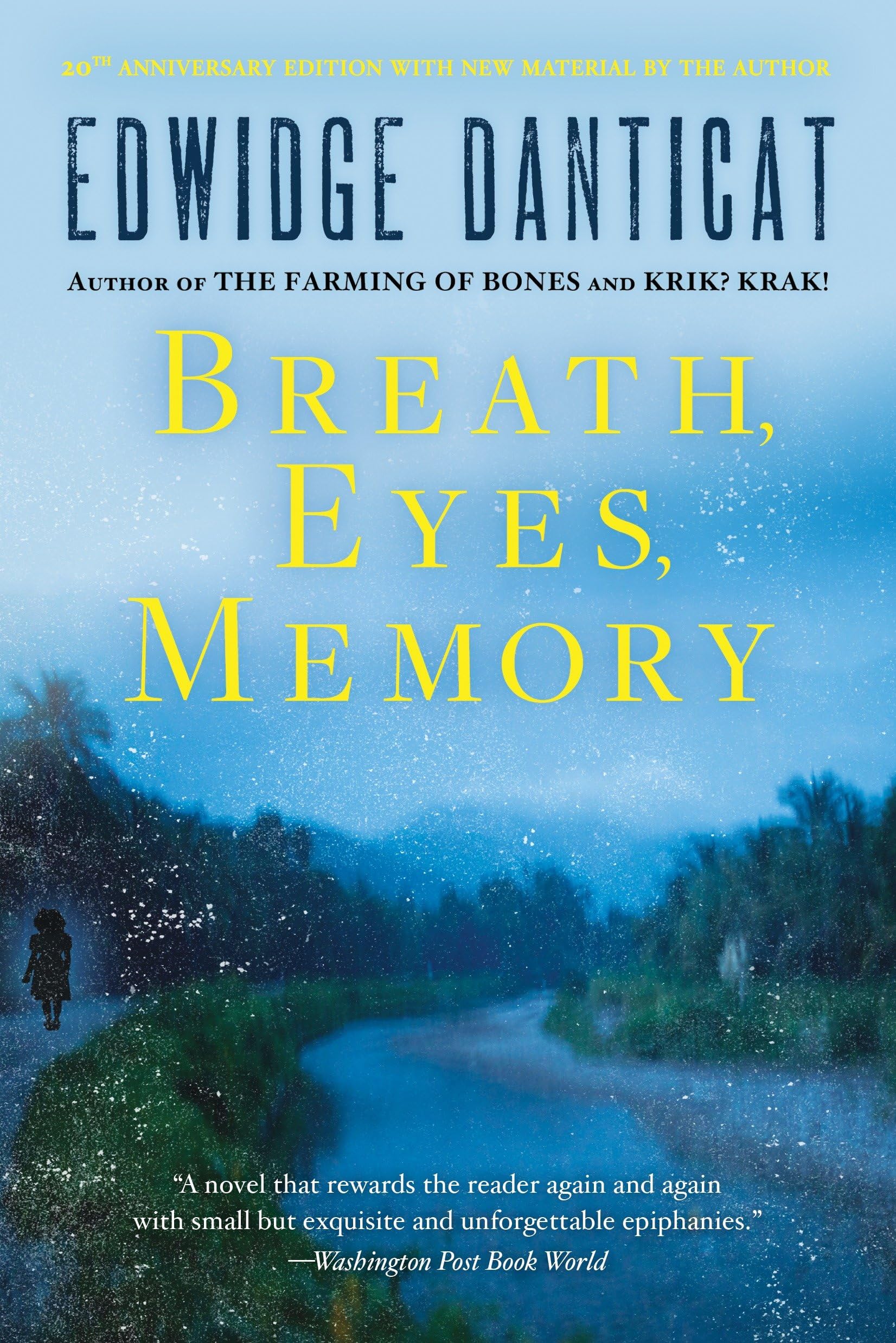
desertcart.com: Breath, Eyes, Memory: 9781616955021: Danticat, Edwidge: Books Review: Images of Haitian life - BREATH, EYES, MEMORY is the first novel by Edwidge Danticat who, like her protaganist, grew up in Haiti and was raised initially by someone other than her birth parents, and then moves to America to be reunited with her biological parents. In Danticat's novel, Sophie Caco lives in Haiti for the first twelve years of her life, and is raised by her Aunt Atie, the older sister of her mother. She knows no other life than what her Aunt had been able to give her. At age 12, Sophie's mother instructs that her daughter be returned to her to America. Sophie leaves her distraught Aunt, the only mother she has ever known, and travels to a far away land to live with a stranger. She knows her mother only through cassette tapes of her mother's voice, sent to the family in Tahiti periodically as one sends letters. But as far as she's concerned,her mother is Aunt Atie. When Sophie meets her mother, she finds that she is not what she had expected. Her mother looks tired. America was not the land of luxury and opportunity that her mother had thought it would be. She works two jobs to make ends meet. She lives in the poor part of town and drives a car that barely runs. She is terribly thin, too thin, and at night she screams at the demons that try to kill her. Her mother's emotional well-being is tested every day through nightmares and demons of a past that Sophie was never aware of, until slowly she learns of her mother's story: Sophie is the result of a rape, when her mother was a very young girl. Her mother's world is a world of sexual and mental abuse, and it is passed down to Sophie, through "tests" that leave an emotional scar on Sophie, to the point where she too begins to have recurring nightmares. Sophie learns to resent her mother. She falls in love with the neighbor, an older man who is a musician, and he returns her love. She finally leaves her mother by running away and eloping with Joseph. Her marraige is not easy, however. Sophie again runs away, this time to Haiti 6 months after the birth of their daugher Brigitte, seeking the only family she has known. Back home again, she is reunited with Tante Atie and her grandmother, who only talks of death. It has been 6 years since Sophie had left Haiti, and she returns as a grown woman and with her first child. BREATH,EYES, MEMORY is more than just a story of a Haitian girl being uprooted to America. It's a story of discovery of self, and about the recovery from childhood abuse and forgiveness. Young Sophie learns to deal with her past and her mother's history, and we see her grow as a character who eventually is able to break free of the cycle of abuse handed down from generation to generation. I highly recommend this book. I enjoyed reading about the life that Sophie lived in Haiti, a world totally foreign to me, but at the same time was brought closer to it with the imagery that Ms Danticat painted on these pages. The story of abuse and reconcillation was convincing and real to me. Am looking foward to reading her next novel. Review: Breath, Eyes, Memory Book Review - Breath, Eyes, Memory, written by Edwidge Danticat, is a powerful novel that illustrates the story of a young Haitian immigrant, Sophie Caco, and her family. The book follows her struggles from her youth to her later years as a mother and wife while giving a unique insight into her troubled life the entire time. Danticat is able to raise emotions concerning the ideas of inheriting burdens from parents and mistrust between the closest of people. I really respect Edwidge Danticat a lot more after reading this novel and recommend it to readers of a mature level due to the content and the ability required to fully understand the story. Although her life differed greatly from that of Sophie’s, one could say that the author started off writing a story about her own life. Edwidge Danticat also had parents who immigrated to America from Haiti, and then she, herself, followed them there at the same age that Sophie was sent to America, twelve. In the novel, Sophie’s life takes many dark turns. At first, her and her mother’s troubles are similar to that of many immigrants including the need to work hard for many hours while making little money. The author later reveals that Sophie’s life is much more complicated than that, and her family’s history in Haiti has come to haunt her in America after finding out that she was the product of her mother being raped. In the coming years, their lives seem to be getting better. They move to a nicer neighborhood and Sophie has been studying hard, but once again her history comes to haunt her. Once Sophie finally finds a man she loves, her mother loses it and starts to perform the invasive “virginity testing” that Sophie’s grandma had performed on Sophie’s mother. Eventually, Sophie becomes so fed up that she breaks her own hymen and is subsequently kicked out of her mother’s home and elopes with her love, Joseph. This novel showed me that immigration is tough for everyone. I had little to no knowledge of what life was like in Haiti or for their immigrants until after I finished this book. I only knew a little about my own parent’s experience of immigrating from Korea, and I’m finding that learning about other immigrant’s experiences really helps me to appreciate everything they’ve done. Danticat also did a remarkable job of telling the story of his young girl. Her language was never too eloquent or sophisticated, but it had a way of really striking deep and getting to the point. The experiences Sophie and her family shared weren’t dressed up in fancy words, but rather told the way it is to capture their true emotions and convey them to the reader. I also really like the interesting ideas Danticat brought up about inheriting burdens and the effects that can have. One very moving story about a group of people in Guinea explains these troubles metaphorically, “Their Maker, she said, gives them the sky to carry because they are strong. These people do not know who they are, but if you see a lot of trouble in your life, it is because you were chosen to carry part of the sky on your head” (Danticat 25). Sophie has a sky to carry, but she was chosen because she is strong. I definitely recommend this book to anyone who is even mildly interested in reading about other cultures and their experiences or is looking for a book that will leave them with that satisfied feeling of having read something meaningful. The way that Danticat tells the story of Sophie is unique in that she uses so many different types of writing styles and prose, yet still keeps it simple. This novel will really make you feel as if you had just shared a mind with Sophie Caco in order to relive all of her experiences. For anyone that needs a phenomenal book to read or is on the fence about reading Breath, Eyes, Memory, read this one.
| Best Sellers Rank | #63,162 in Books ( See Top 100 in Books ) #1 in Haiti Travel Guides #240 in Cultural Heritage Fiction #3,790 in Literary Fiction (Books) |
| Customer Reviews | 4.3 4.3 out of 5 stars (1,236) |
| Dimensions | 5.5 x 0.75 x 8.2 inches |
| Edition | Anniversary |
| ISBN-10 | 1616955023 |
| ISBN-13 | 978-1616955021 |
| Item Weight | 2.31 pounds |
| Language | English |
| Print length | 288 pages |
| Publication date | February 24, 2015 |
| Publisher | Soho Press |
R**Y
Images of Haitian life
BREATH, EYES, MEMORY is the first novel by Edwidge Danticat who, like her protaganist, grew up in Haiti and was raised initially by someone other than her birth parents, and then moves to America to be reunited with her biological parents. In Danticat's novel, Sophie Caco lives in Haiti for the first twelve years of her life, and is raised by her Aunt Atie, the older sister of her mother. She knows no other life than what her Aunt had been able to give her. At age 12, Sophie's mother instructs that her daughter be returned to her to America. Sophie leaves her distraught Aunt, the only mother she has ever known, and travels to a far away land to live with a stranger. She knows her mother only through cassette tapes of her mother's voice, sent to the family in Tahiti periodically as one sends letters. But as far as she's concerned,her mother is Aunt Atie. When Sophie meets her mother, she finds that she is not what she had expected. Her mother looks tired. America was not the land of luxury and opportunity that her mother had thought it would be. She works two jobs to make ends meet. She lives in the poor part of town and drives a car that barely runs. She is terribly thin, too thin, and at night she screams at the demons that try to kill her. Her mother's emotional well-being is tested every day through nightmares and demons of a past that Sophie was never aware of, until slowly she learns of her mother's story: Sophie is the result of a rape, when her mother was a very young girl. Her mother's world is a world of sexual and mental abuse, and it is passed down to Sophie, through "tests" that leave an emotional scar on Sophie, to the point where she too begins to have recurring nightmares. Sophie learns to resent her mother. She falls in love with the neighbor, an older man who is a musician, and he returns her love. She finally leaves her mother by running away and eloping with Joseph. Her marraige is not easy, however. Sophie again runs away, this time to Haiti 6 months after the birth of their daugher Brigitte, seeking the only family she has known. Back home again, she is reunited with Tante Atie and her grandmother, who only talks of death. It has been 6 years since Sophie had left Haiti, and she returns as a grown woman and with her first child. BREATH,EYES, MEMORY is more than just a story of a Haitian girl being uprooted to America. It's a story of discovery of self, and about the recovery from childhood abuse and forgiveness. Young Sophie learns to deal with her past and her mother's history, and we see her grow as a character who eventually is able to break free of the cycle of abuse handed down from generation to generation. I highly recommend this book. I enjoyed reading about the life that Sophie lived in Haiti, a world totally foreign to me, but at the same time was brought closer to it with the imagery that Ms Danticat painted on these pages. The story of abuse and reconcillation was convincing and real to me. Am looking foward to reading her next novel.
K**N
Breath, Eyes, Memory Book Review
Breath, Eyes, Memory, written by Edwidge Danticat, is a powerful novel that illustrates the story of a young Haitian immigrant, Sophie Caco, and her family. The book follows her struggles from her youth to her later years as a mother and wife while giving a unique insight into her troubled life the entire time. Danticat is able to raise emotions concerning the ideas of inheriting burdens from parents and mistrust between the closest of people. I really respect Edwidge Danticat a lot more after reading this novel and recommend it to readers of a mature level due to the content and the ability required to fully understand the story. Although her life differed greatly from that of Sophie’s, one could say that the author started off writing a story about her own life. Edwidge Danticat also had parents who immigrated to America from Haiti, and then she, herself, followed them there at the same age that Sophie was sent to America, twelve. In the novel, Sophie’s life takes many dark turns. At first, her and her mother’s troubles are similar to that of many immigrants including the need to work hard for many hours while making little money. The author later reveals that Sophie’s life is much more complicated than that, and her family’s history in Haiti has come to haunt her in America after finding out that she was the product of her mother being raped. In the coming years, their lives seem to be getting better. They move to a nicer neighborhood and Sophie has been studying hard, but once again her history comes to haunt her. Once Sophie finally finds a man she loves, her mother loses it and starts to perform the invasive “virginity testing” that Sophie’s grandma had performed on Sophie’s mother. Eventually, Sophie becomes so fed up that she breaks her own hymen and is subsequently kicked out of her mother’s home and elopes with her love, Joseph. This novel showed me that immigration is tough for everyone. I had little to no knowledge of what life was like in Haiti or for their immigrants until after I finished this book. I only knew a little about my own parent’s experience of immigrating from Korea, and I’m finding that learning about other immigrant’s experiences really helps me to appreciate everything they’ve done. Danticat also did a remarkable job of telling the story of his young girl. Her language was never too eloquent or sophisticated, but it had a way of really striking deep and getting to the point. The experiences Sophie and her family shared weren’t dressed up in fancy words, but rather told the way it is to capture their true emotions and convey them to the reader. I also really like the interesting ideas Danticat brought up about inheriting burdens and the effects that can have. One very moving story about a group of people in Guinea explains these troubles metaphorically, “Their Maker, she said, gives them the sky to carry because they are strong. These people do not know who they are, but if you see a lot of trouble in your life, it is because you were chosen to carry part of the sky on your head” (Danticat 25). Sophie has a sky to carry, but she was chosen because she is strong. I definitely recommend this book to anyone who is even mildly interested in reading about other cultures and their experiences or is looking for a book that will leave them with that satisfied feeling of having read something meaningful. The way that Danticat tells the story of Sophie is unique in that she uses so many different types of writing styles and prose, yet still keeps it simple. This novel will really make you feel as if you had just shared a mind with Sophie Caco in order to relive all of her experiences. For anyone that needs a phenomenal book to read or is on the fence about reading Breath, Eyes, Memory, read this one.
S**2
Captivating
I’m late to the game in discovering Edwidge Danticat, but I’m making up for lost time. I loved exploring her take on life in Haiti and the immigration experience. This is a novel about generational trauma that was written before any of us used that term. I find her writing to complex and nuanced, and as a reader who comes from the French Cajun culture, I love how she captures the duality of her characters.
A**R
The novel and story was very interesting to read. It is worth a must to read.
K**A
Thats a nice book, interesting story - especially if interested in trans-generational transmission (of trauma), immigrant experience... etc. However the plot, the characters not so much developed as I expected. I definately compare this book with "When I was Puerto Rican" which was a more engaging read. Not sure Ill re-read other book from the same author
B**I
Breath, Eyes, Memory by Edwidge Danticat "I come from a place where breath, eyes, and memory are intertwined, a place where the past clings to you as naturally as the hair on your head." Sophie Caco grows up in Haiti with her beloved Aunt Tante Atie, while her mother resides in New York. With no father and only a grandmother who lives far away, her world revolves around her aunt, whom she deeply cherishes. At twelve, Sophie is abruptly sent to join her mother in New York—a decision she resists but cannot refuse. Once there, she uncovers the depth of her mother’s struggles, not just with making ends meet but also with haunting nightmares that seem to grow more intense with Sophie’s presence. Can Sophie bring healing, or is her arrival only deepening her mother’s pain? This novel explores a deeply layered mother-daughter bond, the lingering effects of trauma on mental health, and the realities of life in diaspora. It also offers a vivid portrayal of Haitian traditions and culture. Danticat’s storytelling is nothing short of extraordinary—hard to believe this is her debut novel. I can’t wait to delve into more of her work.
L**A
beautiful book.
T**S
Reading this incredible debut novel at university sparked a lifelong interest in the history of Haiti and its people. The republic shares the island of Hispaniola with the Dominican Republic and despite only occupying three eighths of the island, it has a staggering population of 11.4 million making it the most populated island in the Caribbean Sea. However, there is a huge Haitian diaspora with many residents relocating to the USA, probably due to the fact that it has the lowest Human Development Index in the world. The indigenous Taino people seem to have been the original residents of the island, but the first European settlers landed in the 1400’s claiming the island for Spain and it remained part of the Spanish Empire until the 17th Century. The French then laid claim to the most westerly point of the island and they brought the first slaves to Haiti for labour on the sugar plantations planted by the French. It has the incredible honour of being the first island in the Americas to abolish slavery after a successful slave revolt led by Toussaint Louverture and eventually declared sovereignty on Jan 1st 1894 under his successor Dessalines. As the country slowly united there were attempts to declare the whole island as Haiti, but eventually they recognised the Dominican Republic as a separate state. Haiti has been notoriously unstable due to crippling debt owed to France, the dearth of resources left by the French and Spanish, as well as the political volatility. The USA took control of the island in the early twentieth century, until Haitian leader Francois ‘Papa Doc’ Duvalier took power in 1956 and it is this period that is explored in the novel. This period, and the following rule of his son known as ‘Baby Doc’, was characterized by state-sanctioned violence against any political opposition an it’s own civilians, corruption, and economic stagnation. It was only after 1986 that Haiti began attempting to establish a more democratic political system. Danticat’s story is about the women of Haiti, particularly the three generations of Sophie’s family, and how this period of history impacted upon the women of Haiti. Sophie has been brought up by her Tante Atie and this is a beautifully warm relationship that really grounds Sophie in her Haitian identity. They are also incredibly close to her Grandma Ifé who tells Sophie stories passed down orally about people who could carry the sky on their heads. Atie is beautifully conveyed as a loving but slightly abrupt woman, conflicted between the needs created by her own motherlessness and her love for this child who has been left behind. Both Sophie and Atie have a void that each other can fill, but Atie is honour bound not to replace Sophie’s mother and to be sure that her mother’s wishes are carried out. This comes to a head one Mother’s Day when Sophie takes a Mother’s Day card home from school clearly wanting to give it to her aunt, but the women living thousands of miles away who she’s never met. Danticat is very adept at evoking her homeland with recipes and descriptions of mouth watering food. It’s not been a wealthy upbringing, but it is rich in stories, colour, warmth and nourishment. So when Sophie is sent to live with her mother in New York City the contrast is stark and confusing. Whereas Tante Atie seems comfortable in her skin, Sophie’s mother is shown to diet and use skin lightening creams, showing an obvious discomfort about her body and possibly even her identity as a black Haitian woman. Men are largely absent in this novel, but their impact is enormous. Maxine lives in an apartment with her boyfriend and Sophie hears her mother’s nightmares through the wall. Left alone for long periods, Sophie forms a friendship with a male neighbour in the apartment block. This seems to trigger Maxine and the truth of Sophie’s family starts to come to light, as her mother becomes obsessed with protecting her. She begins the horrific practice of ‘testing’ her daughters virginity - something apparently passed down from her own mother - causing shame, confusion and trauma. Sophie learns she is a child of rape and we travel back to the Haiti of Maxine’s teenage years where she is spotted by one of the ‘Tonton Macoutes’ - Papa Doc’s foot soldiers and the bogeymen of every Haitian child’s nightmares. He drags Maxine into the sugar cane field and assaults her. It will take a return to Haiti, for both Sophie and her Mother, to bring about healing. Danticat beautifully portrays inter generational trauma and the oppression of women that’s caused by the patriarchal system, but enacted by women on their daughters. Daughters who were virgins kept their value in the marriage market, just as in other cultures the men want wives who have undergone FGM. It takes rebellion and refusal from the women to create change. Sophie must also face the the ghosts of slavery, represented by the sugar cane her ancestors were brought from Africa to cut. Danticat paints a vivid, colourful but painful picture of a country created by trauma that is still felt many centuries later. She explores how generation must find some way to live, whether by leaving the country of their birth for something starkly different or by staying to face the past and break the chain of hurt each generation has passed on to the next. This is an emotional, evocative and difficult read in parts, but is a beautiful debut from an author whose love of her homeland shines through.
Trustpilot
Hace 1 día
Hace 5 días