
Descargar la aplicación


Servicios al cliente
Sobre nosotros
Copyright © 2025 Desertcart Holdings Limited
Descargar la aplicación

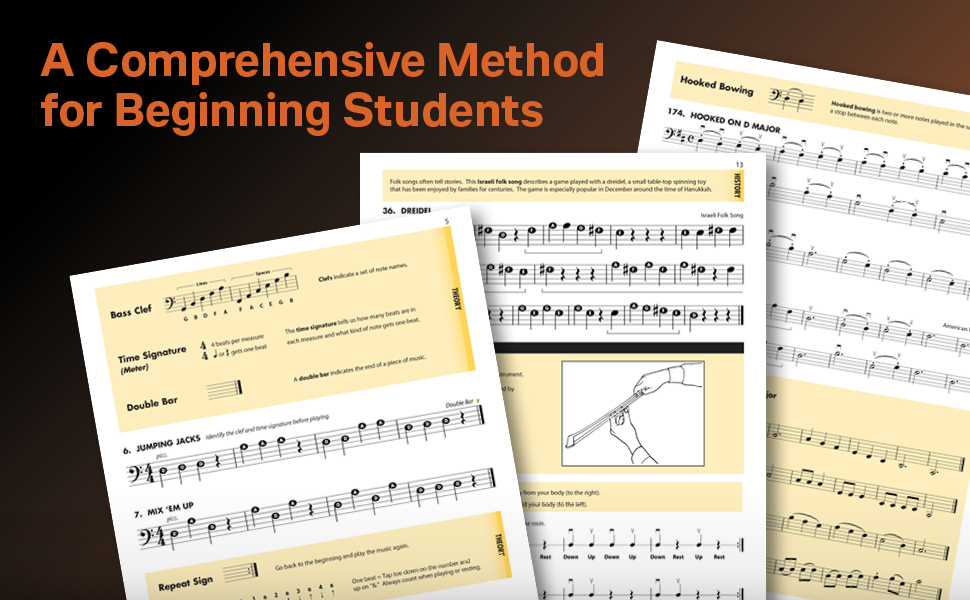
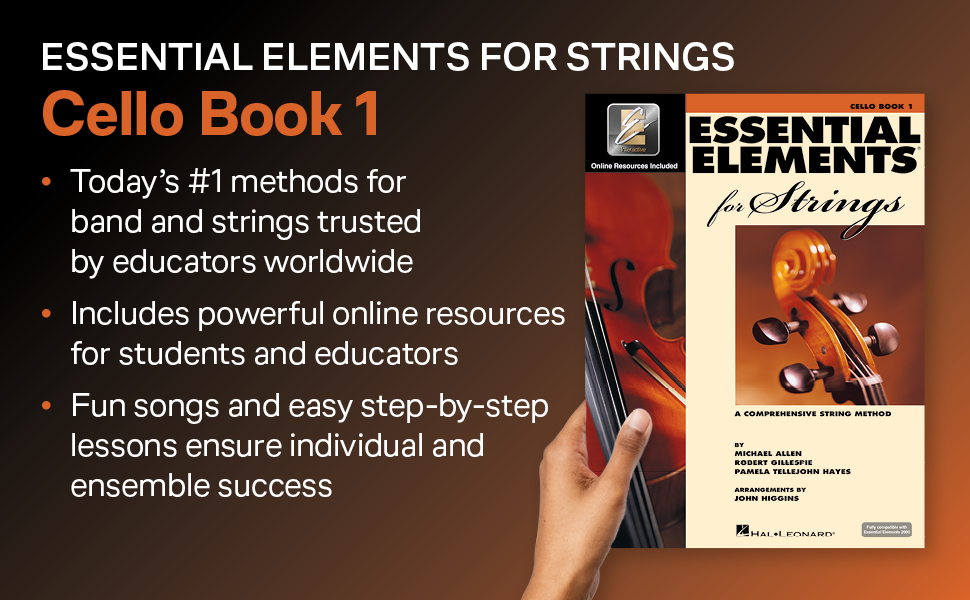
Buy Essential Elements for Strings - Book 1 with EEi by Gillespie, Professor of Music Robert, Tellejohn Hayes, Pamela, Allen, Michael online on desertcart.ae at best prices. ✓ Fast and free shipping ✓ free returns ✓ cash on delivery available on eligible purchase. Review: I'm 27 years old and currently learning to play the cello. I've bought this book along with the Suzuki books/CD and various others. I think this is the best book to start with if you have no prior cello playing experience. With the Suzuki books you're playing more songs, while this book consists of a lot of simple exercises. For example, Suzuki for Cello Book 1 has 17 exercises/etudes, whereas Essential Elements has 193. The exercises in Suzuki are generally a little longer and closer to full songs. Suzuki Book 1 has 23 pages while this book has 48 pages. The biggest down side to Suzuki is that there's absolutely no instructional information, and while both books assume you're working with a teacher, I think it would be harder to progress with the Suzuki book if you do not have a teacher. I see this book as more of a prequel to the Suzuki books, but there's obviously some overlap. If you finish this book you'll likely move through the first few Suzuki books pretty quickly. This book's overall goal seems to be teaching students how to sight read musical notation. Lots of time is spent counting beats and looking at notes and playing them on the cello as you read them. For a book that's focused more on the subtleties of technique I'd check out "The Art of Cello Playing" by Louis Potter Jr., or I'd rely on a teacher for that information. As mentioned, this book comes with a DVD and CD, and the DVD actually has SOME instructional video, but only about 15 minutes. The rest of the DVD is just the audio of all 193 practice tracks. Also, the audio CD for Suzuki books 1 and 2 is purchased separately and is priced at about $14. This book is about the same price as Suzuki book 1 but comes with the audio CD and DVD, so I think it's also a better value. This Essential Elements book starts with plucking the individual strings (pizzicato) and ends on the piano accompanied Bach minuet Number 2. Suzuki Book 1 stars on "Twinkle, Twinkle Little Star variations" and ends on the exact same Bach minuet. What I like about Essential Elements is that it starts you off at the most basic possible level. First, you're just plucking the strings on the cello, learning where the notes correspond to the strings on the cello. There's a few exercises that prepare you for the bow without actually using it yet, but use of the bow isn't until Exercise 47. The idea is to cultivate the left hand first, and after you're comfortable with that it introduces using the right hand along with the left hand. With Suzuki you're using the bow on the first exercise, and more focus is spent on listening to the recordings than reading music. (Suzuki believed people learned languages best by listening.) The strength of this book is that each short exercise is slightly harder than the last, usually introducing a new technical problem for each exercise. Each exercise is set up as a short and unique melody to keep it more fun. Exercises range from repeated single notes, to scales, to kids melodies (old macdonald, twinkle twinkle, frere jacques, baa baa black sheep), to melodies everyone knows (simple gifts, jingle bells, happy birthday, banana boat song, william tell overture), to various American, English, and French folk melodies. I have been practicing cello for a while so I completed the first 46 exercises in one day. Then I did about 20 the follow day, and then about four or so a day after that. Each exercise is a little tougher than the last, but not too tough to be out of reach, so you do feel a sense of accomplishment after you finish each one. I've found the best way to practice ALL of the exercises after #46 is to sight read them as you count beats. Even if it calls for the bow play with pizzicato first. Next do the same thing but now try it with the bow. If you've got that down then try playing along with the accompanying CD/DVD. Did you play it without any mistakes? If so then move to the next exercise, otherwise keep practicing until you get it. If you can read music you already have a head start on this book, but if you can't I strongly recommend this book over the Suzuki ones--at least initially. Essential Elements has taught me how to read music as I play, where the Suzuki books assume you already know how to read music, or that your instructor will show you. This book's many simple exercises manage to push you along without overwhelming you. There's music that accompanies each exercise and it's there to help you train your ear. With the music it's easier to tell if you're playing in tune or if you're a little off. I didn't mean for this to be long or a bunch of Suzuki bashing. I think you should buy this book, the Suzuki books, and every cello book you can afford. You should also watch cello tutorials (and professional performances) on YouTube and find a teacher at your local university. The more resources you have to help you learn the more successful you will be! That's true for anything! However, if I could only purchase one book this one would be it. I expect it to keep me busy for a couple months. This is a great book to start with. After the first day I was impressed enough to purchase book 2 and 3. The only thing that could be improved upon would be more video tutorials on the DVD. Review: I can’t imagine a better start than this book. It’s carefully thought-out and reader-centred, very initiative in how in introduces new concepts and to me that makes all the difference. After three lessons with the teacher and a lot of practice with this book, I can play basic songs in D Major and read music. This book is impressive.



| Best Sellers Rank | #13,201 in Books ( See Top 100 in Books ) #40 in String Instruments #148 in Music Instruction & Study #5,145 in Textbooks & Study Guides |
| Customer reviews | 4.8 4.8 out of 5 stars (2,467) |
| Dimensions | 22.23 x 0.51 x 29.21 cm |
| Edition | First Edition |
| ISBN-10 | 0634038192 |
| ISBN-13 | 978-0634038198 |
| Item weight | 1.05 Kilograms |
| Language | English |
| Print length | 48 pages |
| Publication date | 1 April 2002 |
| Publisher | Hal Leonard Corporation |
J**F
I'm 27 years old and currently learning to play the cello. I've bought this book along with the Suzuki books/CD and various others. I think this is the best book to start with if you have no prior cello playing experience. With the Suzuki books you're playing more songs, while this book consists of a lot of simple exercises. For example, Suzuki for Cello Book 1 has 17 exercises/etudes, whereas Essential Elements has 193. The exercises in Suzuki are generally a little longer and closer to full songs. Suzuki Book 1 has 23 pages while this book has 48 pages. The biggest down side to Suzuki is that there's absolutely no instructional information, and while both books assume you're working with a teacher, I think it would be harder to progress with the Suzuki book if you do not have a teacher. I see this book as more of a prequel to the Suzuki books, but there's obviously some overlap. If you finish this book you'll likely move through the first few Suzuki books pretty quickly. This book's overall goal seems to be teaching students how to sight read musical notation. Lots of time is spent counting beats and looking at notes and playing them on the cello as you read them. For a book that's focused more on the subtleties of technique I'd check out "The Art of Cello Playing" by Louis Potter Jr., or I'd rely on a teacher for that information. As mentioned, this book comes with a DVD and CD, and the DVD actually has SOME instructional video, but only about 15 minutes. The rest of the DVD is just the audio of all 193 practice tracks. Also, the audio CD for Suzuki books 1 and 2 is purchased separately and is priced at about $14. This book is about the same price as Suzuki book 1 but comes with the audio CD and DVD, so I think it's also a better value. This Essential Elements book starts with plucking the individual strings (pizzicato) and ends on the piano accompanied Bach minuet Number 2. Suzuki Book 1 stars on "Twinkle, Twinkle Little Star variations" and ends on the exact same Bach minuet. What I like about Essential Elements is that it starts you off at the most basic possible level. First, you're just plucking the strings on the cello, learning where the notes correspond to the strings on the cello. There's a few exercises that prepare you for the bow without actually using it yet, but use of the bow isn't until Exercise 47. The idea is to cultivate the left hand first, and after you're comfortable with that it introduces using the right hand along with the left hand. With Suzuki you're using the bow on the first exercise, and more focus is spent on listening to the recordings than reading music. (Suzuki believed people learned languages best by listening.) The strength of this book is that each short exercise is slightly harder than the last, usually introducing a new technical problem for each exercise. Each exercise is set up as a short and unique melody to keep it more fun. Exercises range from repeated single notes, to scales, to kids melodies (old macdonald, twinkle twinkle, frere jacques, baa baa black sheep), to melodies everyone knows (simple gifts, jingle bells, happy birthday, banana boat song, william tell overture), to various American, English, and French folk melodies. I have been practicing cello for a while so I completed the first 46 exercises in one day. Then I did about 20 the follow day, and then about four or so a day after that. Each exercise is a little tougher than the last, but not too tough to be out of reach, so you do feel a sense of accomplishment after you finish each one. I've found the best way to practice ALL of the exercises after #46 is to sight read them as you count beats. Even if it calls for the bow play with pizzicato first. Next do the same thing but now try it with the bow. If you've got that down then try playing along with the accompanying CD/DVD. Did you play it without any mistakes? If so then move to the next exercise, otherwise keep practicing until you get it. If you can read music you already have a head start on this book, but if you can't I strongly recommend this book over the Suzuki ones--at least initially. Essential Elements has taught me how to read music as I play, where the Suzuki books assume you already know how to read music, or that your instructor will show you. This book's many simple exercises manage to push you along without overwhelming you. There's music that accompanies each exercise and it's there to help you train your ear. With the music it's easier to tell if you're playing in tune or if you're a little off. I didn't mean for this to be long or a bunch of Suzuki bashing. I think you should buy this book, the Suzuki books, and every cello book you can afford. You should also watch cello tutorials (and professional performances) on YouTube and find a teacher at your local university. The more resources you have to help you learn the more successful you will be! That's true for anything! However, if I could only purchase one book this one would be it. I expect it to keep me busy for a couple months. This is a great book to start with. After the first day I was impressed enough to purchase book 2 and 3. The only thing that could be improved upon would be more video tutorials on the DVD.
J**N
I can’t imagine a better start than this book. It’s carefully thought-out and reader-centred, very initiative in how in introduces new concepts and to me that makes all the difference. After three lessons with the teacher and a lot of practice with this book, I can play basic songs in D Major and read music. This book is impressive.
C**N
Ottimo libro
R**R
If you have ZERO music knowledge and want to learn a musical instrument (cello, in this case), then this is the book for you! It teaches you EVERYTHING you need to know. I didn’t even know how to read music, and this book was incredibly helpful—it showed the note, the name, the finger, the placement… all of it. Honestly, it should be renamed or added to the Music/Cello for Dummies series. I went through so many YouTube videos and even started taking classes, but they all seemed to assume you already had some kind of background in music. It’s like trying to learn a new language and being asked to write a simple three-letter word when you don’t even know what the letters sound like! If you truly know nothing about music, then this is the book for you to at least start! p.s.: I almost never write reviews, but I was so blown away that I had to. UPDATE: Register on the website to help hear what it should sound like, particularly as the learning advances.
L**P
No cd or dvd.....
Trustpilot
Hace 5 días
Hace 1 mes