We remain fully operational. Our teams are working around the clock to ensure your deliveries continue safely.

Descargar la aplicación


Servicios al cliente
Sobre nosotros
Copyright © 2025 Desertcart Holdings Limited
Descargar la aplicación

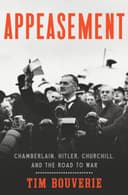
Appeasement: Chamberlain, Hitler, Churchill, and the Road to War [Bouverie, Tim] on desertcart.com. *FREE* shipping on qualifying offers. Appeasement: Chamberlain, Hitler, Churchill, and the Road to War Review: Enthralling and uncanny relevancy to today. - I thoroughly enjoyed Bouverie's enthralling account of the “gathering storm.” He writes swimmingly, and I agree with other readers it reads like a thriller, at times. It’s just enough historical content for it to not skim on accuracy, without being bogged down in unessential details. I knew the overarching theme of appeasement in this period. However, Bouverie's book afforded me a more detailed account of the actions, and the motivations behind them. The result was one of those uncanny moments that make us think of the phrase, “history repeats itself.” The pragmatic, range of the moment, policy, that discounts adversaries’ ideologies, and projects ours onto them, resonates so lucidly in the pages. It makes you wish every western leader had this knowledge. I did not agree with everything in it. I disagree with the author’s historical economic analysis. Also, there’s a couple moments I thought he catered too much to the conventional, revisionist, view of Churchill in an effort to “humanize” the giant. For example, he seems to sympathize with the interpretation that the Dardanelles debacle rested solely on Churchill (Martin Gilbert’s brilliant biography of Churchill provides a lot of evidence this is a myth). However, these were minor offenses, in my view, and didn’t distract from the brilliantly written story. Definitely worth a read. Review: Reads like today’s newspaper - Shocking. Through the 1930s Germany said they want peace yet they occupy uncontested the Sudetenland and the Rhine Valley. The allies are too afraid of instigating another war to try and stop him. And some just plain believed the man, calling him ‘charming, albeit a bad dresser’. All the while at home Hitler is saying what fools the allies are and he can’t wait to repatriate greater Germany. Iran on the one hand says they want peace, nukes for energy and they even manage to get to be the head of the UN Human Rights commission. On the other it says death to Israel and the US, and any other country that gets in its way. Still the world powers are too afraid, too politically correct to stand up to them. And we deliver plane loads of $100 bills and cow tow to their beck and call. This did not end well for the world in Sept 1938. There was no ‘peace for our time’. Based on history outlined in this book isn’t looking good for us either. I found the book extremely well researched, credited and footnoted. It read a little too much like a thesis, as in this isn’t light reading. But it is exceptionally informative. I would recommend it to anyone who wants more than a Wikipedia overview of a disaster waiting to happen.


| Best Sellers Rank | #349,901 in Books ( See Top 100 in Books ) #28 in International Diplomacy (Books) #377 in European Politics Books #477 in World War II History (Books) |
| Customer Reviews | 4.6 4.6 out of 5 stars (1,137) |
| Dimensions | 6.38 x 1.29 x 9.53 inches |
| Edition | Illustrated |
| ISBN-10 | 0451499840 |
| ISBN-13 | 978-0451499844 |
| Item Weight | 1.72 pounds |
| Language | English |
| Print length | 512 pages |
| Publication date | June 4, 2019 |
| Publisher | Tim Duggan Books |
D**Y
Enthralling and uncanny relevancy to today.
I thoroughly enjoyed Bouverie's enthralling account of the “gathering storm.” He writes swimmingly, and I agree with other readers it reads like a thriller, at times. It’s just enough historical content for it to not skim on accuracy, without being bogged down in unessential details. I knew the overarching theme of appeasement in this period. However, Bouverie's book afforded me a more detailed account of the actions, and the motivations behind them. The result was one of those uncanny moments that make us think of the phrase, “history repeats itself.” The pragmatic, range of the moment, policy, that discounts adversaries’ ideologies, and projects ours onto them, resonates so lucidly in the pages. It makes you wish every western leader had this knowledge. I did not agree with everything in it. I disagree with the author’s historical economic analysis. Also, there’s a couple moments I thought he catered too much to the conventional, revisionist, view of Churchill in an effort to “humanize” the giant. For example, he seems to sympathize with the interpretation that the Dardanelles debacle rested solely on Churchill (Martin Gilbert’s brilliant biography of Churchill provides a lot of evidence this is a myth). However, these were minor offenses, in my view, and didn’t distract from the brilliantly written story. Definitely worth a read.
D**E
Reads like today’s newspaper
Shocking. Through the 1930s Germany said they want peace yet they occupy uncontested the Sudetenland and the Rhine Valley. The allies are too afraid of instigating another war to try and stop him. And some just plain believed the man, calling him ‘charming, albeit a bad dresser’. All the while at home Hitler is saying what fools the allies are and he can’t wait to repatriate greater Germany. Iran on the one hand says they want peace, nukes for energy and they even manage to get to be the head of the UN Human Rights commission. On the other it says death to Israel and the US, and any other country that gets in its way. Still the world powers are too afraid, too politically correct to stand up to them. And we deliver plane loads of $100 bills and cow tow to their beck and call. This did not end well for the world in Sept 1938. There was no ‘peace for our time’. Based on history outlined in this book isn’t looking good for us either. I found the book extremely well researched, credited and footnoted. It read a little too much like a thesis, as in this isn’t light reading. But it is exceptionally informative. I would recommend it to anyone who wants more than a Wikipedia overview of a disaster waiting to happen.
B**S
Well Done
This is a fine recap of the period before WW II and the British led European appeasement of Hitler. The author covers some well known territory, but brings a fresh perspective to the events. The book is very well researched and the writing is crisp and clear. I will say if you have an interest in the period, you might prefer Piers Brandon's The Dark Valley, which details how five countries, (the US, the UK, France, Japan and Germany) handled the 30s and William Manchester's, Alone, the second volume of his books on Winston Churchill, which describes Churchill's sounding the alarm about Hitler. Both are superior to this volume, although, I did enjoy Appeasement. I thought it was a good book, although I disagree with some of the reviews that praised it for having a fresh perspective. I did not see that it raised any new issues, or discovered previously unknown facts.
T**M
great coverage from the European view of this turbulent time
the best coverage of the era before WW2 from the European side. excellent! one of the best reads of the year!
A**D
Brilliant History
Tim Bouverie’s “Appeasement: Chamberlain, Hitler, Churchill and the Road to War” is a superb piece of historical analysis of 1930s Europe. It begins with the rise to power of Adolf Hitler and finishes with the collapse of France in 1940. The latter event of course, overlapped with the fall of Chamberlain and the rise of Churchill. Throughout the 1930s, the British (and the French) did not know how to deal with the rise of Nazi Germany. The preferred method was “appeasement”. In other words, the British would accede to Hitler’s demands in the hope and expectation that the man would be satisfied and no more territorial claims would arise. Thus, the Rhineland led to the Anschluss with Austria, the dismemberment of Czechoslovakia and, eventually, the fall of Poland. Within a year, France too had fallen. Much of the blame for these events has fallen on Neville Chamberlain. History has not been kind to the man. He was aided and abetted by others, principally Lord Halifax. Winston Churchill was amongst a handful of appeasement naysayers. But Churchill, it must be remembered, had baggage. He was the architect of Gallipoli, the opponent of reform in India and, strangely, a champion of Edward VII during the abdication crisis. Yet for all this baggage, Churchill was on the right side of history in terms on understanding history and the threat posed by the Nazis. All Chamberlain could say of Czechoslovakia was that it was “a quarrel in a faraway country between people of whom we know nothing”. Quite remarkable! Bouverie’s book is excellent. The 1930s in Europe were a pivotal time in world history. He brings it to life and produces a definitive record of events. Highly recommended.
A**O
La voglia di pace dei vecchi imperi colonialisti europei, ha dato la forza politica ma soprattutto economica e tecnologica a un pazzo di sperare di conquistare l'Europa pezzo dopo pezzo senza aver paura delle reazioni della grandi potenze. Le stesse, democrazie spinte a politiche pacifiste dalle popolazioni ferite dalla prima guerra mondiale si sono fatte trovare nel '39 con gli arsenali semi vuoti e senza munizioni per poter effettivamente difendere la Polonia!!
"**"
A supremely good work of history. The appeasing personality is laid bare. Such history is of enormous relevance to the present day. We had the talentless Chamberlain and Nazi Germany, and now we have Theresa May, the epitome of ambition without talent, narcissism sheltering under the cover of virtue and duty, and the anti-democratic EU. In both cases we have the Conservative Party choosing gutless nonentities as leaders, leading to near disaster. Chamberlain would have happily have made Britain a vassal state of Germany in exchange for peace with dishonour. May sought to sell her sordid deal to make the UK a vassal state of the EU as an escape from the dictates of the EU. Chamberlain was humiliated, along with the country, by Hitler. May was humiliated, along with the country, by the smug pompous and corrupt EU leaders. Chamberlain's gutlessness was supported, for a time, by a majority of the population of Britain. Today we have almost half the country actively wishing to become slaves to a European dictatorship, that openly wishes to destroy nation states. Thank God Chamberlain went and Churchill took on the task. Chamberlain's legacy, had he remained, would have been the destruction of Britain. May's legacy may still well be the destruction the Britain, by Marxism. If Corbyn and his totalitarian and racist henchmen are elected in due course, May will be to blame. She put ego and vanity before country. We have history rhyming here. Let us hope that we escape again, by the skin of our teeth, as we did in 1939 to 1945. Buy this wonderful book.
D**H
An eye opener of abook about what appeasement of a powerful political leader can lead to. A brilliant piece of history.
O**R
Excellent beginning of the book. Looking forward to the continuation.
.**N
This is an excellent and very readable account of the Conservative government of Neville Chamberlain who while wanting to avoid the appalling losses of WW1 was blind to the facts that Hitler was bound and determined for war and revenge. Why Chamberlain made three plane trips to Germany to engage with an Austrian dictator can only be put down to his vanity and lack of judgement for which millions paid the price.
Trustpilot
Hace 1 mes
Hace 1 semana