We remain fully operational. Our teams are working around the clock to ensure your deliveries continue safely.

Descargar la aplicación


Servicios al cliente
Sobre nosotros
Copyright © 2025 Desertcart Holdings Limited
Descargar la aplicación

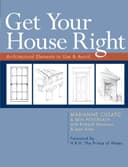
Get Your House Right: Architectural Elements to Use & Avoid [Cusato, Marianne, Pentreath, Ben, Sammons, Richard, Krier, Leon, H.R.H. The Prince of Wales] on desertcart.com. *FREE* shipping on qualifying offers. Get Your House Right: Architectural Elements to Use & Avoid Review: An instant classic - I have been absorbed by this book since my copy arrived. The organization is simple and easily accessible. Start in the beginning, middle or end, wherever you like. No problem reading two pages and putting it down until later. The thing that makes this book exceptional are the illustrations. Thousands of the clearest sketches ever contained in a book, all expertly dovetailed with the text. While this would have been my most cherished text in architecture school, it really excels for the practicing professional. Extremely practical. It shows how to design and build essential traditional house details like dormers, window and door trims, roofs, home entries, porches, chimneys, garage doors, bay windows, arches and more. Review: Get your COLONIAL House Right - Phenomenal book that talks about the historically correct way to style an Adam, Georgian, Federal, Greek Revival, or Neo-Colonial style house. Also quite useful for Victorian style homes, but less authoritative. Once you get into Craftsman-style homes (turn of the 20th century) and later there really isn't anything of value in this book. There's absolutely nothing on mid-century modern. Lots of information about proportion and the Greek/Roman orders of architecture. Great reference if you want to create a historically accurate home from one of the specifically mentioned styles, or need to do historic restoration without butchering its character. The book mostly focuses on the exterior, admitting that interior was beyond the scope of the book. There is one short but useful chapter on the interior, however. For historically-correct interiors I really liked Traditional American Rooms (Winterthur Style Sourcebook): Celebrating Style, Craftsmanship, and Historic Woodwork , which covers the traditional woodwork of homes from the same era, with examples from 12 of the original 13 colonies. Also worthy of note are pattern books from those eras, many of which are still in print, such as the works of Asher Benjamin. The strength of this book is that it explicitly shows common mistakes and explains why they look odd, whereas most historic references (like "The American Vignola") often skip details, or are harder to follow. If you're interested in a more detailed understanding of the classical orders, Robert Chitham's "The Classical Orders of Architecture" has this book beat in its sheer depth, although that book is geared toward architects, not homeowners. Still, this is a great addition to the library and one I find myself referencing more.
| Best Sellers Rank | #21,886 in Books ( See Top 100 in Books ) #3 in Architectural Materials #8 in Residential Architecture |
| Customer Reviews | 4.6 4.6 out of 5 stars (663) |
| Dimensions | 8.4 x 0.7 x 10.7 inches |
| Edition | Reprint |
| ISBN-10 | 1402791038 |
| ISBN-13 | 978-1402791031 |
| Item Weight | 2.41 pounds |
| Language | English |
| Print length | 272 pages |
| Publication date | August 2, 2011 |
| Publisher | Union Square & Co. |
M**R
An instant classic
I have been absorbed by this book since my copy arrived. The organization is simple and easily accessible. Start in the beginning, middle or end, wherever you like. No problem reading two pages and putting it down until later. The thing that makes this book exceptional are the illustrations. Thousands of the clearest sketches ever contained in a book, all expertly dovetailed with the text. While this would have been my most cherished text in architecture school, it really excels for the practicing professional. Extremely practical. It shows how to design and build essential traditional house details like dormers, window and door trims, roofs, home entries, porches, chimneys, garage doors, bay windows, arches and more.
J**F
Get your COLONIAL House Right
Phenomenal book that talks about the historically correct way to style an Adam, Georgian, Federal, Greek Revival, or Neo-Colonial style house. Also quite useful for Victorian style homes, but less authoritative. Once you get into Craftsman-style homes (turn of the 20th century) and later there really isn't anything of value in this book. There's absolutely nothing on mid-century modern. Lots of information about proportion and the Greek/Roman orders of architecture. Great reference if you want to create a historically accurate home from one of the specifically mentioned styles, or need to do historic restoration without butchering its character. The book mostly focuses on the exterior, admitting that interior was beyond the scope of the book. There is one short but useful chapter on the interior, however. For historically-correct interiors I really liked Traditional American Rooms (Winterthur Style Sourcebook): Celebrating Style, Craftsmanship, and Historic Woodwork , which covers the traditional woodwork of homes from the same era, with examples from 12 of the original 13 colonies. Also worthy of note are pattern books from those eras, many of which are still in print, such as the works of Asher Benjamin. The strength of this book is that it explicitly shows common mistakes and explains why they look odd, whereas most historic references (like "The American Vignola") often skip details, or are harder to follow. If you're interested in a more detailed understanding of the classical orders, Robert Chitham's "The Classical Orders of Architecture" has this book beat in its sheer depth, although that book is geared toward architects, not homeowners. Still, this is a great addition to the library and one I find myself referencing more.
B**S
Just what the doctor ordered
I have struggled for years with design issues in the buildings I renovate and (sometimes) modify. It is the "just doesn't look right" syndrome where you spend money and time on what you think is a good idea, but when it's done you can tell it looks goofy, or backwards, or convoluted or something. Well this book is exactly addressed to people like me - indoctrinating the reader to the (seemingly) rigid rules of traditional architecture that have evolved over the centuries since we emerged from caves. It's like getting an abbreviated overview of the lessons learned by earlier generations of builders, condensed into a readable book. Probably the most notable lesson I gleaned from it is the importance of details on the overall look and feel of a building. I know I'm not going to necessarily follow every rule on every decision I make - economics play an important role too - but at least now I have a little better understanding of where I can cut corners, and where spending a little more on the right details will be crucial. It's like having the wisdom of the ages at your back when making design decisions. One thing that attracts me to traditional architecture is that it comes from times where buildings were much more monumental accomplishments than they are today. With our concrete and steel, equipment and technological advances, buildings go up in a matter of days rather than years, and will be replaced just as quickly if we decide we don't like them. Sometimes the way they look reflects this lack of thought necessary for their contstruction. If you follow the guidance provided by this book, you building will at least look like an accomplishment worth celebrating.
A**R
Excellent Reference!!
I just received my copy in the mail and have been very pleased with what I've seen so far. While this book does an excellent job of illustrating what architectural elements to use and how to use them, it is limited in that the scope of the book seems to be only classical architecture (Georgian, Federal, and Greek Revival). If you are looking for a source to guide you as you pick out architectural details to include in your "new" Queen Anne, Gothic Revival, or Craftsman then you might want to look elsewhere. That being said, I am very happy I bought this book even if it is focused exclusively on classical architecture. A great example of how to use this book can be found under the millwork section. A chart is provided which details how tall your ceilings are and how tall your baseboard/crown molding should be. Proportions are everything and this book is an excellent guide for that.
R**E
This book is a must have if you are working with an architect or home designer and want to step away from the typical home construction and house designs you see everywhere today.
R**S
Livro mais do que indicado para arquitetos que querem aprimorar-se. Indicadíssimo para arquitetos que trabalham com projetos tradicionais.
A**R
Very good book for architecture students interested in residential design or anybody who wants to add elements of western traditional architecture to their homes.
A**G
I thought I had a good eye for these things, but this guide really goes into the details that distinguish professional from amateur classical designs.
M**N
I bought this in conjunction with 'A Pattern Language' for our new build. One deals with the humanity of your build, this one deals with the structural details that matter. There are so many important aesthetic aspects to building a house that don't necessarily equate to $$$. While certainly some of the details that the authors speak to would, indeed, increase the cost (in some instances significantly) there are a lot of things one can do to bring your home into harmony by just paying attention to proportion and simple design rules. An example is one of the most common we see - decorative shutters applied to the front of a house that could not possibly be functional and are often illogical. The book provides a good understanding of the original practical functionality behind a lot of building elements and how we've messed that up in a lot of mass produced homes today. Perhaps you can't implement all the best practices described (from both a budget and control perspective) but there is a lot you can do to make your home look proportional and feel like a quality build. Excellent reference material!
Trustpilot
Hace 3 días
Hace 2 meses